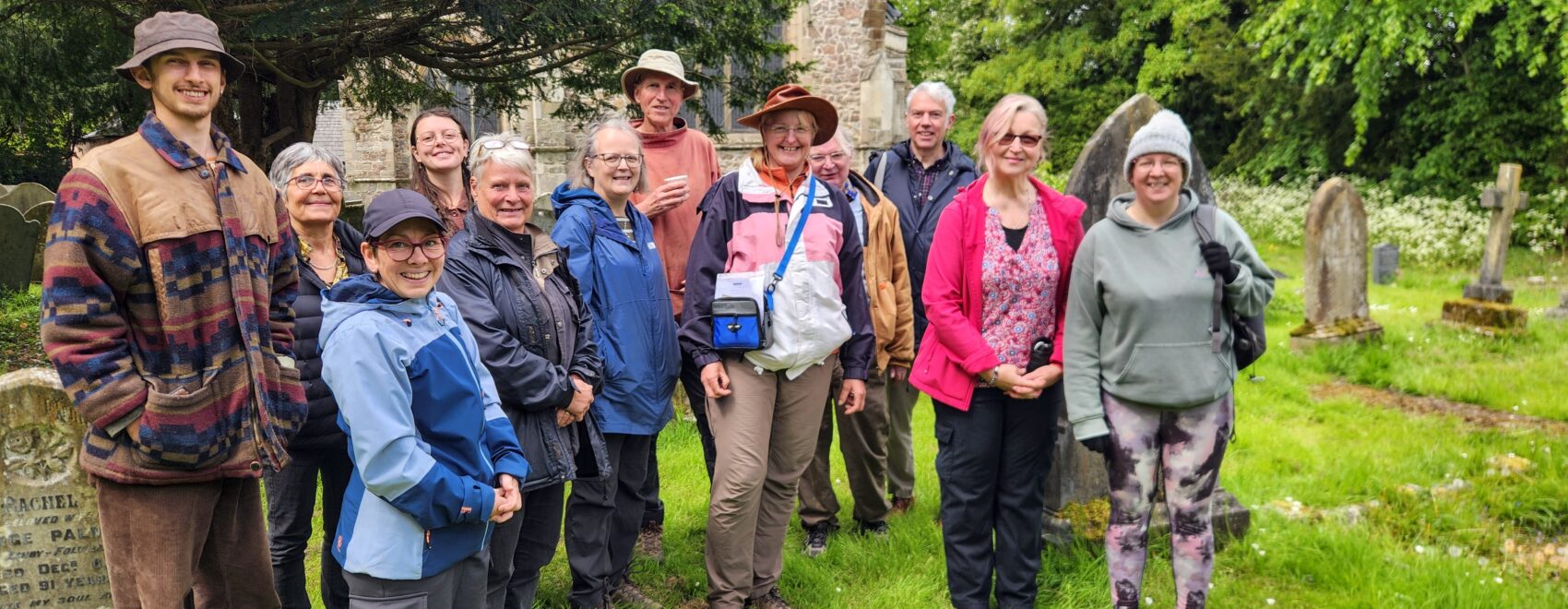
16th May 2026 9:30am – 12:30 pm
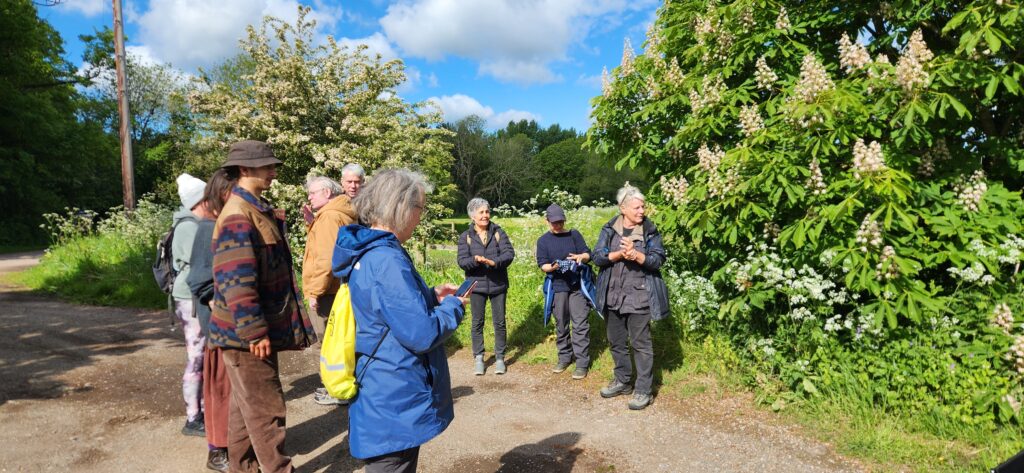
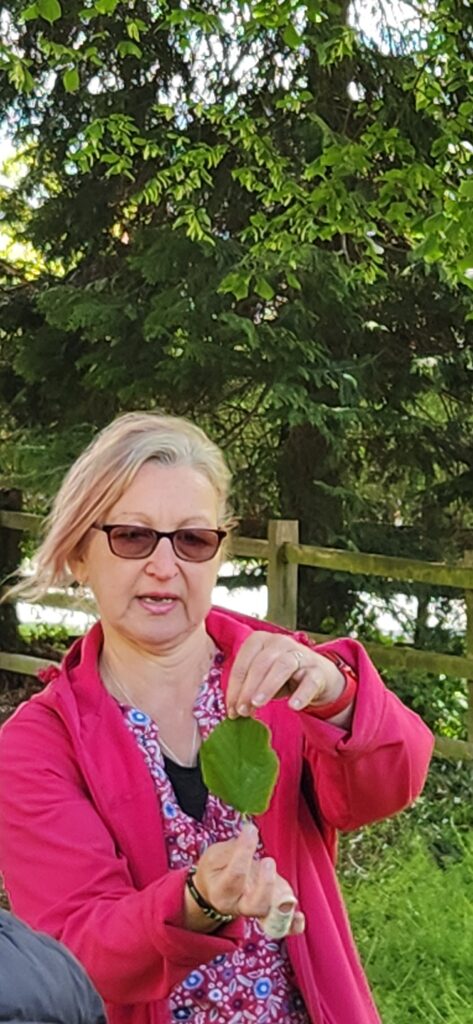
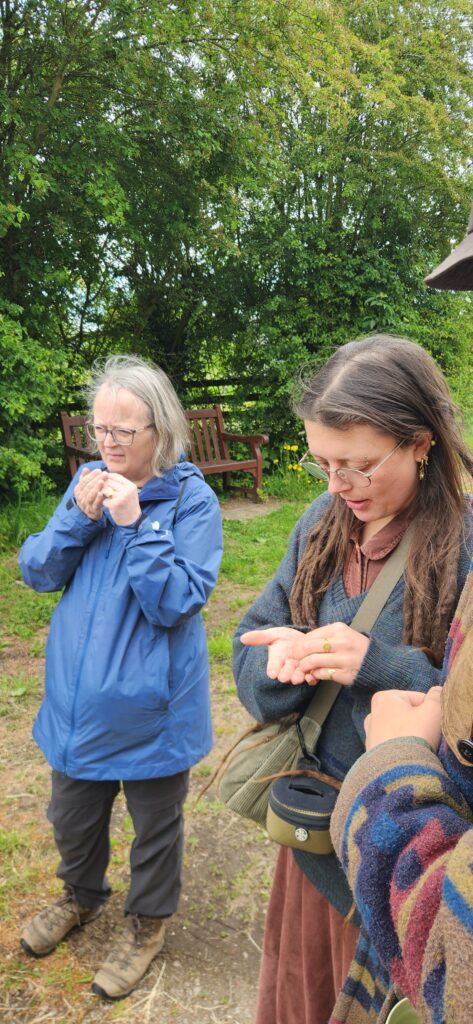
As we all know our manners, we started by washing our hands..the natural way using leaves from non edible Horse Chestnut tree.
We explored couple less known “pretty flowers” such as green alkanet and and unusual “green veg” bristly oxtongue.
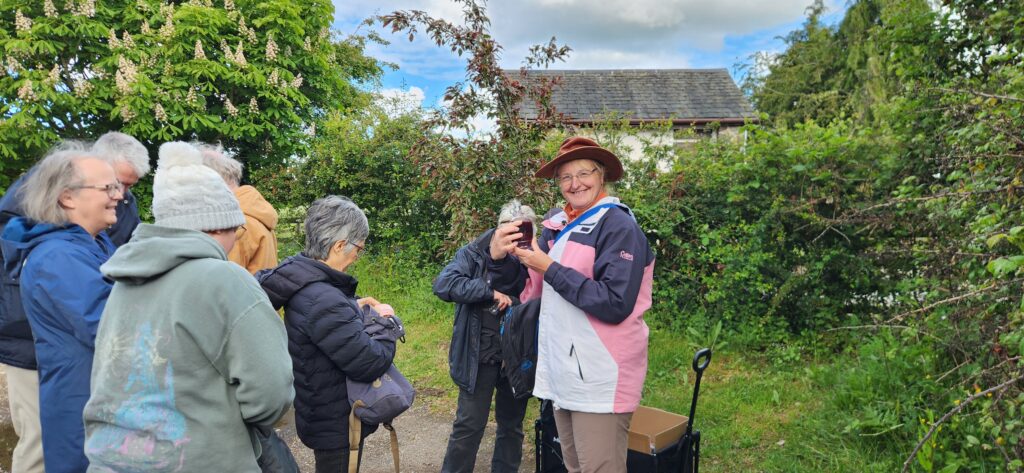
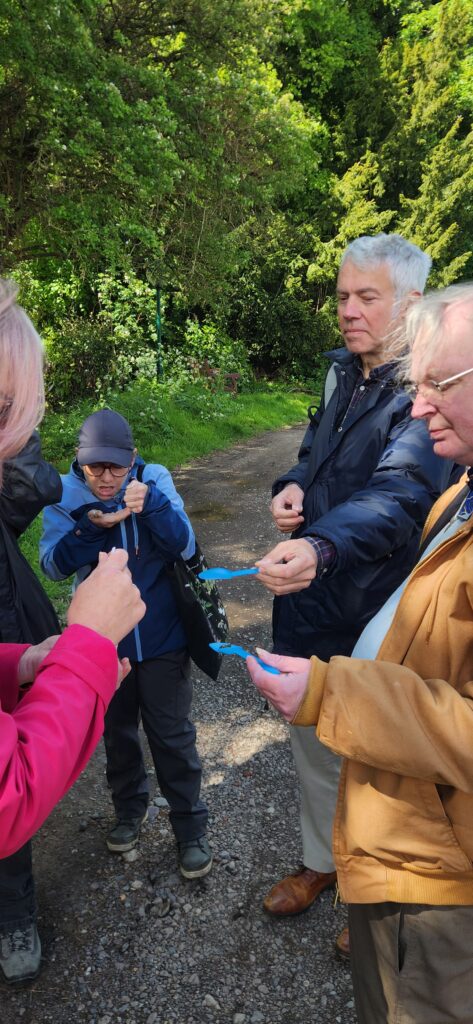
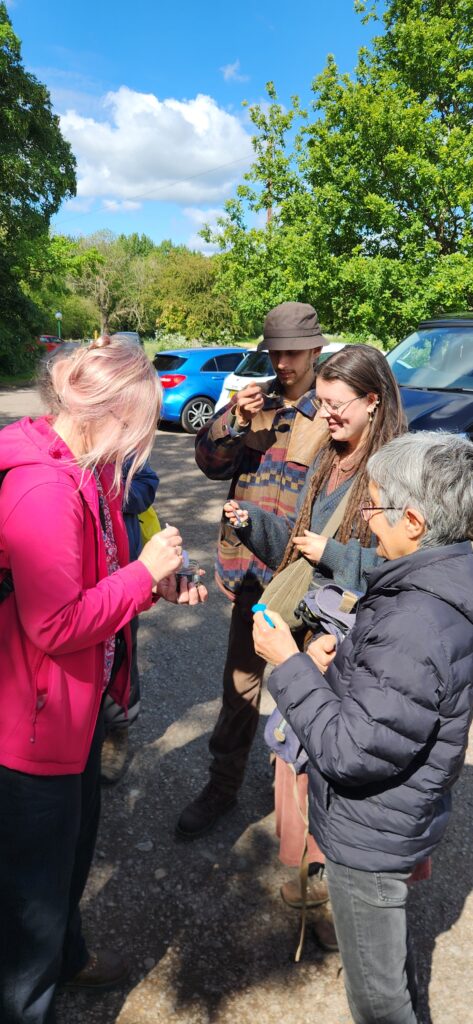
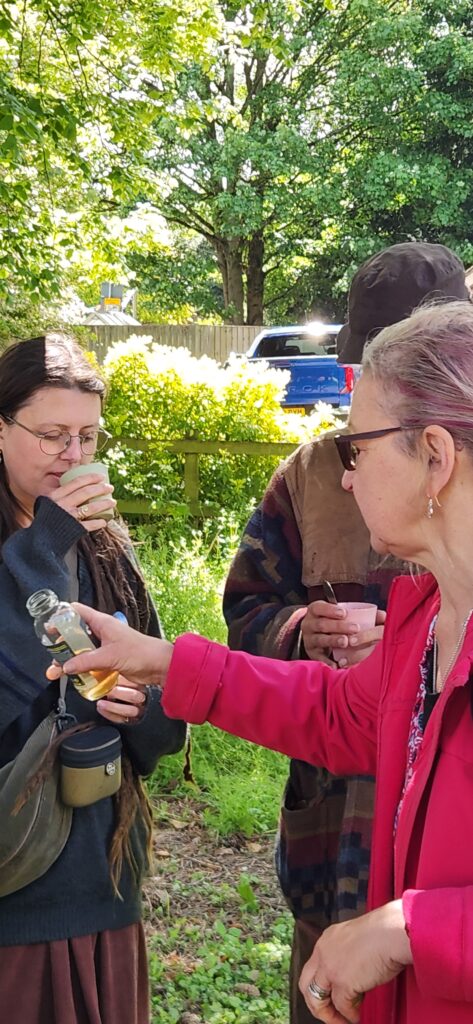
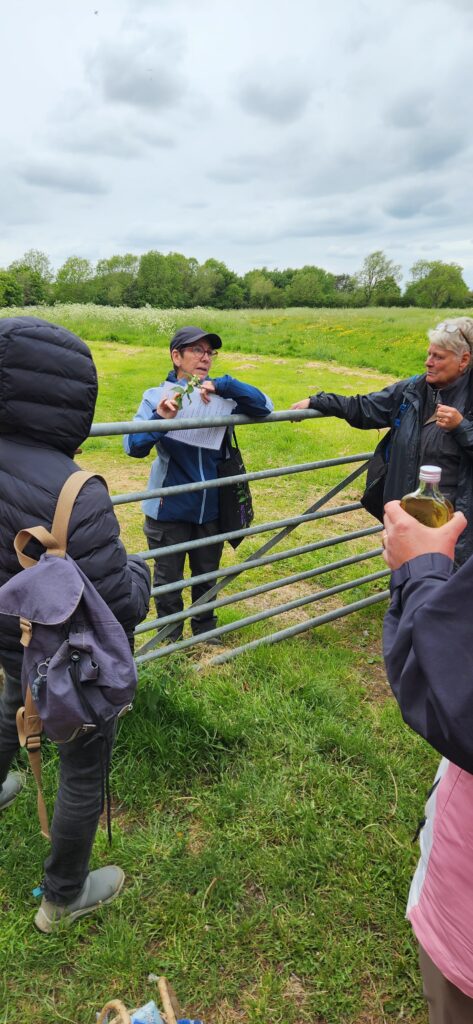
British classic bramble – not yet season for blackberries but we shared a lovely cordial from last years harvest.
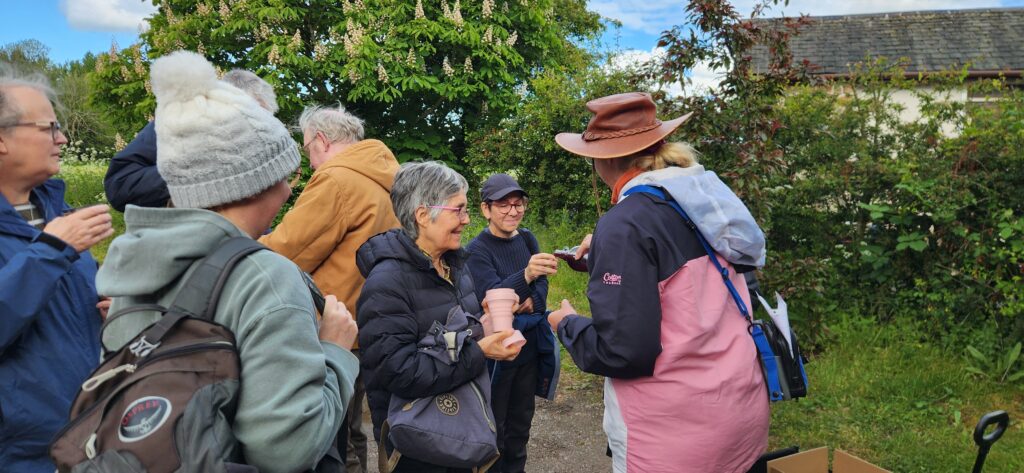
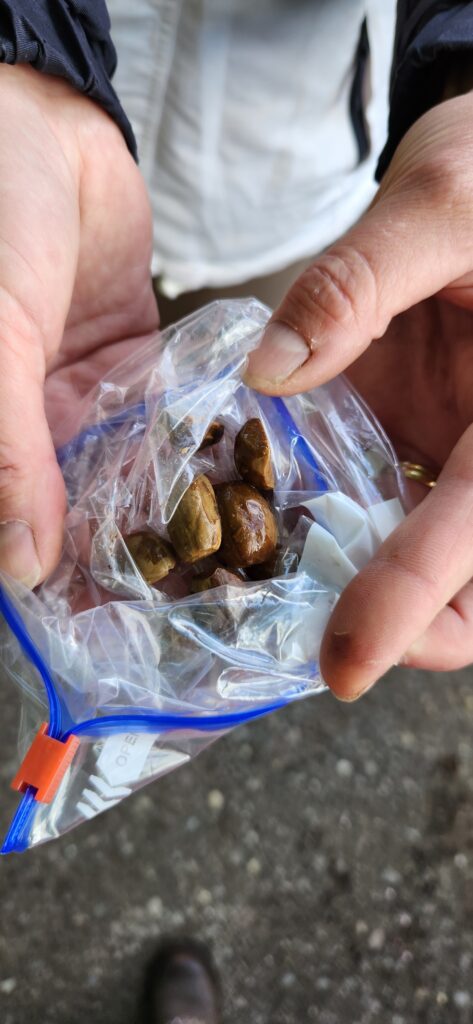
Moving on under the majestic oak tree offering interesting flavouring with its leaves and we tasted “debittered” acorns, ready for roasting.
Turning a little to look at the small pond, we learn about reedmace (not a bullrush but still we should rush to eat this invasive plant)
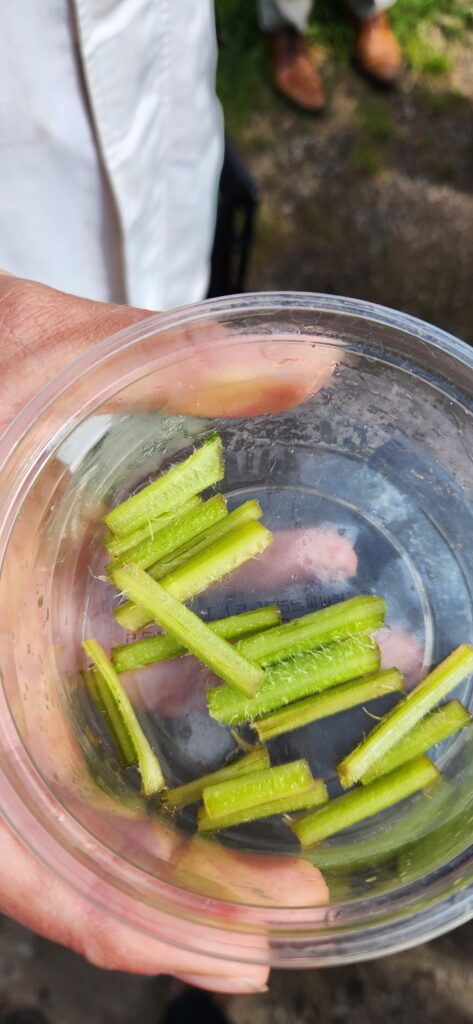
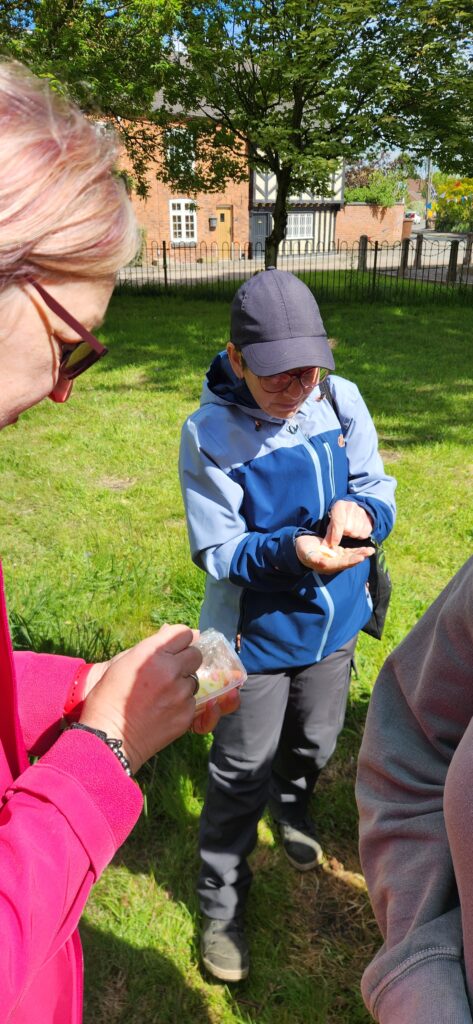
On the shore we discovered beautiful spear thistle. After demonstrating how to prepare it for eating, we have tasted a few home prewashed samples.
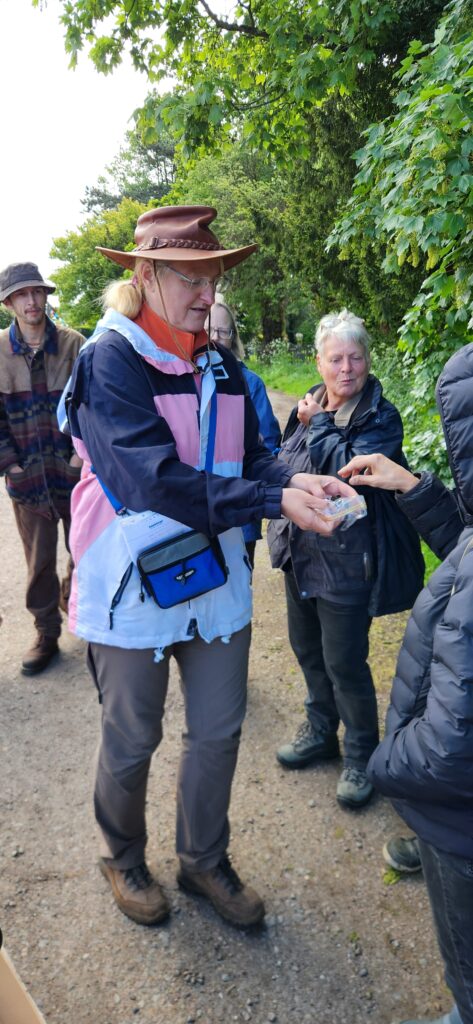
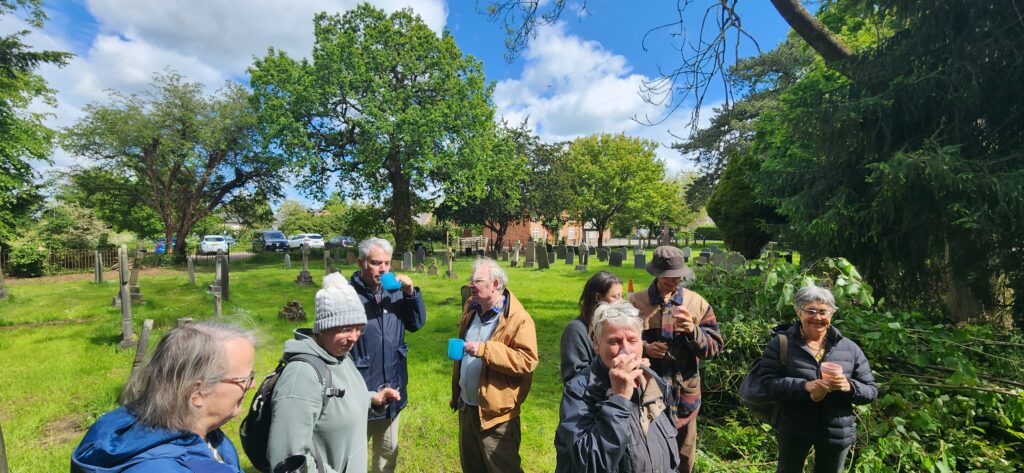
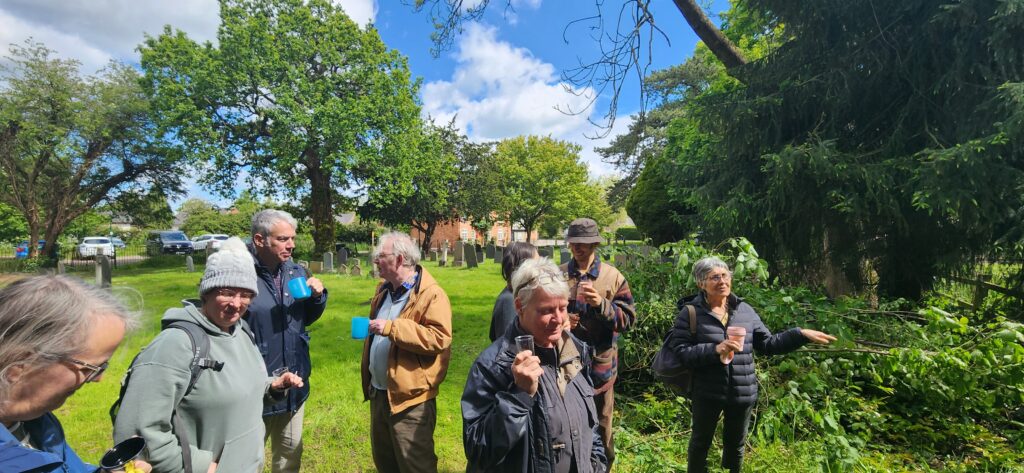
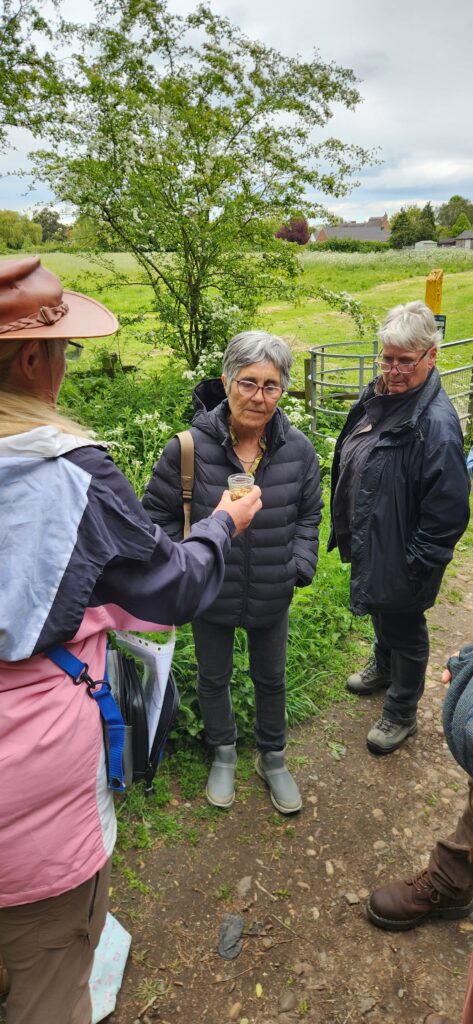
Back to some classics, elder tree – providing us with flowers and later on berries. We tasted an elderberry cordial. On elder (not a living one but dead or dying) we can find jelly ear mushroom. We have demonstrated how quickly it can absorb water and expand its volume and tried jelly ears crisps.
Next to elder, another tree welcomed us- unfortunately not in season for its lovely red arils (edible flesh around the berry)- yew tree.
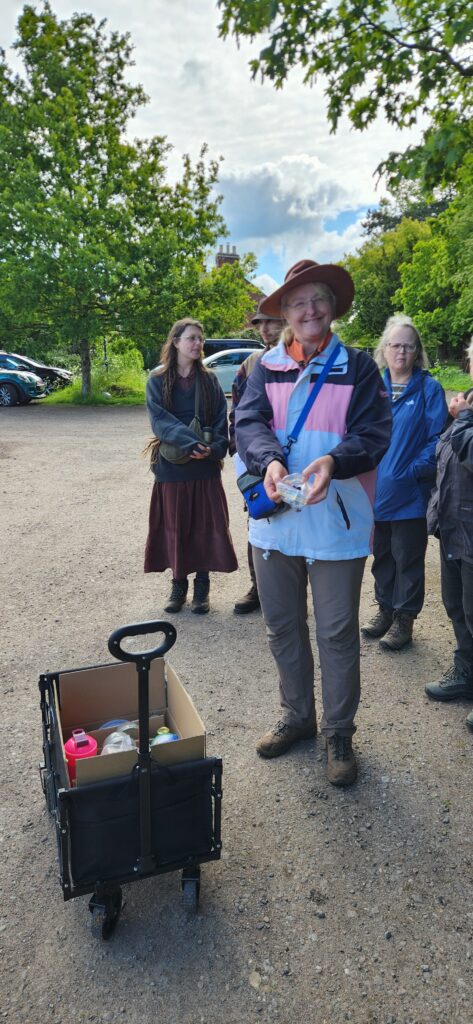
Then onto another classic: dandelion. After trying to prepare the dandelions flower head petals, we appreciated the work needed to make any great recipes: Poor-man’s dandelion honey, Bhaji (which stayed in my trolley and you never got to taste them – sorry :-)) and pickled dandelion buds.
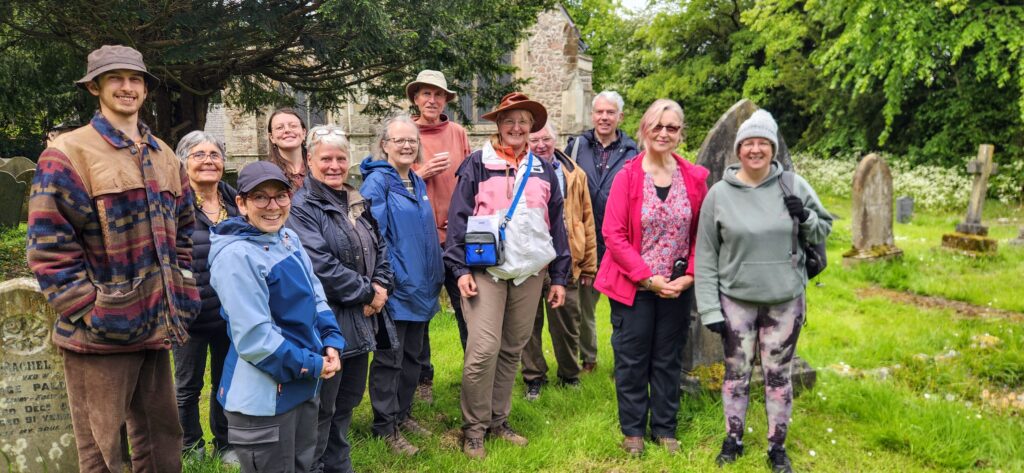
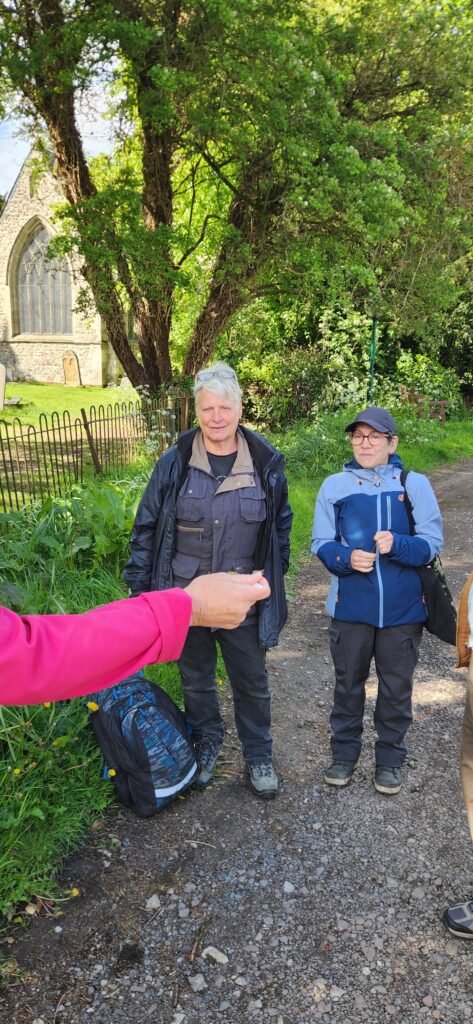
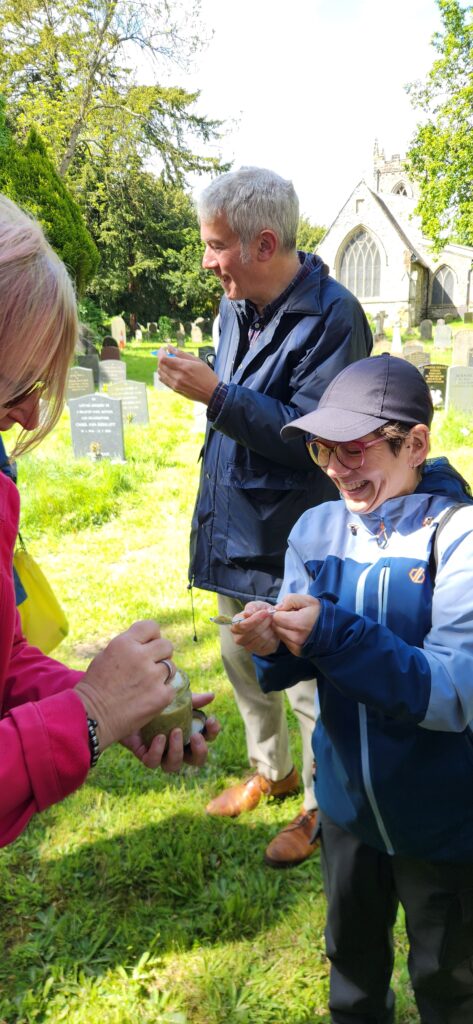
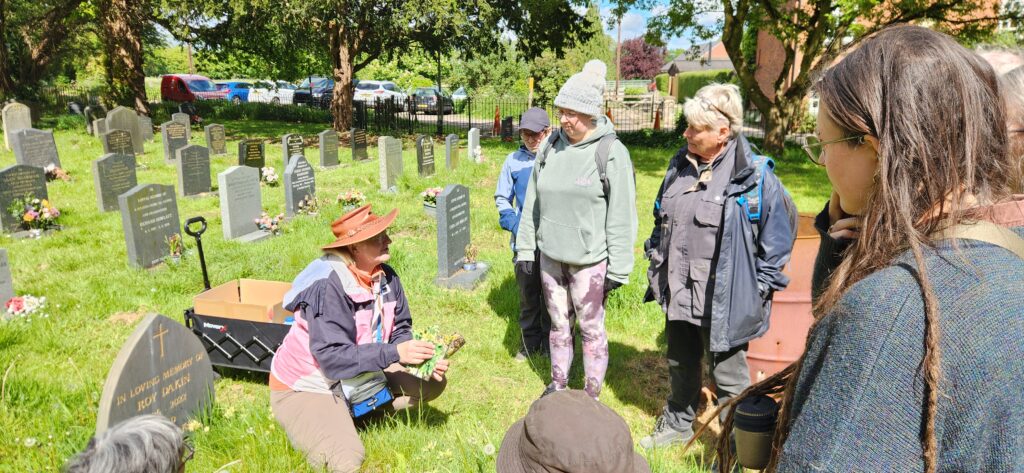
Entering the churchyard, we were welcomed by the monk..or more like a legacy of one. Herb Bennett ( plant named after Benedict the founder of the Benedictines monastery order) edible plant with horrible taste but great remedy for kidney or bladder issues.
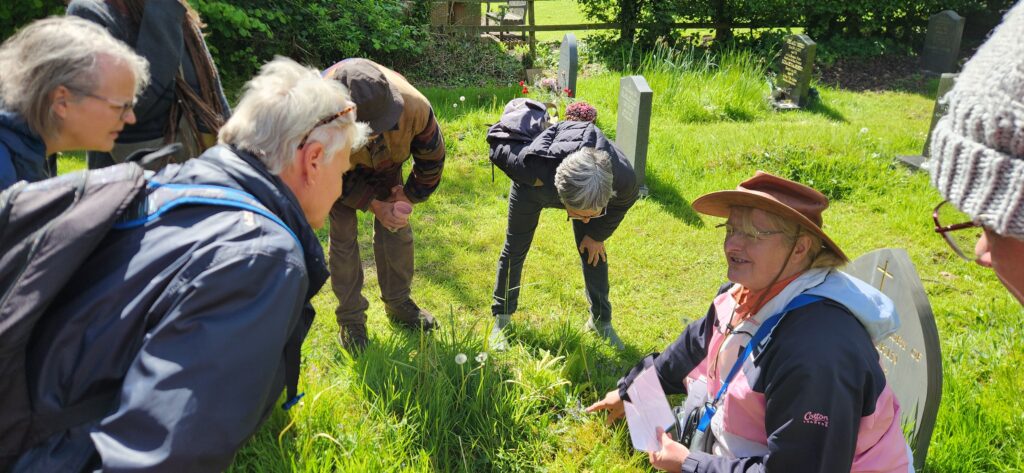
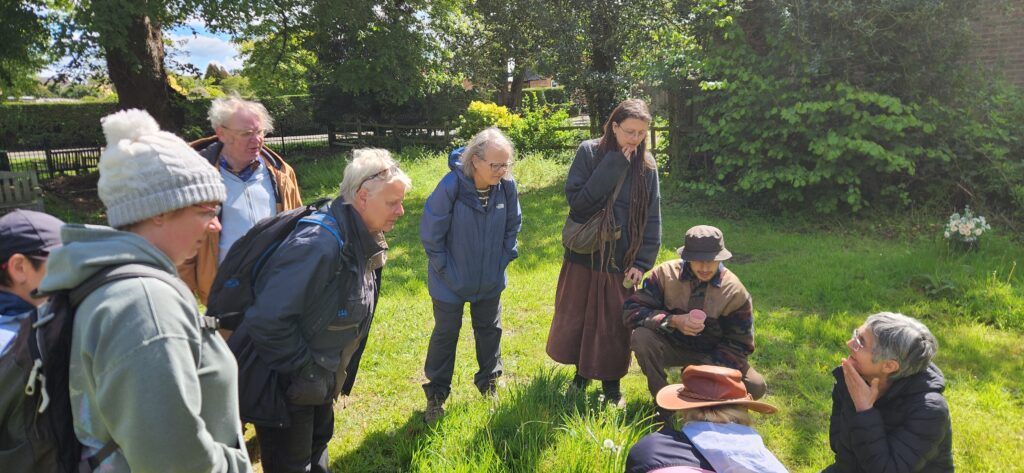
Crouching down and exploring the greens and more flowers, we discovered sweet violets, cat’s ear and Germander speedwell.
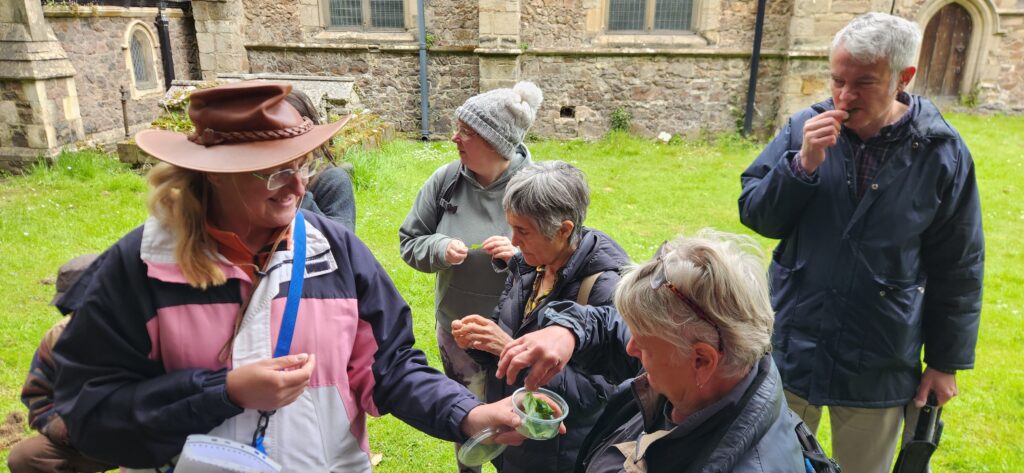
Time for a few more trees, pine full of Vitamic C (tasted female pine cone jam) and calming Linden tree (Tasted tea)
With kind permission of Mr Roy, we had a chance to explore few plants serving as aspirin replacement: cowslip and primrose. Thank you for appreciating the work it takes to prepare crystalized primrose flowers) pls follow the process as with crystalized violets.
Next stop was a bit prickly..well we explored fantastic uses of few prickly plants
Prinkly leaved mahonia alias Oregon grape, after tasting the jelly and wine I think we all agree, its worth getting few scratches when harvesting the berries.
This followed by prickly lettuce next to a smooth sow thistle ( tasted fresh – quite sweet surprisingly)
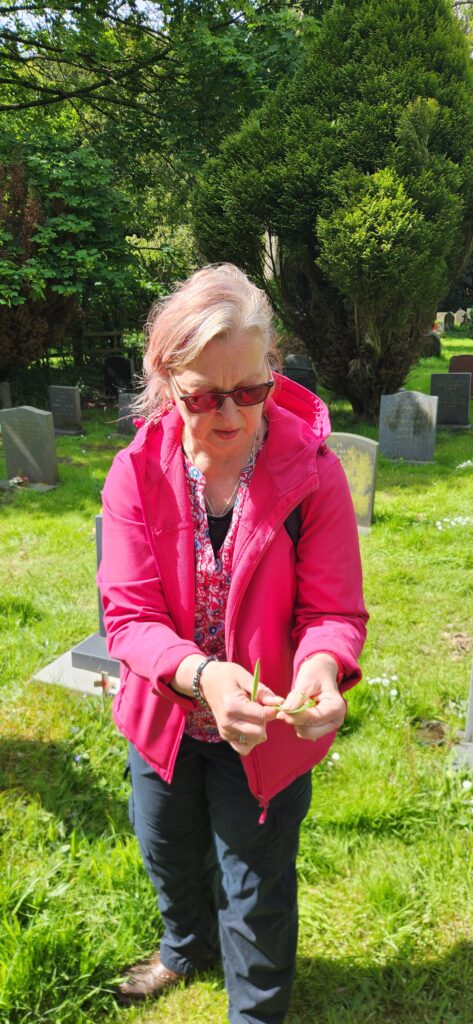
Before heading out off the churchyard again, we stopped to learn about garlic mustard (leaves tasting like garlic and seeds as mustard) Ground elder (tasted fresh greens)
Cleaver with its toxin removing tonic.
We have learnt the key features of cow parsley and how not to confuse it with poisonous hemlock. (forgot to give u a taster … of cow parley of course)
And one final tree before heading out back onto the carpark – hazel – yes, we all know nuts but who ever harvested the catkins. Well, I did, and we shared a lovely catkins muesli.
We have also learnt the difference between stinging nettle (makes lovely crisps and kimchi) and deadnettle which is in a mint family, that is why it does not sting ( sweet tasting for cake or tea)
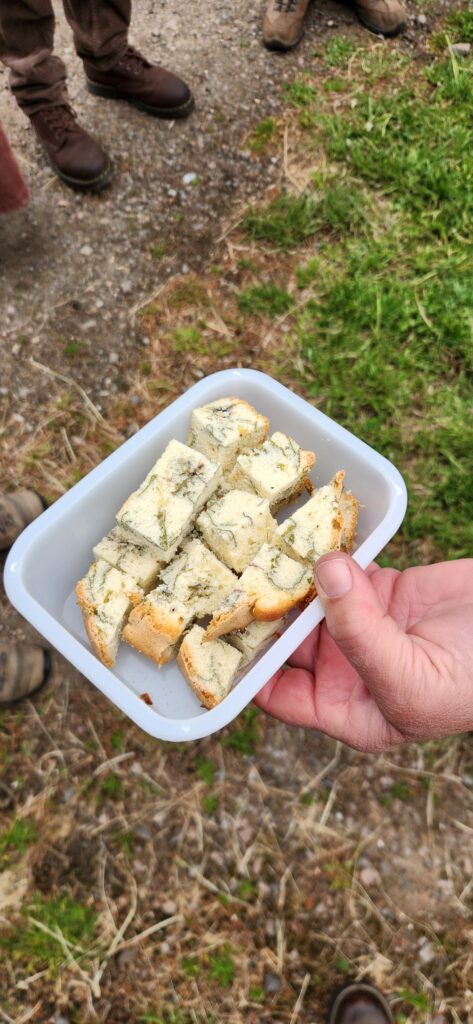
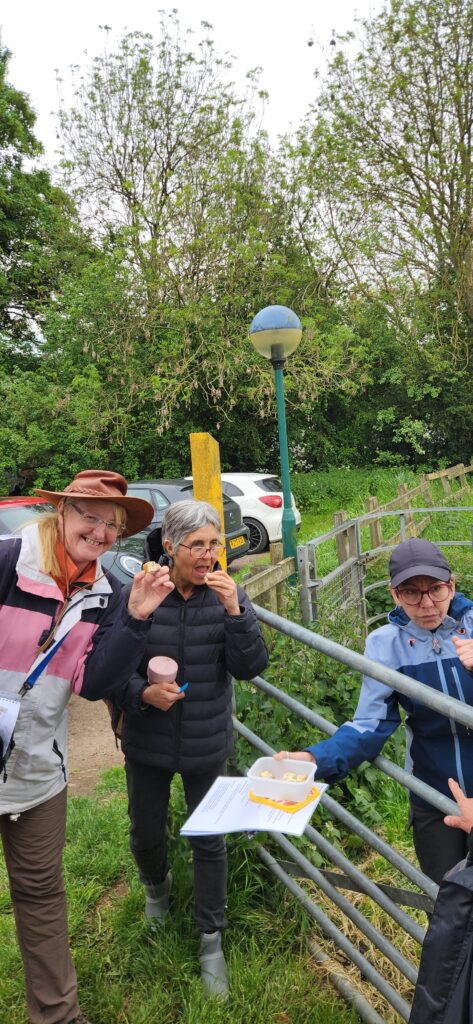
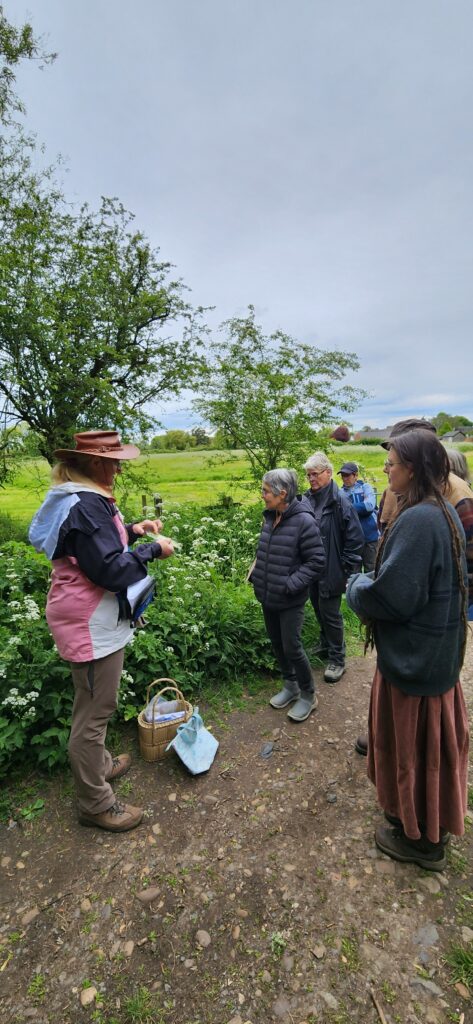
Final quick hop over the field with clover to taste flowers from the magical ceremonial bush hawthorn. Everybody prepared their own bread and cheese (bread and butter)
Concluding the day with Jo’s favourite, Common Hogweed and its broccoli like turrets just ready for harvest. And the secret of Charnwood Foraging signature chocolates. 🙂
Time run out long before the endless more plants could be discovered. Hopefully we will all meet again. Dont forget about your 3 years refresher half price offer.
Email me to join us again jo@charnwoodforaging.co.uk
We have collected a little bit more for LRWT charity which I am sure will be greatly appreciated.
We were warmly welcome by All Saints Church warden who kindly offered to open up the beautiful church for us, we hope to be back exploring it during the Cossington open gardens.






- Nature Exploration
- Plant Identification
- Outdoor Learning
- Sustainable Living
- Community Bonding and team building
- Foraging near me Leicestershire