Pine – A Resinous Giant with Edible and Medicinal Surprises
The pine tree, with its towering form and fragrant needles, is more than just a symbol of wild woodland resilience. It’s also an abundant source of edible and medicinal treasures. From vitamin-rich needles to the surprising culinary potential of its cones, pine is a fascinating wild resource. Whether you’re snacking on raw male cones or turning young female cones into a delicious jelly, this majestic tree offers year-round interest for the curious forager.
Other names: Scots Pine, Lodgepole Pine, Eastern White Pine, Maritime Pine, Red Pine (Note: many pines share similar edible uses)
Not sure about tree identification? Join us for the next foraging course in Charnwood, Leicestershire!
Habitat
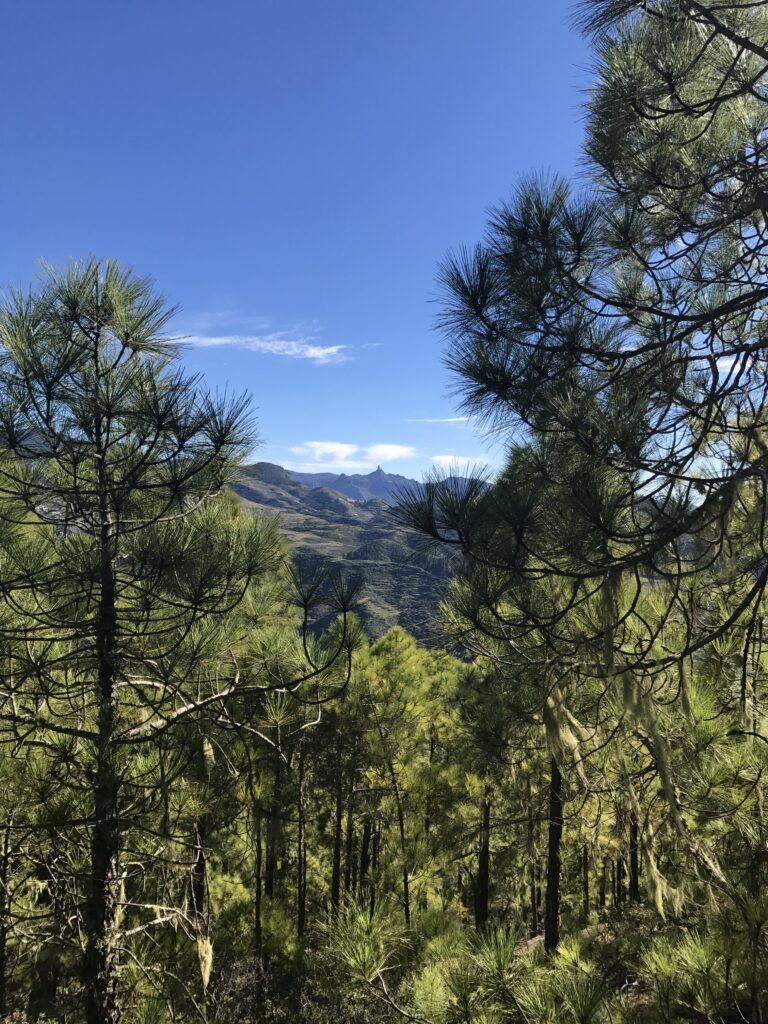
Pines are widespread across the UK and thrive in a range of conditions—from sandy heathlands and hillsides to old plantations and parklands. They favour well-drained soils and open sun but are hardy enough to withstand exposure, wind, and nutrient-poor ground. Many different species of pine can be found, especially in managed forestry areas or mixed conifer woodlands.
Identification features
Cones:
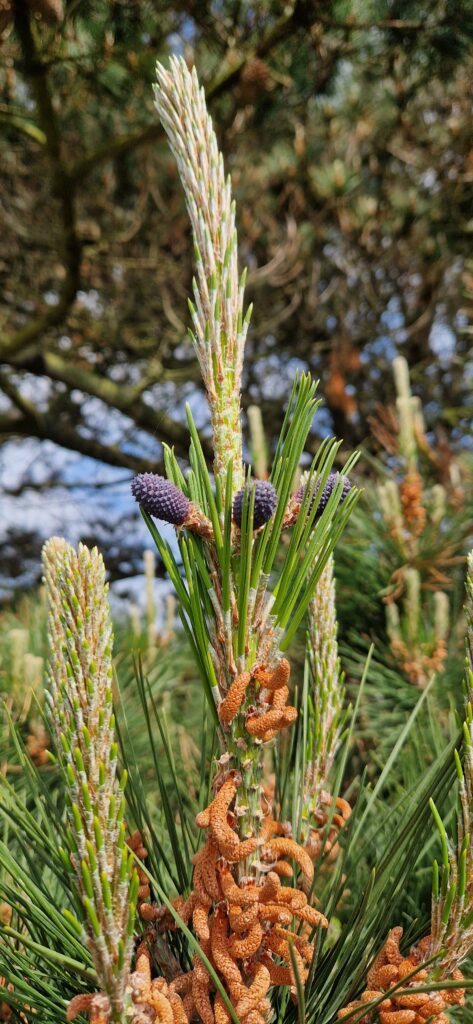
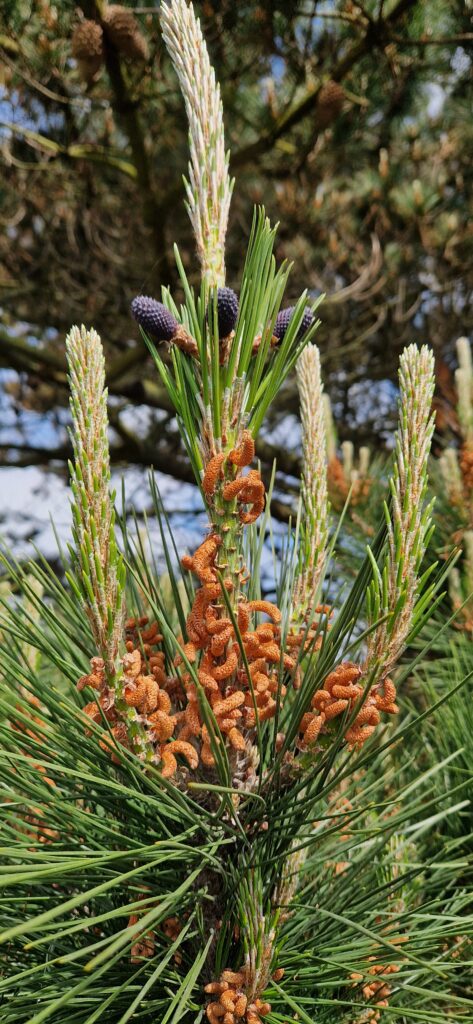
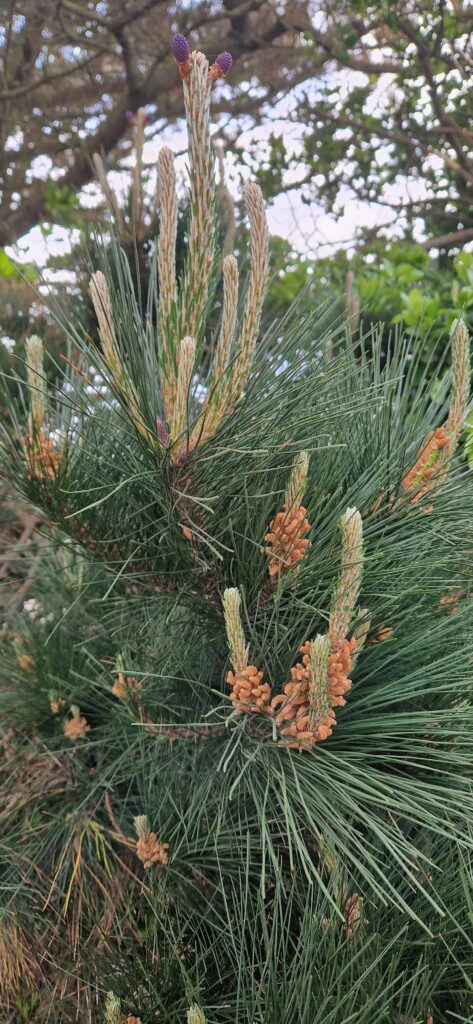
- Male cones are small, soft, and pollen-filled in spring—found in clusters and ideal for eating raw when young.
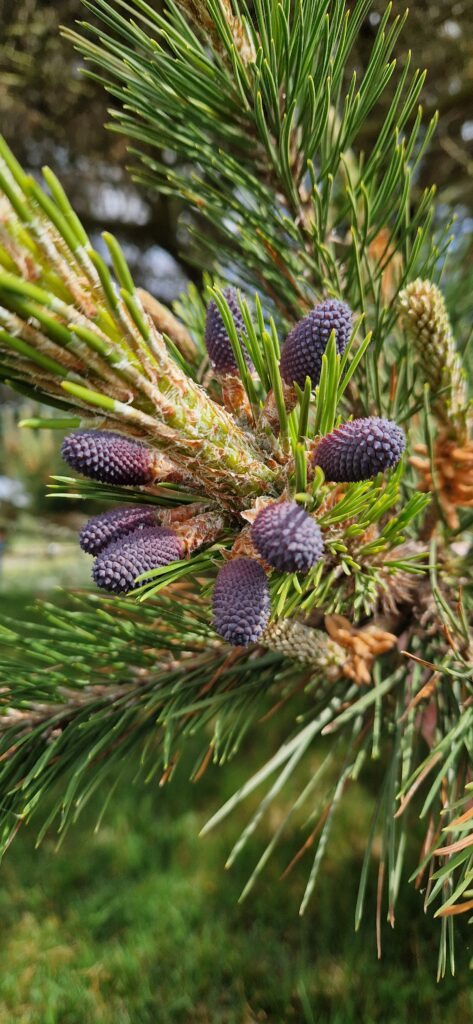
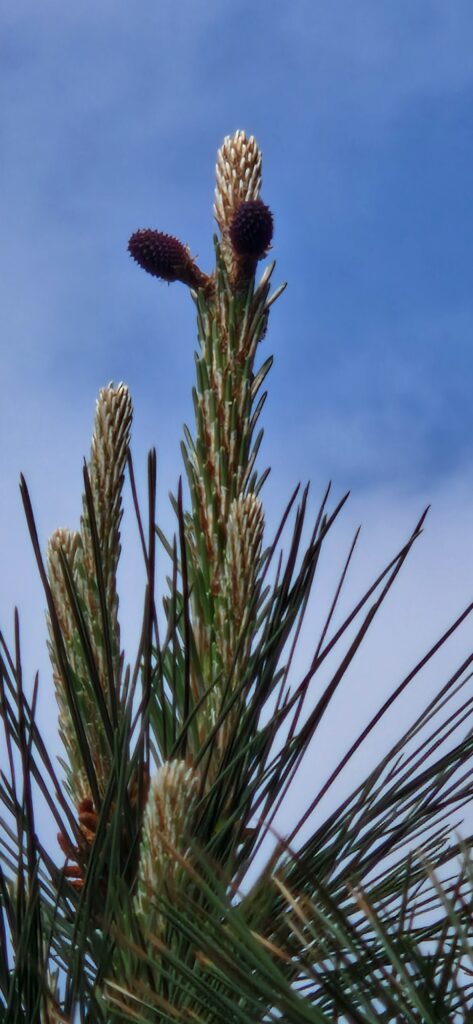
- Female cones start small and green before growing larger and woody. In their early stages, they can be used to make flavourful jellies rich in resinous, citrusy notes.
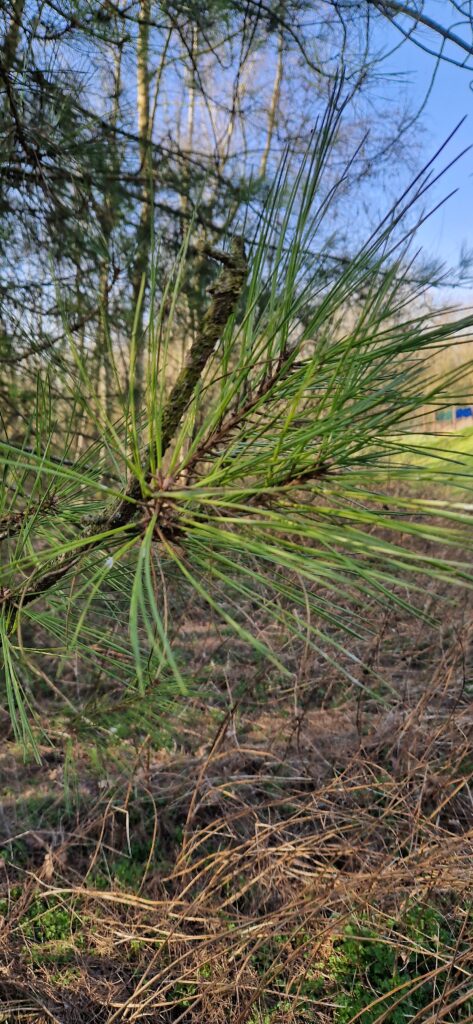
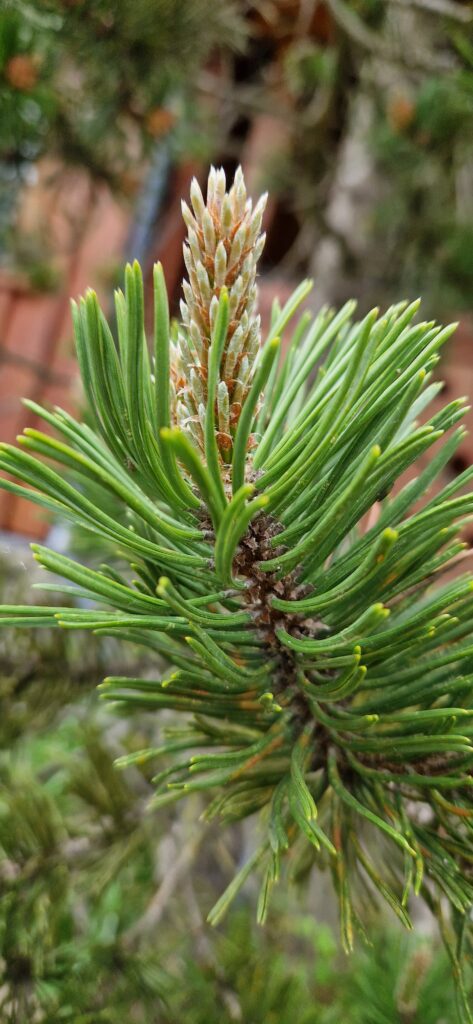
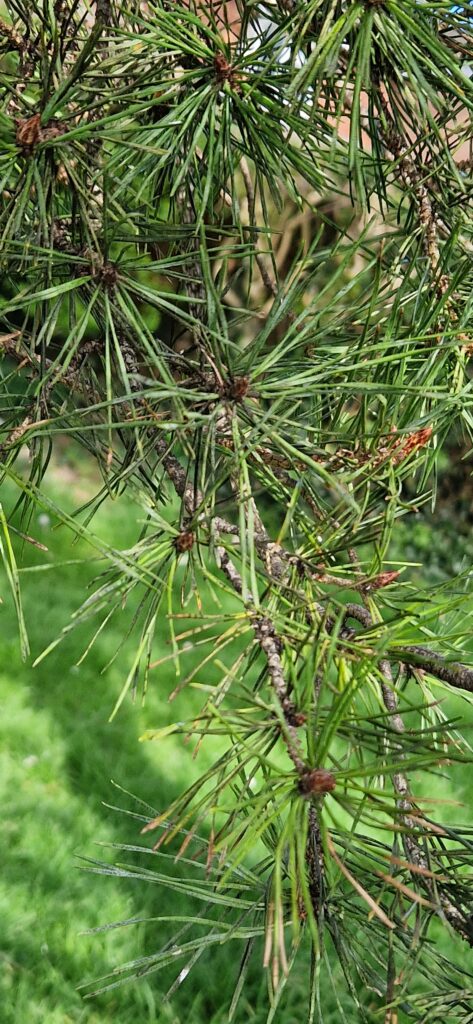
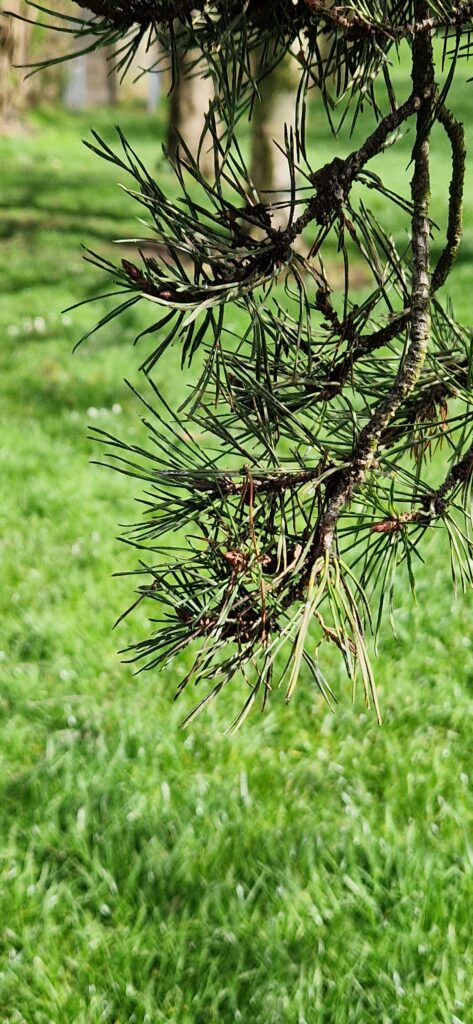
Needles: Long, thin, and usually found in bundles of 2 to 5 depending on the species. They remain green throughout the year and give off a citrus-like aroma when crushed.
Bark: Thick and often reddish-brown, becoming more fissured and flaky with age. Some species show deep plates or ridges as they mature.
Height: Pines can grow from modest shrub-like trees to towering giants reaching 30+ metres.
Edibility
Male cones are best gathered in early spring when they are soft, pale, and pollen-rich. At this stage, they can be eaten raw and have a slightly nutty, fresh flavour. They’re a nutritious nibble and also a pollen source that some use in baking or smoothies.
Try fresh male pinecones as a snack.
Young female cones can be simmered to extract their resiny flavour into a syrup or jelly—perfect for foragers who enjoy turning wild ingredients into something sweet and shelf-stable. The result is a unique spread with hints of citrus and pine, perfect on toast or stirred into warm drinks.
Try female pinecone jelly recipe.
Needles can be steeped in hot water to make a vitamin C-rich tea that also acts as a natural decongestant- see pine soda.
As with all wild ingredients, moderation is key. Overconsumption of pine products can irritate the stomach, and not all conifers are safe (avoid yew, which is toxic).
Historical and cultural significance
Throughout history, pine has been revered not only for its practical use in timber and resin but also for its health benefits. Indigenous cultures used pine needle infusions for respiratory complaints, while pine resins were applied to wounds as natural antiseptics. The soothing properties of pine-scented balms are still used today in modern herbalism and aromatherapy.
From pine pitch to pine pollen, the tree’s by-products have featured in folk medicine across the globe. In culinary history, pine nuts (from select species) have been a staple in many diets, while pine honey—produced by bees visiting pine-resin-loving insects—is a Mediterranean delicacy.
Ecological role
Pines play a crucial ecological role, offering shelter and food for birds, squirrels, and insects. Their dense needle cover provides protection in harsh weather, while their cones are vital food sources over the winter. They also stabilise soil, enhance biodiversity, and support lichen, fungi, and mosses.
Foraging season
- Male cones appear in spring (March to May)—harvest while soft and before they open.
- Young female cones are best gathered in late spring to early summer, before they become woody.
- Needles can be collected all year round, though the freshest flavour comes from new growth in spring.
Health warning
Do not confuse pine with yew, which is toxic. Always confirm you’re harvesting from a true pine (genus Pinus) and avoid consumption of any part that looks unfamiliar or too mature and resinous. Pregnant individuals should avoid pine needle tea due to its potential to stimulate uterine contractions. Always forage responsibly and seek expert guidance if unsure.
Rediscover wild woodland flavours with our guided foraging courses in Charnwood, Leicestershire! Learn how to safely identify useful trees like pine, discover their many edible and medicinal applications, and explore the deep connection between forest and folk medicine.