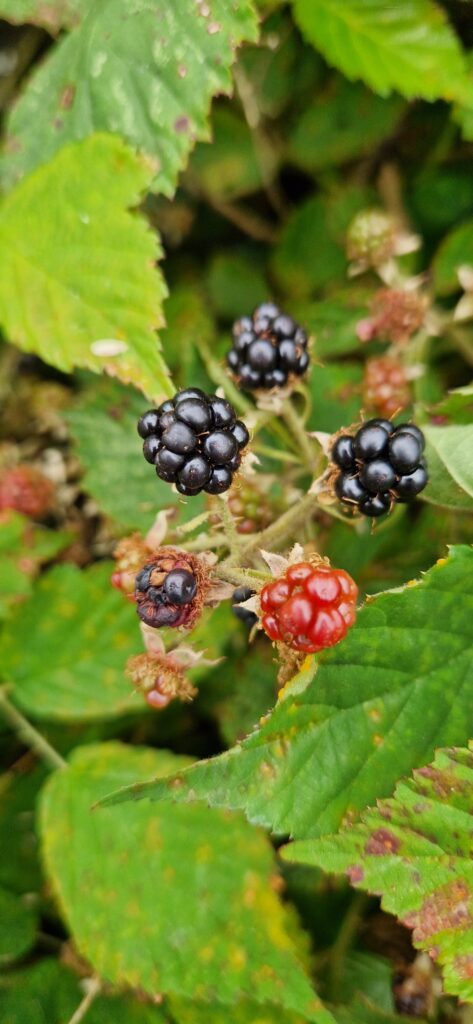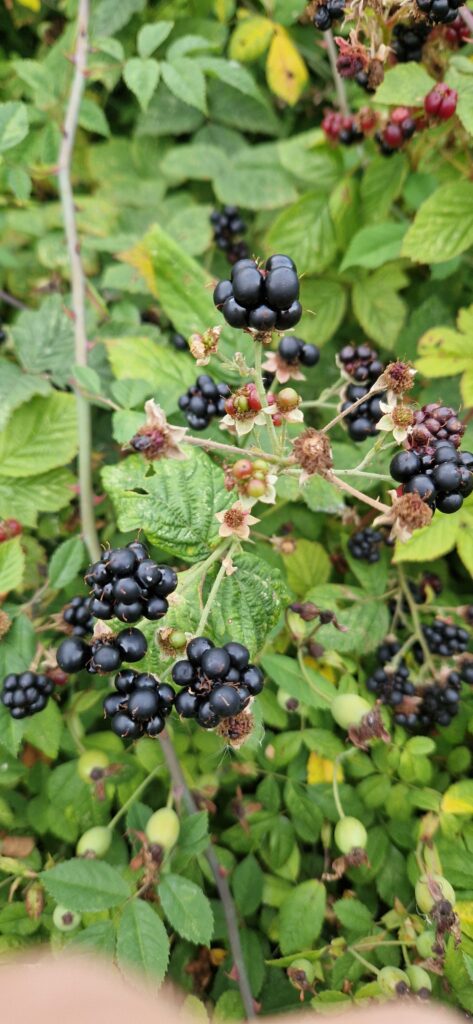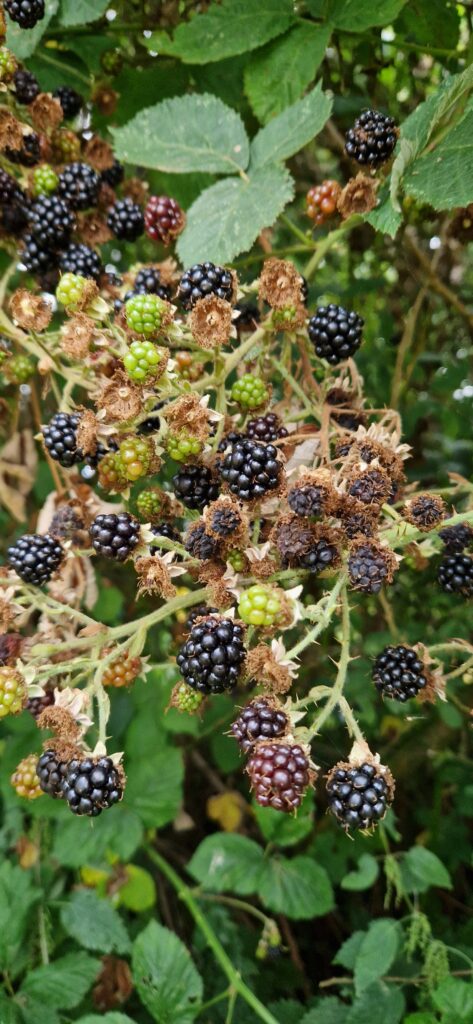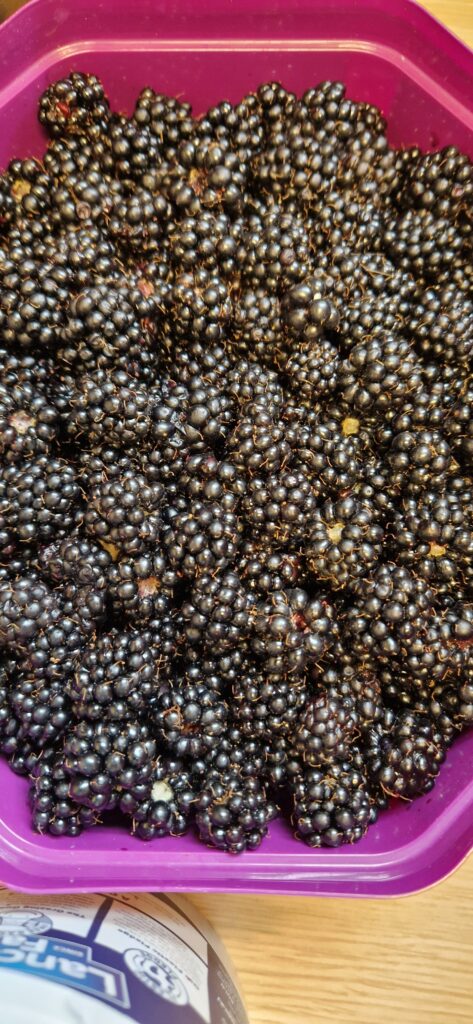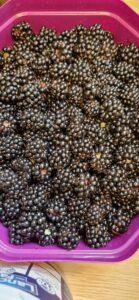
Wild blackberries, found on the bramble bush (Rubus fruticosus), are a beloved fruit of hedgerows and woodlands, cherished for their sweet, tangy flavor and versatile uses. These robust plants have been a forager’s favorite for centuries, offering both culinary delights and medicinal benefits.
Overview
Latin Name: Rubus fruticosus
Common Names: Bramble, Blackberry, Brambleberry
Natural Habitat
Bramble bushes thrive in a variety of environments and are commonly found in:
- Hedgerows and field edges
- Woodland clearings and forest margins
- Disturbed ground and abandoned fields
- Scrublands and riverbanks
They prefer well-drained soil and can grow in full sun or partial shade, often forming dense, sprawling thickets.
Identification
Leaves
- Compound leaves with 3-5 oval, toothed leaflets.
- Dark green on top, lighter underneath, and slightly hairy.
Flowers
- Clusters of small, pinkish-white flowers.
- Bloom from late spring to early summer, providing a vital nectar source for pollinators.
Fruit
- Aggregate berries that turn from green to red, ripening to a deep, glossy black.
- Typically ready to harvest in late summer to early autumn.
Stems
- Long, arching, and thorny, often rooting where they touch the ground.
- Young stems are green, maturing to woody brown.
Edibility and Culinary Uses
Blackberries are a versatile fruit, prized for their sweet and tart flavor. Common uses include:
- Raw Consumption: Enjoy fresh as a snack or in fruit salads.
- Preserves: Make into jams, jellies, or syrups.
- Baking: Use in pies, crumbles, cakes, and muffins.
- Beverages: Create cordials, wines, or smoothies.
Recipe Ideas:
- Classic Blackberry Jam
- Blackberry and Apple Crumble
- Bramble Pie
- Foraged Berry Smoothies
- Healthy Berry Jelly Cake
- Blackberry cordial
Nutritional Value & Health Benefits
Blackberries are a nutrient-dense fruit with several health-promoting properties:
Nutritional Content
- Vitamins: High in vitamin C and K.
- Minerals: Good source of manganese and potassium.
- Antioxidants: Rich in anthocyanins and ellagic acid.
- Fiber: Promotes digestive health.
Medicinal Benefits
- Traditionally used to soothe sore throats and mouth ulcers.
- Anti-inflammatory properties may help reduce the risk of chronic diseases.
- Supports immune health and skin repair due to high vitamin C content.
Foraging Tips
- Best Harvesting Season: Late summer to early autumn when berries are plump and fully ripe.
- Sustainability: Pick selectively, leaving plenty for wildlife such as birds and small mammals.
- Pro Tip: Wear gloves and long sleeves to protect against the thorns.
Folklore & History
In folklore, bramble bushes were believed to offer protection against evil spirits. The fruit has long been a symbol of abundance, with blackberries often featured in harvest festivals and traditional remedies.
Safety Precautions
- Ensure proper identification, as unripe or contaminated berries may cause stomach upset.
- Avoid foraging near busy roads or areas treated with pesticides.
Conclusion
The bramble bush is not only a staple of the British countryside but also a treasure trove of delicious and nutritious fruit. From jams and desserts to herbal remedies, blackberries offer a taste of nature’s bounty. Venture into the wild and discover the joys of foraging these thorny yet rewarding plants.
Not sure about plant identification? Join us for the next foraging event in Charnwood, Leicestershire.