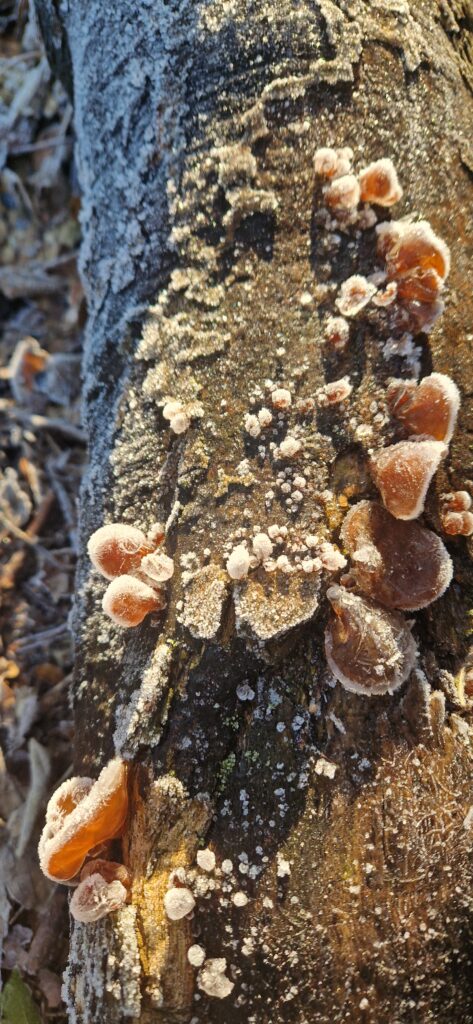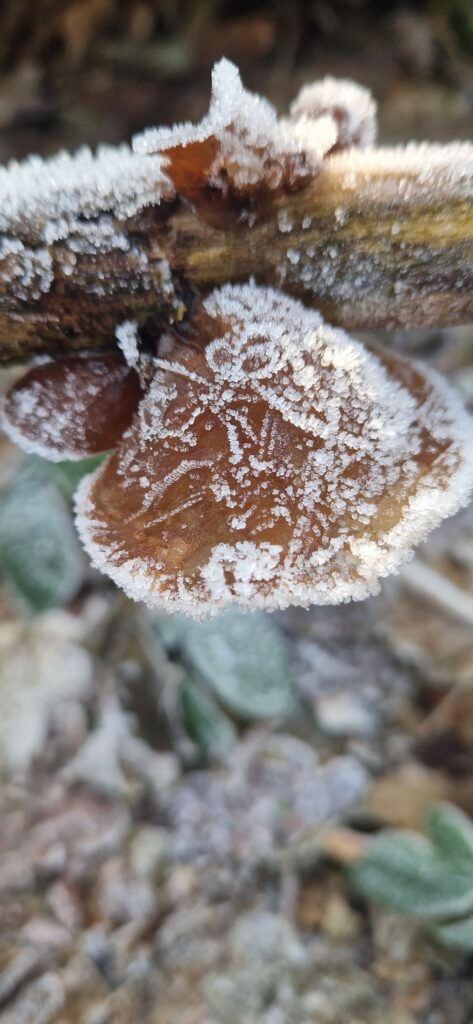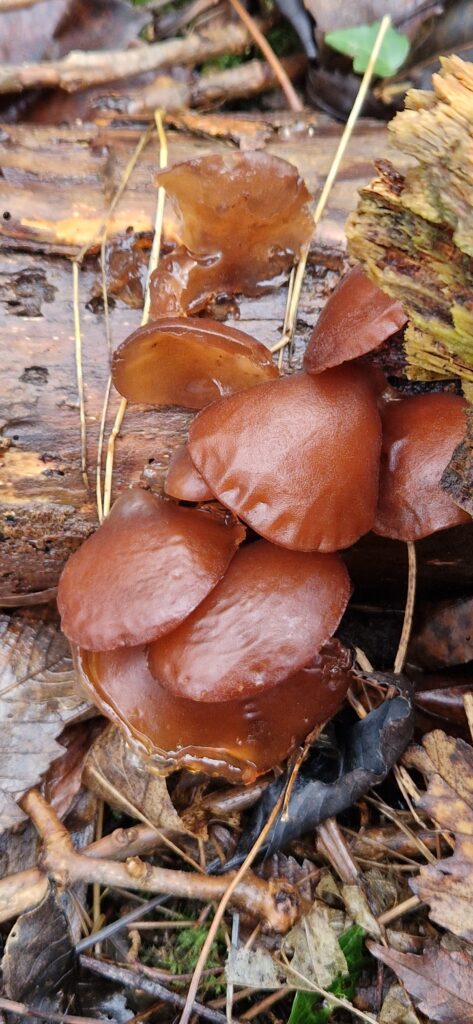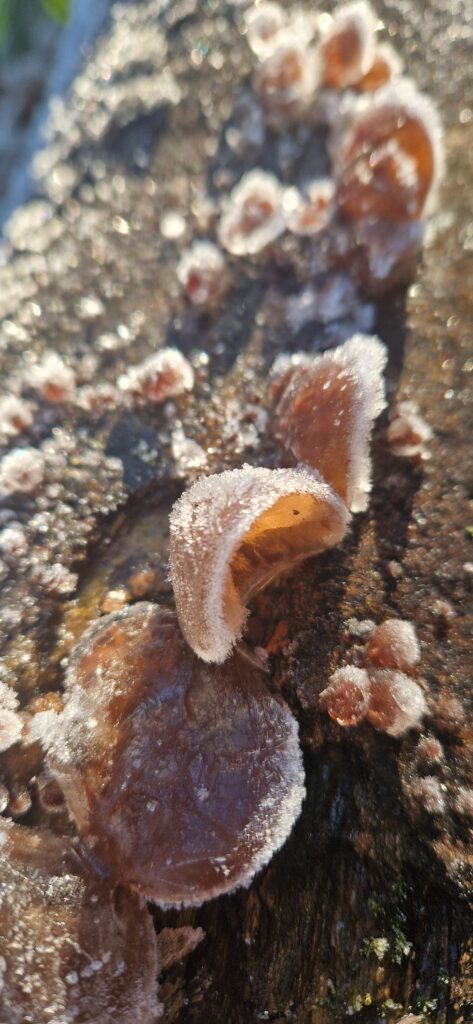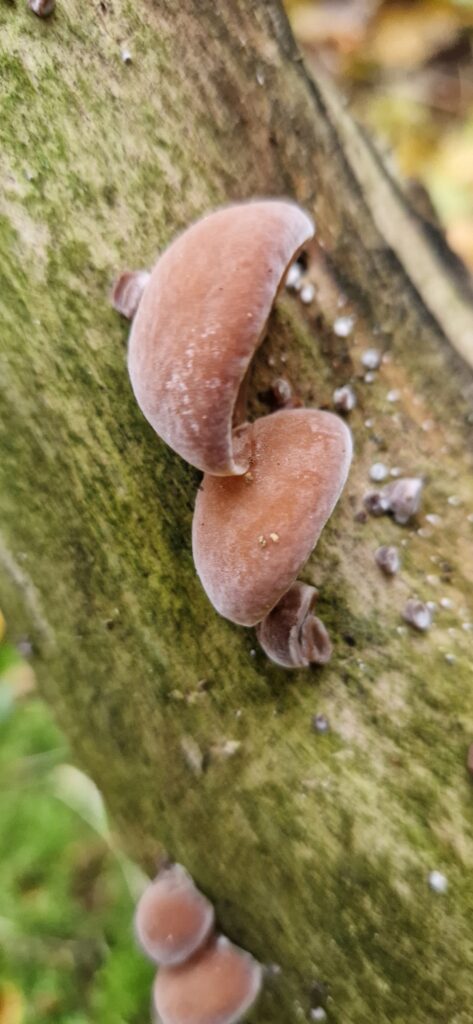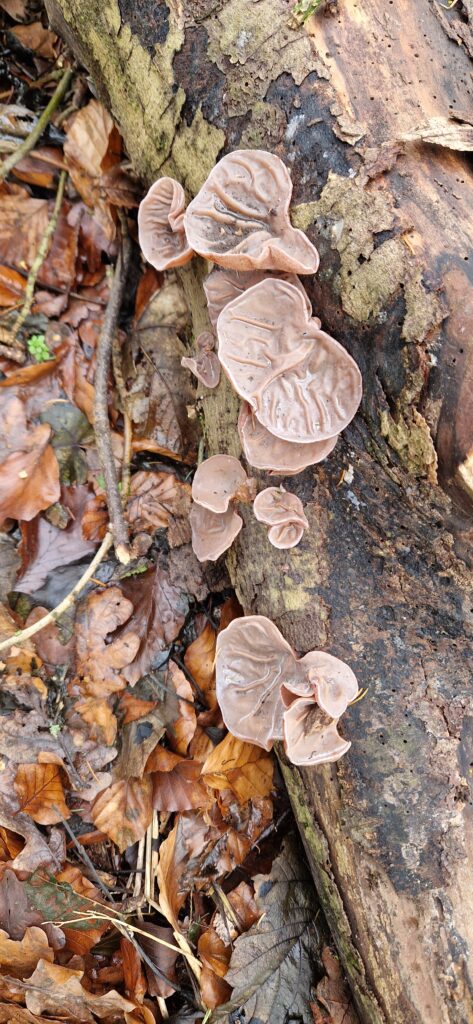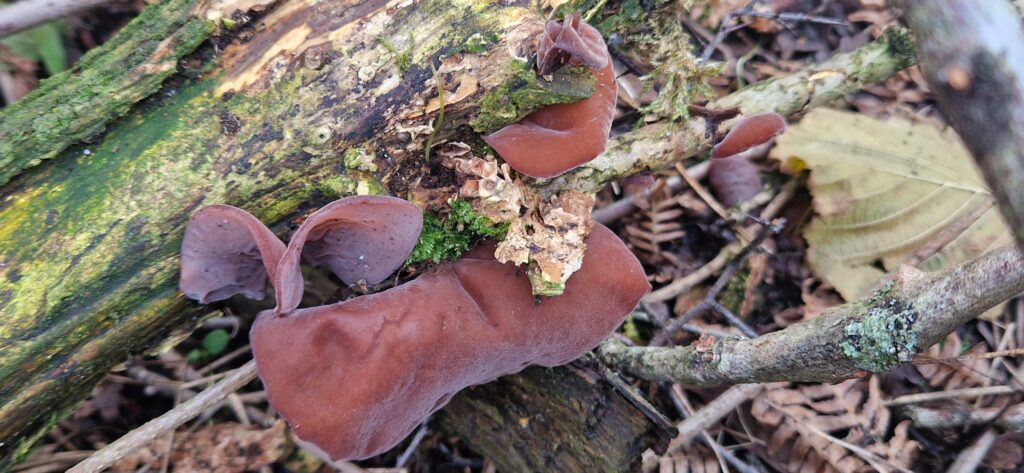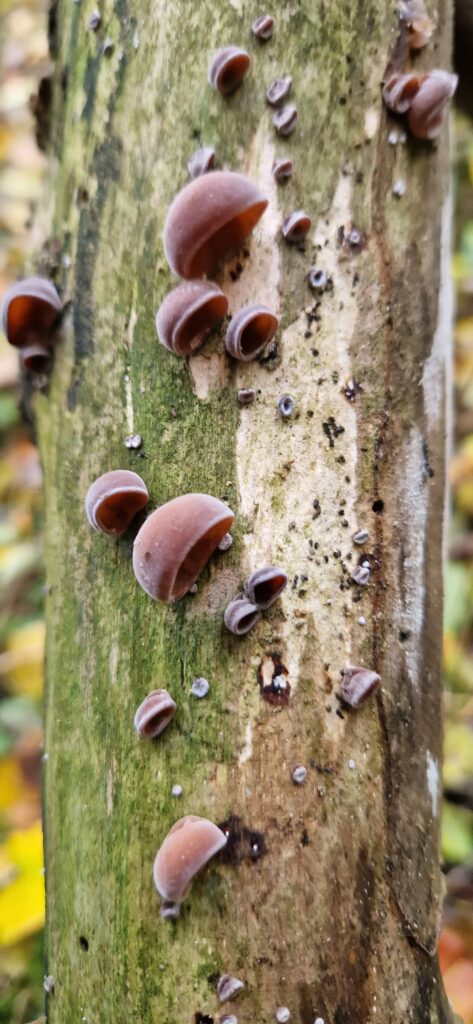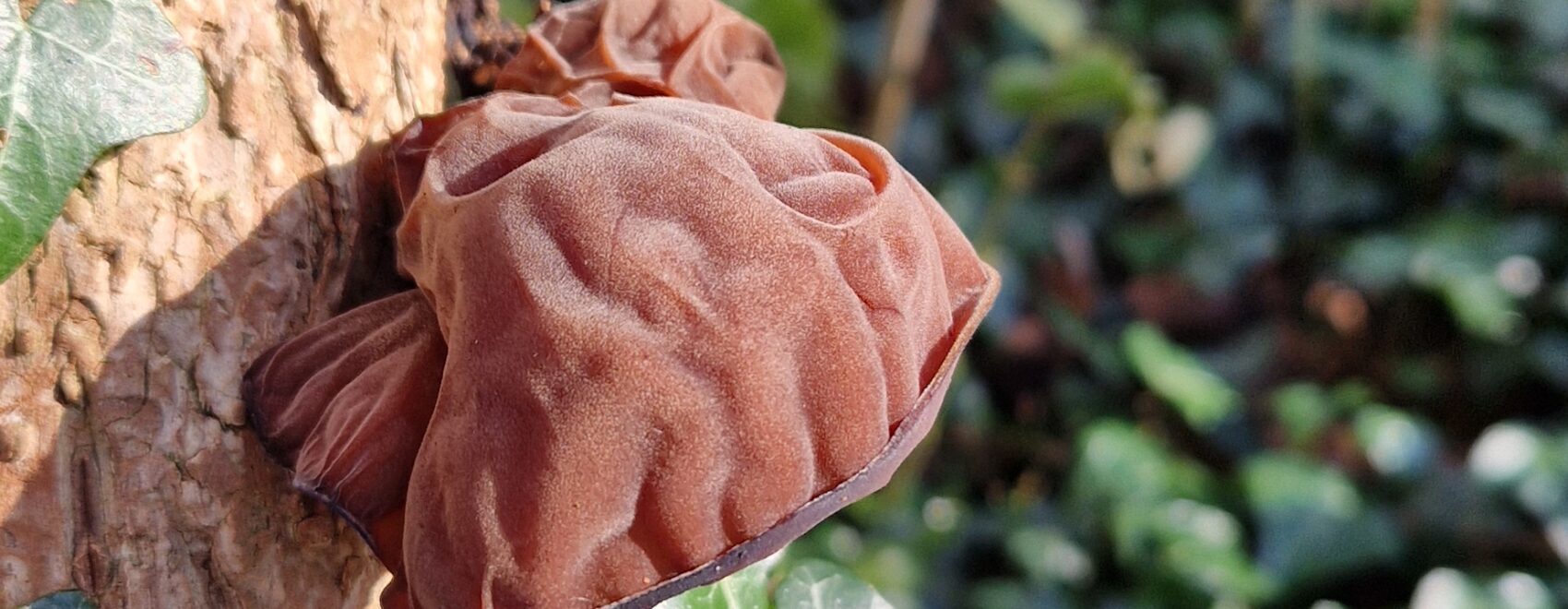
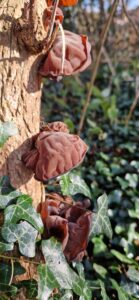
The Jelly Ear, scientifically known as Auricularia auricula-judae, is a unique and fascinating wild mushroom, recognized for its ear-like shape and jelly-like texture. This mushroom is prized in many cuisines, particularly in Asian dishes, for its mild flavor and interesting texture.
Other names: Jelly Ear, Jew’s Ear, Cloud Ear Fungus or Wood Ear in the US.
Not sure about plant identification? Join us for the next foraging event in Charnwood, Leicestershire.
Habitat
- Wood Ear mushrooms are commonly found growing on decaying wood, particularly on elder trees, though they can also be found on other hardwoods like beech and sycamore. These mushrooms prefer damp, shaded environments and are widely distributed across Europe, Asia, and North America. They can be found year-round, especially in moist conditions.
Identification features
- Cap: The fruiting body of the Wood Ear is typically ear-shaped or cup-like, measuring 3 to 10 centimeters in diameter. The color ranges from light brown to dark reddish-brown, with a gelatinous, rubbery texture. The outer surface is often slightly fuzzy or velvety, while the inner surface is smooth.
- Gills: Wood Ears do not have traditional gills. Instead, the underside of the mushroom is smooth and slightly wrinkled, following the contours of the ear-like shape.
- Stem: The Wood Ear typically lacks a distinct stem, attaching directly to the substrate (usually wood) at one side of the ear-shaped body. When present, the stem is short and blends seamlessly with the rest of the mushroom.
Edibility
- The Wood Ear is considered an excellent edible mushroom, valued more for its texture than its flavor, which is mild and neutral. It is commonly used in soups, stir-fries, and salads, where it absorbs the flavors of the other ingredients. Wood Ears are also known for their health benefits and are a staple in many traditional Asian dishes.
Recipes
Wood Ears are most commonly used in Asian cuisine, particularly in soups like hot and sour soup, stir-fries, and salads. They can also be rehydrated from their dried form and added to dishes for a chewy, crunchy texture. A simple preparation involves soaking dried Wood Ears in warm water until rehydrated, then slicing them and adding to stir-fries with garlic, ginger, and soy sauce.
Jelly Ear Mushroom Soup with Radish, Potatoes, Wood Avens, and Hogweed
Vitamins Content/Health Benefits
Wood Ear mushrooms are low in calories and rich in dietary fiber, which supports digestive health. They are also a good source of iron, which is important for blood health, and contain bioactive compounds that have been studied for their potential anti-inflammatory and immune-boosting properties.
Foraging season
- Wood Ear mushrooms can be found year-round, but they are most abundant in the cooler, wetter months of autumn and winter. They are particularly easy to spot after rain, growing on dead or decaying wood in shady, moist environments.
Health warning
- While the Wood Ear is generally safe to eat and has been used in traditional medicine for centuries, it is important to ensure proper identification, as there are other similar-looking fungi that may not be as palatable. Always consult an expert or a reliable field guide before foraging wild mushrooms. Additionally, be aware that Wood Ears can absorb pollutants from their environment, so it’s best to forage them from clean, unpolluted areas.