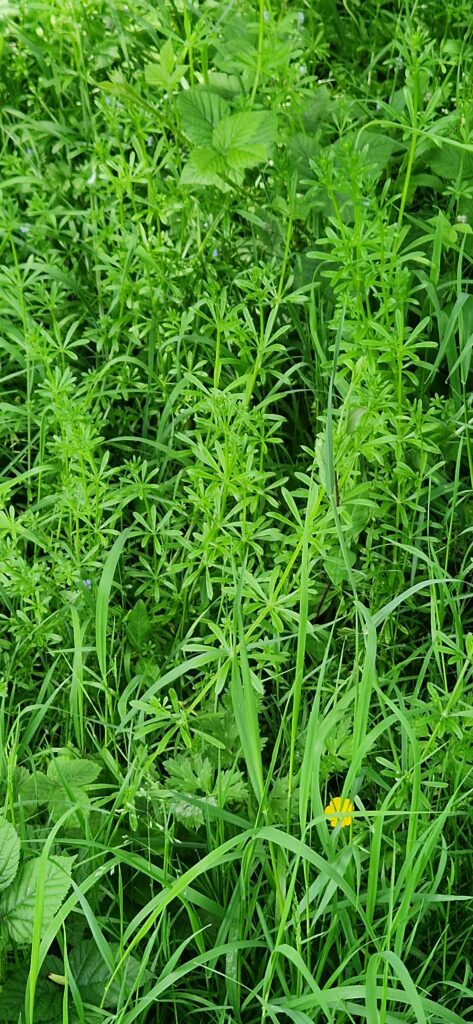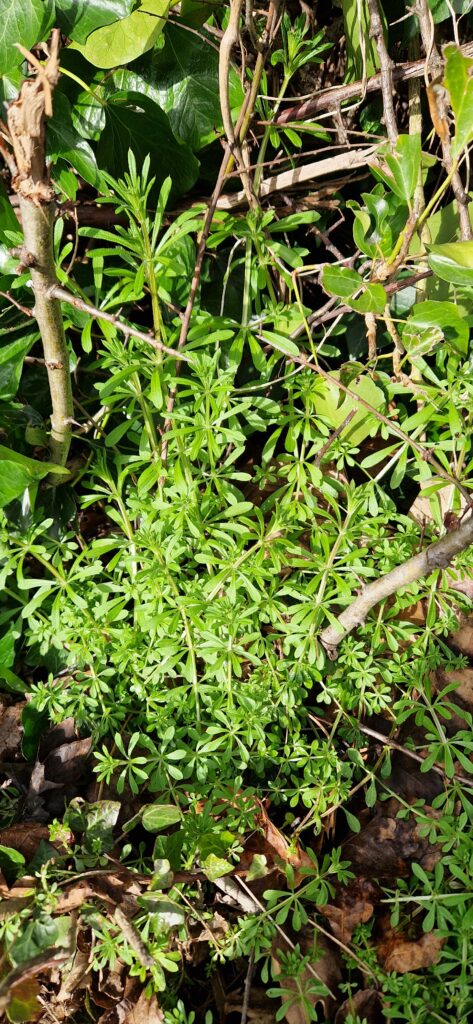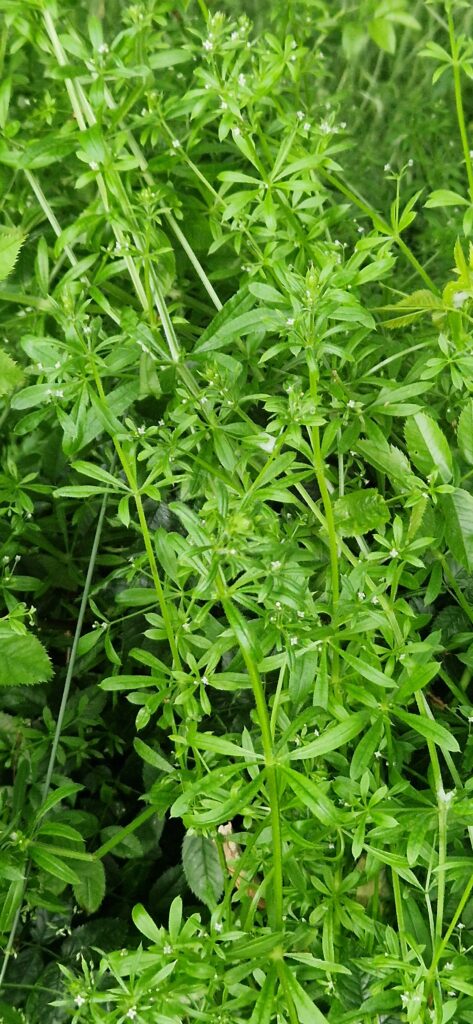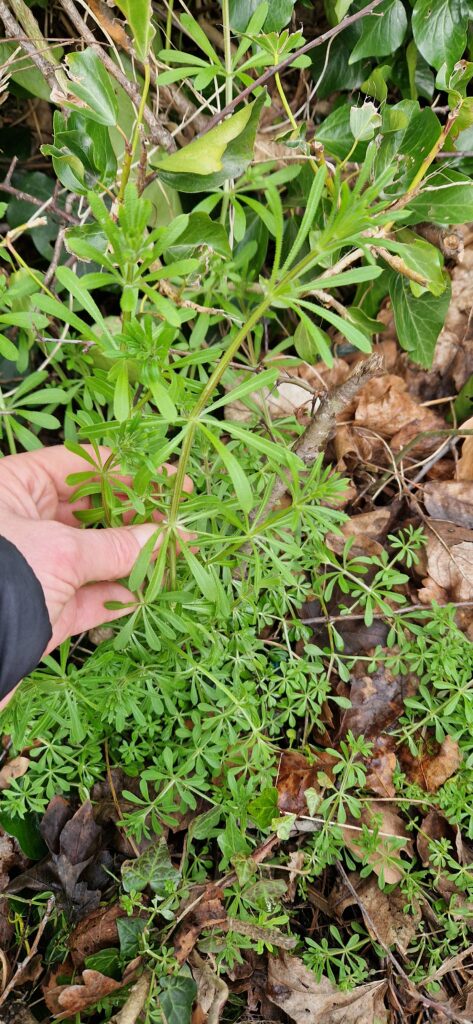
Latin name: Galium aparine
Other names: Cleavers, bedstraw, stickywilly, goosegrass
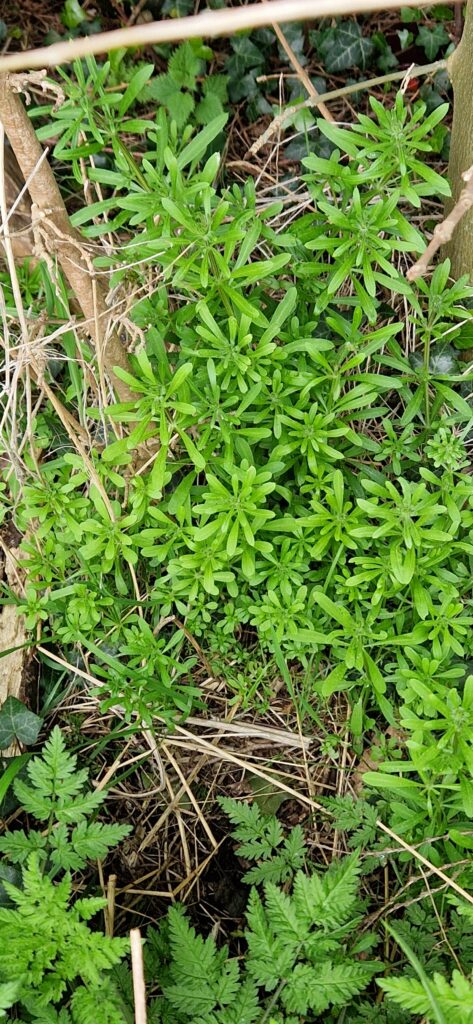
Habitat: Cleavers are common in many parts of the world and can be found in hedgerows, woodland edges, meadows, and disturbed areas. They often grow in moist, fertile soil
Appearance
Leaf Description:
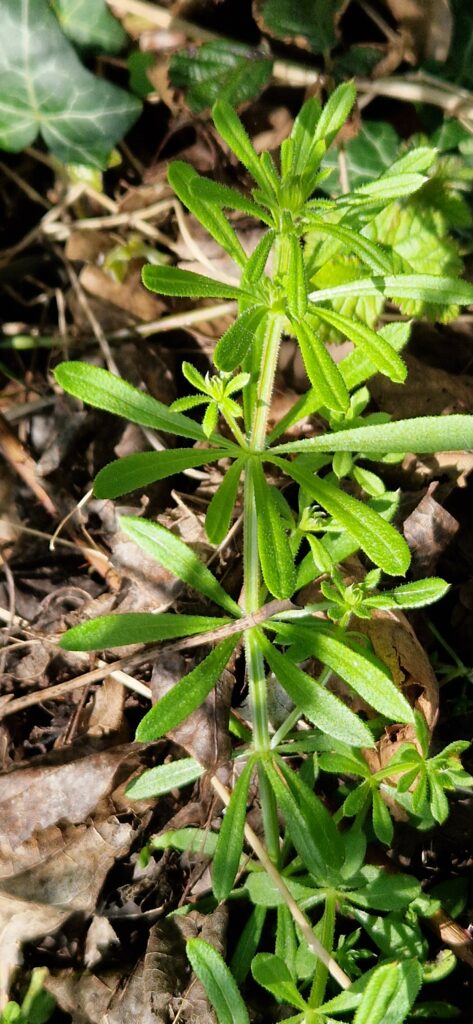
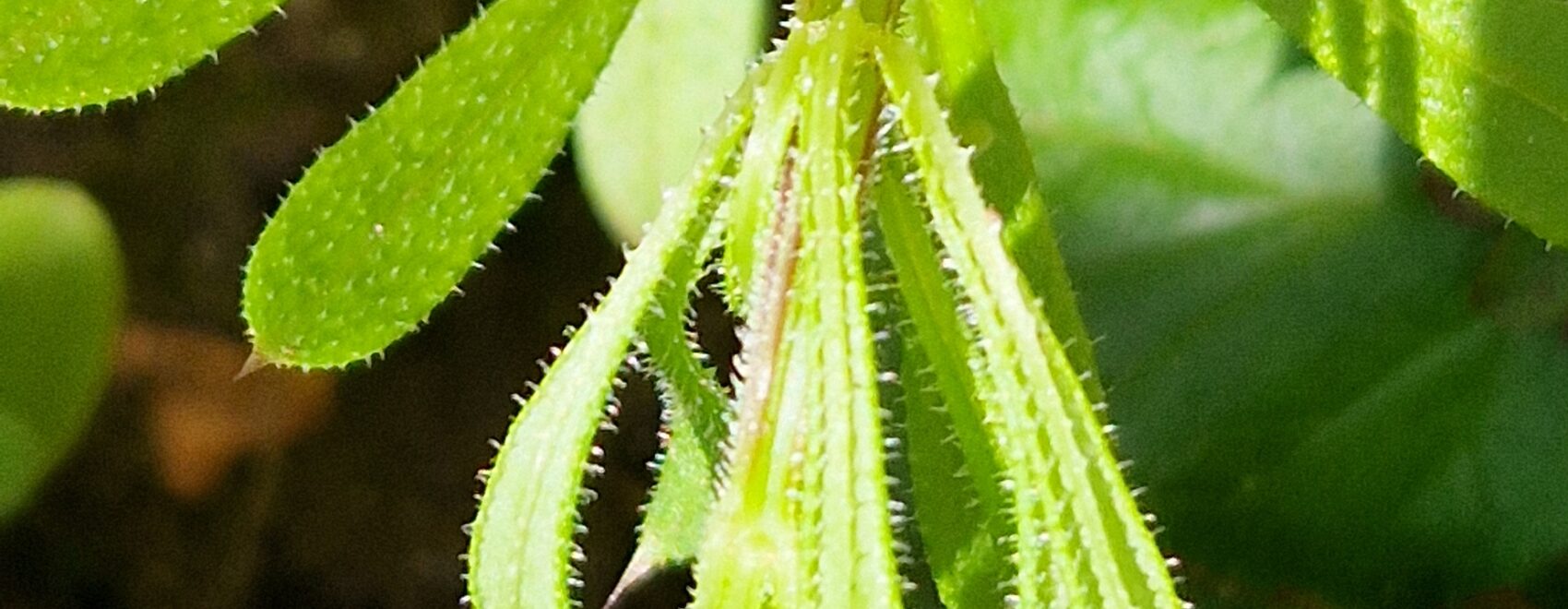
- The leaves of cleavers are narrow, lance-shaped, and arranged in whorls of 6-8 along the stem. They are rough-textured and covered with tiny hooked hairs, which give the plant its characteristic sticky feel.
Flower Description:
- Cleavers produce small, white to greenish-white flowers that are star-shaped and clustered in groups at the leaf nodes. The flowers have four petals and are inconspicuous compared to the foliage.
Stem Description:
- Cleavers have slender, square stems that can grow up to 1.5 meters in length. The stems are covered in tiny hooked hairs, which allow the plant to cling to surfaces and other vegetation.
Fruit/Seed Description:
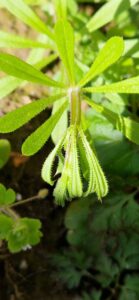
- After flowering, cleavers produce small, round fruits covered in hooked bristles. These fruits easily cling to clothing and animal fur, facilitating seed dispersal.
Edibility
- Cleavers are edible and can be consumed raw or cooked. The young shoots, leaves, and tender tips are often used in salads, soups, and teas. They have a mild flavor reminiscent of cucumber.
- Seeds contain a very small amount of caffeine and can be used as coffee substitute.
Recipes
Cleavers can be used in a variety of culinary preparations, including pesto, soups, and stir-fries. They can also be brewed into a refreshing herbal tea or used fresh in tonics or juiced into smoothies.
Cleaver Spring Tonic for Immunity Boost
Cleaver and Young Nettle Smoothie
Vitamins Content/Health Benefits
- Cleavers are rich in vitamin C, vitamin A, antioxidants, and minerals such as calcium and potassium. They are believed to have diuretic, detoxifying, and anti-inflammatory properties and have been used in traditional herbal medicine to treat conditions such as urinary tract infections, skin problems, and lymphatic congestion.
Foraging season
Cleavers are best harvested in the spring when the young shoots and leaves are tender and flavorful. They can also be harvested throughout the growing season, but the quality may decline as the plants mature
Folklore/Interesting Info
- Cleavers have been used in traditional European and Native American medicine for centuries to treat a variety of ailments.
- The sticky hairs of cleavers were historically used as a makeshift adhesive, earning the plant its nickname “stickywilly.”
- The plant’s ability to cling to surfaces inspired its Latin name, Galium aparine, with “aparine” meaning “to seize” or “to grasp.”
Health warning
- While cleavers are generally safe for consumption, individuals with known allergies to plants in the Rubiaceae family (such as coffee or gardenia) should use caution when handling or ingesting cleavers. Additionally, it’s essential to harvest cleavers from clean, uncontaminated areas to avoid the risk of pesticide or herbicide exposure.
Not sure about plant identification? Join us for the next foraging event in Charnwood, Leicestershire.