
Latin name: Crataegus monogyna (Common Hawthorn), Crataegus laevigata (Midland Hawthorn), and other species
Other names: May tree, thornapple, quickthorn, whitethorn, haw
Habitat:
Hawthorn is native to Europe, North America, and parts of Asia. It commonly grows in hedgerows, woodlands, and scrublands and is often used as a natural boundary or fence due to its dense, thorny branches. Hawthorn thrives in a variety of soil types, from clay to sandy loam, and can tolerate full sun to partial shade.
Not sure about plant identification? Join us for the next foraging event in Charnwood, Leicestershire.
Appearance
Leaf Description:
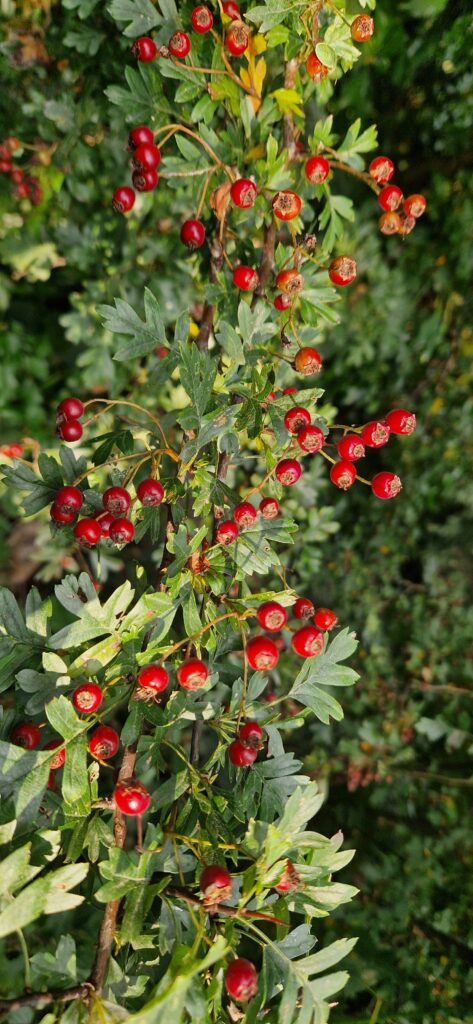
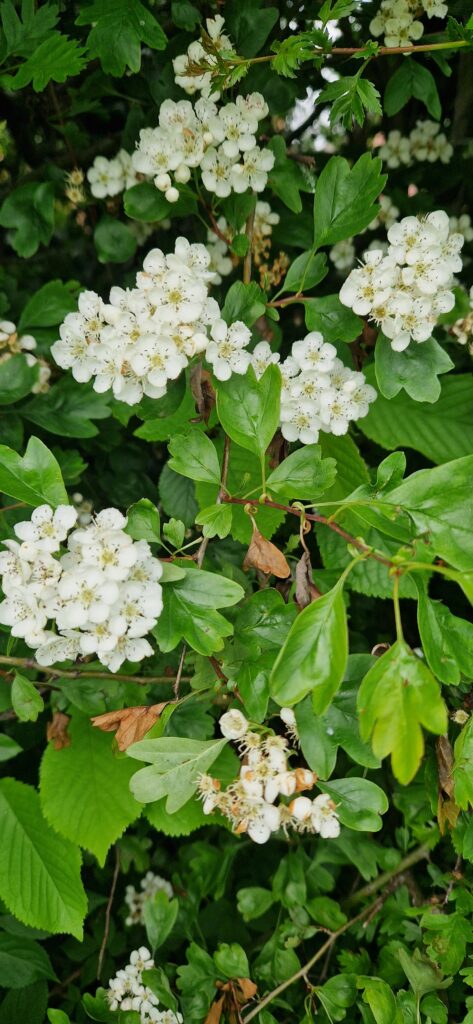
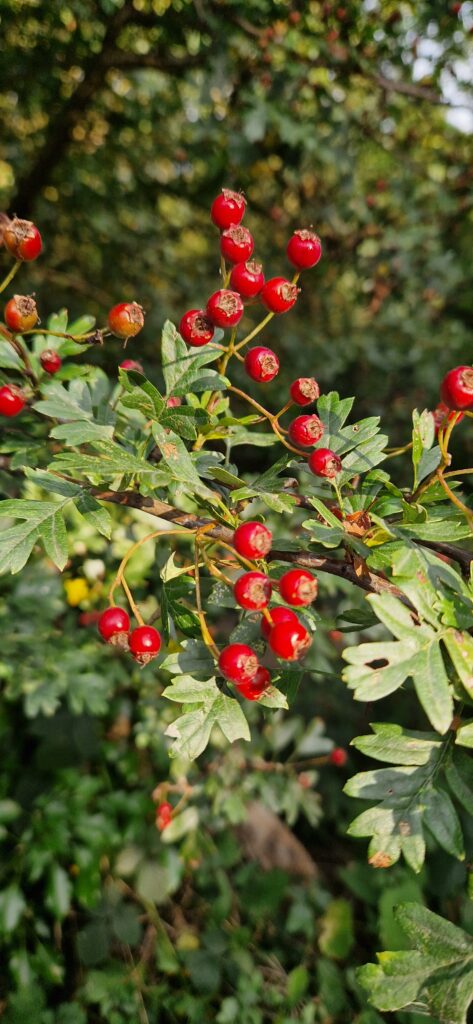
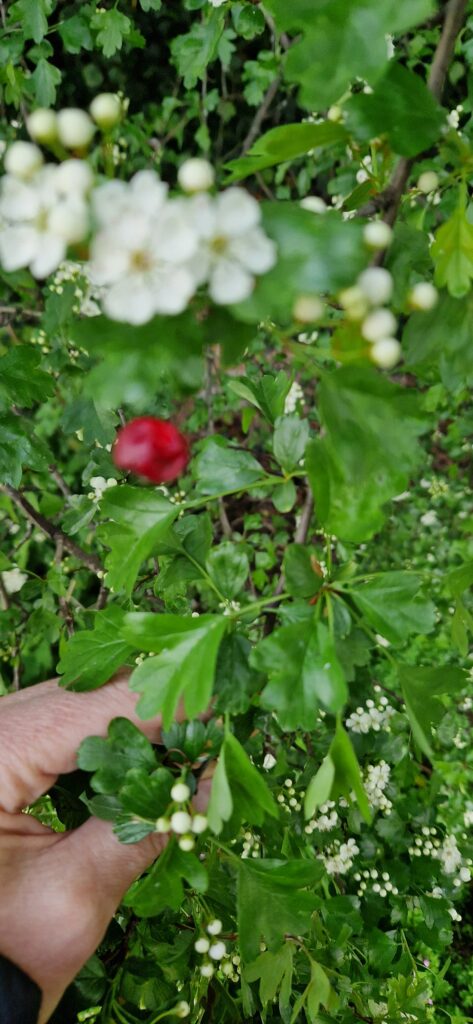
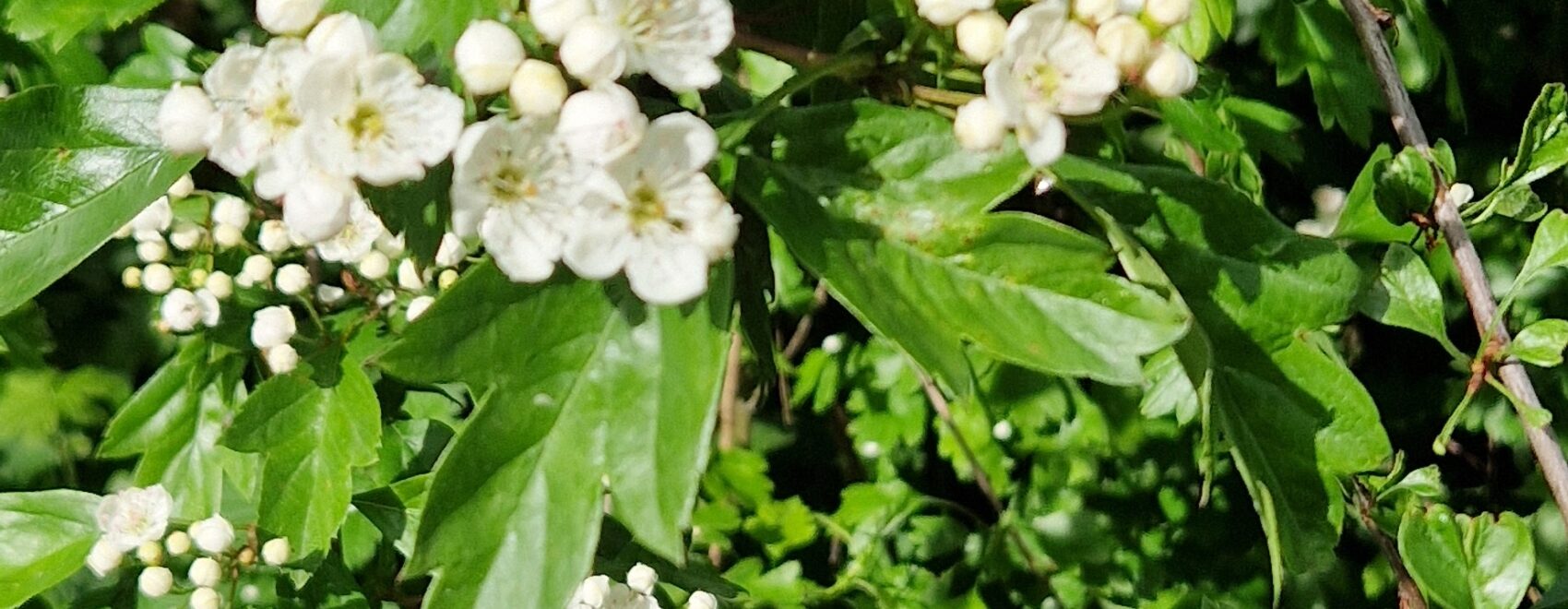
Hawthorn leaves are small, deeply lobed, and toothed along the edges. They are dark green on top and lighter underneath. In autumn, the leaves turn a golden yellow or reddish-brown before falling. The leaves are typically arranged alternately along the stems.
Flower Description:
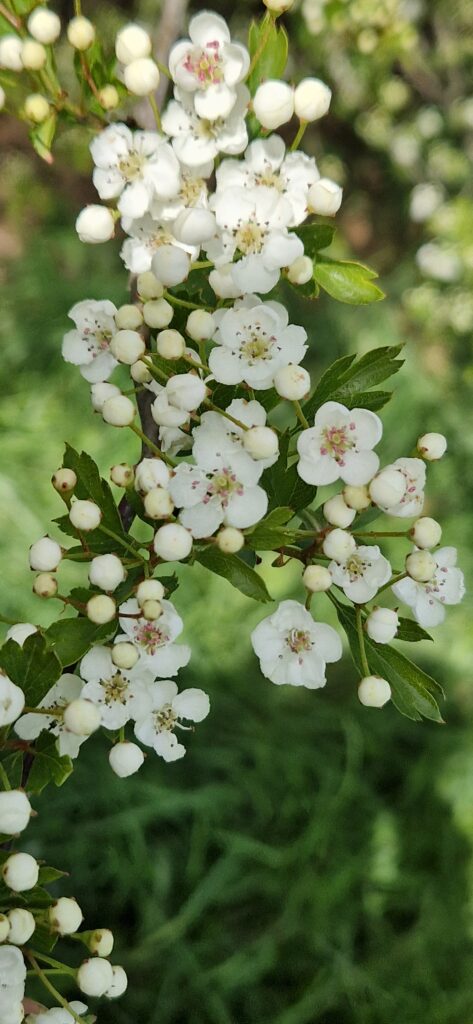
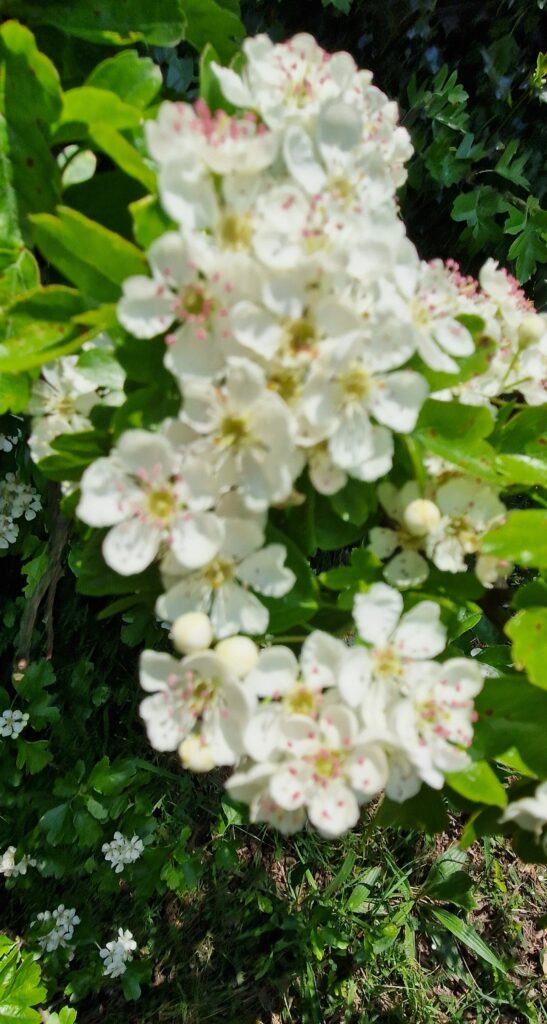
Hawthorn produces clusters of small, white or pink flowers in late spring, usually around May, which is why it is often called the “May tree.” The flowers have five petals and a sweet, slightly musky fragrance, attracting bees and other pollinators. These blossoms are followed by the development of its characteristic fruit.
Stem Description:
The stems and branches of Hawthorn are densely packed with sharp thorns, which can grow up to 1 inch long. The bark is grayish-brown and becomes more fissured with age, creating a rugged, textured appearance. The tree’s branches form a twisted, gnarled structure, contributing to its distinctive, ancient look.
Fruit/Seed Description:
Hawthorn bears small, red fruits known as “haws” in late summer to autumn. These berry-like fruits are round and contain a single seed. They are edible and have a slightly tart, apple-like flavor. Haws are often used in jams, jellies, and herbal preparations, prized for their nutritional and medicinal properties.
Edibility
Hawthorn berries, leaves, and flowers are all edible. The berries, or haws, are often made into jams, jellies, and syrups, while the young leaves and flower buds can be eaten raw in salads or brewed into tea. The berries are rich in antioxidants and have a mild, tart taste, best used when fully ripe.
Recipes
Hawthorn berries can be used to make a variety of preserves, including jellies and wines. They can also be dried and used in herbal teas or ground into a powder for use in baking or cooking.
Vitamins Content/Health Benefits
Hawthorn is rich in vitamin C, flavonoids, and antioxidants, making it beneficial for heart health. It has been traditionally used to improve circulation, lower blood pressure, and support cardiovascular health. Hawthorn also has mild sedative properties, often used in herbal medicine to reduce anxiety and promote relaxation.
Foraging season
The best time to forage Hawthorn is in autumn when the berries are fully ripe. The leaves and flowers can be harvested in spring when they are young and tender. Always ensure you correctly identify the plant, as it closely resembles some inedible species.
Folklore/Interesting Info
Hawthorn is steeped in folklore and is often associated with protection, love, and fertility. In many cultures, it was believed to ward off evil spirits and was planted near homes and farms for this purpose. The Hawthorn tree is also central to many May Day celebrations, symbolizing the return of spring. It is sometimes referred to as the “faerie tree,” and it was considered bad luck to cut down a Hawthorn, as it was believed to be a dwelling for fairies.
Health warning
While Hawthorn is generally safe to consume, it should be done in moderation, especially if you are taking medications for heart conditions. Consult with a healthcare provider before using Hawthorn medicinally, particularly if you are pregnant, breastfeeding, or have any underlying health conditions. As always, ensure that the plant is harvested from clean, uncontaminated areas to avoid exposure to pollutants.