Latin name: Taraxacum officinale
Other names: Common dandelion, Lion’s tooth, Blowball
Habitat: Dandelions are native to Europe and Asia but have become naturalized in many parts of the world. They thrive in a variety of habitats, including lawns, fields, meadows, and disturbed areas. Dandelions are adaptable plants, growing in both sunny and shaded locations with well-drained soil.
Appearance
Leaf Description:
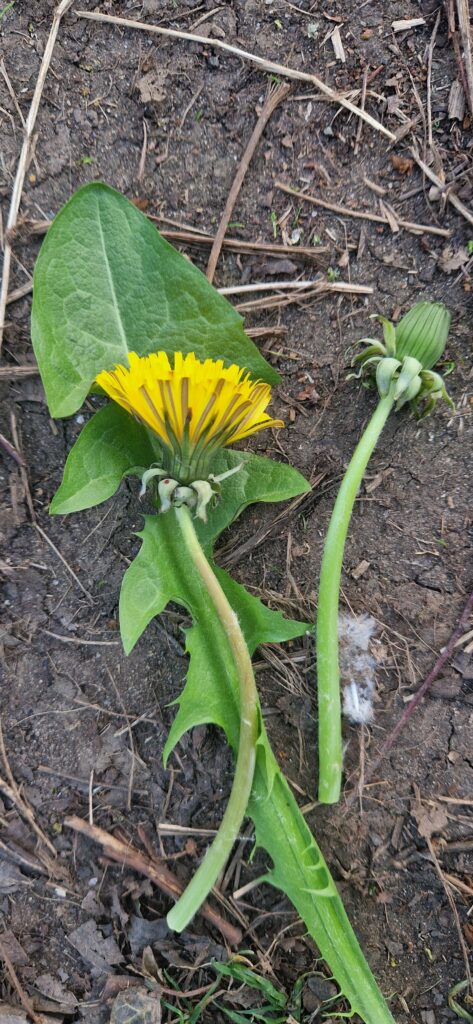
- Dandelion leaves form a basal rosette and are deeply lobed with toothed edges, resembling the teeth of a lion, which gives the plant its common name “lion’s tooth.” The leaves are typically dark green and can grow up to 12 inches (30 cm) long.
Flower Description:
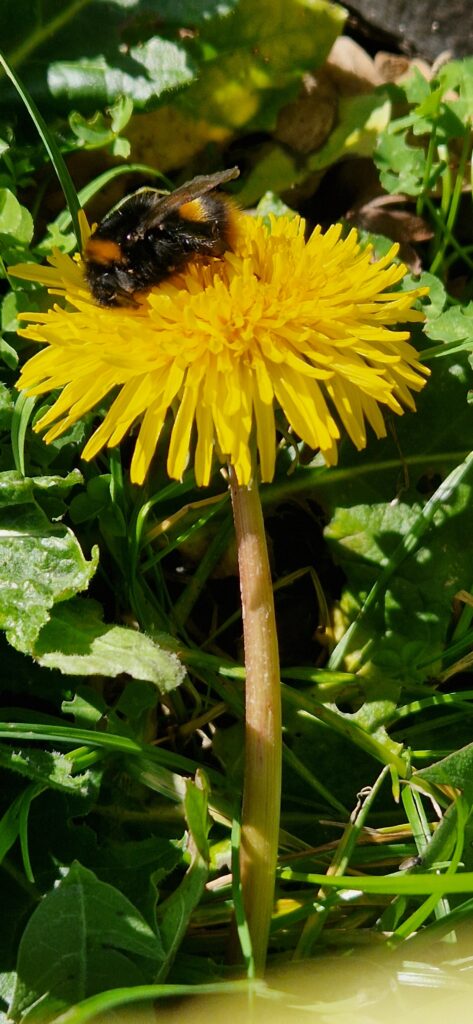
- Dandelion flowers are bright yellow and composed of numerous small ray florets arranged in a dense, round cluster. Each flower head sits atop a hollow, leafless stalk and measures about 2.5-5 cm in diameter.
Stem Description:
- Dandelion stems are hollow, smooth, and leafless, rising directly from the center of the basal rosette. The stems can reach heights of 6-18 inches (15-45 cm) and may produce multiple flower heads.
Fruit/Seed Description:
- After flowering, dandelions produce spherical seed heads known as “blowballs” or “clocks.” Each clock consists of numerous small, parachute-like seeds attached to a central receptacle. When mature, the seeds are dispersed by the wind.
Edibility
- Dandelion leaves, flowers, and roots are all edible and have been used for culinary and medicinal purposes for centuries. The leaves have a slightly bitter flavor and can be eaten raw in salads or cooked as greens. Dandelion flowers can be used to make wine, syrup, or infused into honey, while the roots can be roasted and ground as a coffee substitute.
Recipes
Dandelions can be incorporated into various recipes, including salads, soups, stir-fries, teas, and even baked goods. Dandelion wine and dandelion jelly are popular homemade delicacies, capturing the essence of the plant’s vibrant flavor and nutritional benefits.
Vitamins Content/Health Benefits
- Dandelions are rich in vitamins A, C, and K, as well as minerals like iron, calcium, and potassium. They also contain antioxidants and other phytochemicals that may help support liver health, digestion, and overall well-being.
Foraging season
Dandelions are typically found in bloom from spring to early summer, although they may continue to flower sporadically throughout the growing season in favourable conditions. The leaves are best harvested in spring when they are young and tender.
Folklore/Interesting Info
- Dandelions have a long history of use in traditional medicine and folklore. In folklore, blowing the seeds off a dandelion clock is said to carry your thoughts and dreams to faraway places. Additionally, dandelions are often seen as symbols of resilience, hope, and transformation.
Health warning
- While dandelions are generally safe for consumption, individuals with allergies to plants in the Asteraceae family (such as ragweed or chamomile) may experience allergic reactions to dandelions. Additionally, it’s important to avoid harvesting dandelions from areas that may have been treated with pesticides or herbicides.
Not sure about plant identification? Join us for the next foraging event in Charnwood, Leicestershire.