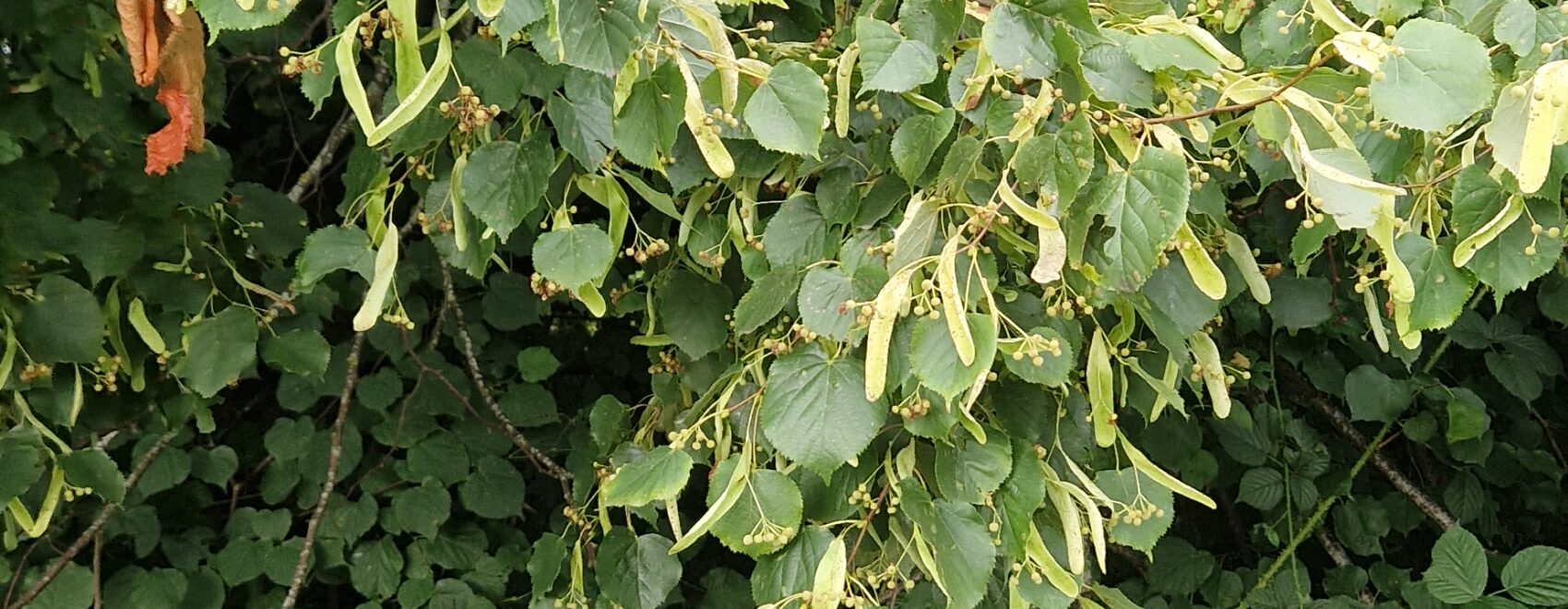

Latin Name: Tilia cordata (Small-Leaved Lime), Tilia platyphyllos (Large-Leaved Lime)
Other Names: Lime Tree, Basswood, Linden Blossom Tree
Habitat
Linden trees are native to Europe and parts of Asia and North America. They thrive in a range of environments, including woodlands, parklands, and urban areas. Linden trees prefer deep, moist, well-drained soils but can adapt to drier conditions. They are often found in areas with moderate sunlight and shelter from strong winds.
Not sure about plant identification?
Join us for the next foraging event in Charnwood, Leicestershire.
Appearance
Leaf Description
Linden leaves are heart-shaped, with serrated edges and a pointed tip. The Small-Leaved Lime has smaller, darker green leaves, while the Large-Leaved Lime features larger, lighter green foliage. The undersides of the leaves often have small, downy hairs near the veins.
Flower Description
Linden trees produce clusters of small, fragrant, pale yellow flowers in early to midsummer. Each cluster is accompanied by a narrow, leaf-like bract, which aids in wind dispersal of seeds. The flowers are highly attractive to bees, making Linden trees important for pollinators.
Stem/Trunk Description
The trunk of the Linden tree is straight and sturdy, with smooth gray bark when young, developing shallow fissures and ridges as the tree matures.
Fruit/Seed Description
Linden trees produce small, round nutlets with a slightly fuzzy surface. These are attached to the bracts and ripen in late summer to autumn, often persisting on the tree into winter.
Edibility
Linden flowers, leaves, and even young seeds are edible. The flowers are commonly used to make herbal teas, syrups, and infusions. Young leaves can be eaten raw in salads or used as a wrap for other ingredients. The flowers and bracts have a mild, sweet flavor, while the leaves are tender and slightly mucilaginous.
Recipes
Linden Flower Tea
- Ingredients:
- 1-2 tsp dried Linden flowers (or a handful of fresh flowers)
- 1 cup boiling water
- Instructions:
- Place the flowers in a teapot or mug.
- Pour boiling water over the flowers and steep for 5-10 minutes.
- Strain and enjoy with honey or lemon.
Linden Leaf Salad Wraps
Use fresh, young Linden leaves to wrap fillings such as hummus, grated vegetables, or seasoned rice for a nutritious snack.
Vitamins Content/Health Benefits
Linden flowers are rich in antioxidants, particularly flavonoids, which support the immune system and combat inflammation. The flowers also contain compounds with mild sedative and diaphoretic (sweat-inducing) properties, making them popular for relieving stress, anxiety, and colds.
The leaves are a source of vitamins A and C, as well as calcium and magnesium, supporting overall health and well-being.
Foraging Season
The best time to forage for Linden flowers is in early to midsummer when they are in full bloom. Leaves can be harvested in spring and early summer while they are young and tender.
Folklore/Interesting Info
Linden trees have been celebrated in European folklore for centuries. They were often planted in village squares as symbols of community, peace, and justice. In Slavic mythology, the Linden tree was sacred, associated with love and protection. Linden flower tea has long been used as a remedy for colds and sleeplessness, earning it a place in traditional medicine.
Health Warning
Linden flower tea is generally considered safe but should be consumed in moderation, particularly by those with heart conditions, as it may have mild diuretic effects. Pregnant and breastfeeding individuals should consult a healthcare professional before using Linden flowers medicinally.