Striking ornamental tree famous for its conkers and impressive spring flowers
Horse Chestnut is one of the UK’s most recognisable trees, loved for its large hand-shaped leaves, towering flower spikes, and glossy autumn conkers. Originally introduced from the Balkans, it has become a familiar feature of parks, streets, and school grounds across Britain.
Although often associated with childhood games and autumn collecting, Horse Chestnut is not an edible nut tree and should not be confused with Sweet Chestnut.
🌳 Habitat
Commonly found in:
- Parks and gardens
- Roadside plantings
- Estates and avenues
- School grounds and public green spaces
It thrives in rich soils and is widely planted as an ornamental shade tree.
🔍 Identification Features
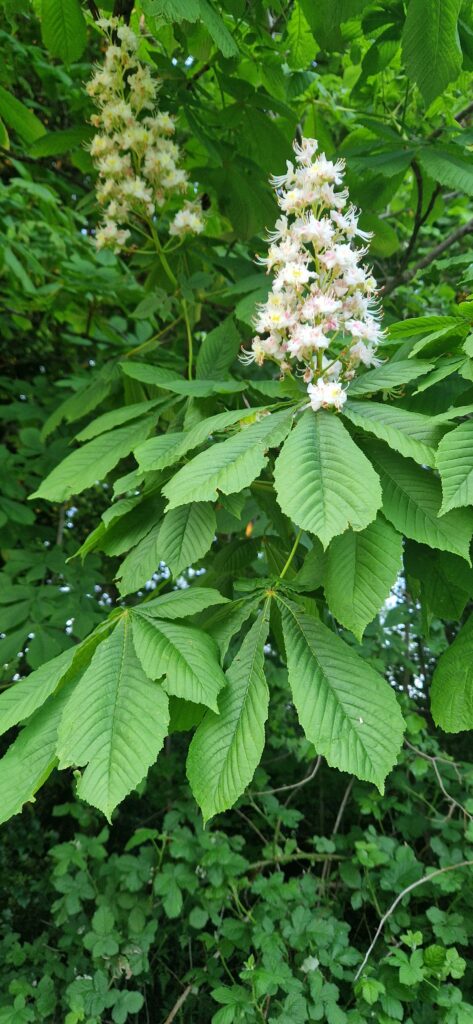
- Large deciduous tree with broad spreading crown
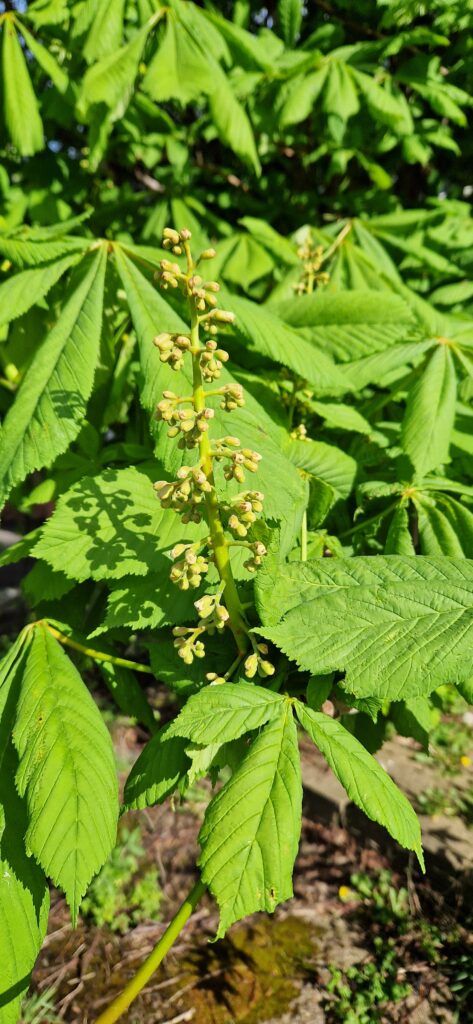
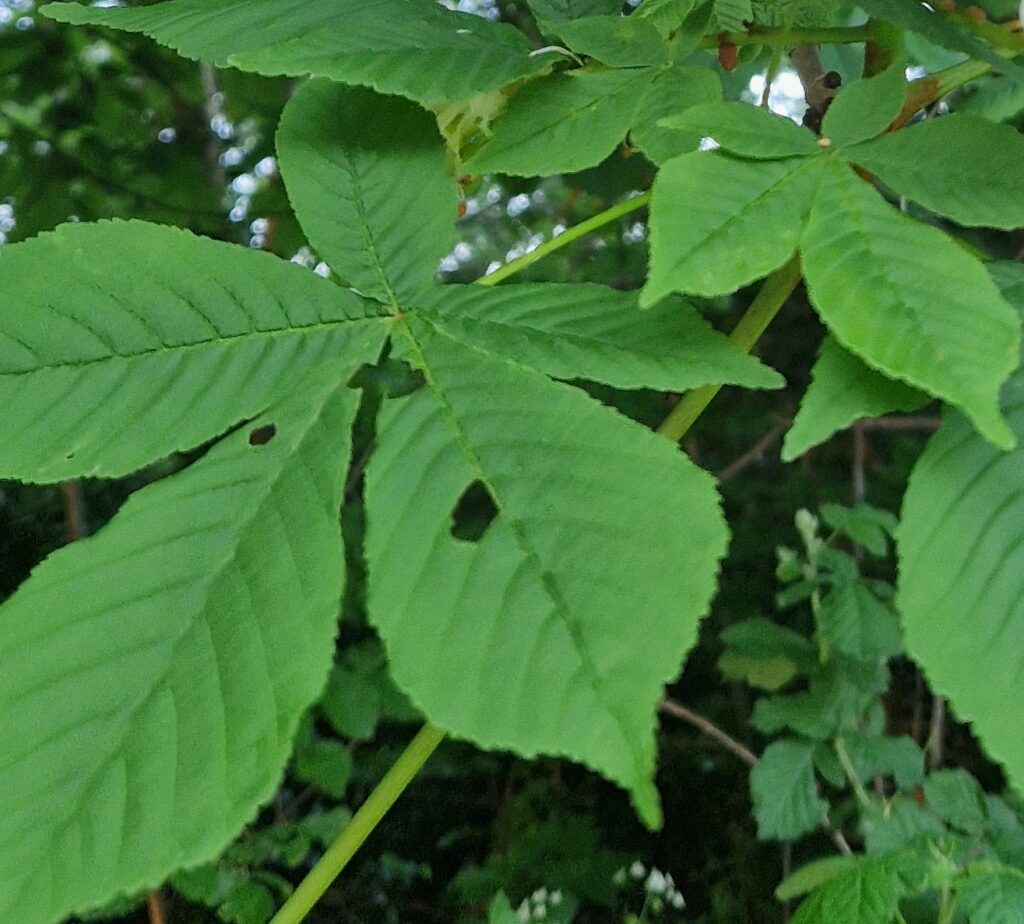
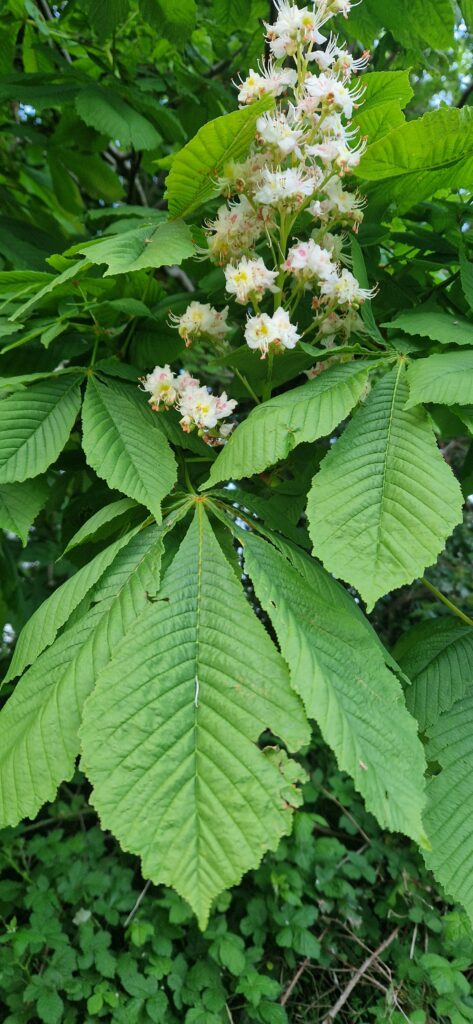
- Distinctive palmate leaves made up of 5–7 leaflets
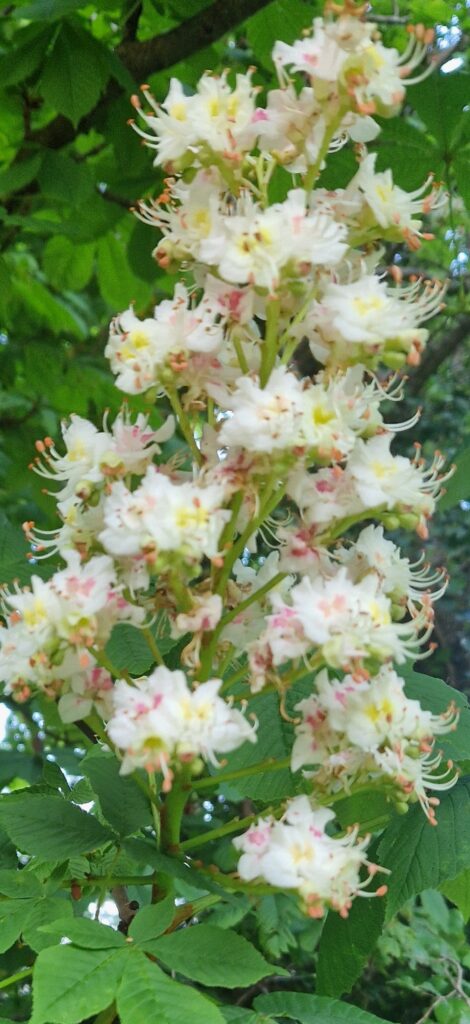
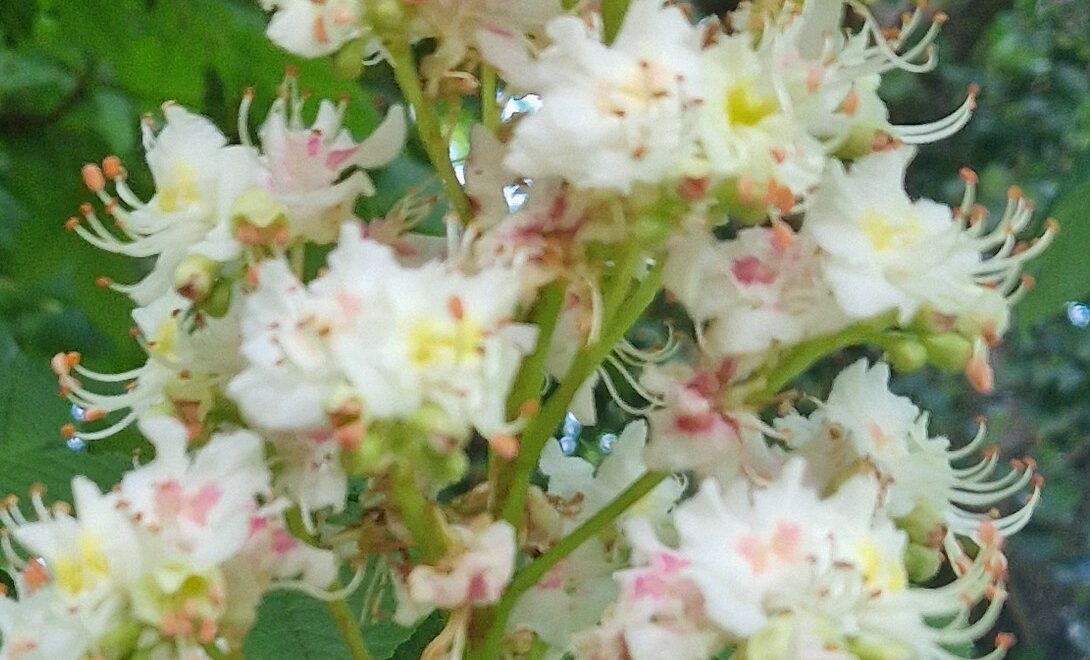
- Tall upright white flower spikes (“candles”) in spring
- Flowers often marked with yellow and pink tones
- Produces green spiky husks containing glossy brown conkers
The sticky buds in winter are another excellent identifying feature.
⚠️ Lookalikes
- Sweet Chestnut (Castanea sativa) – edible nuts but very different leaves
- Buckeye species (Aesculus spp.)
The hand-shaped leaves make Horse Chestnut relatively easy to distinguish.
☠️ Edibility
Not edible.
Conkers and other parts of the tree contain compounds that can cause illness if consumed.
Horse Chestnut should never be confused with edible Sweet Chestnut.
🌿 Ecology & Traditional Uses
- A popular ornamental tree across the UK
- Flowers provide nectar for pollinators
- Conkers are famously used in the traditional children’s game
Historically, extracts from Horse Chestnut seeds have also been used in herbal and cosmetic preparations, though these require specialist processing and should not be attempted casually.
The tree is sadly increasingly affected by pests and diseases including:
- Horse Chestnut Leaf Miner
- Bleeding Canker
📅 Season
- Flowers: April to May
- Conkers: September to October
⚠️ Health Warning
Conkers and other parts of the tree are toxic if eaten and may cause vomiting and digestive upset.
Always supervise children around wild plants and trees, particularly where edible and non-edible species may be confused.
Want to learn more about foraging and wild plant uses? Join our foraging courses in Charnwood, Leicestershire, and discover the secrets of trees like the walnut!