A tall wild lettuce with a surprisingly interesting history and a distinctly prickly character
Prickly Lettuce is a common but often overlooked wild plant found growing in disturbed ground, roadside edges, and urban environments. Related to cultivated lettuce, it has a much tougher appearance and produces a milky sap that has historically attracted interest for its traditional uses.
Its upright growth and sharply spined leaves make it one of the easier wild lettuces to identify once you know what to look for.
Not sure about plant identification? Join us for the next foraging course in Charnwood, Leicestershire, and learn how to safely identify wild plants.
🌳 Habitat
Commonly found in:
- Roadsides and pavements
- Waste ground and disturbed soils
- Field margins
- Urban edges and industrial areas
It thrives in dry, sunny environments and is particularly successful in compacted or poor soils.
🔍 Identification Features
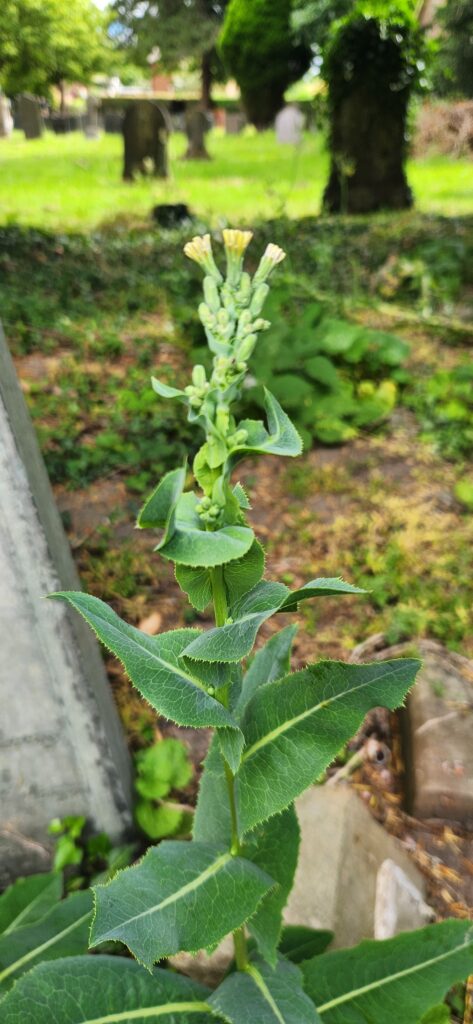
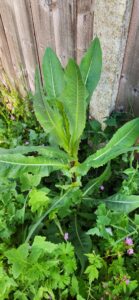
- Tall upright plant, often reaching over 1 metre
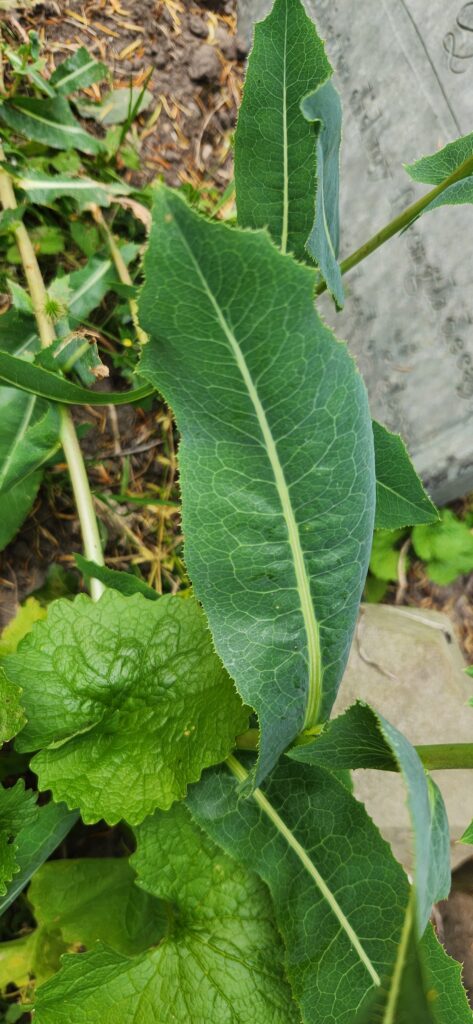
- Narrow bluish-green leaves with irregular lobes
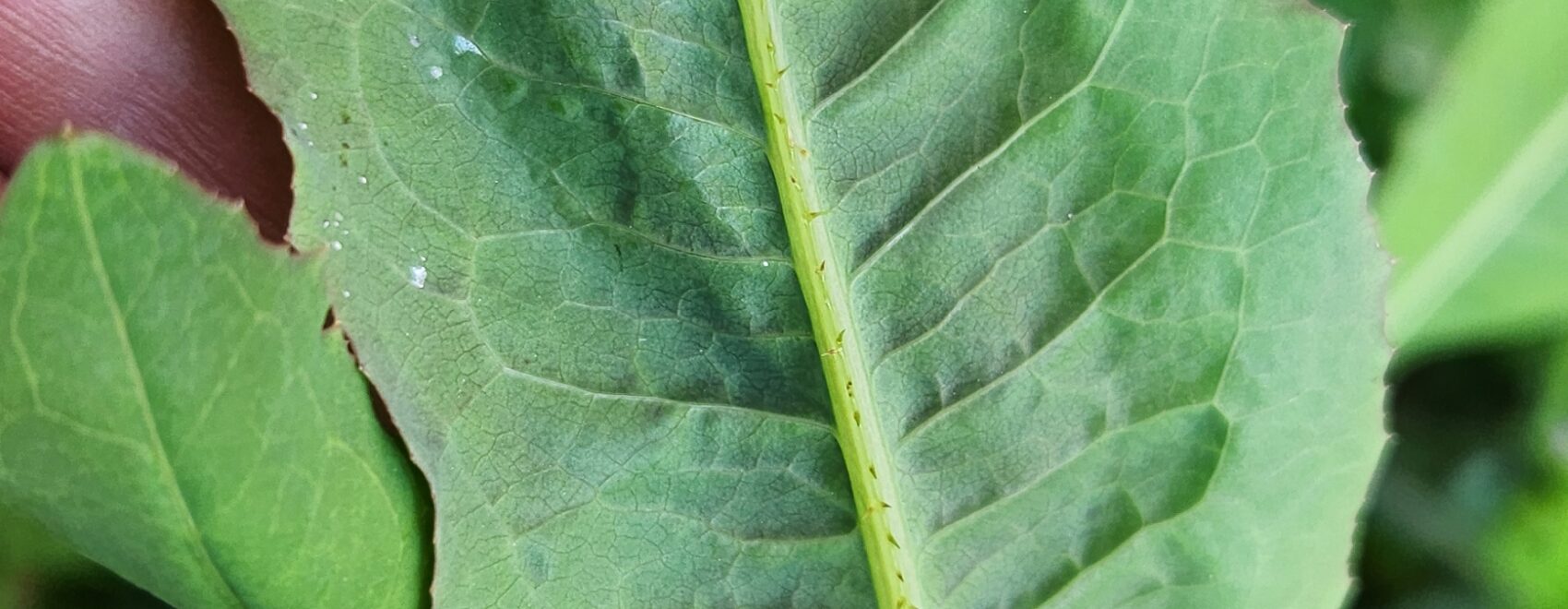
- Distinct row of small prickles along the underside of the leaf midrib
- Leaves often twist vertically to face north-south
- Produces milky white latex when cut
- Small pale yellow dandelion-like flowers
The stem is usually stiff and branching toward the top.
⚠️ Lookalikes
- Sow-thistles (Sonchus species)
- Wild Lettuce species
- Young plants can resemble dandelion relatives
The prickly underside of the leaf midrib is one of the best identification features.
🍴 Edibility
Young leaves can be eaten cooked or in very small quantities raw, though they become increasingly bitter with age.
The plant is more commonly discussed for its historical traditional uses than as a major wild food source.
Older plants are generally too bitter and tough for enjoyable eating.
🌿 Ecology & Traditional Uses
Prickly Lettuce is related to cultivated lettuce and has a long history of traditional herbal interest.
The milky latex, sometimes referred to historically as “lettuce opium,” was once used in folk traditions, though the effects are mild and inconsistent.
It is also an important plant for pollinating insects, especially later in summer when flowers are abundant.
📅 Season
- Young leaves: Spring to early summer
- Flowers: Summer into autumn
⚠️ Health Warning
The milky sap may irritate sensitive skin in some individuals.
Large quantities are not recommended for consumption, and the plant should not be relied upon for medicinal purposes.
Always ensure correct identification before consuming any wild plant.
Not sure about plant identification? Join us for the next foraging event in Charnwood, Leicestershire.