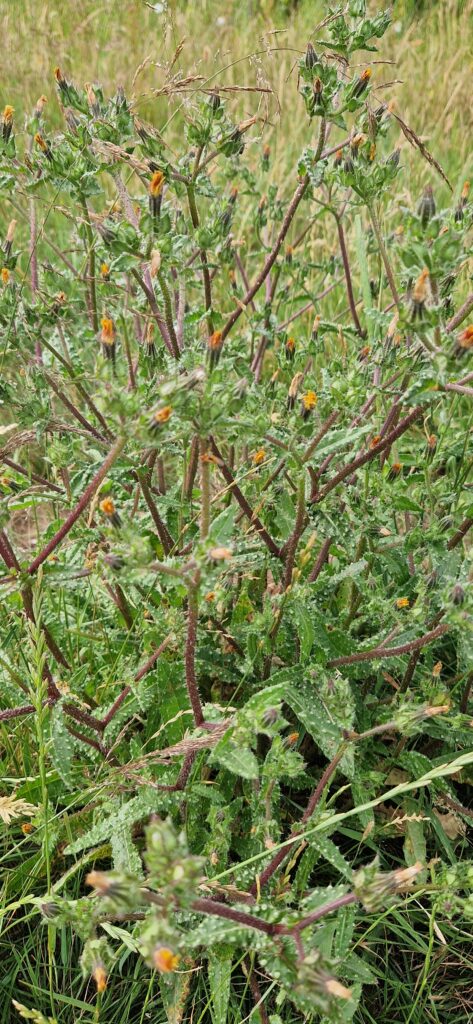
Bristly Oxtongue (Helminthotheca echioides) is a robust and spiny wild plant commonly found throughout the UK. Often dismissed as a weedy intruder, this member of the daisy family (Asteraceae) has surprising value as a wild edible and medicinal herb. With its coarse leaves, yellow dandelion-like flowers, and bristly texture, Bristly Oxtongue is a distinctive plant with both culinary and traditional uses.
Overview
Latin Name: Helminthotheca echioides
Common Names: Bristly Oxtongue, Hawkweed Oxtongue, Rough Oxtongue
Natural Habitat
Bristly Oxtongue thrives in disturbed areas and open ground, often colonising poor soils with ease. It is commonly found in:
- Road verges and railway embankments
- Gardens, allotments, and waste ground
- Field margins and urban green spaces
- Dry grasslands and scrubby meadows
It prefers full sun and well-drained soils and is often seen from late spring through early autumn.
Identification
Leaves
- Long, lance-shaped, and covered in stiff bristles
- Toothed edges with prominent white blister-like spots
- Basal rosette in early growth, with clasping upper leaves along the stem
- Coarse and rough to the touch—hence the name “oxtongue”
Flowers
- Bright yellow and daisy-like, similar to dandelions
- Bloom from June to October
- Flower heads about 2–3 cm wide
- Open in sunlight and close in dull weather
Stems
- Upright, branching, and covered in coarse hairs and stiff bristles
- Hollow and grooved, can grow up to 1 metre tall
Edibility and Culinary Uses
Bristly Oxtongue is edible, though best used when young due to its tough, bristly texture. It has a slightly bitter, earthy flavour reminiscent of other wild chicory or dandelion relatives.
Common Uses
- Salads: Very young leaves can be used raw in small amounts
- Steamed Greens: Boil or steam older leaves to reduce bitterness and soften texture
- Soups & Broths: Add chopped leaves for an earthy depth
- Infusions: Leaves and flowers can be steeped for a mildly bitter herbal tea
Recipe Ideas
- Wilted bristly oxtongue with garlic and lemon
- Wild greens soup with nettle, oxtongue, and chickweed
- Herbal tea blend with oxtongue, mint, and chamomile
Nutritional Value & Health Benefits
Nutritional Content
- Contains vitamins A and C
- Provides fibre and trace minerals
- A source of natural bitter compounds that may aid digestion
Medicinal Benefits
- Digestive Tonic: Bitter principles stimulate appetite and digestion
- Anti-inflammatory: Traditionally used to ease skin irritations and minor swellings
- Detoxifying: Sometimes included in spring cleanses for its mildly diuretic properties
- Topical Use: Leaves were used in folk remedies as poultices for stings and rashes
Foraging Tips
Though not the most tender wild green, Bristly Oxtongue is abundant and easy to identify.
- Best Harvesting Season: Late spring through early summer (younger plants are best)
- Sustainability: Common and often weedy—harvesting helps manage its spread
- Location Considerations: Avoid polluted sites or chemically treated land
Pro Tip:
Use gloves when harvesting! The bristly hairs can irritate sensitive skin.
Folklore & History
While less prominent in folklore than other wild herbs, Bristly Oxtongue has long been used in traditional medicine across Europe. The name “oxtongue” comes from the rough texture of the leaves, thought to resemble the tongue of an ox. Its inclusion in early herbals suggests it was valued for wound healing and digestive support.
Safety Precautions
- Bristly Texture: Use only young leaves if consuming raw; older leaves are better cooked
- Skin Sensitivity: The stiff hairs may irritate the skin—handle with care
- Medicinal Use: Consult a professional before using medicinally, especially during pregnancy or if taking medications
- Proper ID: Easily confused with other yellow-flowering daisy-family plants—check the bristly leaves and blistered texture
Conclusion
Bristly Oxtongue (Helminthotheca echioides) may not be the most glamorous wild edible, but it’s a resilient, versatile plant with a place in both the forager’s kitchen and apothecary. With its bold yellow flowers, coarse leaves, and digestive benefits, this common plant invites us to look beyond appearances and rediscover the hidden gifts of nature.
Want to learn more about foraging and medicinal plants?
Join our foraging courses in Charnwood, Leicester.