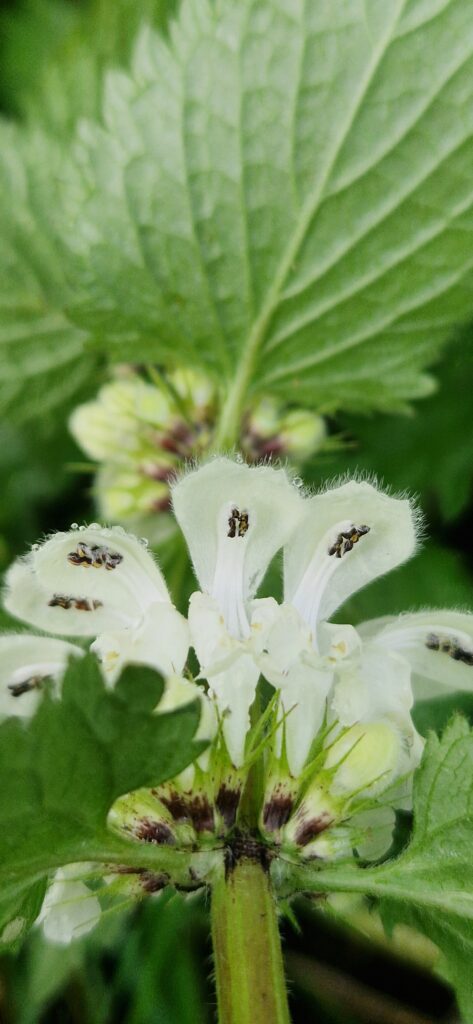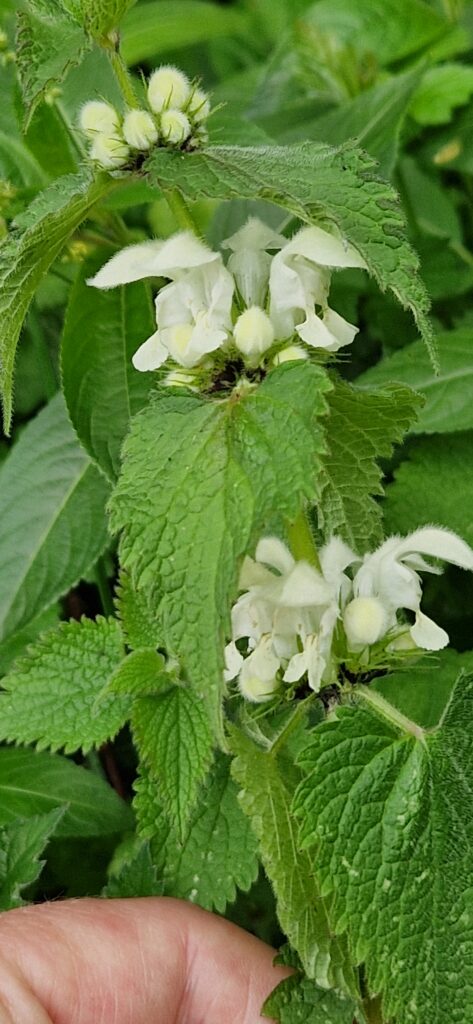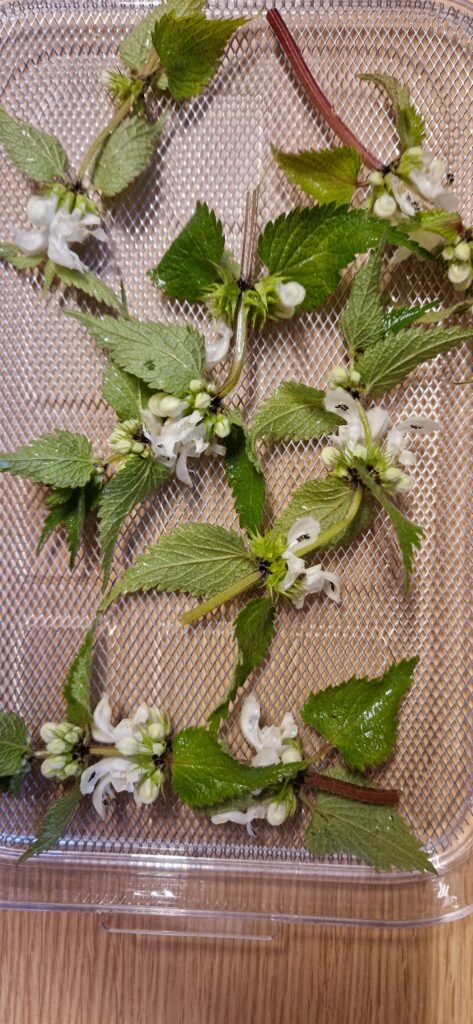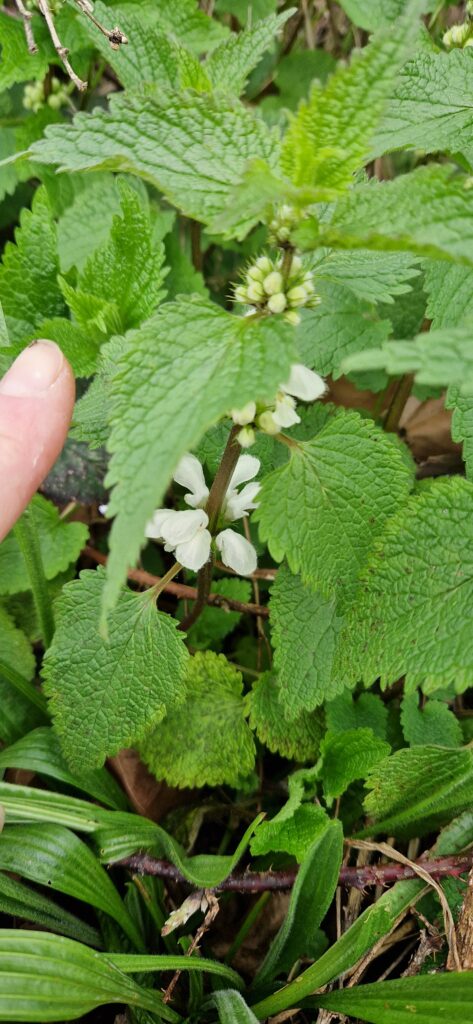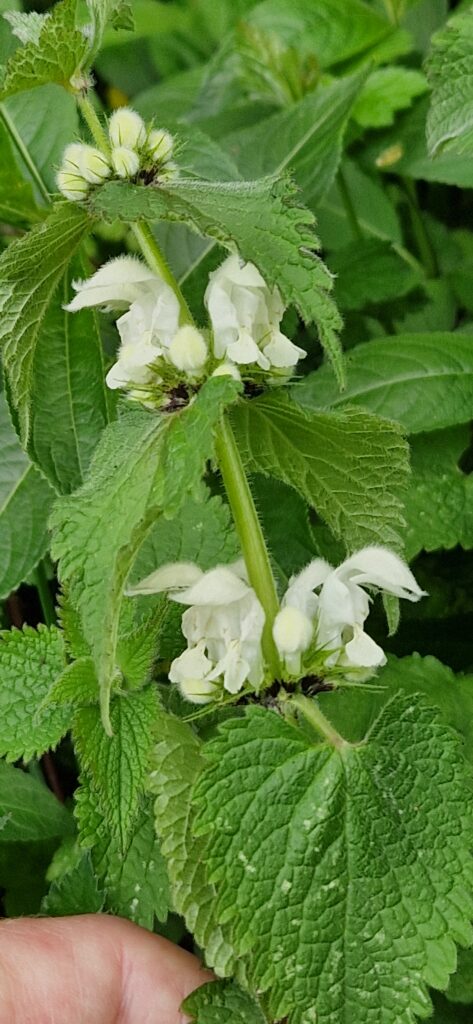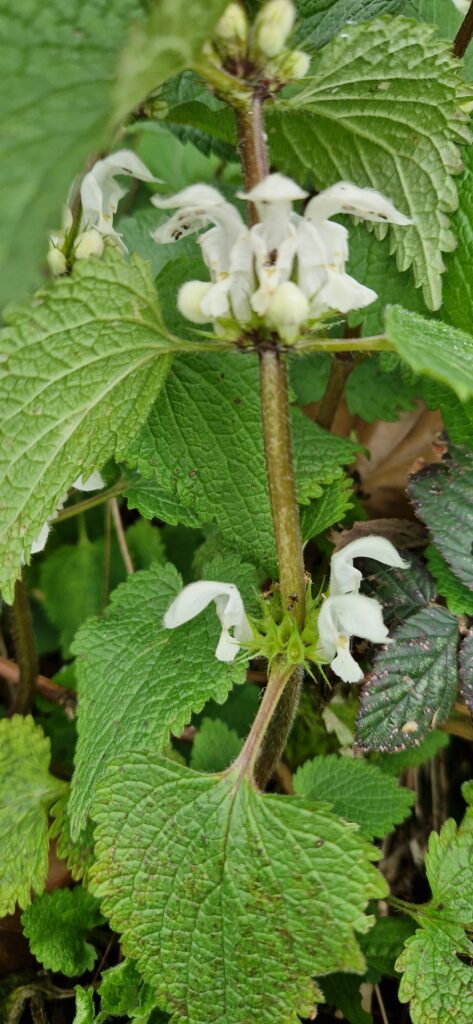
White Deadnettle (Lamium album), often mistaken for a stinging nettle at first glance, is a gentle and useful wild plant with edible and medicinal properties. Unlike true nettles, it has no sting, making it a safe and easy plant to forage — especially for beginners.
Overview
Latin Name: Lamium album
Common Names: White Deadnettle, White Nettle, Bee Nettle
Natural Habitat
White Deadnettle thrives in rich, disturbed soils and is commonly found in:
- Hedgerows and woodland edges
- Roadsides and field margins
- Waste ground and gardens
It prefers semi-shaded conditions and often grows in clumps, particularly near human habitation.
Identification
Leaves:
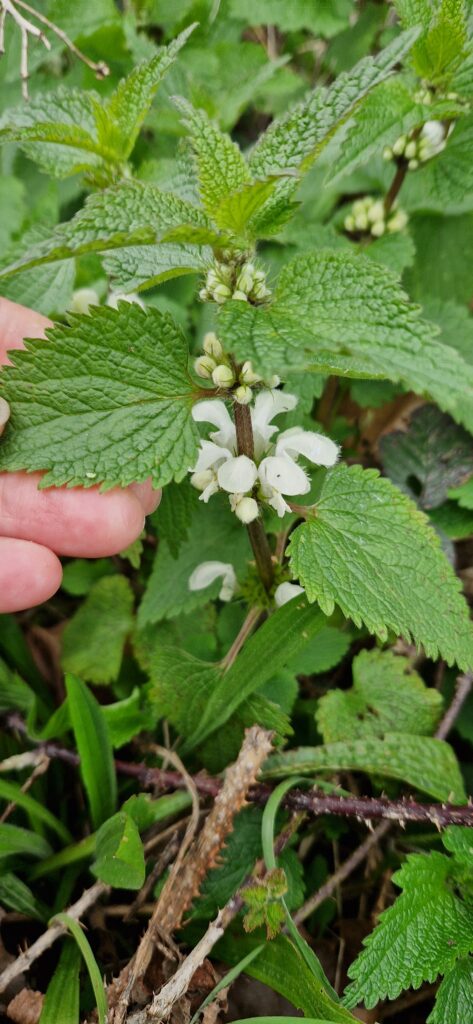
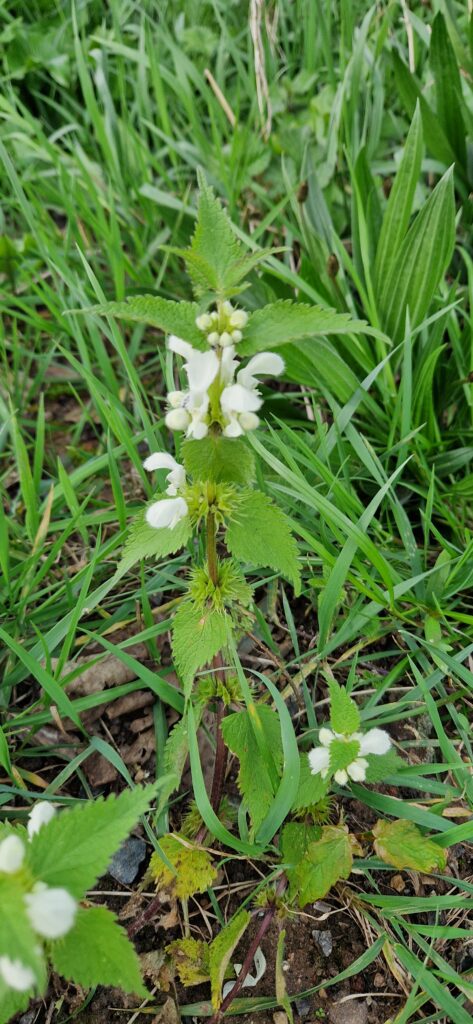
Heart-shaped with serrated edges, arranged opposite each other on square stems. They closely resemble stinging nettle leaves but are soft and stingless.
Flowers:
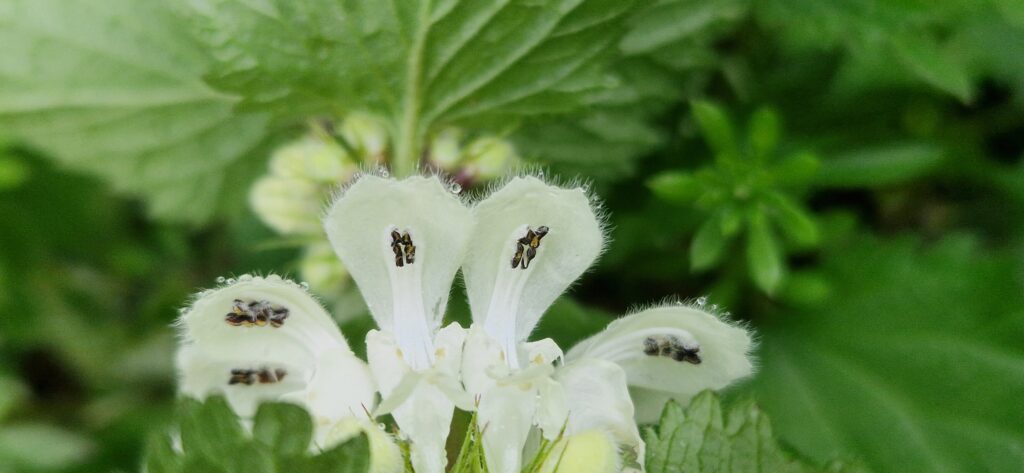
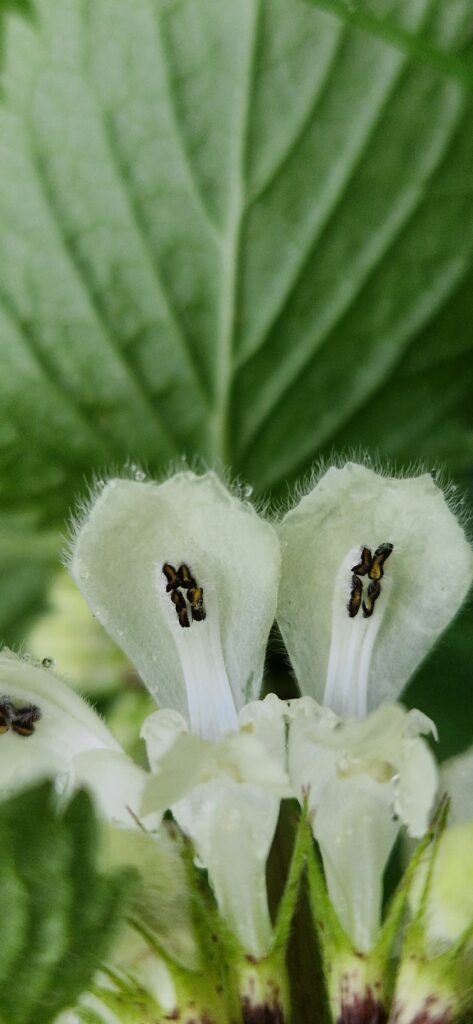
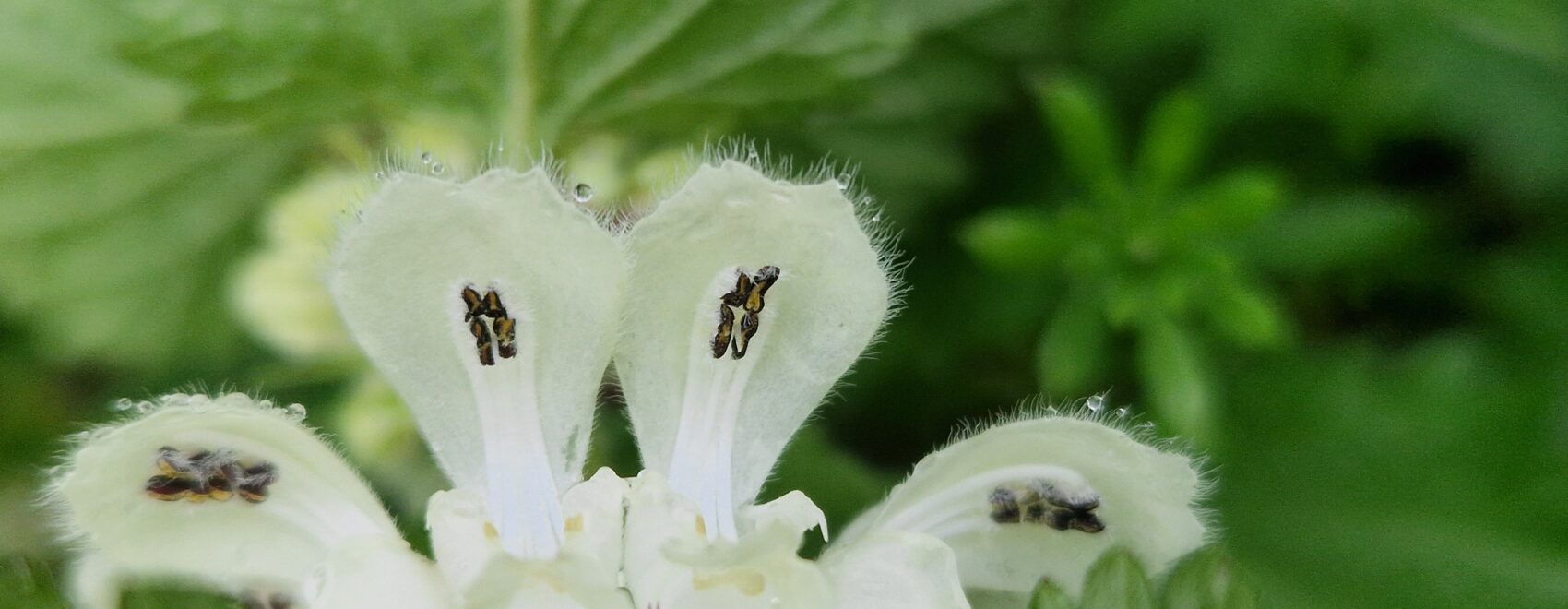
Tubular, white flowers with a hooded top lip and spreading lower lip, often with faint yellow markings. They appear in whorls around the upper leaf joints from April to November.
Stem:
Square in cross-section — a feature shared by all members of the mint family (Lamiaceae).
Height:
Typically grows 20–60cm tall, sometimes taller in nutrient-rich soils.
Edibility and Medicinal Uses
White Deadnettle is a mild edible and soothing herb, traditionally used for its anti-inflammatory and astringent properties. Both flowers and young leaves can be eaten or used in herbal teas and preparations.
Culinary Benefits
Flowers:
- Sweet and nectar-rich, a favourite of bees
- Can be eaten raw, used as a garnish, or added to salads
- Makes a delicate floral tea when infused
Young Leaves:
- Milder than stinging nettle
- Can be eaten raw when very young, or cooked like spinach
- Added to soups, pestos, or stir-fries
Medicinal Benefits
Traditionally, White Deadnettle was used to support women’s health, soothe inflammation, and relieve mucous membrane irritation. Common uses include:
- Menstrual support: Taken as a tea for heavy or painful periods
- Respiratory relief: Soothing for coughs and sore throats
- Digestive aid: Mildly astringent, helping with diarrhoea and gut inflammation
- Wound care: Crushed leaves used as a poultice for minor cuts or skin irritation
Preparation and Uses
Tea:
Steep fresh or dried flowers and young leaves in hot water for 5–10 minutes. A light, mildly sweet herbal tea that soothes and calms.
Poultice:
Crush fresh leaves and apply directly to the skin to relieve mild irritation or inflammation.
Cooked Greens:
Steam or sauté young leaves and use as you would nettles or spinach.
Foraging Tips
Best Harvesting Season:
- Flowers: April to November, depending on local climate
- Leaves: Spring and early summer for the most tender growth
Sustainability:
- Pick leaves and flowers lightly from abundant patches
- Leave enough flowers for pollinators
- Avoid roadside or polluted areas where plants may absorb contaminants
Pro Tip:
Always double-check you’re not harvesting stinging nettles — although harmless, White Deadnettle has no sting and a softer feel. Look for the white flowers and square stems to be sure.
Folklore & History
In medieval herbalism, White Deadnettle was associated with purity and healing. It was considered especially helpful for “cooling” inflamed tissues and easing “female complaints.” Its nectar-rich flowers have long been enjoyed by children and foraging bees alike.
The name “deadnettle” refers to its resemblance to stinging nettle — but being “dead” or “deadened,” it has no sting.
Safety Precautions
- Mild plant: White Deadnettle is generally safe for all ages.
- Allergies: As with any wild food, try a small amount first if you have plant allergies or are pregnant.
Conclusion
White Deadnettle is a gentle and rewarding plant to forage — safe for beginners, loved by pollinators, and useful in both the kitchen and the herbal medicine cabinet. Its long flowering season and distinctive look make it a forager’s friend from spring through late autumn.
Want to discover more sting-free wild edibles and their uses?
Join one of our foraging courses at www.charnwoodforaging.co.uk and learn how to confidently identify and use nature’s forgotten plants.