Latin name: Heracleum sphondylium
Other names: Common hogweed, wild parsnip, cow parsnip
Habitat: Hogweed thrives in damp, fertile soil and can be found in meadows, woodlands, hedgerows, and along riverbanks across temperate regions of Europe and Asia.
Appearance
Leaf Description:
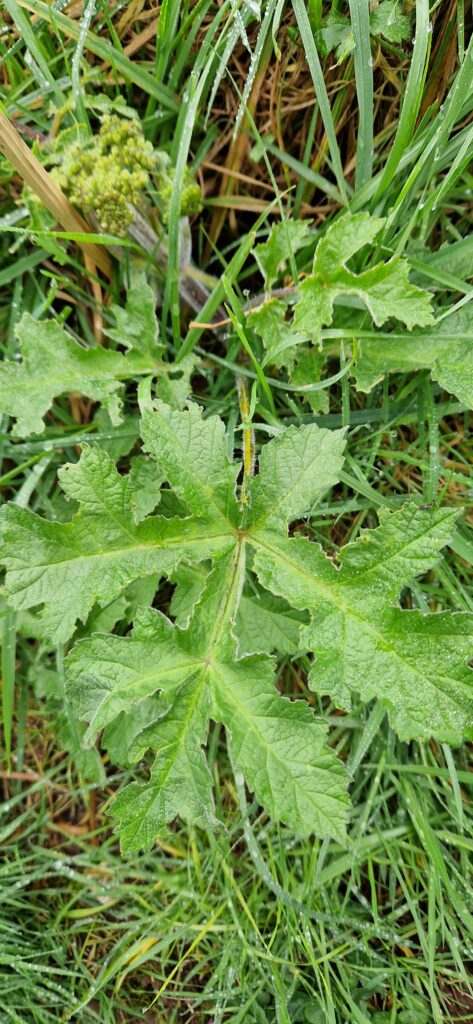
- Shape: The leaves are large, rounded, and divided into 3 to 5 lobes.
- Surface: They are covered in tiny hairs.
- Serration: The serrated edges of the leaves are more evident on fully grown leaves.
- Size: Fully grown leaves can be up to 60cm in length.
Flower Description:
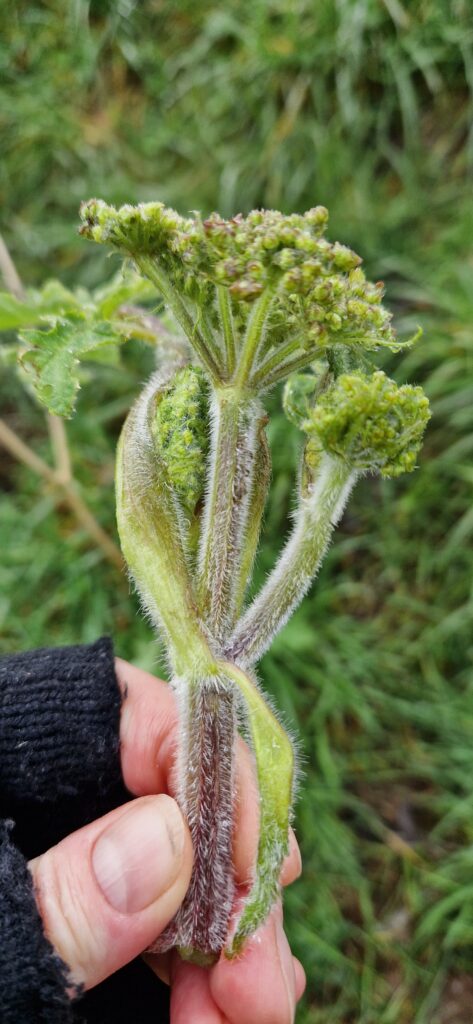
- The common hogweed produces umbel-shaped flower heads– 12-14 stems typically (not 24 which would be a sign of giant hogweed).
- These clusters of flowers are creamy-white in color.
- The flower heads can measure up to 20 cm in diameter.
Stem Description:
- Shape: The leaves are large, rounded, and divided into 3 to 5 lobes.
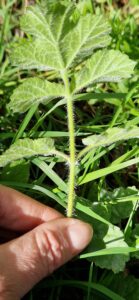
- Surface: They are covered in tiny hairs.
- Serration: The serrated edges of the leaves are more evident on fully grown leaves.
- Size: Fully grown leaves can be up to 60cm in length.
Fruit/Seed Description:
- Green Seeds:
- When the seeds are green and juicy, they have a coriander-like flavor with a citrusy tang.
- These green seed casings dry out naturally on the plant and develop into delicate paper-like seed discs.
- Dry Seeds:
- As the seeds mature, the smell and taste change to more like burnt orange, coriander, and cardamom.
- When dry, the flavor becomes a little more mellow and spiced.
Edibility
- Young unopened flower turrets, young leaves stems and later in the year seeds.
Recipes
Seeds as spice replacement, the flowers turrets and leave stems as green vegetable.
Hogweed seeds flavoured chocolates
St George mushroom and Hogweed Fry up
Jelly Ear Mushroom Soup with Radish, Potatoes, Wood Avens, and Hogweed
Vitamins Content/Health Benefits
- Vitamins Content/Health Benefits: Hogweed is rich in vitamins and minerals, including vitamin C, vitamin A, potassium, calcium, and iron. When consumed in moderation and properly prepared, hogweed shoots can provide a nutritious addition to your diet.
Foraging season
Common hogweed typically flowers between May and August.
Young shots can be harvested from early spring and seeds in autumn.
Folklore/Interesting Info
- According to Irish folklore, they were also a remedy for many common complaints, such as jaundice, warts, and sores.
- Common hogweed has featured in herbal medicine as an aphrodisiac, digestive aid, sedative, and to treat chest complaints.
Health warning
- Sap is less toxic than the giant hogweed’s but it’s still advisable to wear gloves when handling and wash hands after contact
Not sure about plant identification? Join us for the next foraging event in Charnwood, Leicestershire.
Beware confusion with Giant Hogweed. Watch this video.