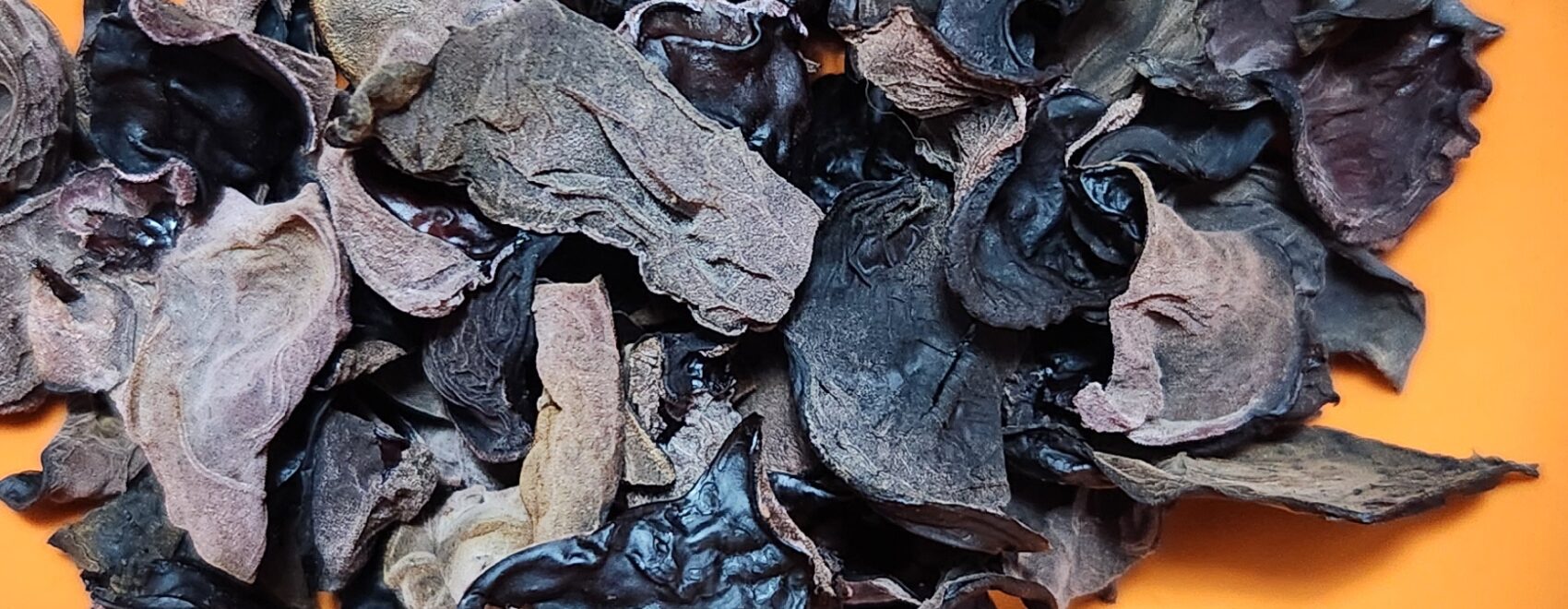

Jelly Ear is a wonderfully versatile wild mushroom. Its naturally gelatinous texture means it absorbs flavours extremely well, making it perfect for turning into unusual savoury or sweet crisps. By soaking the mushrooms in strongly flavoured liquids before cooking, you can create a wide range of tastes—from fruity snacks to more savoury options.
Forage for
Jelly Ear mushrooms
Foraging Time
Year-round, but most commonly found during autumn, winter, and early spring
Foraging Site
Usually found growing on elder trees and fallen elder branches, particularly after wet weather.
Patience Required
⭐⭐⭐ (Moderate)
Ingredients
- Fresh Jelly Ear mushrooms
- Strongly flavoured soaking liquid (choose depending on your flavour preference), for example:
- Grape juice
- Apple juice
- Elderberry juice
- Soy sauce
- Beer or cider
- Wine or another alcohol
- A small amount of oil (optional)
- Salt or seasoning (optional)
Method
- Clean the mushrooms
Gently rinse the Jelly Ear mushrooms to remove any dirt or debris. - Soak in flavour
Place the mushrooms in a bowl and cover them with your chosen liquid. Strong flavours work best because the mushrooms absorb the liquid easily. - Allow time to absorb
Leave the mushrooms to soak for 30 minutes to a few hours depending on how intense you want the flavour. - Cut after soaking
Once the mushrooms have absorbed the liquid, slice them into thin strips or small pieces. Cutting them after soaking prevents them from exploring in your oven! - Cook until crisp
Spread the pieces on a baking tray or place them in an air fryer. Cook at low to medium heat (around 120–150°C) until they become dry and crisp. This may take 30–60 minutes depending on thickness. - Optional seasoning
If making savoury crisps, you can add a little salt or other seasoning once they are cooked.
Serving Suggestions
- Eat them as a crispy wild snack
- Add them to salads for texture
- Use them as a garnish on soups or noodle dishes
- Sweet versions work surprisingly well sprinkled over desserts or yoghurt
Nutritional Benefits
Jelly Ear mushrooms are rich in polysaccharides, fibre, and antioxidants. They have traditionally been used in Asian cuisine and herbal medicine and are known for their potential immune-supporting and circulatory health benefits.
Safety Note
Always ensure you are 100% confident in mushroom identification before consuming anything from the wild. If you are unsure, do not eat it. Only harvest from clean environments away from pollution.ack!