Hemlock is one of the most infamous toxic plants in the UK, historically known for its role in the execution of Socrates. Commonly found along riverbanks, roadsides, and wastelands, hemlock poses a serious risk to foragers due to its resemblance to edible plants like cow parsley and wild carrot. Proper identification is essential to avoid accidental poisoning.
Overview
Latin Name: Conium maculatum
Common Names: Poison Hemlock, Dead Man’s Oats
Natural Habitat
Hemlock thrives in damp, nitrogen-rich soils and is commonly found in:
- Riverbanks and ditches
- Roadside verges and wasteland
- Field edges and disturbed ground
It is widespread across the UK and typically appears in early spring, flowering in summer.
Identification
Leaves:
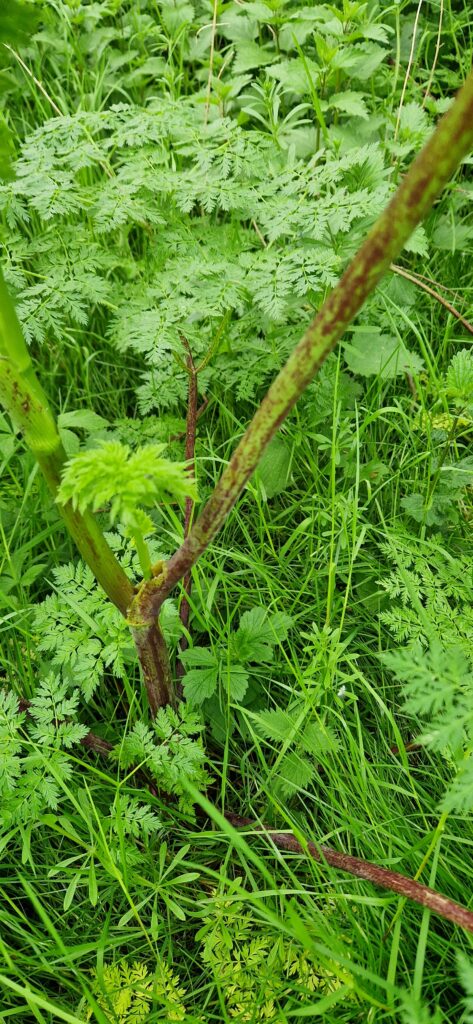
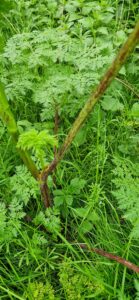
- Delicate, fern-like, and finely divided, resembling parsley or cow parsley.
- Dark green and completely smooth, lacking the fine hairs found on cow parsley.
Flowers:
- Small, white, arranged in umbrella-like clusters (umbels), similar to other members of the carrot family.
- Blooms between June and August.
Stem:
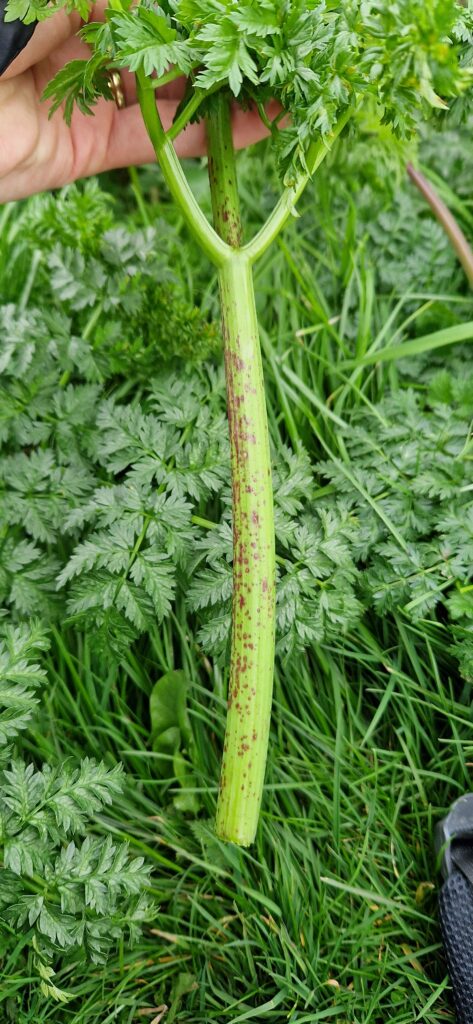
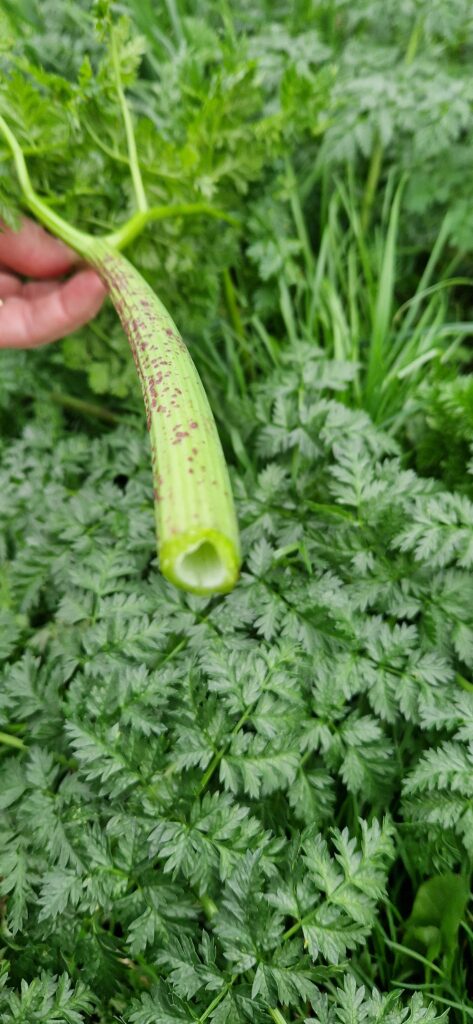
- Tall (up to 2.5m) and hollow.
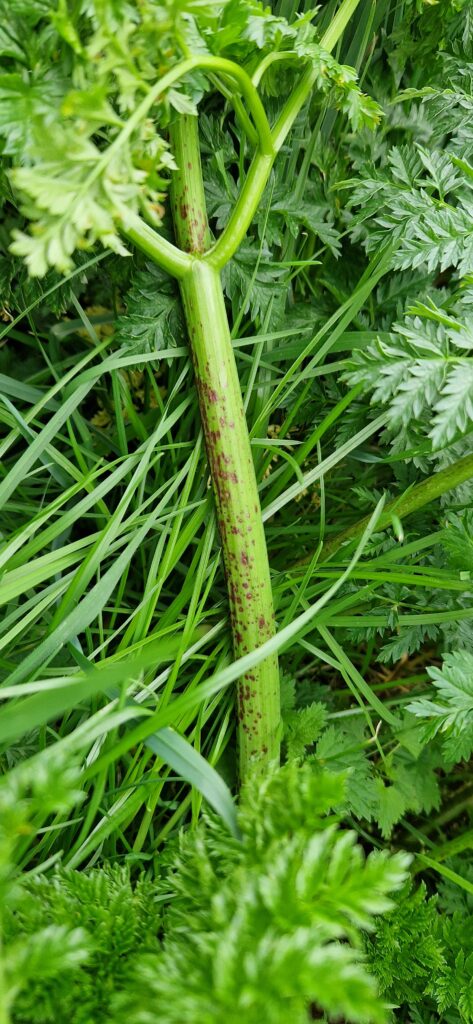
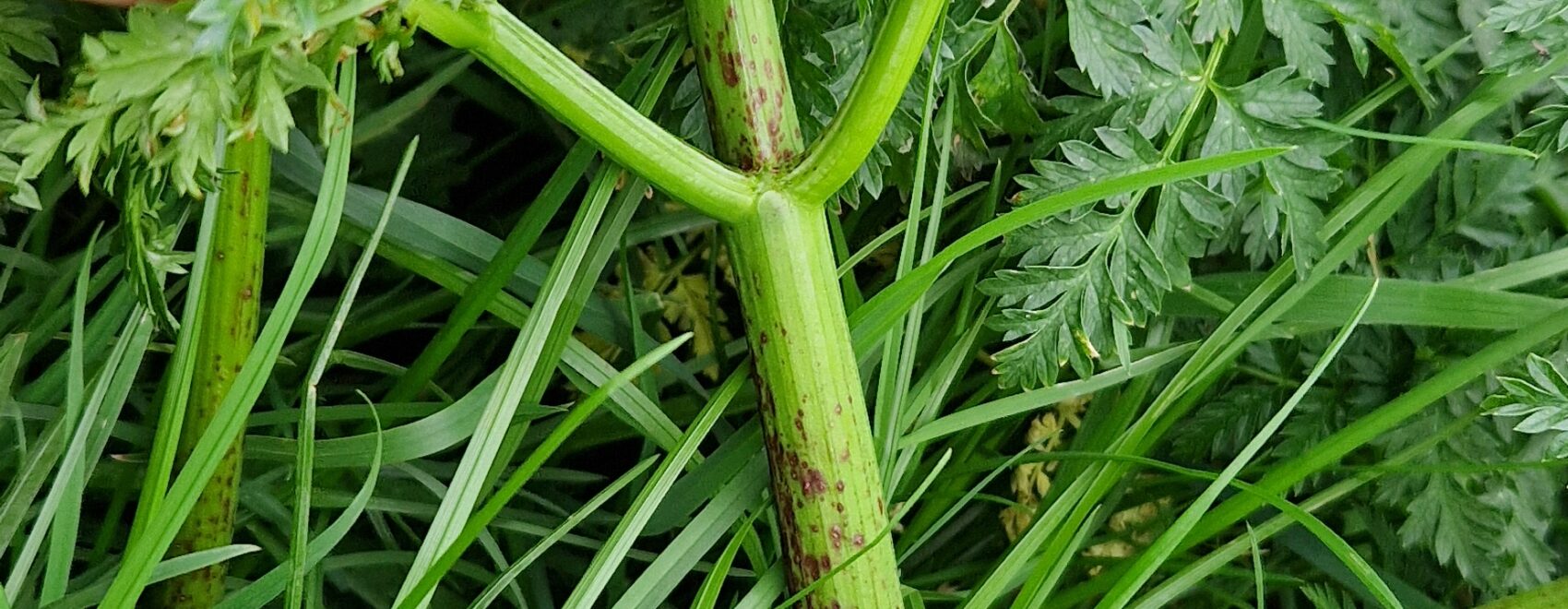
- Distinctive purplish blotches or streaks along its length.
- No groove (unlike cow parsley, which has a V-shaped groove).
Scent:
- Unpleasant, musty, or ‘mousy’ smell when crushed.
- Some describe it as similar to rotting meat.
Key Differences Between Hemlock and Cow Parsley
- Stem Characteristics:
- Hemlock: Purplish blotches, no groove, slightly waxy.
- Cow parsley: Smooth green (purple but more like painter brush) stem with a V-shaped groove.
- Leaf Texture:
- Hemlock: Dark green, smooth.
- Cow parsley: Lighter green, fine hairs on edges.
- Scent:
- Hemlock: Foul, musty smell when crushed.
- Cow parsley: Pleasant, slightly aniseed-like scent.
Toxicity and Dangers
Hemlock is extremely poisonous. All parts of the plant contain toxic alkaloids that affect the nervous system, even in small amounts.
Symptoms of Poisoning:
- Nausea and vomiting
- Tremors and muscle weakness
- Respiratory failure, which can be fatal
Important: Even handling hemlock can cause skin irritation in some people. Avoid any contact.
Folklore & History
Hemlock has a long history as a deadly poison. The ancient Greeks used it for executions, most famously in the case of Socrates. In folklore, hemlock was often associated with witches and dark magic due to its lethal properties.
Safety Precautions
- Never consume any plant unless 100% certain of its identity.
- Do not handle hemlock without gloves. The toxic compounds can be absorbed through cuts or sensitive skin.
- Educate others. Hemlock is sometimes mistaken for edible plants, making awareness crucial for foragers.
Conclusion
Hemlock is one of the most dangerous wild plants in the UK and should be avoided at all costs. Its similarity to edible species like cow parsley makes proper identification essential. When foraging, always take the time to check distinguishing features carefully and err on the side of caution.
Want to learn more about foraging and edible plants? Join our foraging courses in Charnwood, Leicestershire.