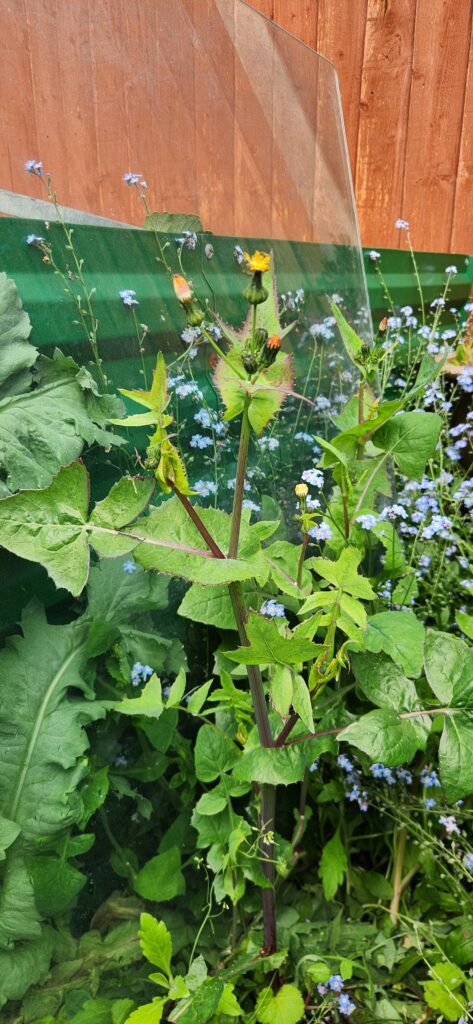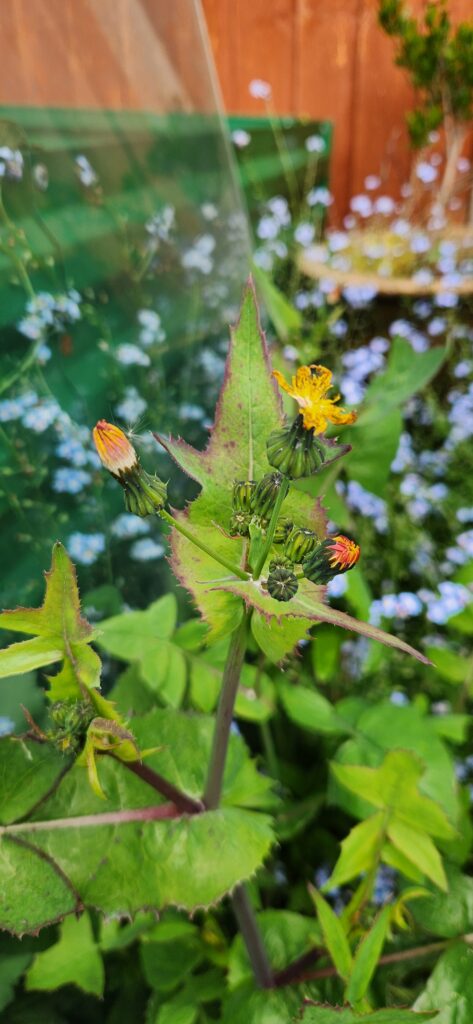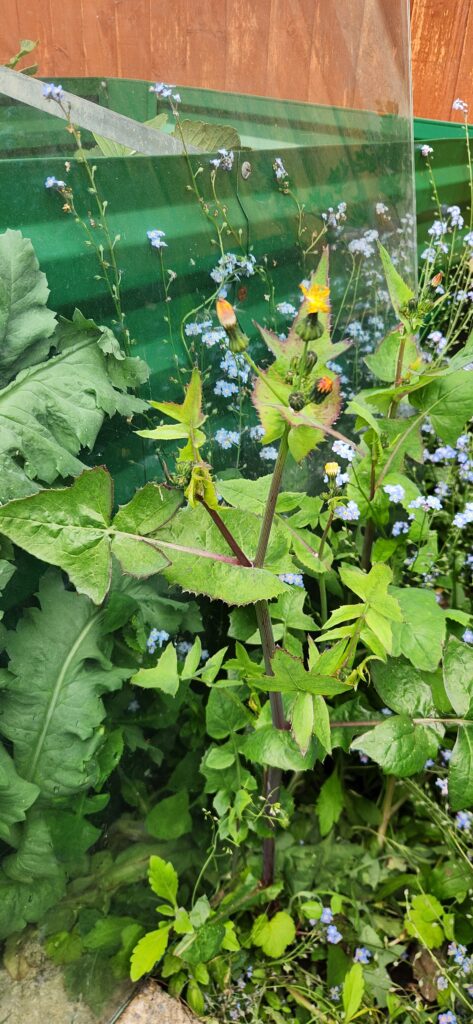
A very common edible wild plant that is often overlooked as just another weed
Smooth Sow-thistle is a widespread and useful edible plant found across much of the UK. Related to dandelions and lettuces, it produces soft leaves and bright yellow flowers and can provide a surprisingly good wild green when gathered young.
Despite its delicate appearance, it is a resilient pioneer plant that thrives wherever the ground has been disturbed.
Not sure about plant identification? Join us for the next foraging course in Charnwood, Leicestershire, and learn how to safely identify wild plants.
🌳 Habitat
Commonly found in:
- Gardens and allotments
- Waste ground
- Field edges and disturbed soil
- Pavements and urban areas
It grows quickly in nutrient-rich soils and often appears in freshly disturbed ground.
🔍 Identification Features
- Upright annual plant with soft, hollow stems
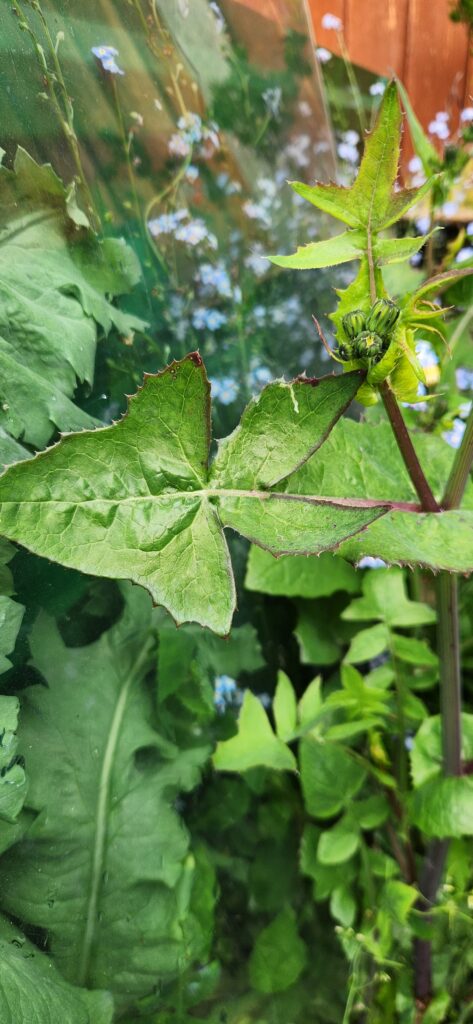
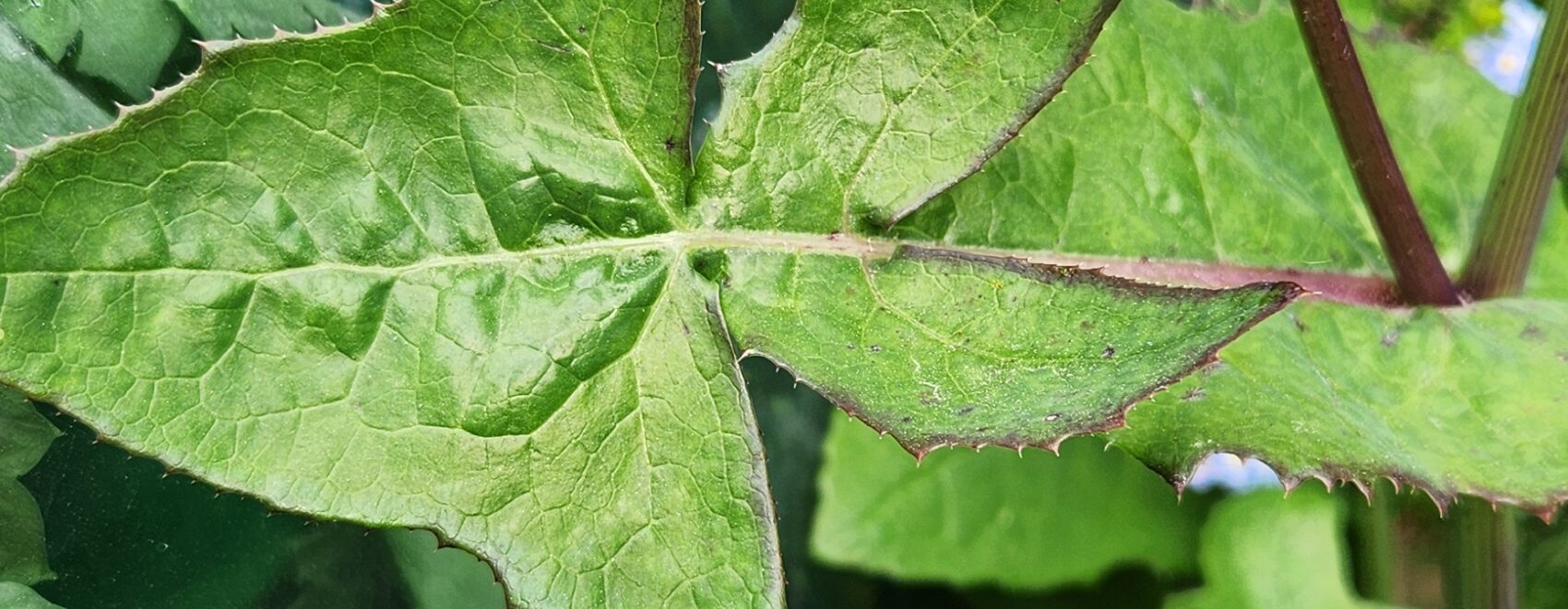
- Leaves are green, soft, and deeply lobed
- Leaf edges are not sharply prickly compared to rougher sow-thistles
- Leaves clasp around the stem with rounded lobes
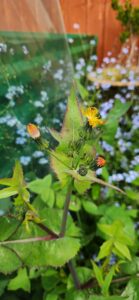
- Bright yellow dandelion-like flowers
- Produces white milky sap when broken
The plant often has a softer, less aggressive appearance than other sow-thistles.
⚠️ Lookalikes
- Prickly Sow-thistle (Sonchus asper) – shinier leaves with much sharper prickles
- Dandelion relatives
- Wild lettuces
The softer leaves and less spiny texture help distinguish Smooth Sow-thistle.
🍴 Edibility
Young leaves are edible and best before the plant flowers.
Can be used:
- Raw in salads (young leaves)
- Cooked like spinach
- Added to soups or stir-fries
Older leaves become increasingly bitter.
The flower buds can also be cooked similarly to small vegetables.
🌿 Ecology & Traditional Uses
Smooth Sow-thistle is an important food source for insects and birds, with seeds readily taken by finches and other wildlife.
Historically, it has been used as a simple potherb and emergency green in many parts of the world.
Its ability to rapidly colonise disturbed ground makes it an excellent example of a pioneer species.
📅 Season
- Young leaves: Spring to early summer
- Flowers: Summer into autumn
⚠️ Health Warning
Always ensure correct identification before consuming any wild plant.
Harvest young plants for the best flavour and avoid areas exposed to pollution, pesticides, or heavy dog traffic.
Not sure about plant identification? Join us for the next foraging event in Charnwood, Leicestershire.