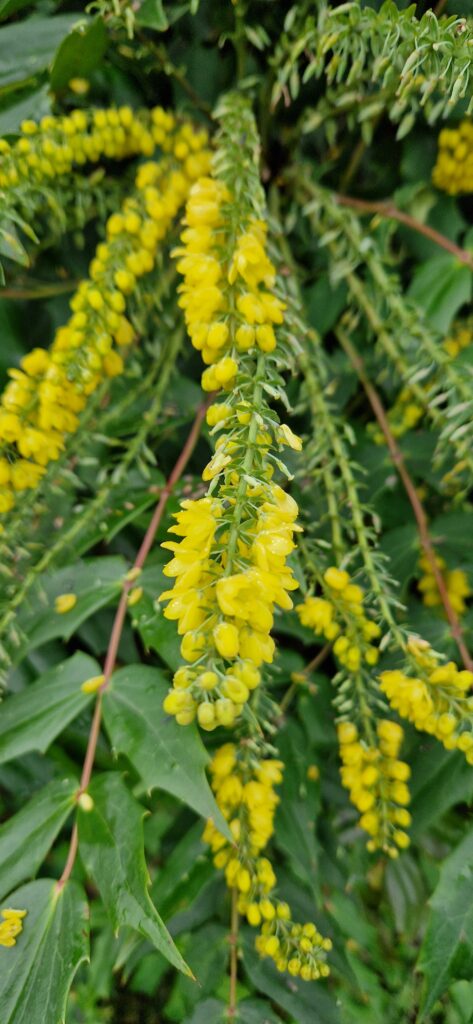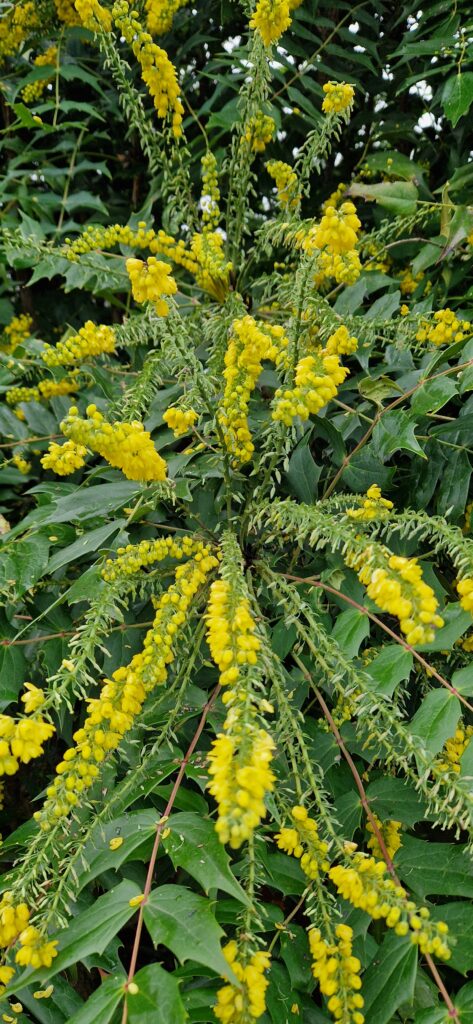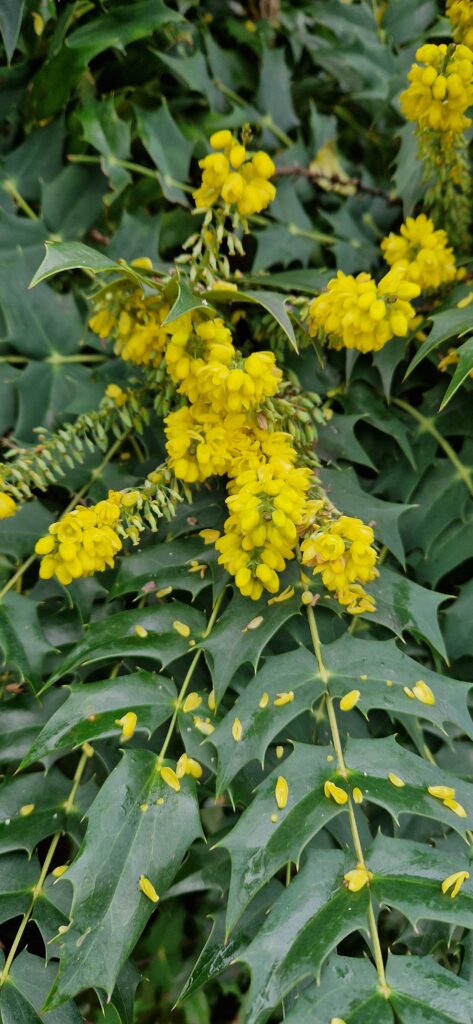
Mahonia aquifolium, commonly known as Oregon grape, is an evergreen shrub celebrated for its striking holly-like leaves, vibrant yellow flowers, and deep purple berries. Valued for its ornamental appeal and medicinal properties, this plant is a versatile addition to any forager’s repertoire.
Overview
Latin Name: Mahonia aquifolium
Common Names: Oregon Grape, Holly-leaved Barberry
Family: Berberidaceae (Barberry family)
Natural Habitat
Native to North America, particularly the Pacific Northwest, Oregon grape thrives in:
- Forest understories and woodland edges
- Rocky slopes and open areas
- Gardens and landscaped areas
It prefers well-drained soils and partial to full shade but can adapt to a variety of growing conditions.
Identification
Leaves
- Shape: Evergreen, pinnate leaves with 5–9 spiny, holly-like leaflets.
- Color: Glossy green, turning reddish-bronze in winter.
- Texture: Leathery with sharp, pointed edges.
Flowers
- Appearance: Clusters of small, bright yellow, star-shaped flowers.
- Bloom Time: Late winter to early spring.
Berries
- Shape: Round, deep blue to purple berries, resembling small grapes.
- Taste: Tart, with a flavor reminiscent of blackcurrants.
Height
- Typically grows to 1–2 meters tall, with a bushy, spreading habit.
Edibility and Culinary Uses
The berries of Oregon grape are edible, though very tart, and are often used in combination with sweeter ingredients.
Berries:
- Use in jams, jellies, and syrups.
- Ferment into wine or liqueur.
- Add as a tart component to pies and desserts.
Recipe Ideas:
- Mahonia jelly
- Mahonia wine
- Tart Berry Syrup for Pancakes
- Oregon Grape and Apple Pie
Nutritional Value & Health Benefits
Nutritional Content
- Rich in vitamin C and antioxidants.
- Contains small amounts of vitamin A and iron.
Medicinal Benefits
- The roots and bark are traditionally used for:
- Digestive Aid: Stimulating liver and gallbladder function.
- Skin Conditions: Treating eczema and psoriasis with its antimicrobial properties.
- Immune Support: Boosting the immune system.
The active compound, berberine, found in the root, is a potent antimicrobial and anti-inflammatory agent. Remember you can only forage for roots in the UK on private property with owners permission,
Foraging Tips
Best Harvesting Season:
- Flowers: Late winter to early spring.
- Berries: Late summer to early autumn, when fully ripe.
Sustainability:
Harvest responsibly, leaving some berries for wildlife and ensuring the plant’s longevity.
Processing Tip:
Berries are best cooked or sweetened to balance their tartness.
Folklore & History
Oregon grape has been used by Indigenous peoples of North America for centuries as a food source and a medicine. The plant’s name is derived from its native range and grape-like clusters of berries. It was historically used as a natural dye and a bitter tonic for digestive health.
Safety Precautions
- Properly identify before foraging, as some berries may resemble toxic species.
- The berries are sour when raw and are best consumed after cooking.
- Do not consume the roots or bark without proper preparation and guidance, as high doses of berberine can be harmful.
Conclusion
Mahonia aquifolium (Oregon Grape) is a beautiful, hardy shrub with a wealth of culinary and medicinal applications. Its tart berries add a unique flavor to recipes, while its roots have a long history of traditional use. Whether you’re a gardener, a forager, or a natural medicine enthusiast, this versatile plant is one to know and appreciate.
Not sure about plant identification? Join us for the next foraging course in Charnwood, Leicestershire, and learn how to identify and use wild plants safely and sustainably!