25th April 2026 13:00 am – 16:00 pm
A beautiful spring day full of discovery, flavour, and hands-on learning
We were treated to a glorious warm day for this late April foraging course, with the landscape bursting into life. Conditions were perfect for exploring a wide range of edible plants and trees, and the group brought great energy and curiosity throughout.
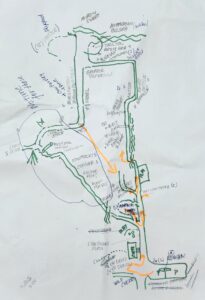
The route (see map) took us through a variety of habitats, allowing us to identify and discuss an excellent range of species including some surprising garden edibles.
🌿 What We Found & Learned
We have started in the shade of the carpark with safety briefing and then went onto learning about fantastic gifts from Rowan tree. Enjoyed a syrup from flowers and jam from berries.
Crossing the entry road carefully, we rested under the shade of wild cherry tree and tasted a “compote” (way of preserving entire fruit for a season with minimum effort – spoon of sugar and hot water is all we need!)
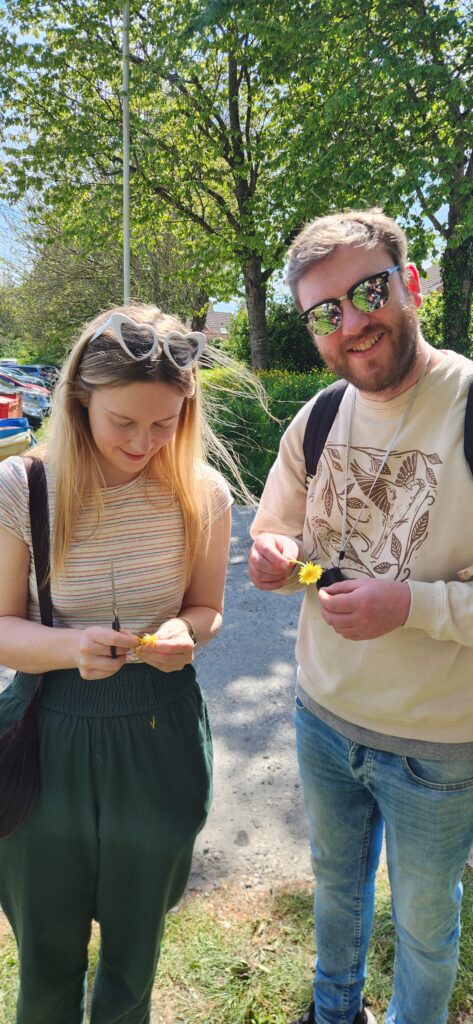
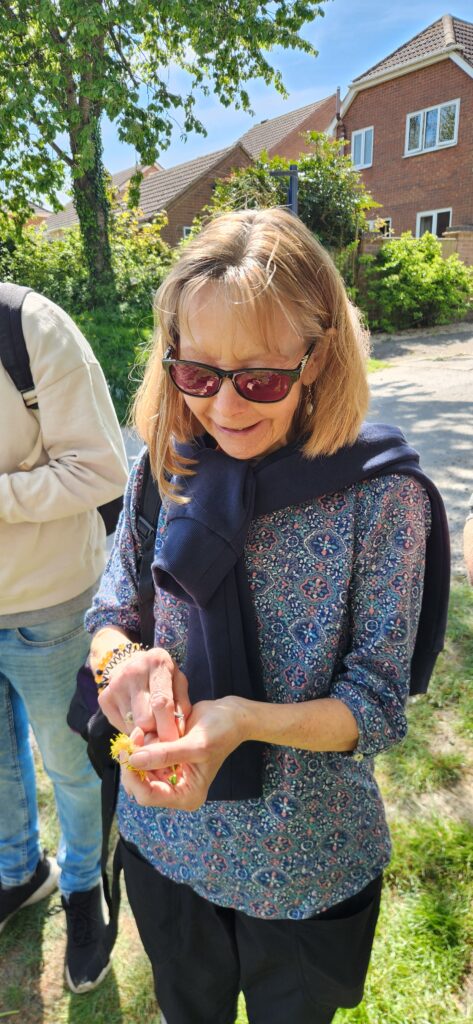
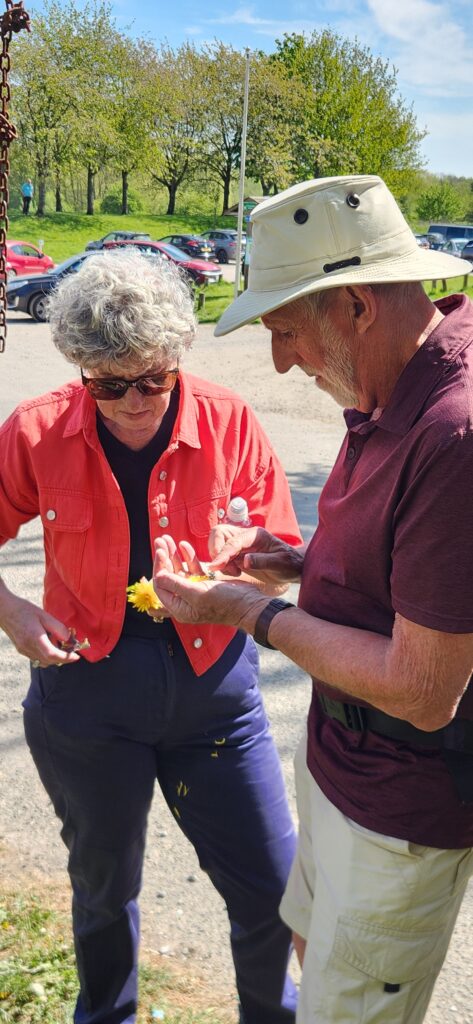
Keeping in shade we started by the easy to recognize plants: daisies (tried fresh flowers) and dandelions (cordial/honey and pickled buds)
Passed by tiny shepherds purse great for nose bleed.
In the “garden” we tried cherry laurel wine and laboriously made fruit leather. Mahonia with its spiky leaves provided greatly loved jam/jelly.
Short stop to practice observation skills- identification of different times of willow herbs and tasted a non sweet sample of rosebay willowherb tea.
Hawthorn (young leaves) – a fantastic seasonal nibble, often called “bread and cheese”- that’s when flowers come out too 🙂
Underneath it in the shade, we felt the leaves of garlic mustard and tasted its mustard like seeds.
Following on pass the kids play area into the welcoming shade of the woodland.
We stopped by old elder with jelly ear growing on it. We started the experiment of growing mushroom and tasted jelly ear crisps. Eventually we tasted elder berry cordial.
Sto by the nettles to learn the difference between stinging nettle (crisps, kimchi) and dead nettle. (tea)
Another classic – bramble with blackberries that can be turned into delicious cordial.
Coming on the path by the lake, we stopped to look at common hogweed and discussed how it differs from dangerous giant hogweed. After tasting roasted hogweed seeds, we managed to scrape out what once were a lovely looking common hogweed flavoured chocolates.
Little stop by the lake to identify few interesting mushrooms such as artist bracket and to check on our own jelly ear growth.
Something unique and a bit different. We spent time collecting and washing Himalayan balsam in situ, giving everyone a chance to engage directly with this invasive but very useful plant. A great example of how foraging can also support habitat management.
By the lake we talked about meadowsweet and reedmace (not a bulrush) and their brilliant use.
Time was running out on us so we “run” uphill to our last stop of the day.
Here we briefly covered few more plants and trees:
- Greater Plantain – edible leaves and medicinal uses
- Cleavers – sticky, nutritious and versatile
- Cow Parsley – identification tips versus poisonous hemlock
- Hazel – tree ID and seasonal uses such as catkins to make muesli.
We concluded with a proper splash! of Pine soda. Was it fizzy? Well tune into Charnwood foraging u-tube channel where a video with snippets of a day will soon appear.