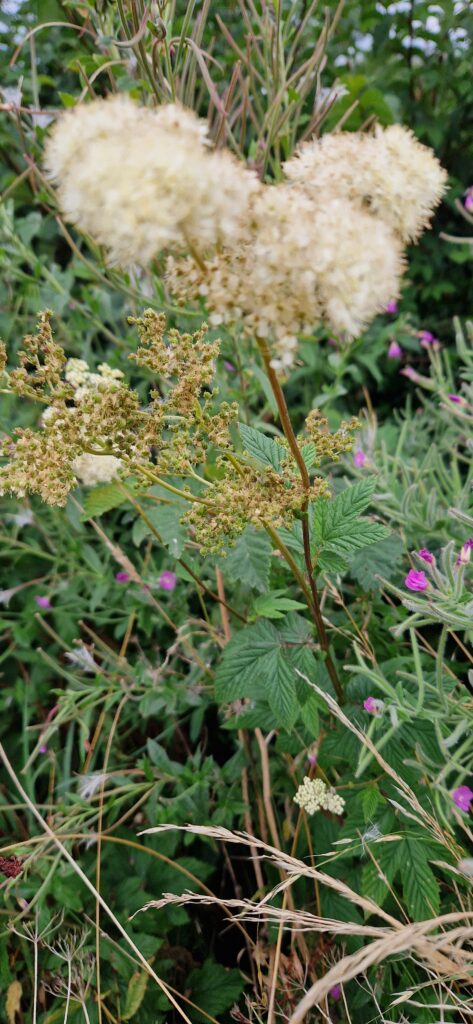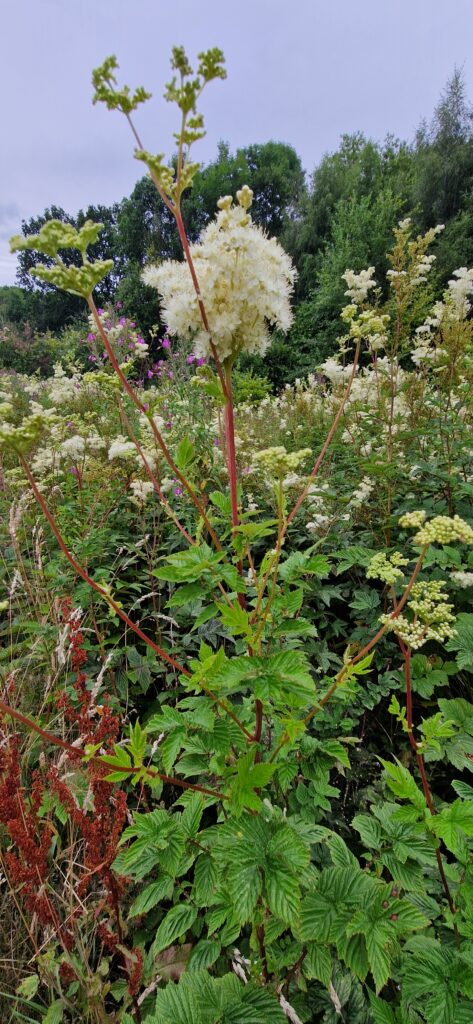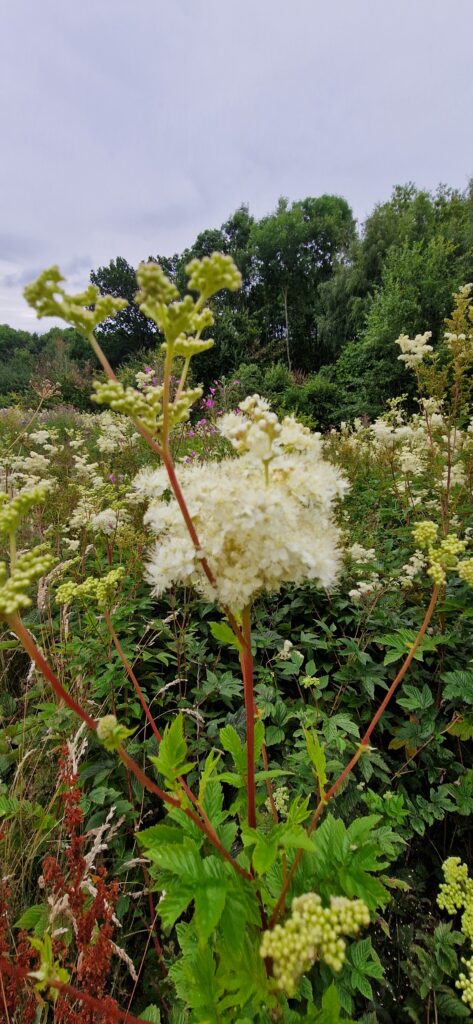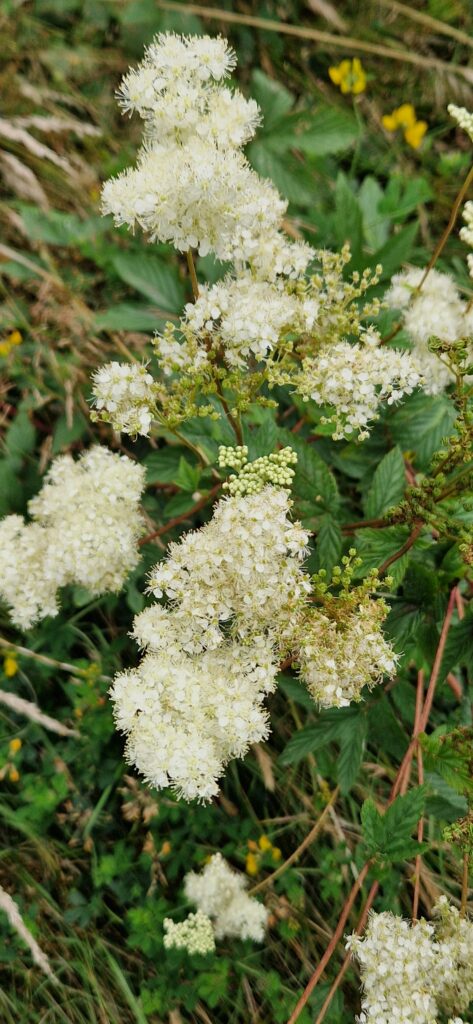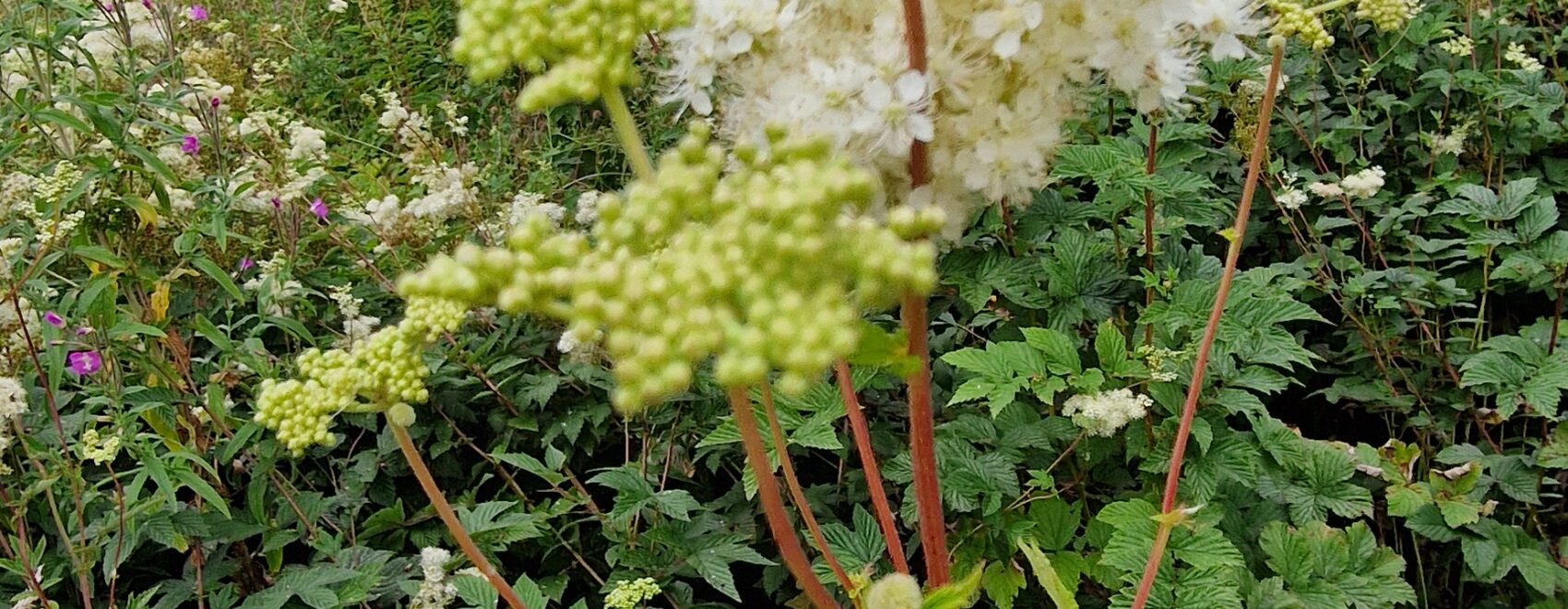
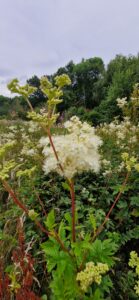
Meadowsweet (Filipendula ulmaria) is a fragrant perennial herb renowned for its creamy white flowers, medicinal properties, and historical significance. Often found in damp meadows and along riverbanks, it has been a valued plant in traditional medicine, culinary use, and folklore. With its sweet scent and striking presence, Meadowsweet is a favorite among foragers and nature enthusiasts alike.
Overview
Latin Name: Filipendula ulmaria
Common Names: Meadowsweet, Queen of the Meadow, Bridewort, Mead Wort
Family: Rosaceae (Rose family)
Natural Habitat
Meadowsweet thrives in:
- Damp meadows, marshes, and wetlands
- Riverbanks, ditches, and streamsides
- Woodland clearings and moist grasslands
It prefers moist, rich soils and can often be spotted in full sun to partial shade environments. Native to Europe and Western Asia, it has been naturalized in North America.
Identification Features
Leaves
- Size: Pinnate, with 5–9 pairs of leaflets and a larger terminal leaflet.
- Shape: Serrated and lance-shaped.
- Color: Dark green on top and silvery underneath with fine hairs.
Flowers
- Appearance: Clusters of small, creamy-white flowers with a frothy, delicate appearance.
- Scent: Sweet, reminiscent of almonds or honey.
- Bloom Time: Late spring to summer (June to August).
Height
- Can grow between 60 cm and 1.2 meters tall.
Edibility and Culinary Uses
Meadowsweet has several edible parts, including its flowers and leaves, both of which are used to impart a unique flavor to dishes and drinks.
Culinary Tips
- Flowers: Add to jams, desserts, or infused in syrups and drinks for a sweet, floral note. They work particularly well in mead and wine, giving Meadowsweet its common name.
- Leaves: Use sparingly in teas or to flavor stews for a mild, earthy taste.
Recipe Ideas
- Meadowsweet Cordial
- Floral Infused Cream or Custard
- Meadowsweet Mead or Wine
- Wildflower Jelly
Caution: Meadowsweet contains salicylic acid, a precursor to aspirin. Those allergic to aspirin or with salicylate sensitivity should avoid consuming this plant.
Nutritional Value & Health Benefits
Nutritional Content
- Rich in salicylic compounds, flavonoids, and tannins.
Medicinal Benefits
- Anti-inflammatory: Known to reduce pain and inflammation, particularly for headaches and joint pain.
- Digestive Support: Traditionally used to treat indigestion, acid reflux, and diarrhea.
- Fever Reducer: Used historically to lower fevers and ease cold symptoms.
- Skin Health: Often applied as a wash for soothing irritated skin and minor wounds.
Foraging Tips
Best Harvesting Season
- Flowers: Harvest in midsummer when the blooms are fully open and fragrant.
- Leaves: Pick young, tender leaves in spring or early summer for the best flavor.
Sustainability
- Harvest responsibly, taking only what you need and leaving enough for wildlife and the plant to thrive. Avoid over-harvesting in areas where Meadowsweet is less abundant.
Legal Note
- Foraging is only permitted on private property with the owner’s permission. Ensure to gather plants from unpolluted areas.
Folklore & History
Meadowsweet has a rich history in herbal medicine and folklore. It was considered sacred by the Druids and was used in ancient wedding ceremonies as a symbol of love and purity, earning it the name “Bridewort.” In medieval times, it was strewn on floors to freshen rooms and ward off pests. Its use in flavoring mead and ales dates back centuries, contributing to its reputation as “Queen of the Meadow.”
Safety Precautions
- Avoid Meadowsweet if you have a known allergy to aspirin or salicylates.
- Do not consume plants from polluted areas or those sprayed with pesticides.
- Always ensure correct identification before harvesting and using wild plants.
Conclusion
Meadowsweet (Filipendula ulmaria) is a versatile and enchanting plant, celebrated for its medicinal properties, culinary uses, and fragrant beauty. From its role in herbal remedies to its inclusion in meads and desserts, it’s a rewarding find for any forager.
Want to learn more about identifying and using wild plants like Meadowsweet? Join us for a foraging course in Charnwood, Leicestershire!
This entry highlights Meadowsweet’s edible, medicinal, and historical significance, while also addressing safety and sustainability concerns for responsible foraging.