Plantain, a resilient and widely distributed plant, is a forager’s treasure with both culinary and medicinal value. Both broadleaf plantain (Plantago major) and ribwort plantain (Plantago lanceolata) are highly regarded for their healing properties and nutritional benefits. Often overlooked as weeds, these plants are easy to identify and abundant in many environments.
Overview
- Latin Names:
- Broadleaf Plantain: Plantago major
- Ribwort Plantain: Plantago lanceolata
- Common Names: Greater plantain, waybread, Englishman’s foot, ribgrass
Natural Habitat
Plantains are highly adaptable and thrive in a variety of habitats, including:
- Lawns, gardens, and roadside verges
- Fields and meadows
- Waste grounds and disturbed areas
They prefer compacted or disturbed soils and are often found in sunny to partially shaded locations.
Identification
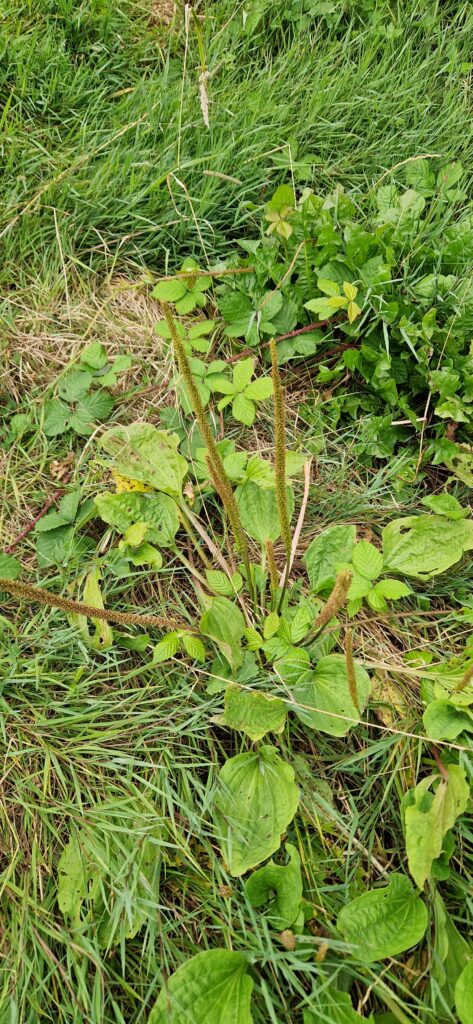
Broadleaf Plantain (Plantago major)
- Leaves: Large, oval-shaped, and broad with smooth or slightly wavy edges. Prominent parallel veins run the length of the leaf.
- Flower Stalks: Green, slender, and spike-like, with tiny flowers arranged densely along the stalk.
- Height: Up to 20 cm tall, with leaves forming a rosette close to the ground.
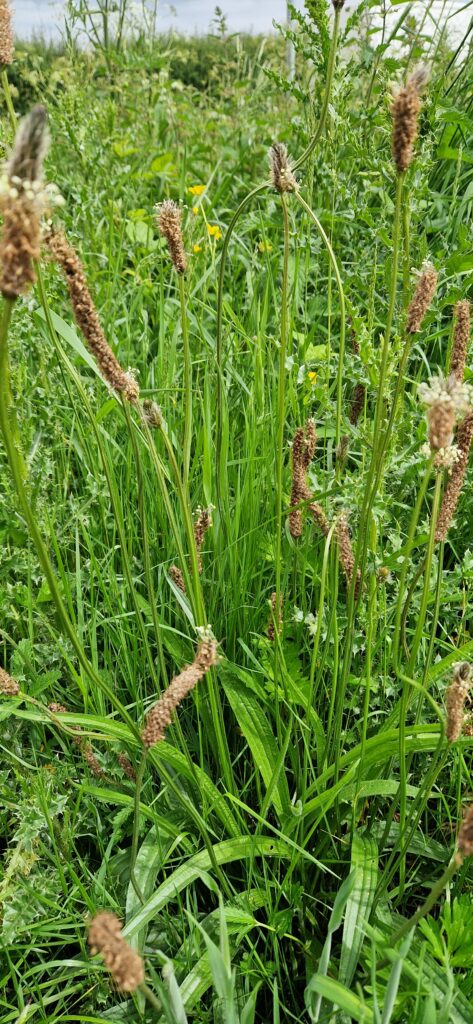
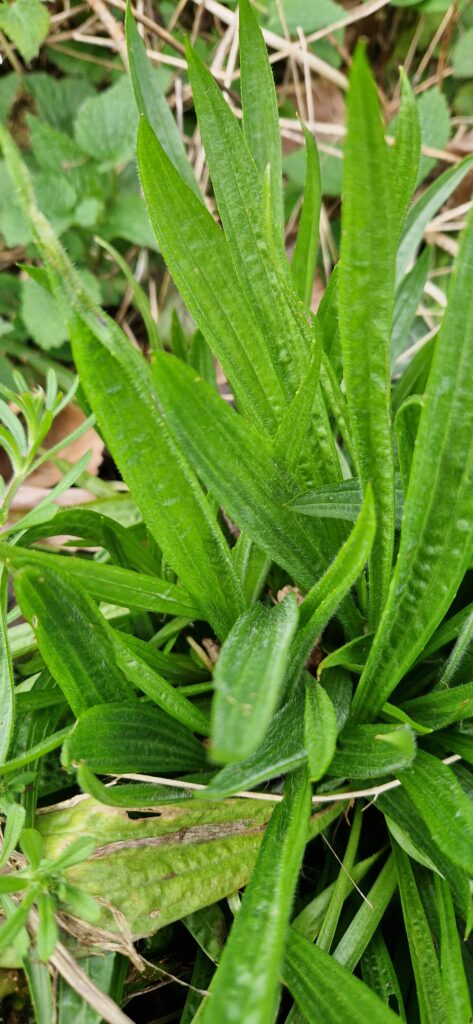
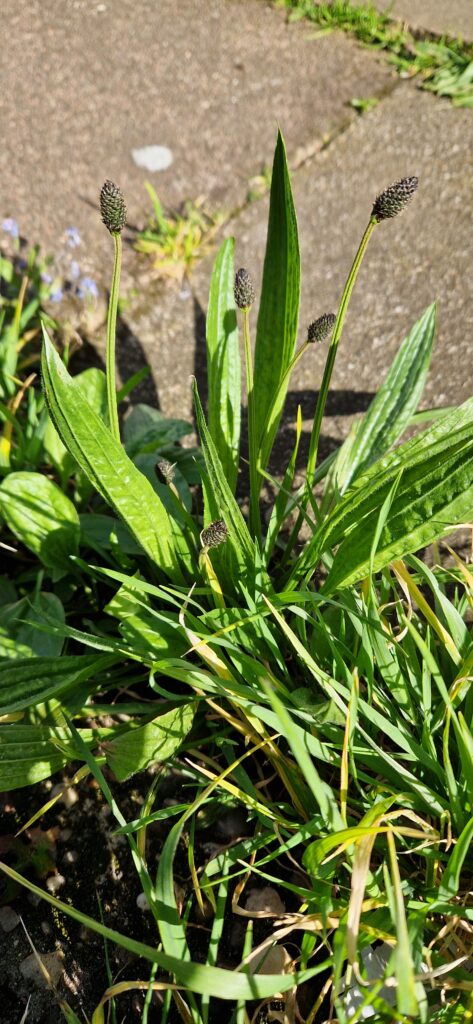
Ribwort Plantain (Plantago lanceolata)
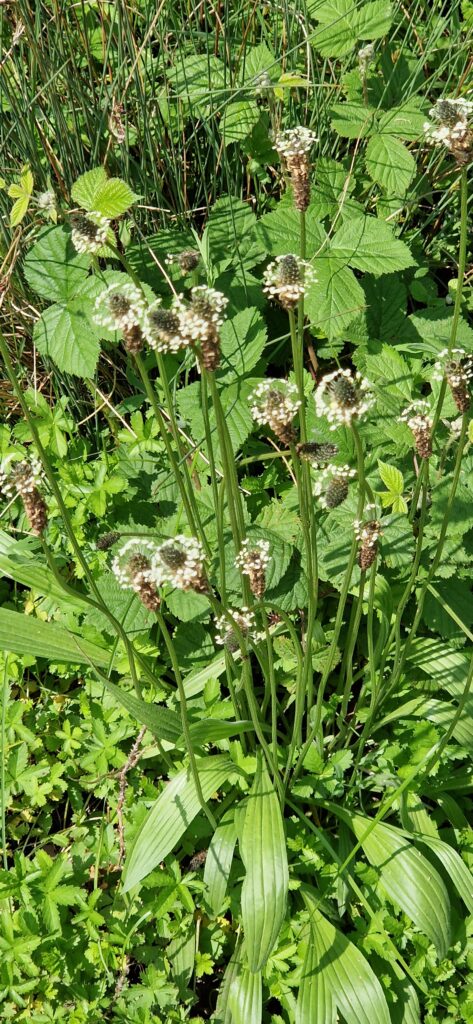
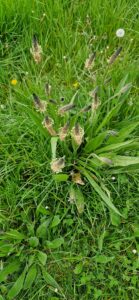
- Leaves: Narrow, lance-shaped, with prominent ribs running lengthwise. Leaves grow in a rosette at the base.
- Flower Stalks: Taller than broadleaf plantain, ending in compact, cone-shaped flower heads with small white filaments.
- Height: Can grow up to 40 cm tall.
Edibility and Culinary Uses
Plantain leaves and seeds are edible and nutritious, making them a valuable addition to a forager’s diet.
- Leaves:
- Young, tender leaves can be eaten raw in salads or blended into smoothies.
- Older leaves are better cooked due to their fibrous texture; use them in soups, stews, or as a leafy green.
- Seeds:
- Harvest mature seeds and use them as a flour substitute or sprinkle them on porridge and baked goods.
- Seeds are also a source of soluble fiber, often used in herbal remedies.
Recipe Ideas:
- Wild Greens Stir-Fry with Plantain Leaves
- Foraged Plantain Soup
- Seed Crackers with Ground Plantain Seeds
Nutritional Value & Health Benefits
Nutritional Content
- Vitamins: Rich in vitamins A, C, and K.
- Minerals: High in calcium, magnesium, and potassium.
- Fiber: Supports digestion and gut health.
Medicinal Benefits
Plantain is renowned for its healing properties, used both internally and externally:
- Skin Healing: Crushed leaves act as a natural poultice for cuts, stings, bites, and burns due to their anti-inflammatory and antimicrobial properties.
- Traditional Soothing Plantain Balm
- Respiratory Health: Ribwort plantain is often used in herbal remedies for coughs and bronchial issues.
- Digestive Aid: Known to soothe the gut and aid in digestion when consumed as a tea or infusion.
- Detoxification: Acts as a natural diuretic and helps cleanse the body.
Foraging Tips
- Best Harvesting Season: Spring to early summer for young leaves; seeds in late summer to autumn.
- Sustainability: Harvest sparingly, leaving plenty for pollinators and natural regeneration.
Folklore & History
Plantain has been valued for centuries, earning names like “waybread” for its ability to grow along footpaths. In traditional medicine, it was considered a cure-all, often referred to as “nature’s bandage” for its wound-healing abilities. Anglo-Saxon texts even list it as one of the “Nine Sacred Herbs.”
Safety Precautions
- Avoid harvesting from polluted areas, such as roadsides or chemically treated lawns.
- Test for allergies, particularly when using as a poultice or consuming in large amounts for the first time.
Broadleaf and ribwort plantain are not only resilient survivors but also invaluable allies in the world of foraging. Their versatility in both the kitchen and medicine cabinet makes them a must-know plant for any wild food enthusiast. Add plantain to your foraging repertoire and explore its rich history and benefits!
Not sure about plant identification? Join us for the next foraging event in Charnwood, Leicestershire.