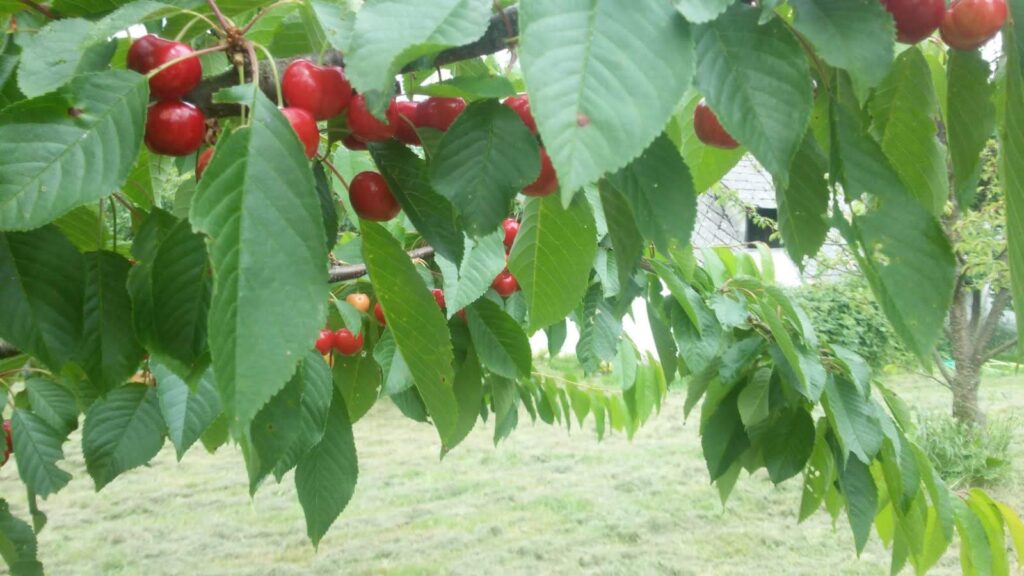
Latin name: Prunus avium
Other names: Sweet Cherry, Bird Cherry
Habitat
The Wild Cherry tree (Prunus avium) is native to Europe, western Asia, and parts of northern Africa. It thrives in well-drained soils, preferring sunny or partially shaded locations. Frequently found in woodlands, hedgerows, and meadows, this tree is a favorite among wildlife due to its blossoms and fruit.
🌳 Want to identify wild trees like the Wild Cherry? Join our next foraging event in Charnwood, Leicestershire, and enhance your skills.
Appearance
Leaves
- Oval-shaped with serrated edges, dark green on top and lighter underneath.
- Turn brilliant yellow or red in autumn.
- Grow 7–15 cm in length and are arranged alternately.
Flowers
- Bloom in clusters of small, white, five-petaled flowers in early to mid-spring.
- Fragrant and a key food source for bees and pollinators.
Stem
- Smooth, reddish-brown bark on younger trees, developing horizontal lines (lenticels).
- Older trees feature deeply fissured bark.
Fruit/Seeds
- Small, round fruits that ripen to a glossy red or dark purple by early summer.
- Sweet and juicy, each fruit contains a single hard stone.
Edibility & Recipes
Wild Cherry fruits are a delicious seasonal treat:
- Raw: Eat fresh off the tree for a sweet snack.
- Preserves: Turn into jams, jellies, or syrups.
- Baking: Perfect for pies, cakes, and clafoutis.
- Beverages: Use in cordials or infuse spirits like gin or vodka and even wine.
Health Benefits
Wild Cherries are packed with nutrients:
- Vitamin C: Boosts immunity and skin health.
- Anthocyanins: Potent antioxidants that reduce inflammation.
- Melatonin: Supports better sleep.
- Fiber: Promotes digestive health.
Foraging Season
The best time to forage Wild Cherries is in early to mid-summer. Look for ripe, deep red to purple fruits that are plump and easily detached from the tree.
Folklore & Interesting Facts
- Symbolism: Associated with love, beauty, and new beginnings in many cultures.
- Wildlife Benefits: Birds, squirrels, and other animals feast on the fruits, aiding in seed dispersal.
- Historic Uses: Ancient Romans cultivated Wild Cherries for their fruits, and the wood was prized for crafting furniture.
Health Precautions
- Wild Cherry seeds and leaves contain cyanogenic glycosides, which can release cyanide. Avoid consuming the seeds and wilted leaves.
- Ensure the fruit is fully ripe before eating to enjoy its flavor and avoid bitterness.
✨ Ready to explore the Wild Cherry and other native trees? Join our foraging events in Leicestershire and uncover the wonders of nature!