
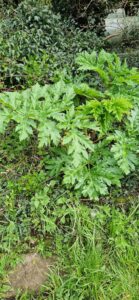
A highly dangerous invasive plant that must never be touched
Giant Hogweed is one of the most hazardous plants found in the UK. While visually striking, it poses a serious risk to human health, causing severe skin reactions when handled or even brushed against in sunlight.
This is a plant that foragers must learn to identify and avoid completely.
🌳 Habitat
Commonly found in:
- Riverbanks and streamsides
- Waste ground and disturbed land
- Road verges and embankments
It thrives in damp soils and can form dense, dominating stands.
🔍 Identification Features
- Height: Can reach 2–5 metres tall
- Stems:
- Thick, hollow
- Green with distinct purple blotches
- Covered in coarse white hairs
- Leaves:
- Very large, deeply lobed and jagged
- Can span over 1 metre across
- Flowers:
- Large white umbrella-shaped clusters (umbels)
- Can be up to 50 cm across
⚠️ Lookalikes
- Common Hogweed (Heracleum sphondylium) – much smaller and far less dangerous
- Other members of the carrot family (Apiaceae)
⚠️ Misidentification can have serious consequences — always assume risk if unsure.
☠️ Edibility
Not edible. Do not consume. Do not handle.
🌿 Ecology & Impact
- Non-native invasive species in the UK
- Outcompetes native plants and reduces biodiversity
- Often subject to control and reporting efforts
📅 Season
- Rapid growth in spring
- Most noticeable and hazardous in summer when large and in flower
⚠️ Health Warning
Giant Hogweed sap contains phototoxic chemicals (furanocoumarins) that react with sunlight.
Contact with sap can cause:
- Severe skin burns
- Blistering (similar to chemical burns)
- Long-lasting scars
- Increased sensitivity to sunlight for months or even years
Important precautions:
- ❌ Do not touch any part of the plant
- ❌ Do not strim, cut, or handle without specialist protection
- ❌ Keep children and pets well away
If contact occurs:
- Wash the area immediately with soap and water
- Keep the affected skin out of sunlight
- Seek medical advice if a reaction develops
🌿 Key Learning Point
Giant Hogweed is a perfect example of why foraging is not just about what you can eat — it’s also about what you must avoid.
Learning to confidently identify dangerous species is just as important as finding edible ones.