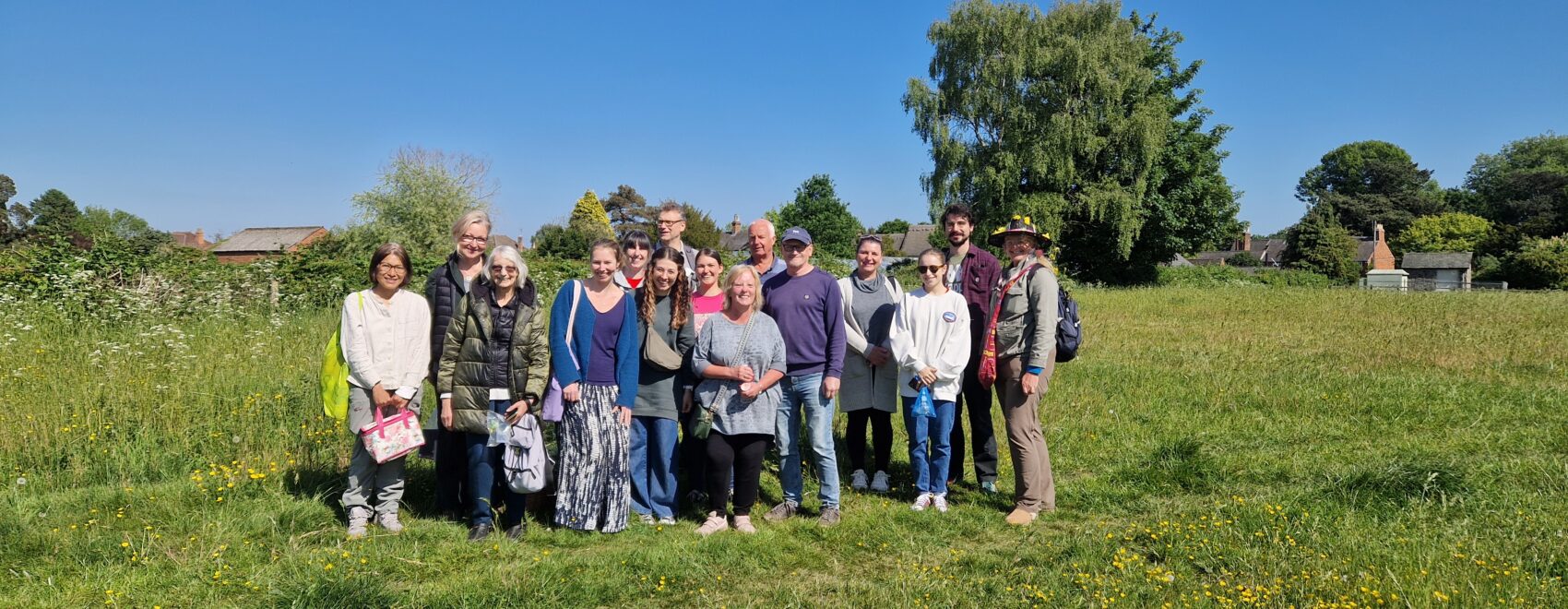
17th May 2025 14:30 – 17:30 pm
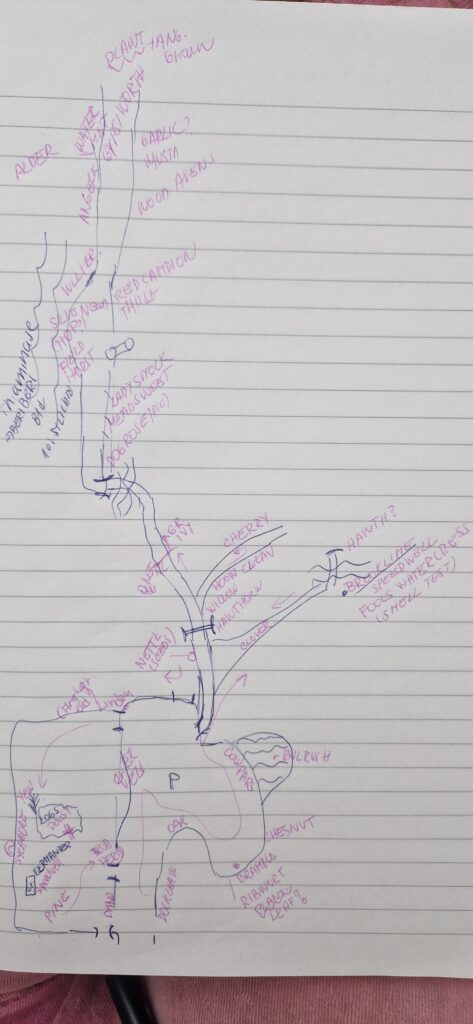
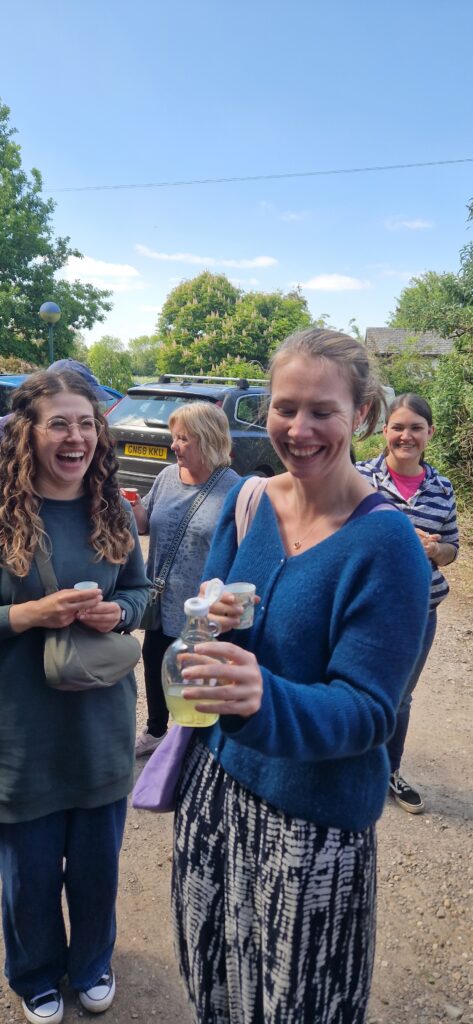
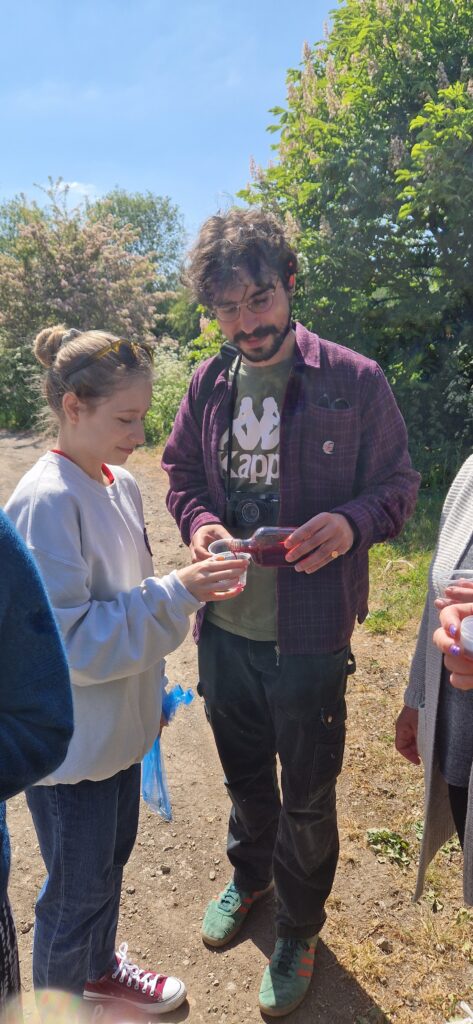
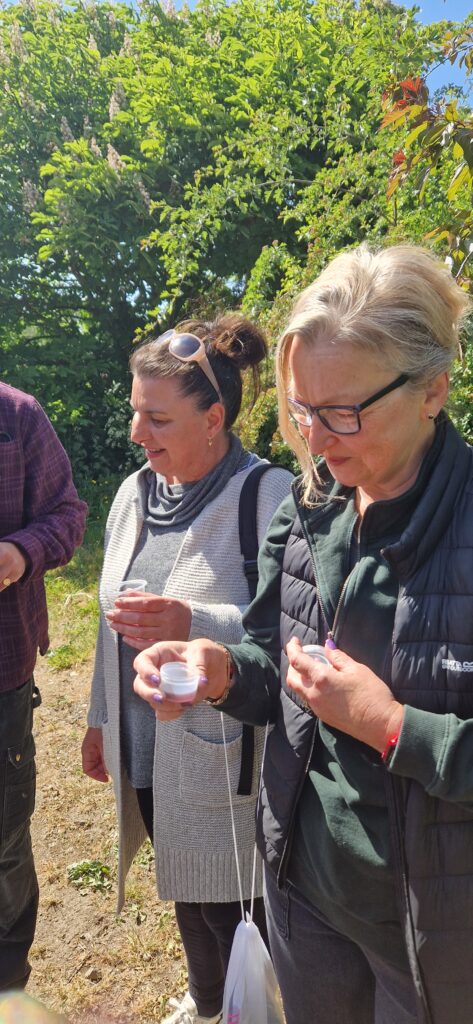
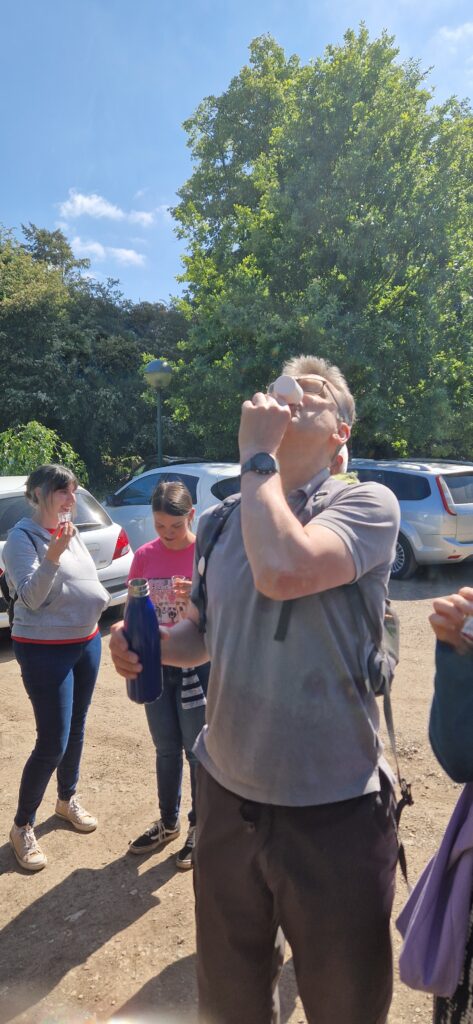
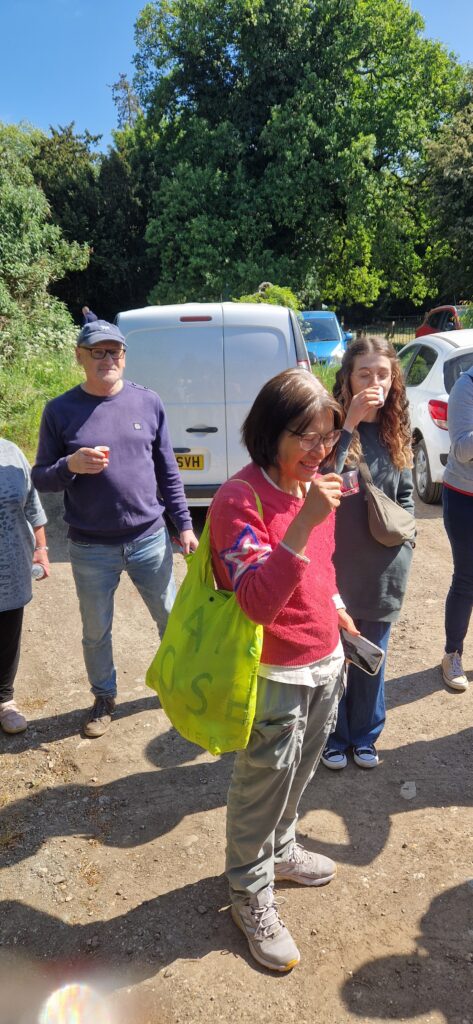
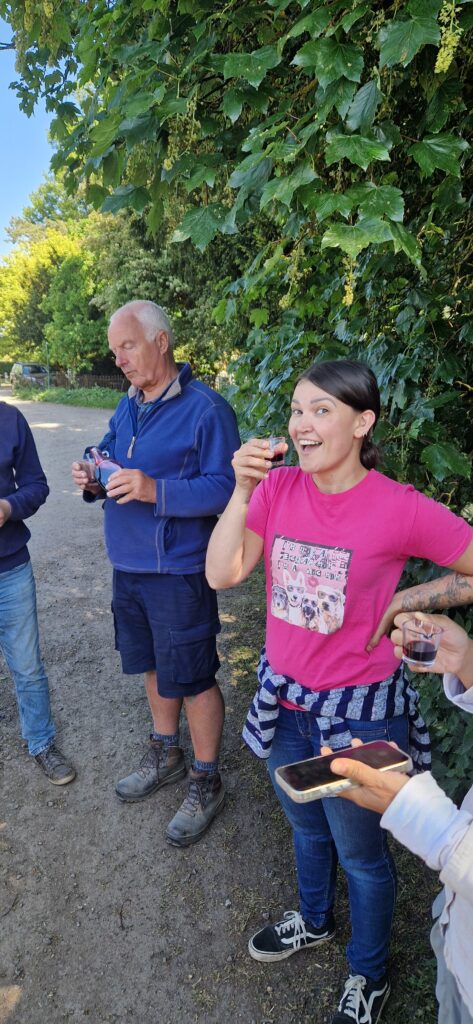
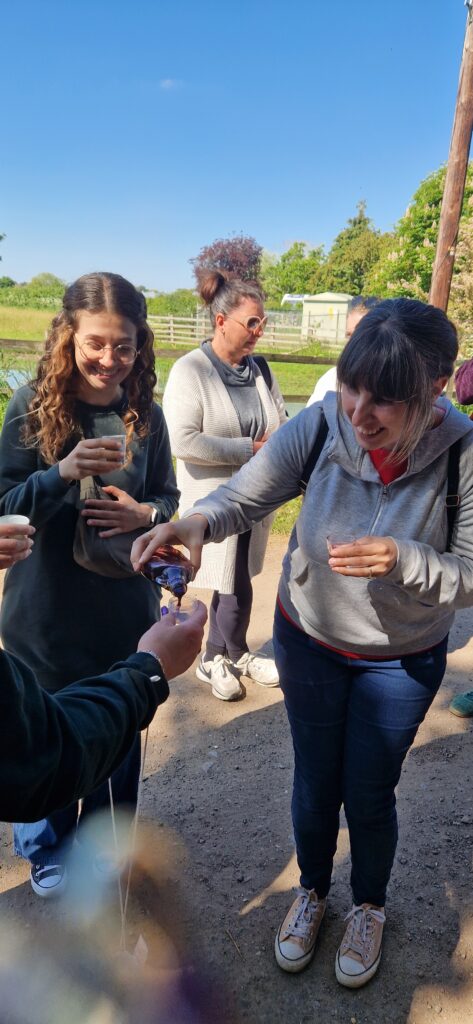
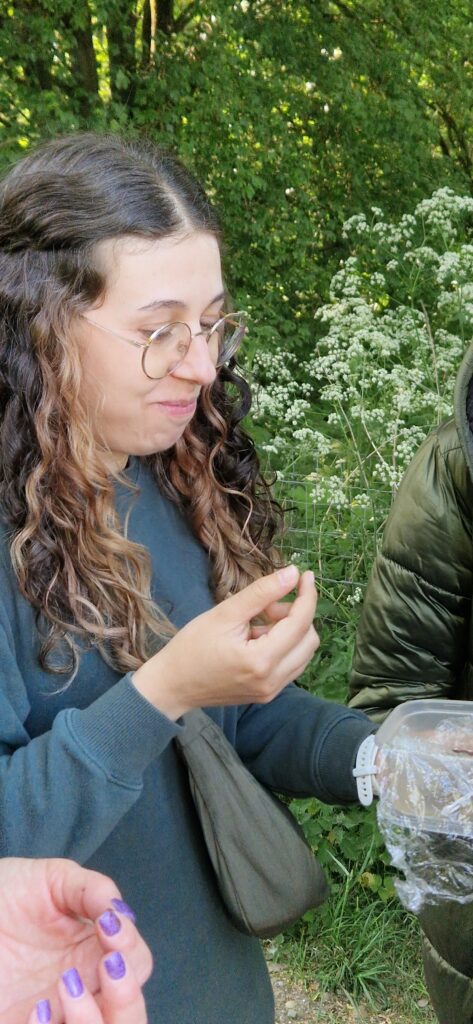
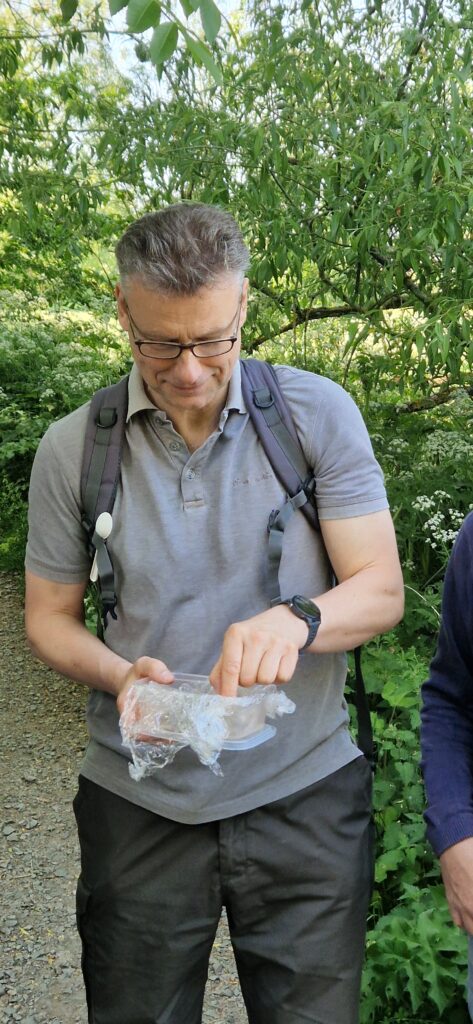
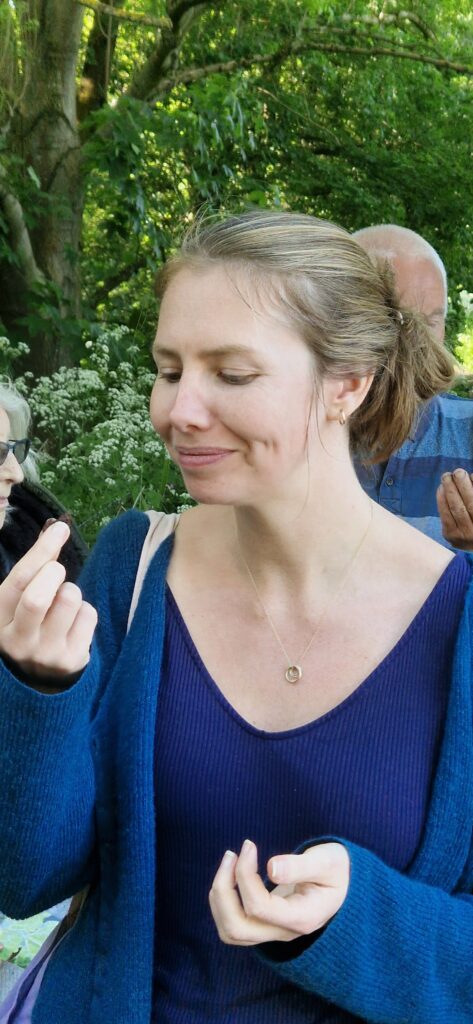
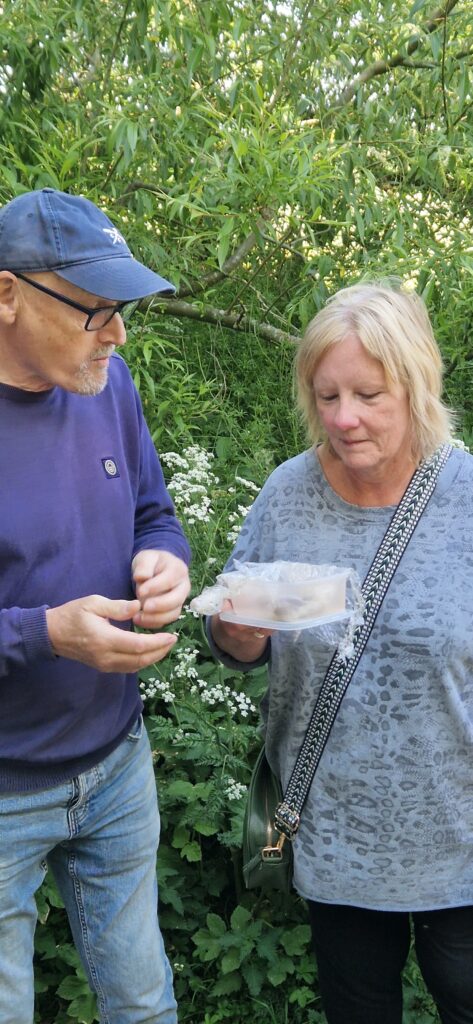
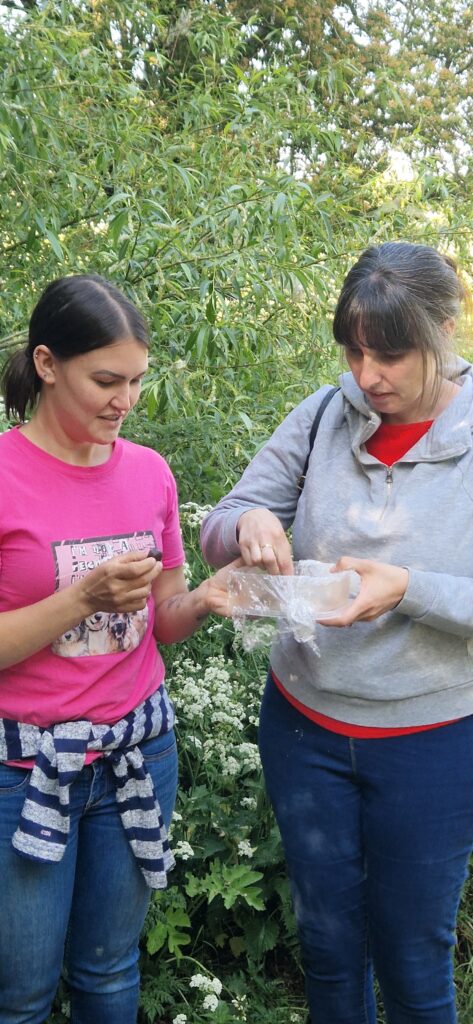
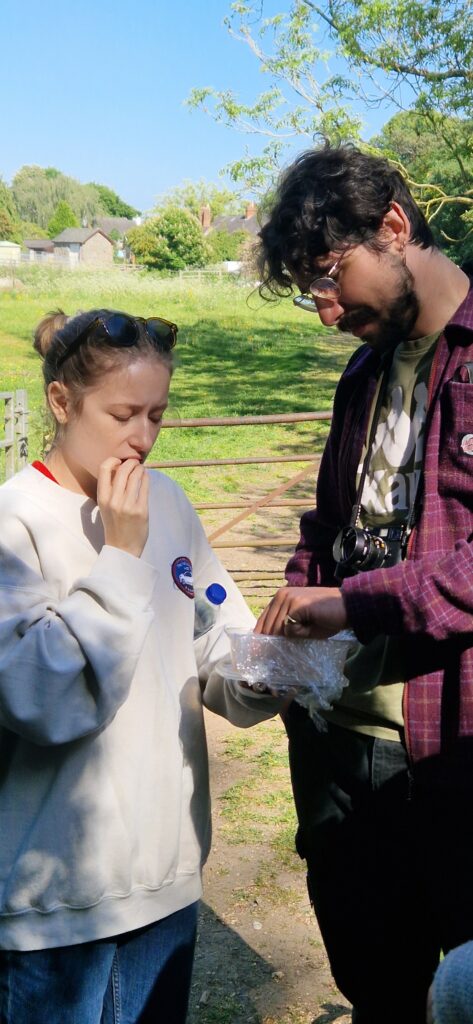
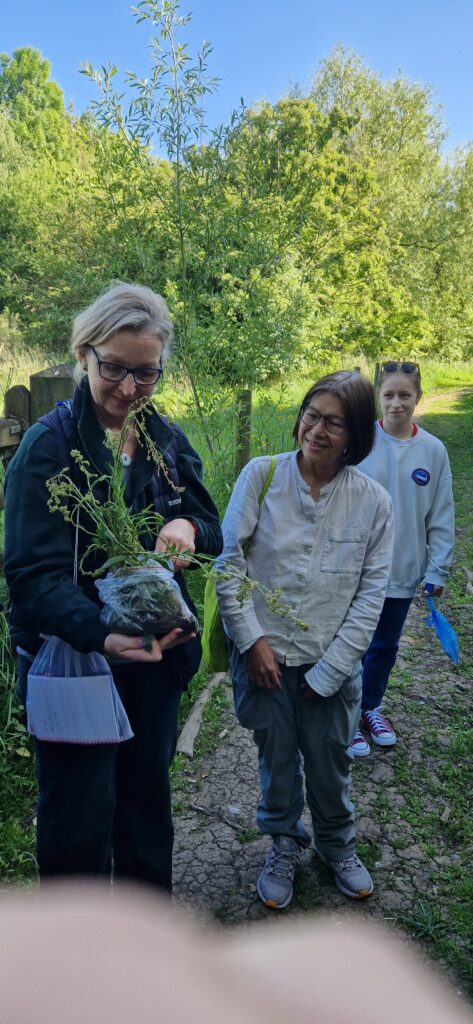
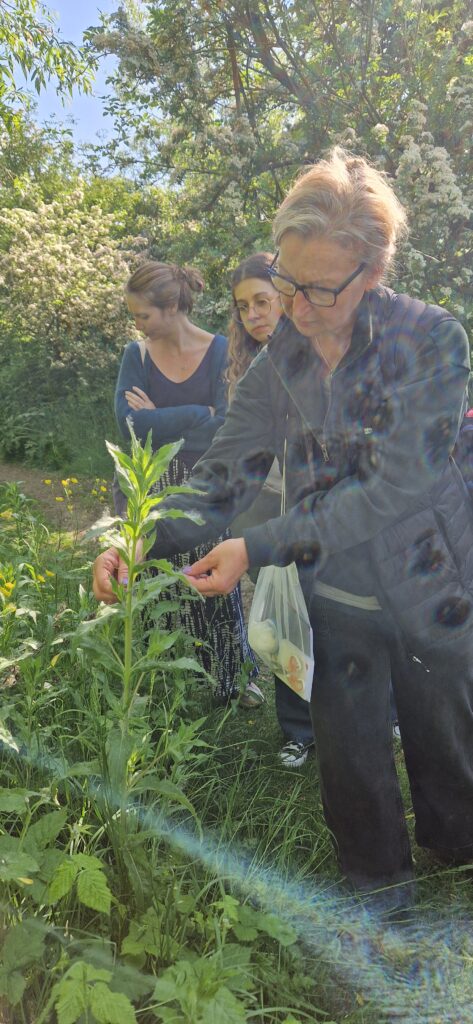
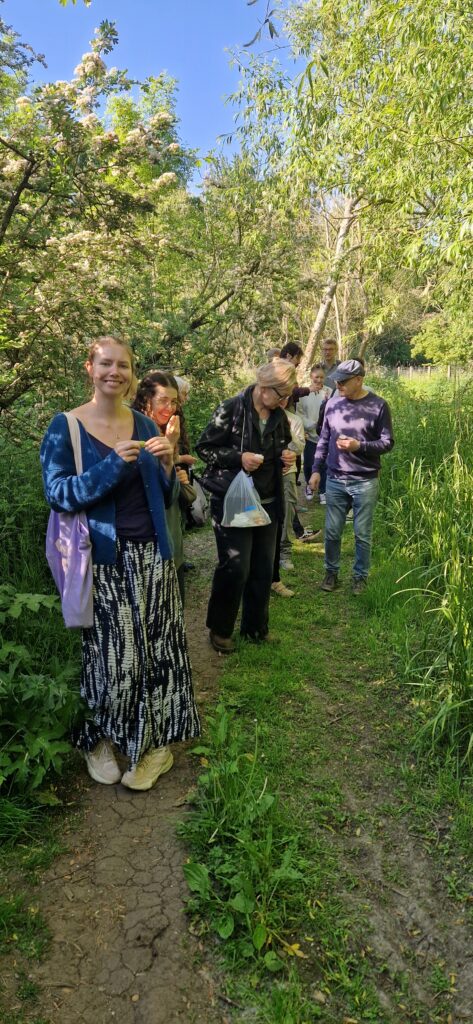
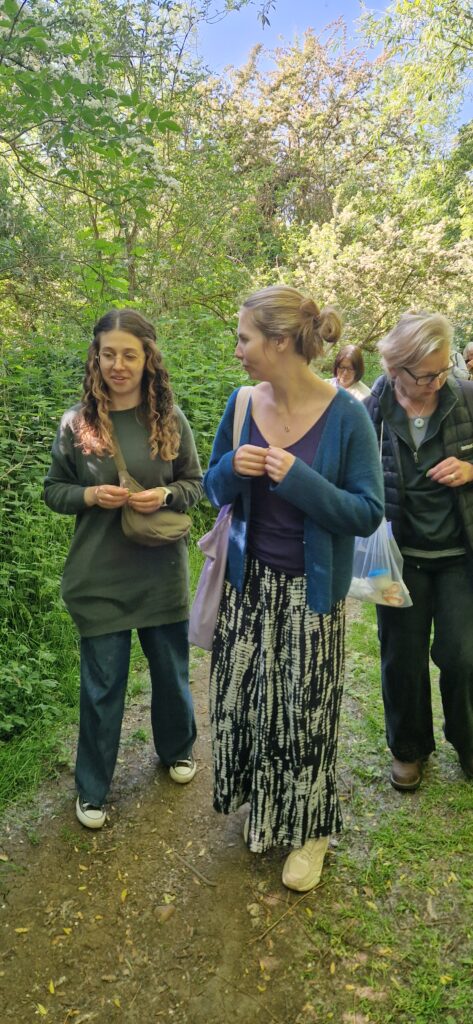
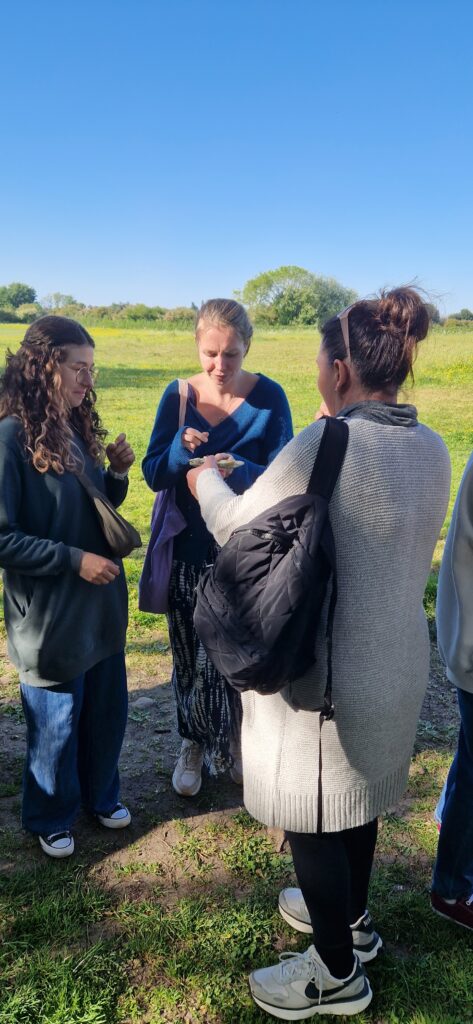
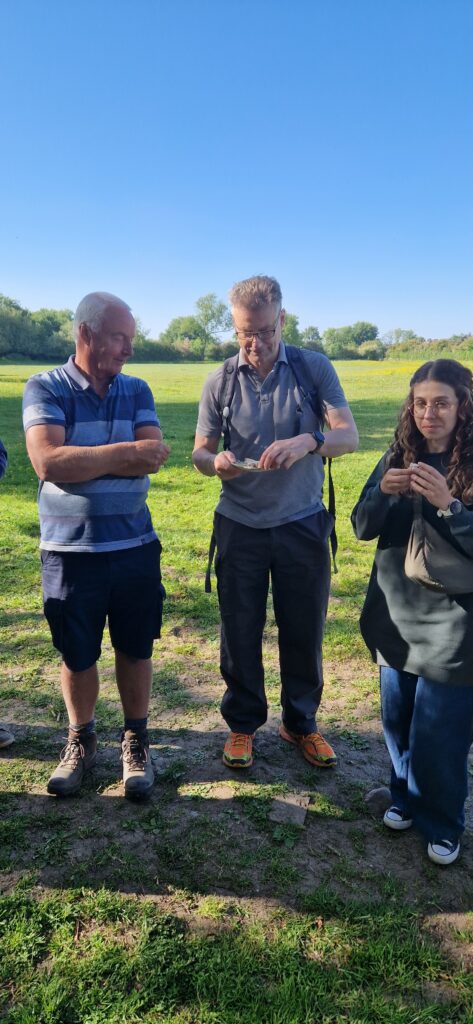
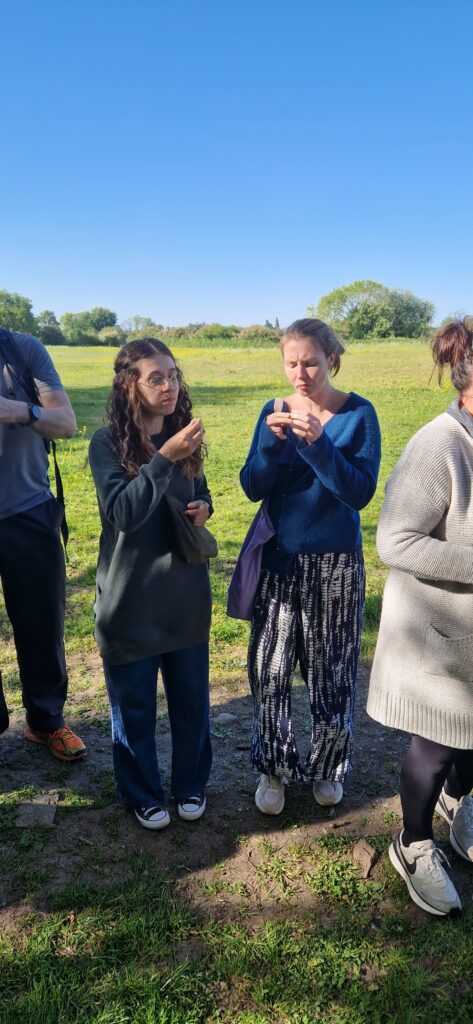
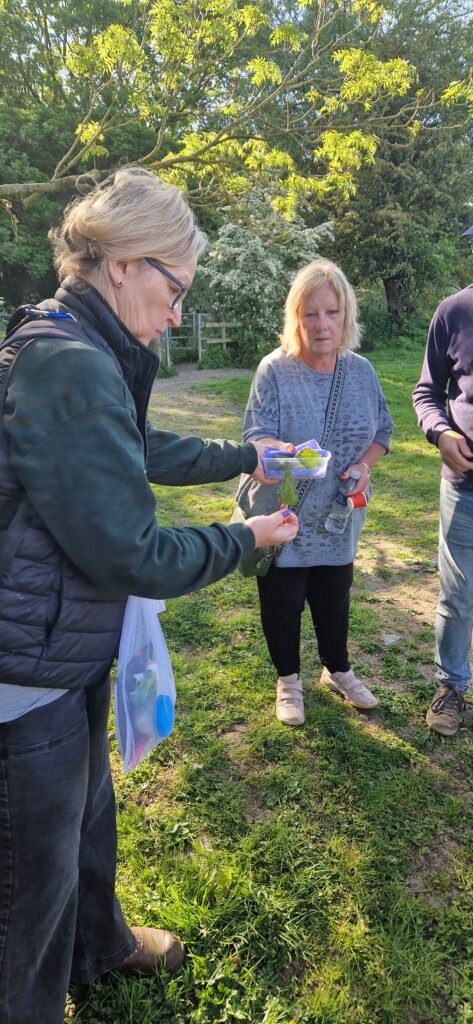
First time at Cossington, we met at free carpark by All Saints Church on the main road. Everyone arrive early and therefore had time to explore the parkign itself for wild edibles. Some experince forager spoted nearly 10! In the entire course we learnt around 40 species and tasted over 20 different samples. Here is what we did:
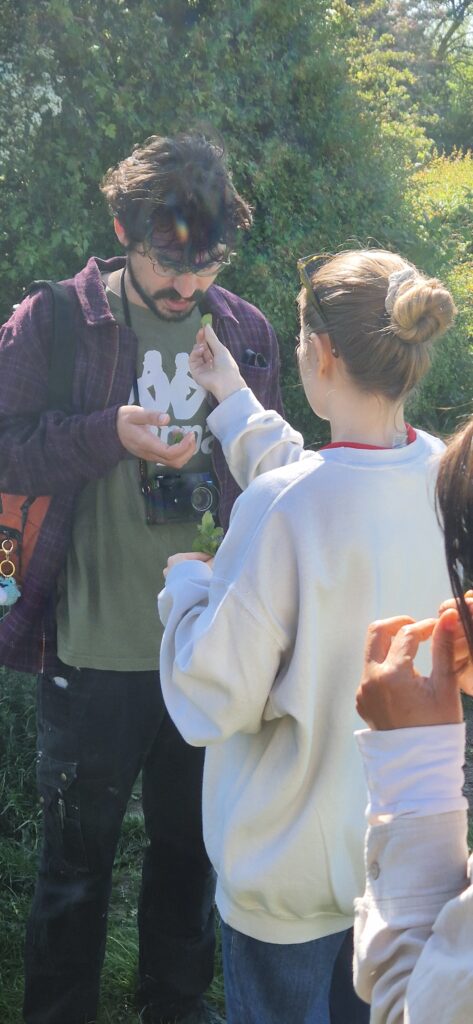
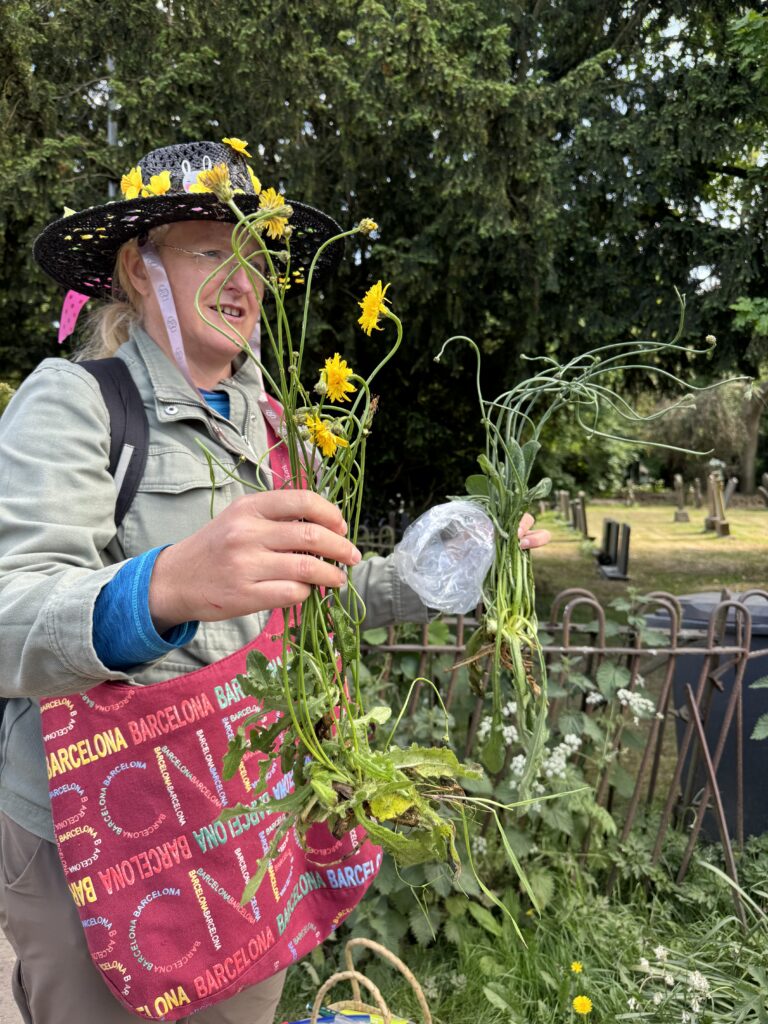
Started with the foraging classic – dandelion ..but ahh what are the closest lookalikes we spot as weed in our garden. With a little help from home foraged samples, we could see the difference in leaf structure of cats-ear, hawkbit and dandelion. Good to know which one is which especally in the autum when the look-a-like- taste very bitter and we dont want to discard all for one. After trying to prepare the dandelions flower head petals, we appreciated the work needed to make any great recipes: Poor-man’s dandelion honey, Bhaji and pickled dandelion buds were on the manu of the day.
We continued along the parking edge to stop at oak and tasted few roasted acorns.
Another classic – Bramble, of course berries are not yet in season but we wetted our appetite with Blackberry cordial.
We have learnt the key features of cow parsley and how not to confuse it with poisonous hemlock.
In the nearby pond we spotted what we all now know is NOT A BULLRUSH but a reedmace.
Before heading out across the field, we stopped to learn about Ground elder (tasted fresh greens) and elder – the lovely bush where both flowers and berries make a great cordial.
On the way to the brook, we have learn differnt uses of clover.
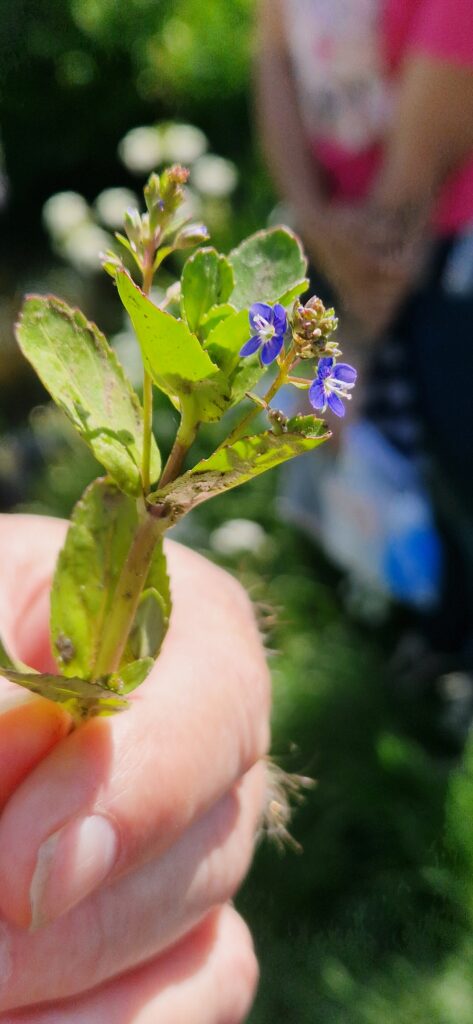
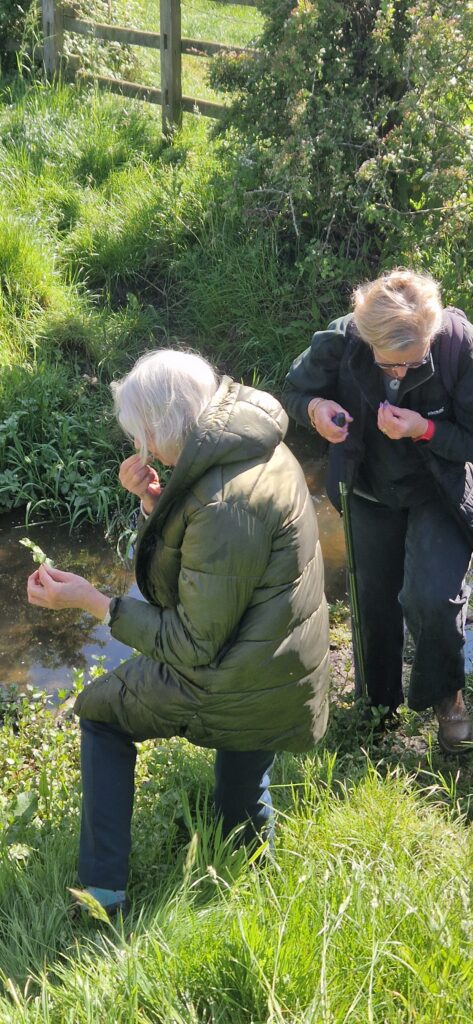
Near the brook we tested our capability to smell with a little fun excercise – carrot smelling fools watercress – which of course was not so easy to tell what the smell is until we knew, what it was. The brain is a funny thing. We also managed to have a closer look at tiny blue flowers of Brookline Speedwell – Veronica- resembling the imprint of Jesus’s face on the vail. Later on we were hoping to see Germander speedwell in the cemetery with very similar flowers, but very differnt stem and leaves. (unfortunatelly we run out of time)
As we walked back towards the main path, we made a little sandwich from hawthorn.
Quick mention about willow and taking a leaf for later comparison with Willowherb. Depending on the leaf structure, we can now tell apart true Rosebay Willowherb from not so tasty greater willowherb. We have tasted jam made from flowers and tea made from leaves.
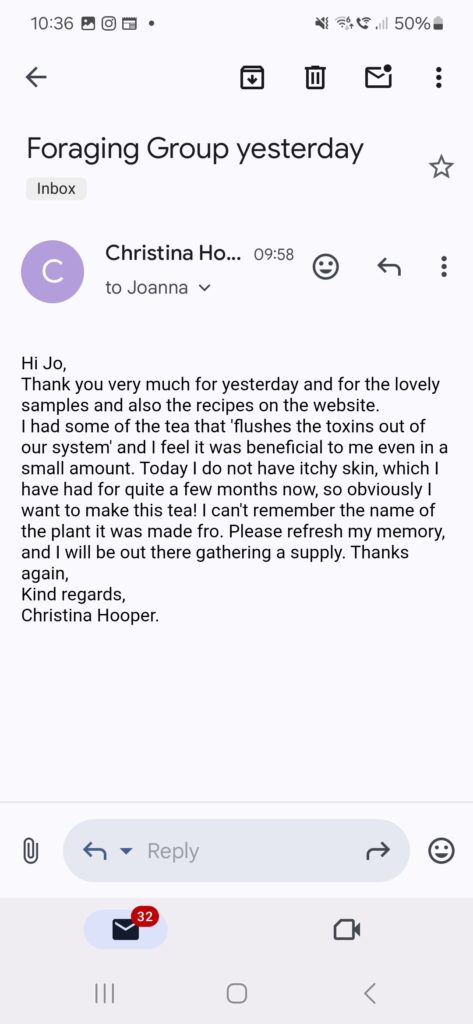
A little detour to discover wild cherry and tasted a lovely jam. Cleaver with its toxin removing tonic.
All time favoured of Charnwood Foraging versatile Common Hogweed and its broccoli like turrets just ready for harvest. And the secret of Charnwood Foraging signature chocolates. 🙂
We all know dog rose and its edible petals and rosehips but we have also discovered what a small female vasp can prepare for us.
We have studied the importnat difference between bitter dock leave, lemony sorrel (pointing us to use it) and poisonous Lords and Ladies.
We have also learnt the difference between deadnettle ( sweet tasting for cake or tea) and bitter ground ivy.
On a small stretch of path after the dog rose, we also encountered meadowsweet (good for hangover-which we of course never have), hop and silverweed, thistle, plantain. The field horsetail relative of giant horsetail.
Use of roots from wood avens to sooth the tooth ache or to flavour mulled wine and the traditional candid sweet from anglelica.
As we were nearing the end of our allocated time, our last stop was by a patch of stinging nettles. We enjoyed a bit of bread made from its seeds and crunchy leaves as crisp.
We concluded the adventure with calming tea made from Linden tree flowers.
We have collected a little bit more for LRWT charity which I am sure will be greatly appreciated.

- Nature Exploration
- Plant Identification
- Outdoor Learning
- Sustainable Living
- Community Bonding and team building
- Foraging near me Leicestershire