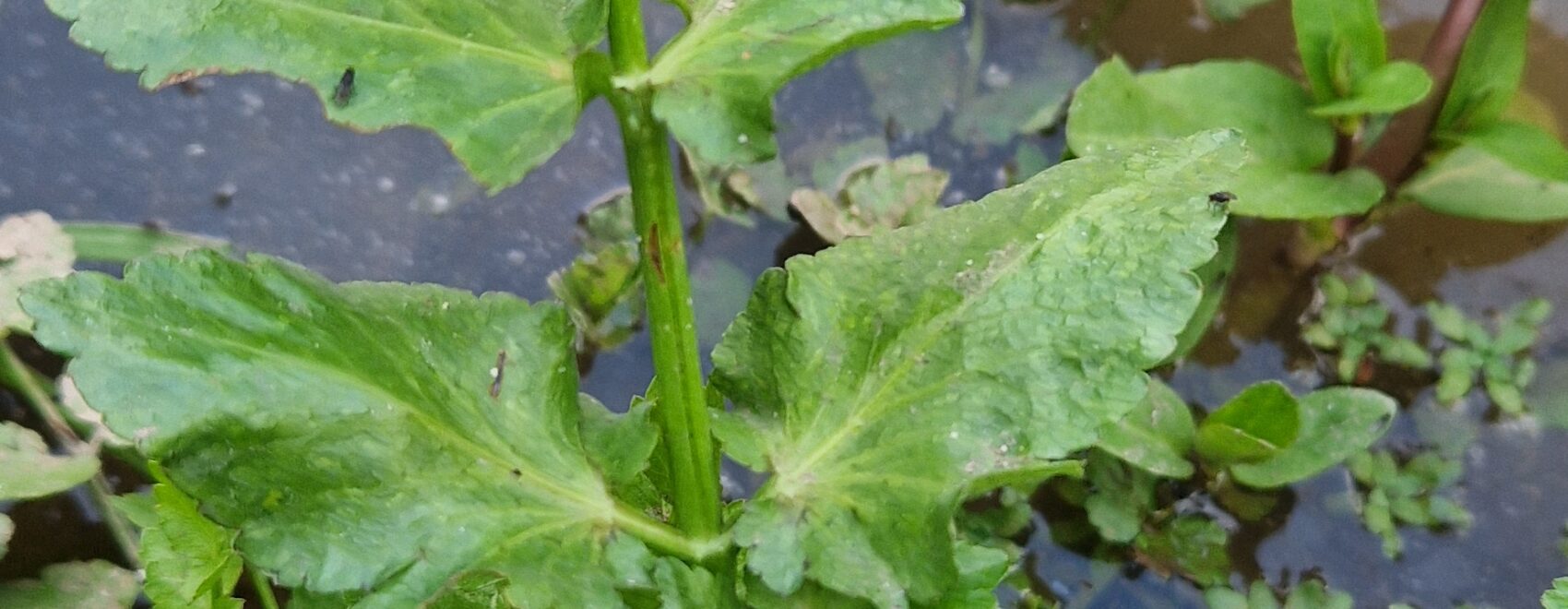
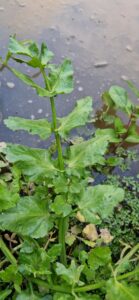
Fool’s Watercress (Apium nodiflorum) is a semi-aquatic plant often found along the edges of slow-moving streams and ditches. Though its name suggests caution, this wild edible is safe when properly identified and offers a crisp, peppery addition to salads and other dishes.
Overview
Latin Name: Apium nodiflorum
Common Names: Fool’s Watercress, Wild Celery, Bastard Watercress
Natural Habitat
Fool’s Watercress thrives in damp and aquatic environments, including:
- Stream and riverbanks
- Ditches and canal edges
- Marshes and wet meadows
It prefers flowing fresh water and is often seen sprawling or rooting in shallow areas, growing most actively from spring through autumn.
Identification
Leaves:
Bright green, glossy, and pinnate (feather-like) with oval or rounded leaflets. The leaves have a celery-like smell when crushed.
Stems:
Hollow, smooth, and often reddish or green, they can creep along the ground or float in water.
Flowers:
Tiny white flowers appear in small clusters (umbels) during summer. They resemble those of other members of the carrot family.
Height:
Typically ranges from 10 to 60 cm tall but can sprawl over larger areas when growing in water.
Edibility and Medicinal Uses
Despite its name, Fool’s Watercress is edible and not toxic when correctly identified. It offers a mild peppery taste similar to true watercress and has been valued for both culinary and traditional herbal uses.
Culinary Benefits
Leaves and Stems:
Best harvested young and tender, they can be eaten raw or cooked. Add to:
- Salads
- Soups and stews
- Stir-fries
- Pestos and green sauces
The taste is somewhere between parsley and celery, with a slight peppery kick.
Medicinal Benefits
While less studied than other wild edibles, Fool’s Watercress has been used traditionally for:
- Diuretic properties – to help flush the system
- Digestive support – to promote appetite and soothe mild stomach complaints
Preparation and Uses
Raw: Add finely chopped to salads for a fresh, herby flavour.
Cooked: Lightly wilt in soups or stir-fries – cooking reduces the peppery intensity.
Infusion: Though less common, young leaves may be steeped as a mild herbal tea.
Foraging Tips
Best Harvesting Season:
Late spring to early autumn when the leaves are tender and abundant.
Sustainability:
Harvest in moderation, and avoid pulling up roots. Ensure the water source is clean, as aquatic plants can absorb pollutants.
Pro Tip:
Always forage Fool’s Watercress upstream and away from farmland or areas likely to be contaminated. Avoid it altogether if growing near stagnant or polluted water.
Folklore & History
The term “Fool’s” in its name likely refers to its resemblance to true watercress (Nasturtium officinale), a plant with similar appearance but different botanical lineage. Historically, confusion between edible and toxic water plants led foragers to err on the side of caution—hence the name.
Safety Precautions
- Lookalike Warning: Be absolutely certain of identification. Fool’s Watercress can be mistaken for toxic plants like Lesser Water-Parsnip (Berula erecta) or Hemlock Water Dropwort (Oenanthe crocata), which are deadly.
- Water Quality: Only harvest from clean, running water. Avoid any plant growing in polluted or stagnant water.
- Cooking: Light cooking can help eliminate any minor microbial contamination from water.
Conclusion
Fool’s Watercress is a refreshing and flavourful wild edible that rewards careful foraging with crisp, peppery greens perfect for the plate. While its name warns of mistaken identity, with proper knowledge and caution, this aquatic herb can be a delicious and safe addition to your wild food journey.
Want to learn more about safely identifying wild edibles like Fool’s Watercress?
Join our foraging courses in Charnwood, Leicestershire.