Wild Angelica is a remarkable plant cherished for its culinary and medicinal uses. Known for its aromatic stems and umbrella-like clusters of delicate flowers, this native European herb has a long history in traditional recipes, particularly for creating candied sweets that are as delicious as they are unique.
Overview
Latin Name: Angelica sylvestris
Common Names: Wild Angelica, Woodland Angelica
Natural Habitat
Wild Angelica thrives in damp, nutrient-rich environments across Europe and parts of Asia. It can often be found in:
- Meadows and wet grasslands
- Riverbanks and stream edges
- Woodland clearings
- Moist roadside verges
Preferring partial to full sunlight, it grows best in fertile, well-drained soil.
Identification
Leaves
- Finely divided, feathery, and dark green with a slight sheen.
- Arranged alternately on tall, hollow stems.
Flowers
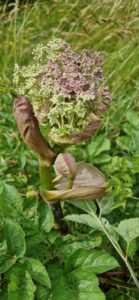
- Small, pale pink or white, forming rounded clusters called umbels.
- Bloom from midsummer to early autumn, attracting pollinators.
Stem
- Color:
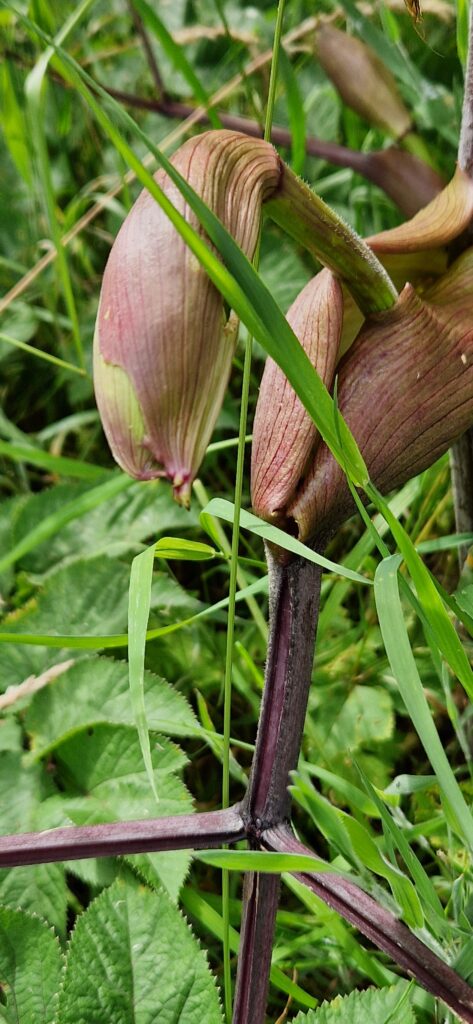
- Typically a light green or greenish-purple.
- May have a reddish or purplish tint, particularly near the base or joints.
- Shape:
- Hollow and smooth, with a round, cylindrical structure.
- Often slightly ridged or grooved along its length.
- Size:
- Sturdy and upright, growing to a height of 1 to 2 meters (3 to 6 feet).
- The diameter varies but is generally thick enough to support the large leaves and flower clusters.
- Texture:
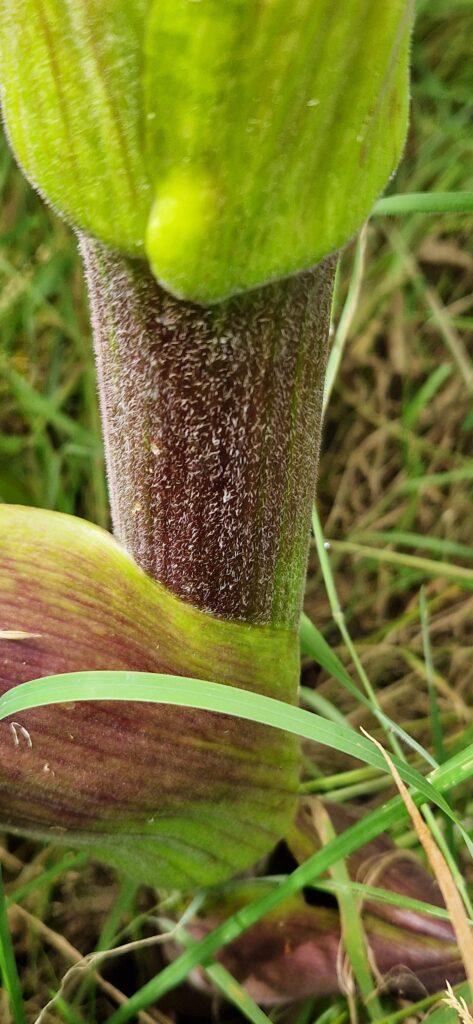
- Smooth to the touch, without hairs or bristles.
- The hollow interior makes the stem lighter than it appears.
- Key Features:
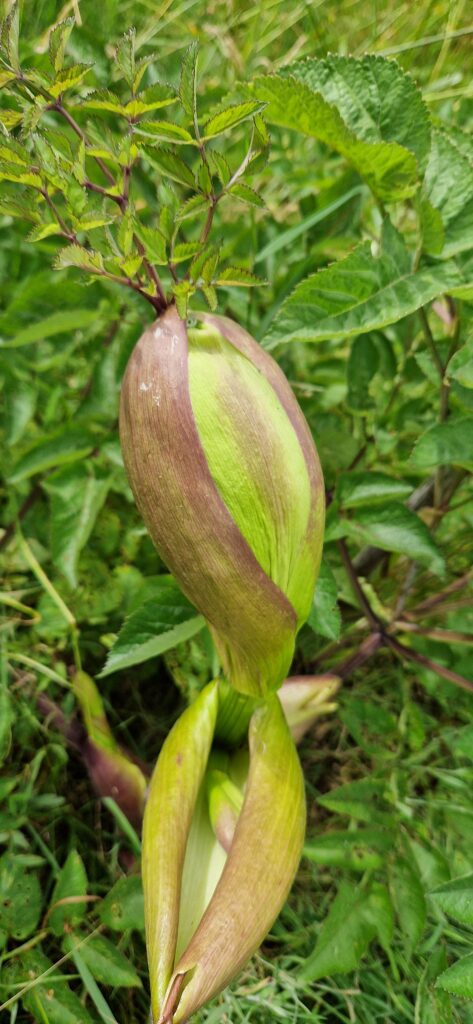
- Jointed where the leaves and branches emerge, with sheathing bases at leaf junctions.
- Breaks cleanly when snapped, with a visible hollow center.
Height
- Typically grows 1 to 2 meters tall, with sturdy, upright stems.
Edibility and Culinary Uses
Wild Angelica is a prized ingredient in traditional European recipes, particularly for its candied stems, which are both a treat and a garnish.
Culinary Uses
- Stems (Young): Ideal for candying or as a flavoring agent in syrups and desserts.
Traditional candid angelica recipe
- Leaves (Young): Used sparingly in teas or to flavor savory dishes.
- Seeds: Aromatic, often used as a spice or in liqueurs like Chartreuse.
Nutritional Value & Health Benefits
Nutritional Content
- Vitamins: Rich in vitamin C and moderate amounts of vitamin A.
- Minerals: Contains iron, magnesium, and potassium.
- Aromatic Compounds: Known for its digestive and soothing properties.
Health Benefits
- Digestive Aid: Traditionally used to ease bloating and indigestion.
- Respiratory Support: Mildly effective in alleviating coughs and colds.
- Calming Effect: Valued for its ability to reduce anxiety and promote relaxation.
Foraging Tips
- Best Harvesting Season: Early spring for stems, summer for flowers and seeds.
- Sustainability: Harvest responsibly; leave some plants to support local ecosystems.
- Safety: Ensure correct identification, as Wild Angelica resembles some toxic plants like Hemlock.
Folklore & History
Wild Angelica has long been associated with protection and healing. In medieval times, it was believed to ward off evil spirits and the plague. Its sweet, aromatic stems were a favorite among European confectioners, who transformed them into delightful candied treats.
Safety Precautions
While Wild Angelica is generally safe to consume, always exercise caution:
- Avoid Overconsumption: Especially if pregnant or nursing.
- Proper Identification: Do not confuse it with toxic lookalikes like Water Hemlock (Cicuta spp.) or Giant Hogweed (Heracleum mantegazzianum). Giant Hogweed stems: Have coarse hairs
Conclusion
Wild Angelica (Angelica sylvestris) is a fascinating plant that brings both beauty and utility to the table. From its sweet candied stems to its herbal medicinal properties, it is a treasure trove for foragers and cooks alike. Explore its rich history and delightful recipes while embracing the art of sustainable foraging.
Not sure about plant identification? Join us for the next foraging event in Charnwood, Leicestershire.