
The dog rose (Rosa canina) is a beautiful wildflower and a treasure for foragers, offering vibrant blooms and vitamin-packed hips. Found throughout hedgerows and woodland edges, this iconic plant is valued for its nutritional, medicinal, and culinary uses. Its delicate flowers and bright red fruits make it a standout in the natural landscape.
Overview
- Latin Name: Rosa canina
- Common Names: Dog Rose, Wild Rose, Hedge Rose
- Family: Rosaceae
Natural Habitat
Dog rose is native to Europe, North Africa, and parts of Asia, and it thrives in:
- Hedgerows and scrublands
- Woodland edges and meadows
- Gardens and disturbed areas
It prefers sunny to partially shaded locations and can grow in a variety of soil types, from sandy to clay-rich.
Identification
Leaves
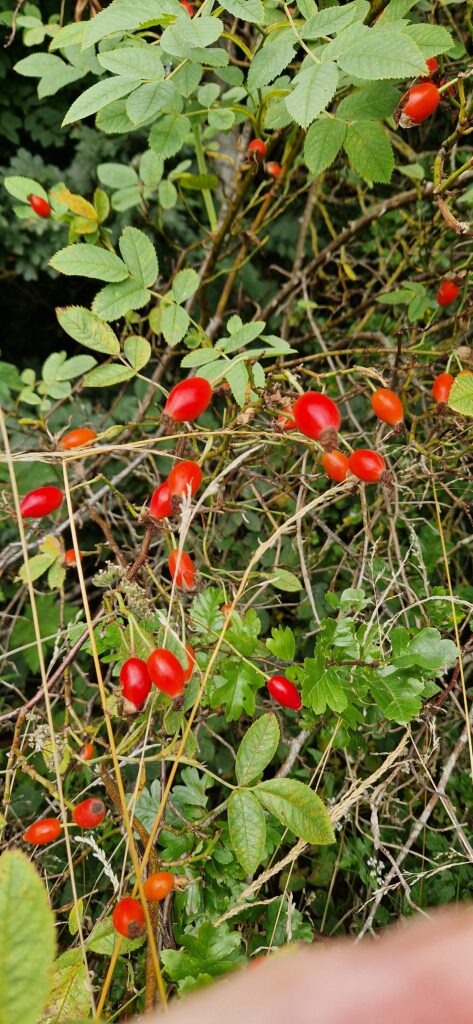
- Pinnate leaves with 5–7 oval leaflets.
- Each leaflet has serrated edges and a dark green color.
Flowers
- Five-petaled flowers, ranging from pale pink to deep rose, with a delicate fragrance.
- Bloom from late spring to mid-summer.
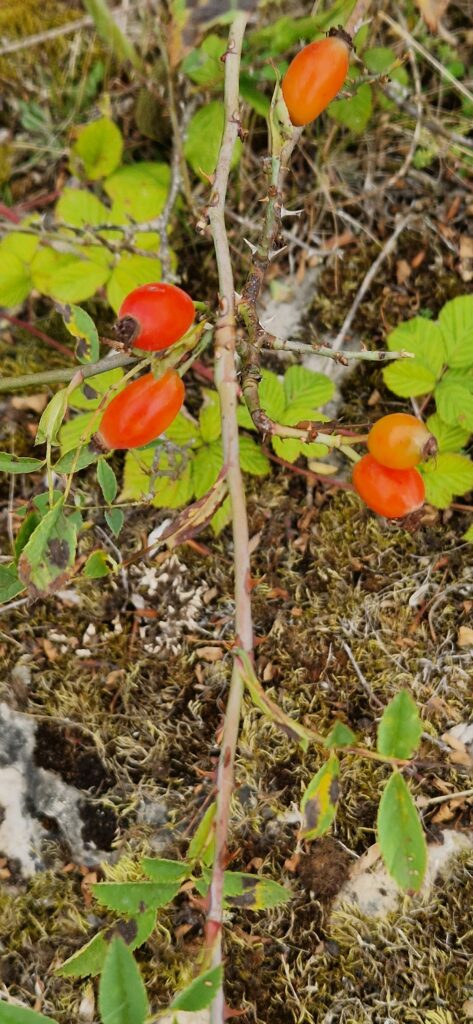
Hips (Fruits)
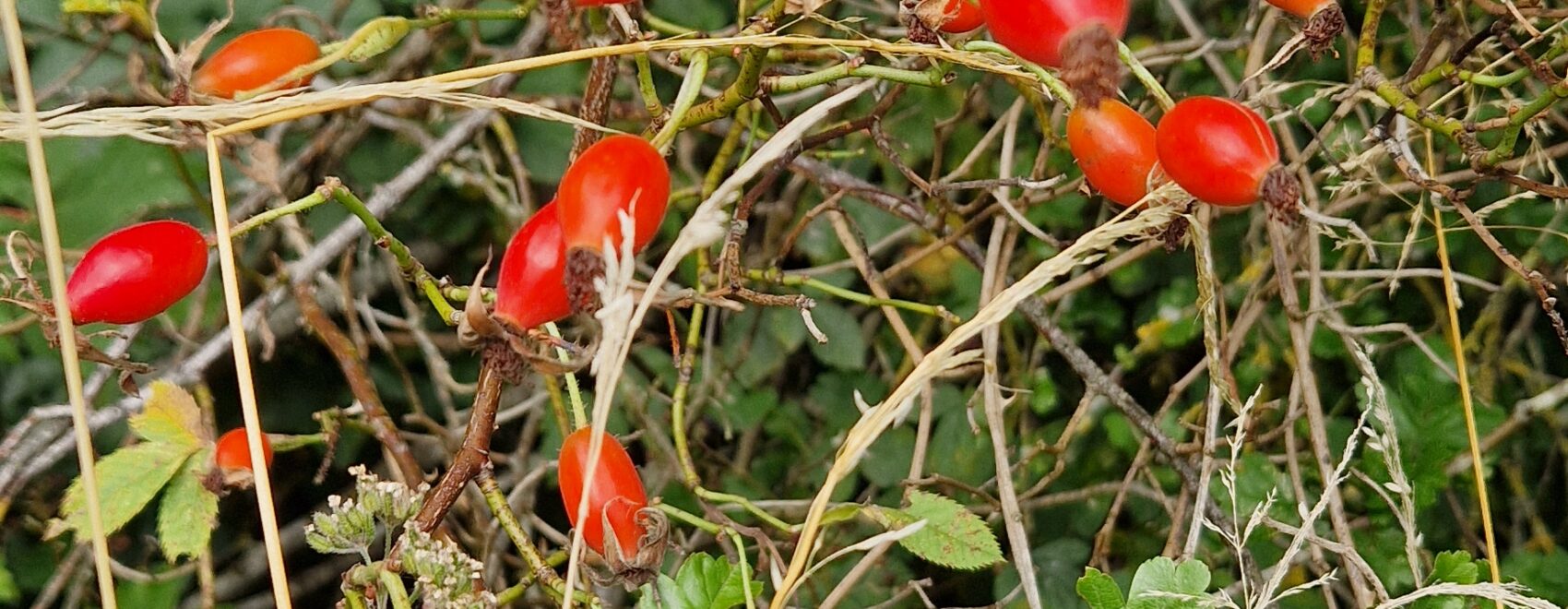
- Bright red, oval-shaped fruits appear in late summer to autumn.
- Contain small seeds surrounded by a hairy inner lining.
Stems
- Woody stems with curved, sharp thorns.
Height
- Can grow as a sprawling shrub or climbing vine, reaching up to 3 meters in height.
Edibility and Culinary Uses
Dog rose hips are a rich source of vitamins and can be used in a variety of ways:
- Hips:
- Make into syrups, jams, jellies, or sauces.
- Dry and use for teas or powdered supplements.
- Add to soups or stews for a tangy, fruity flavor.
- Petals:
- Use fresh in salads or as a garnish.
- Infuse into syrups, vinegars, or desserts for a subtle floral flavor.
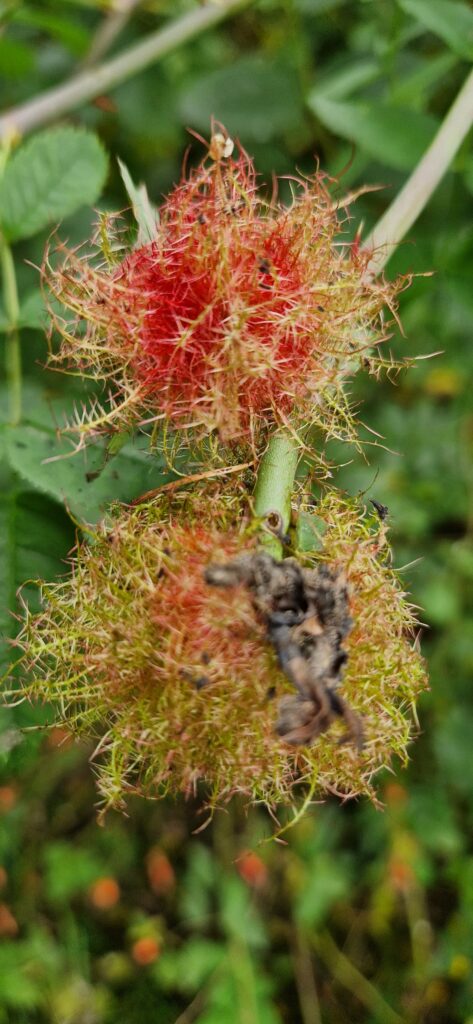
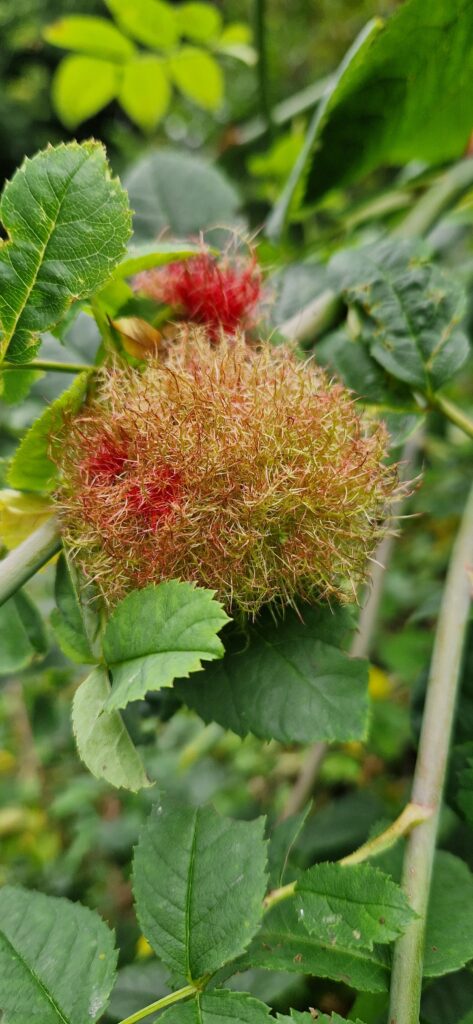
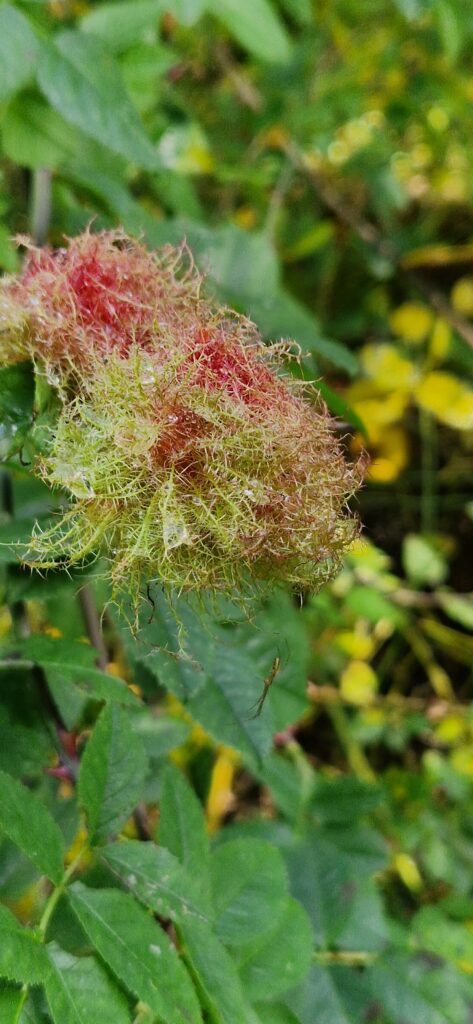
- Also look for growth on the rose bushes in the autumn -see video about Robin’s pin cushion
Recipe Ideas:
- Rose Hip Syrup for Immunity Boosting
- Wild Rose Petal Jam
- Herbal Tea Blend with Dried Rose Hips
- Rosehip Jam
Nutritional Value & Health Benefits
Nutritional Content
- Vitamins: Exceptionally high in vitamin C, with small amounts of vitamins A, E, and K.
- Minerals: Contains calcium, magnesium, and potassium.
- Antioxidants: Packed with flavonoids and carotenoids for immune support.
Medicinal Benefits
Dog rose has been used in traditional medicine for centuries:
- Immunity Support: High vitamin C content helps ward off colds and flu.
- Digestive Health: Aids in digestion and acts as a mild laxative.
- Skin Health: Rose hip oil is renowned for promoting skin repair and reducing inflammation.
- Joint Health: Anti-inflammatory properties can alleviate symptoms of arthritis.
Foraging Tips
- Best Harvesting Season:
- Flowers: Late spring to early summer, when in full bloom.
- Hips: Late autumn, after the first frost, when they are soft and ripe.
- Sustainability: Harvest hips responsibly, leaving plenty for birds and wildlife.
Folklore & History
The dog rose has been steeped in mythology and tradition. In ancient times, it was believed to ward off evil spirits. During World War II, its hips were harvested in the UK to make vitamin C syrup when citrus imports were scarce. The name “dog rose” is thought to refer to its historical use as a remedy for dog bites.
Safety Precautions
- Remove seeds from rose hips before consumption, as they are surrounded by irritating hairs.
- Avoid foraging from polluted areas or roadsides.
- Test for potential allergies to rose petals or hips, especially if trying for the first time.
Conclusion
The dog rose (Rosa canina) is a plant of beauty, utility, and tradition. Its vibrant flowers and nutrient-rich hips offer endless opportunities for culinary creations and natural remedies. Whether you’re looking to boost your immune system or add a wild twist to your recipes, the dog rose is a forager’s delight. Venture into the hedgerows and discover the treasures this wild rose has to offer!
Not sure about plant identification? Join us for the next foraging event in Charnwood, Leicestershire.