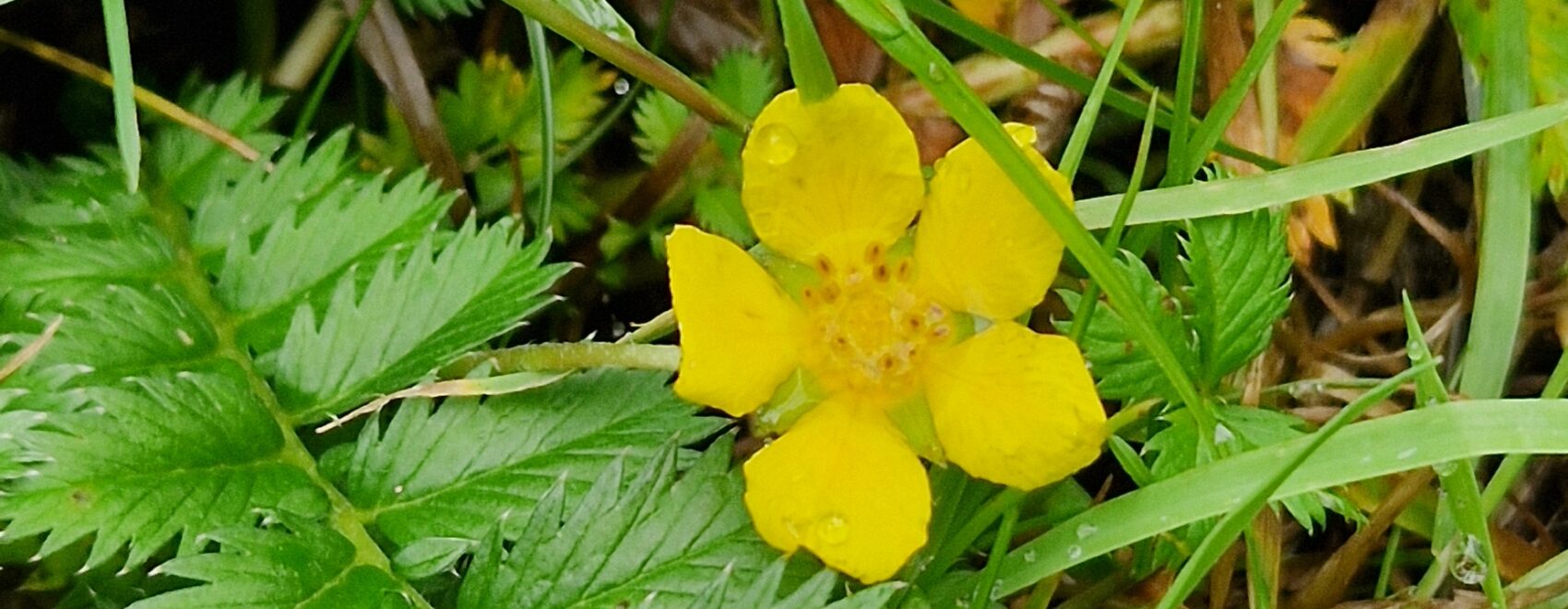
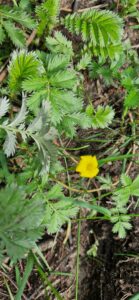
Silverweed (Potentilla anserina), known for its soft, silvery leaves and low-growing habit, is a widespread and easily recognisable plant with a rich foraging history. Once a staple wild food, this humble plant was valued for its starchy roots and has a quiet place in the story of Britain’s traditional diet.
Overview
Latin Name: Potentilla anserina
Common Names: Silverweed, Goosegrass, Wild Tansy, Silverweed Cinquefoil
Natural Habitat
Silverweed thrives in compacted or disturbed soils and is commonly found in:
- Grassy paths and roadsides
- Damp meadows and pastureland
- Riverbanks and lake edges
- Coastal areas and sand dunes
It spreads easily via creeping runners and prefers moist, well-drained soils with plenty of sunlight.
Identification
Leaves:
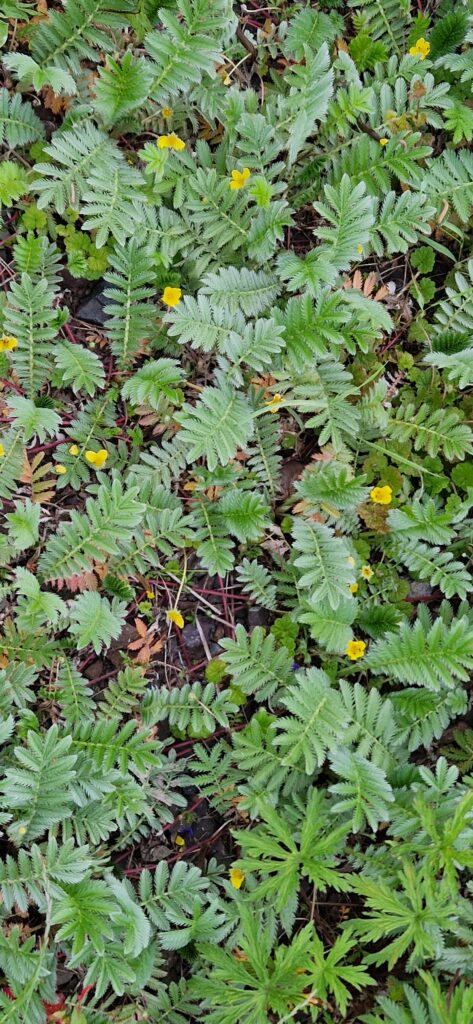
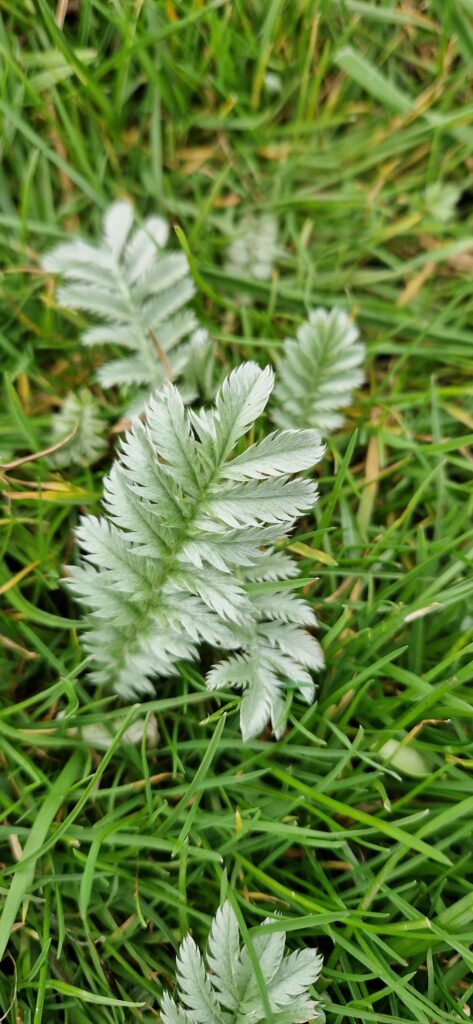
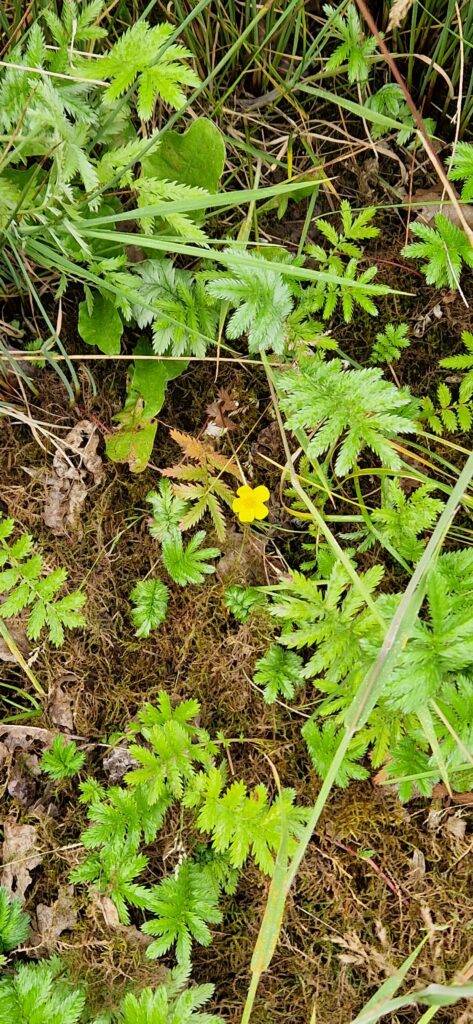
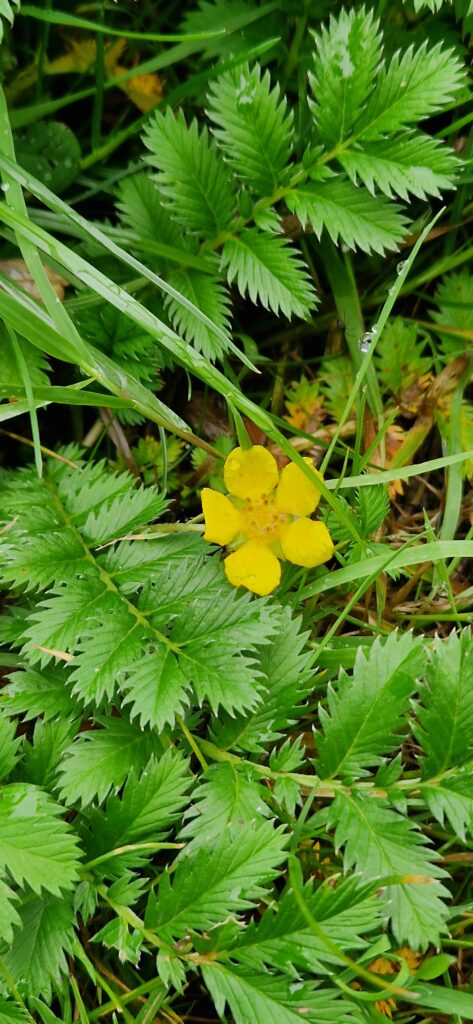
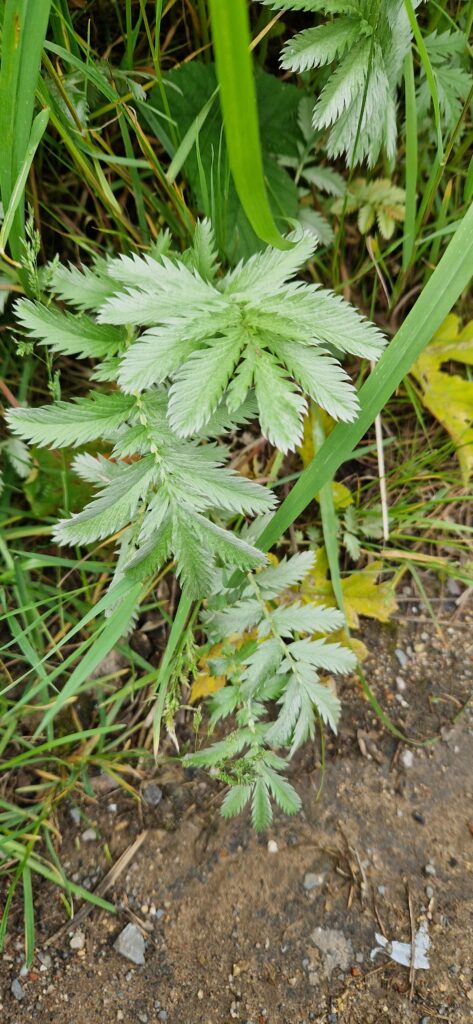
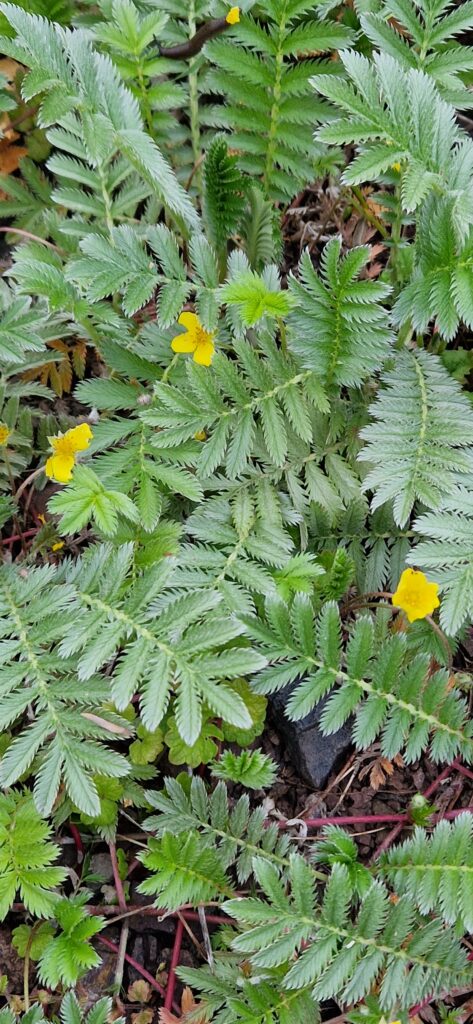
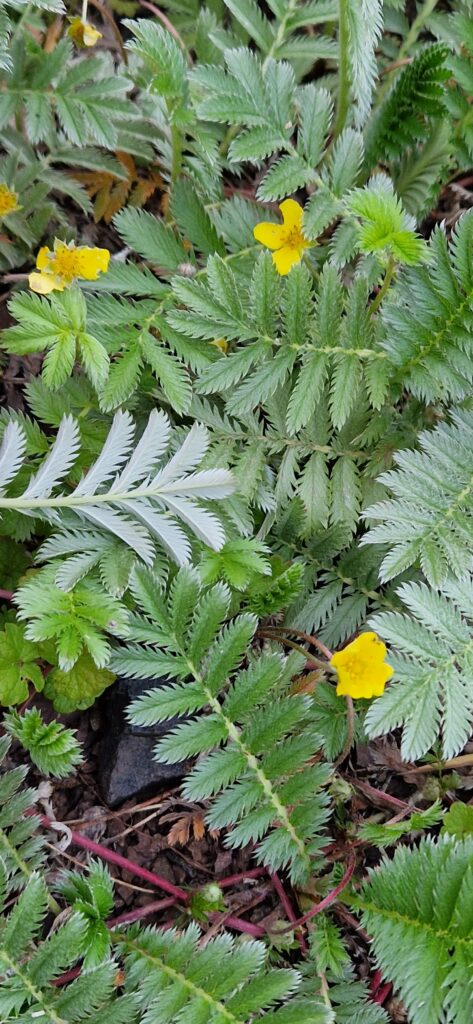
Long, feather-like leaves with deeply toothed leaflets. The underside of the leaves is covered in silvery-white hairs, giving the plant its name. They grow in a basal rosette close to the ground.
Flowers:
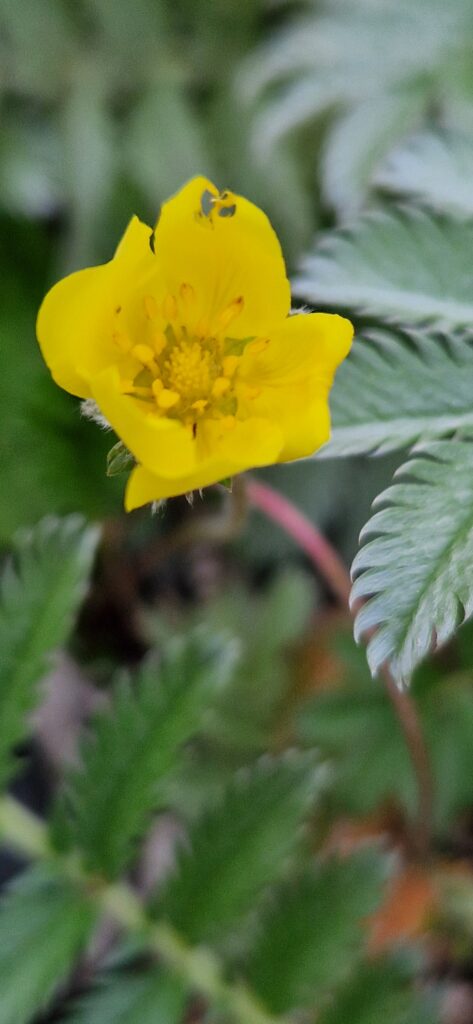
Bright yellow, five-petalled flowers appear singly on slender stalks from late spring to mid-summer. They resemble small buttercups.
Roots:
Thin, carrot-shaped roots that are white or creamy and become woody with age. Best dug when the plant is dormant (late autumn to early spring). Only on private land with owners permission!
Height:
Usually less than 15cm tall, with long creeping stems that root at the nodes.
Edibility and Medicinal Uses
Silverweed was once cultivated for its edible roots, particularly in the Scottish Highlands and parts of Scandinavia. Though rarely used today, it remains a valuable wild food for foragers interested in forgotten crops.
Culinary Benefits
Roots:
- Can be roasted, boiled, or baked
- Taste is similar to parsnip or chestnut, though more fibrous
- Traditionally harvested in late autumn or early spring when the starch content is highest
Leaves:
Not typically eaten due to their bitter taste and fuzzy texture, but were once used sparingly in folk teas or as emergency greens.
Medicinal Benefits
Historically, Silverweed was used in folk medicine for:
- Menstrual cramps and childbirth support – leaf infusions were used as a mild uterine relaxant
- Digestive discomfort – the astringent properties of the plant were used to ease diarrhoea and inflammation
- Wound care – mashed leaves applied as a poultice for minor skin issues
While scientific backing is limited, these uses highlight the plant’s astringent and soothing nature.
Preparation and Uses
Root Preparation:
- Dig up in autumn or early spring
- Wash thoroughly and remove any fibrous outer skin
- Roast, boil, or slow-bake to bring out a mild, nutty sweetness
- Can also be sliced thin and dried for later use
Tea:
A tea made from dried or fresh leaves is mildly astringent and can be taken in small amounts.
Foraging Tips
Best Harvesting Season:
- Roots: October to March, when the plant is dormant
- Leaves and flowers: May to August
Sustainability:
- Harvest roots only where the plant is abundant
- Always leave some plants undisturbed to allow regrowth
- Only dig on private land with permission – root foraging is not allowed on public land
Pro Tip:
Look for plants growing in compacted soil along grassy tracks and gateways – these often have the largest, starch-rich roots.
Folklore & History
Silverweed was once called “traveller’s food” due to its presence along old roads and tracks. In medieval Britain, its roasted roots were eaten like potatoes. It was also known as “goosegrass” because it was favoured by grazing geese.
Folklore suggests it was planted outside cottages to protect against lightning and bring peace to the home.
Safety Precautions
- Root Identification: Always confirm the plant before digging. Silverweed is low-growing and distinctive, but roots of lookalike plants (e.g., Cinquefoils or potentillas) may be too small or unpalatable.
- Moderation: As with all wild plants, consume in moderation, especially if you’re trying it for the first time.
Conclusion
Silverweed is a forgotten wild food with a deep history in the British Isles. Though it no longer graces our plates as it once did, foragers can still appreciate its quiet resilience and the earthy, chestnut-like flavour of its roots.
Not sure about plant identification? Join us for the next foraging event in Charnwood, Leicestershire.