
Ground Ivy (Glechoma hederacea): A Versatile Wild Edible and Medicinal Herb
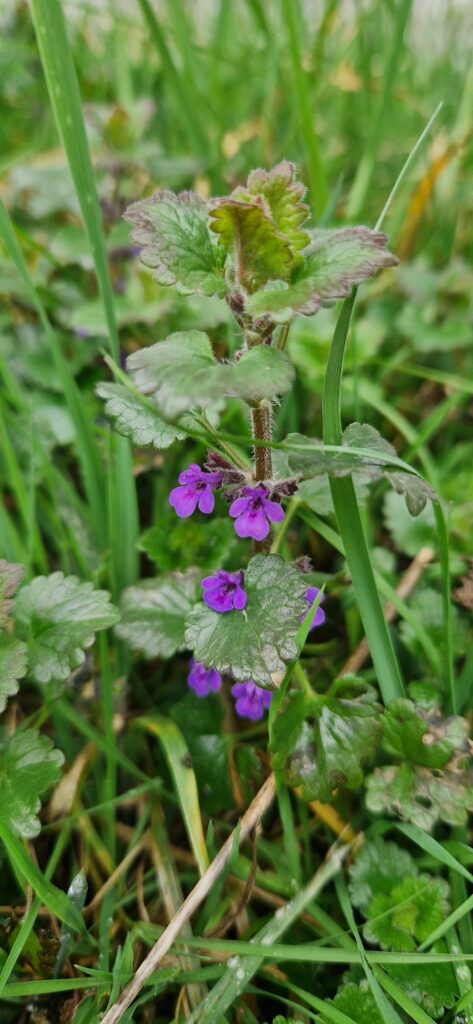
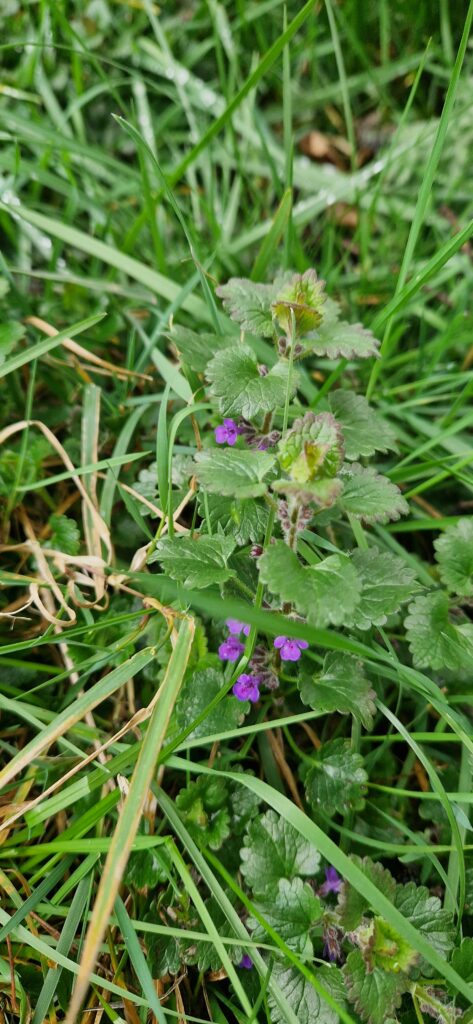
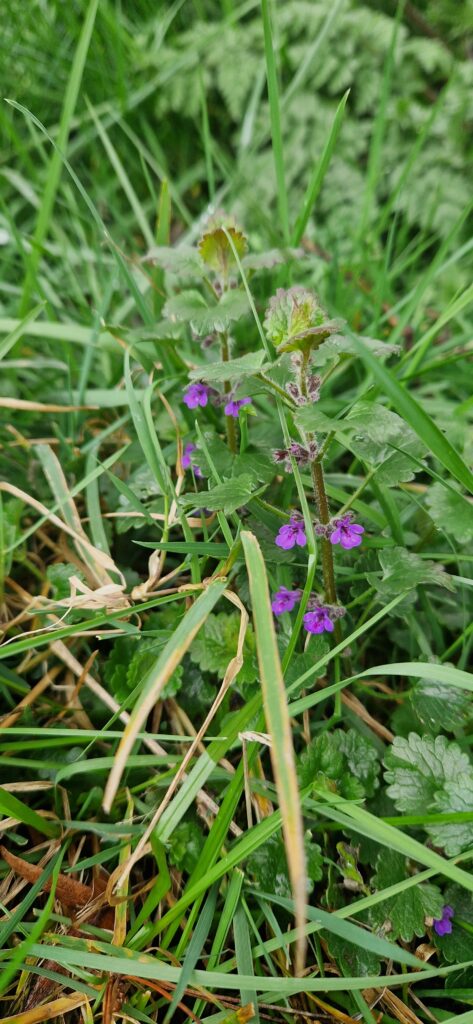
Ground Ivy (Glechoma hederacea) is a creeping perennial herb commonly found in woodlands, hedgerows, and meadows. With its distinctive kidney-shaped leaves and vibrant purple flowers, it is easily recognizable and widely distributed across temperate regions. This hardy plant has a long history of use in both traditional medicine and culinary applications, offering a mild, earthy flavor with subtle minty undertones.
Overview
Latin Name: Glechoma hederacea
Common Names: Ground Ivy, Creeping Charlie, Alehoof, Gill-over-the-Ground
Natural Habitat
Ground Ivy thrives in a variety of temperate environments and is commonly found in:
- Woodlands and forest edges
- Meadows and grassy areas
- Hedgerows and roadside verges
- Gardens and disturbed ground
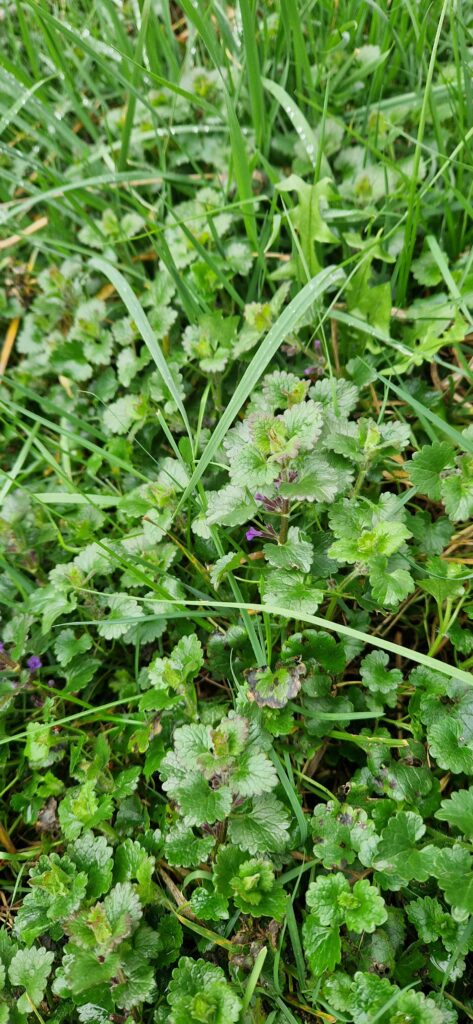
It prefers moist, well-drained soil and partial shade but can tolerate a range of conditions, often forming dense carpets in the wild.
Identification
Leaves
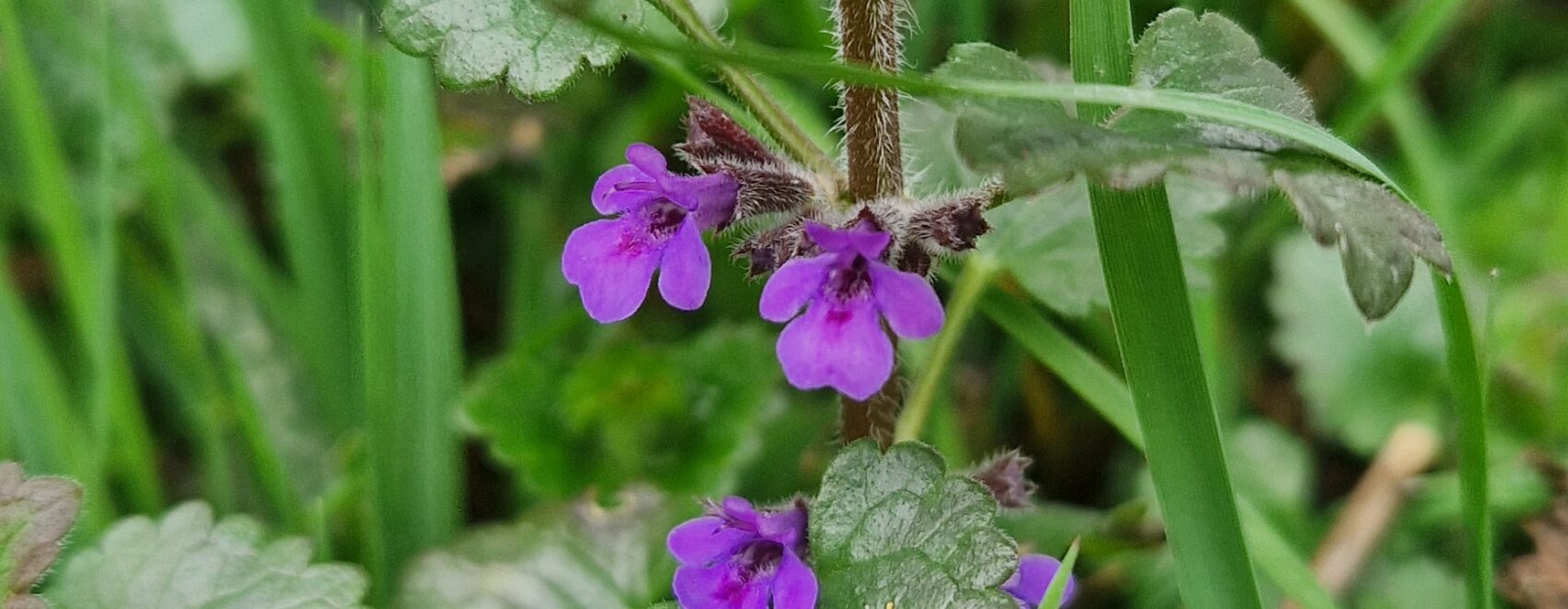
- Kidney- or fan-shaped with scalloped edges
- Deep green with a slightly hairy texture
- Grow in opposite pairs along the creeping stems
Flowers
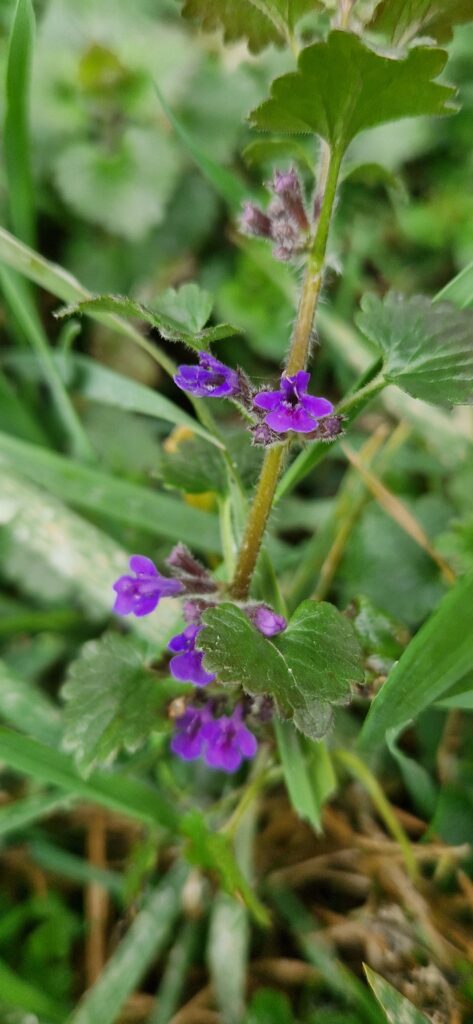
- Small, funnel-shaped, and violet-blue to purple
- Typically bloom in clusters from mid-spring to early summer
- Attractive to bees and other pollinators
Stems
- Square-shaped, a key characteristic of plants in the mint family
- Low-growing and creeping, rooting at nodes as it spreads
Edibility and Culinary Uses
Ground Ivy has a distinct, earthy, and slightly minty flavor, making it a versatile wild herb. Its leaves and flowers can be used fresh or dried in various culinary applications.
Common Uses
- Herbal Tea: Brew the leaves for a refreshing and aromatic tea.
- Soups and Stews: Add fresh or dried leaves for a subtle, herbal depth.
- Salads: Use young leaves raw for a mild, minty kick.
- Beer Brewing: Historically used as a bittering agent before hops became common.
- Pesto: Blend with other wild greens for a unique take on pesto.
Recipe Ideas
- Ground Ivy Herbal Tea
- Wild Green Soup with Ground Ivy
- Ground Ivy-Infused Vinegar
- Ground Ivy Pesto with Nuts and Cheese
Nutritional Value & Health Benefits
Nutritional Content
- Rich in vitamin C, supporting immune health
- Contains flavonoids and essential oils with antioxidant properties
- A good source of iron and calcium
Medicinal Benefits
- Respiratory Support: Traditionally used to ease congestion and coughs
- Digestive Aid: Helps with bloating and mild digestive discomfort
- Anti-Inflammatory: Used in folk medicine for wound healing and joint pain
- Detoxification: Historically believed to help cleanse the liver and kidneys
Foraging Tips
Ground Ivy is abundant and easy to identify, making it an excellent plant for beginner foragers.
Best Harvesting Season:
- Spring to early summer for the most flavorful and tender leaves
- Flowers can be harvested when in bloom for tea and decoration
Sustainability:
- Harvest responsibly, leaving enough for pollinators
- Avoid collecting from areas treated with pesticides or along busy roads
Pro Tip:
- Dry the leaves for later use in teas and herbal remedies
Folklore & History
Ground Ivy has been used in traditional herbal medicine across Europe for centuries. In medieval times, it was a key ingredient in “alehoof” beer brewing, believed to improve clarity and flavor. Folklore also attributed protective qualities to the plant, and it was sometimes carried as a charm against evil spirits.
Safety Precautions
- Allergic Reactions: Try a small amount first if you are unfamiliar with it.
- Medical Considerations: Consult a healthcare provider before using for medicinal purposes, especially if pregnant, breastfeeding, or on medication.
- Proper Identification: Ensure correct identification before consumption, as some similar-looking plants may be toxic.
Conclusion
Ground Ivy (Glechoma hederacea) is a widely available, highly versatile wild herb with both culinary and medicinal uses. Whether infused into teas, added to soups, or used as a natural remedy, this creeping plant offers a unique addition to your foraging repertoire.
Want to learn more about foraging? Join our courses in Charnwood, Leicestershire, to explore the wild plants growing around us!