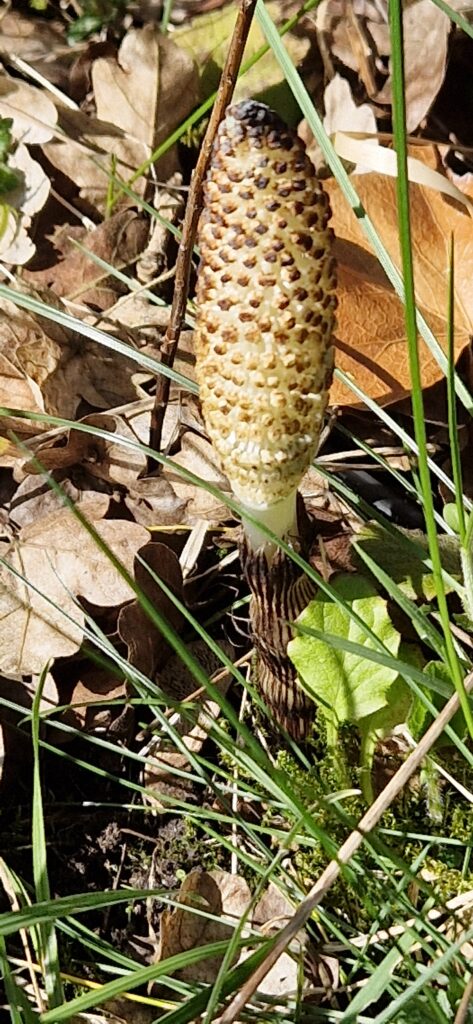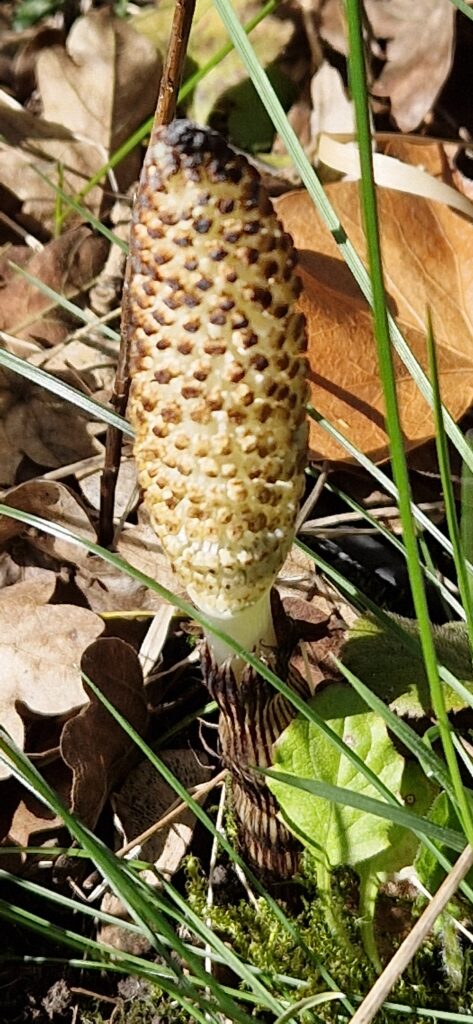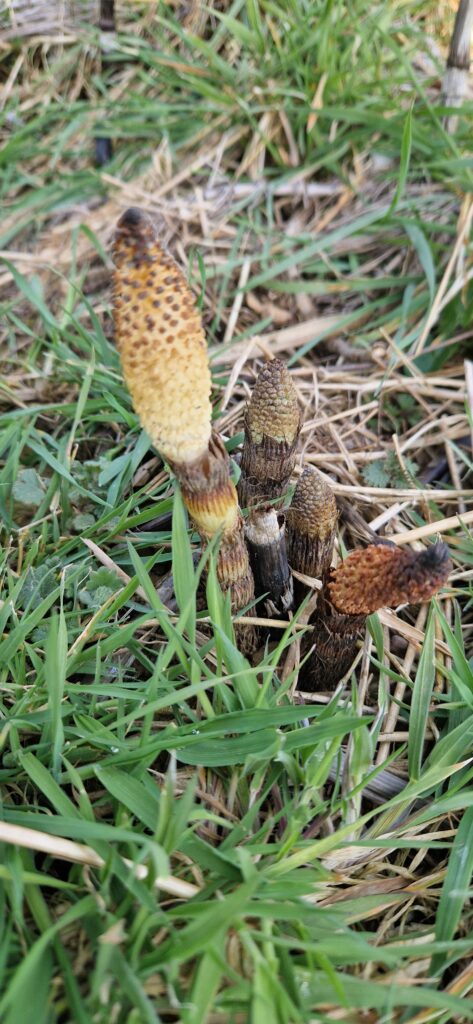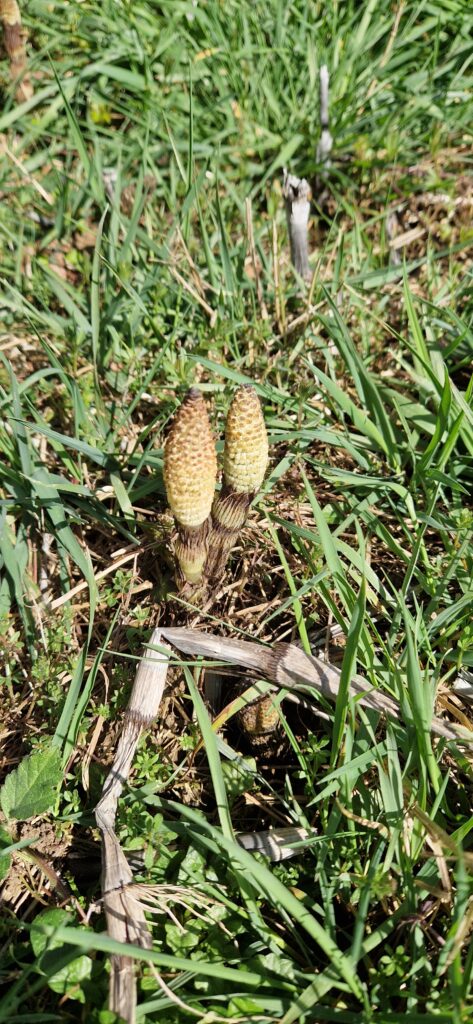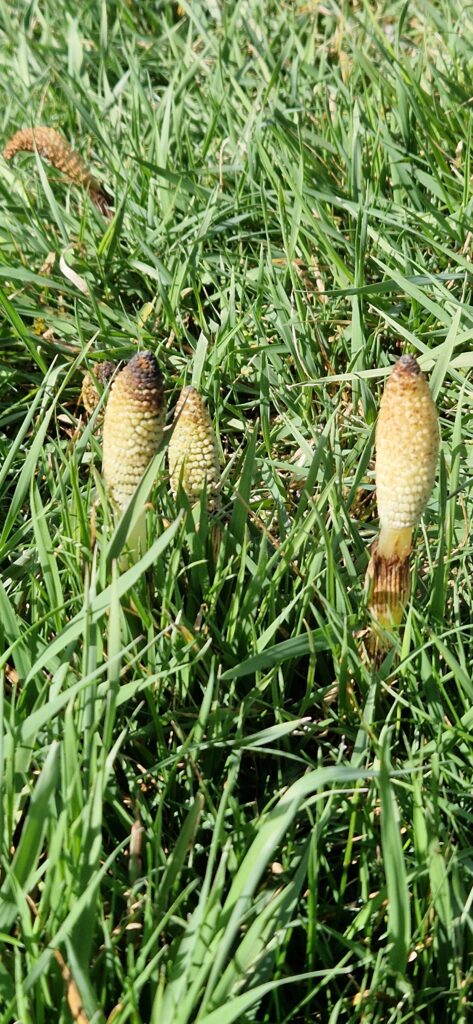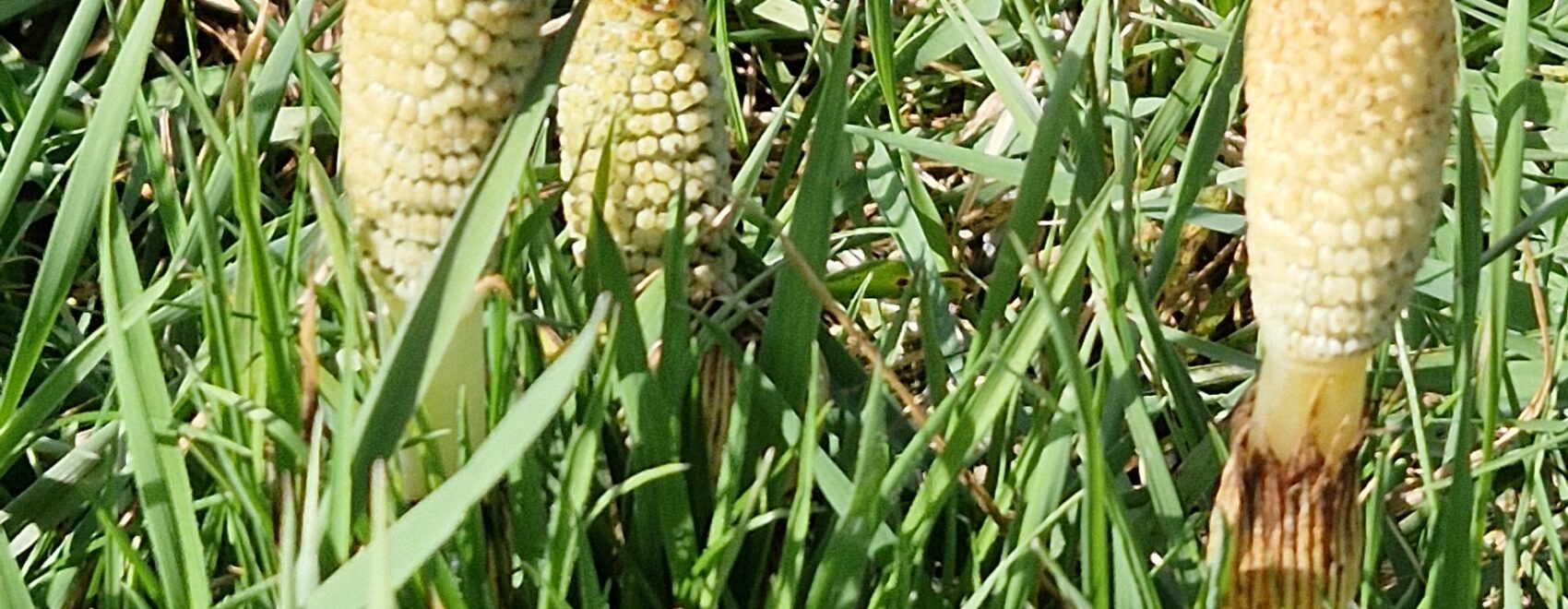
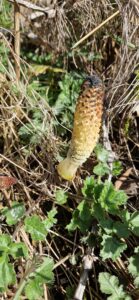
Giant Horsetail is a striking, prehistoric-looking plant found in damp woodlands, riverbanks, and wetlands across the UK. While not widely used for food, it has historical medicinal applications and is notable for its high silica content, making it useful in traditional crafts and natural remedies.
Identification
- Height: Can grow up to 2 meters tall, significantly larger than common horsetail species.
- Stem: Hollow, jointed, and ridged, with a rough texture due to high silica content.
- Branches: Whorled, resembling the segmented structure of bamboo.
- Spores: Reproduces via spores rather than flowers, with cone-like spore-producing structures appearing in early spring.
- Habitat: Prefers damp environments, often found near streams, ponds, and shaded wetlands.
- Season: Best identified in spring and summer when green sterile stems are present.
Foraging Considerations
Giant Horsetail has been traditionally used for its medicinal properties, particularly as a diuretic and for strengthening bones and nails due to its silica content. However, caution is needed as some types of horsetail contain thiaminase, an enzyme that can interfere with vitamin B1 absorption if consumed in large quantities over period of time.
Uses & Benefits
- Herbal Tea: Dried horsetail can be brewed into a tea believed to support kidney function and bone health.
- Natural Abrasive: Due to its silica-rich stems, it was historically used for polishing metal and wood.
- Traditional Medicine: Used in folk remedies for urinary tract health and wound healing.
- Craft Uses: The sturdy stems have been employed in traditional basket weaving and tool sharpening.
- Sauté: Sweet tasting young tip can be eaten raw but are even more delicious sauteed in butter with young shoots of rosebay willowherb.
Caution
Certain horsetail species, including Giant Horsetail, contain compounds that may be toxic in large amounts, particularly to livestock. Always ensure proper identification and moderation if using foraged horsetail.
Sustainability & Conservation
Giant Horsetail plays an important ecological role in wetland habitats. Responsible foraging is key—only take small amounts when necessary and leave plenty behind to support wildlife and natural regeneration.
Foraging for wild plants is a rewarding way to connect with nature, but safety and sustainability should always come first. If you’re interested in learning more, join one of our foraging courses, where you can gain hands-on experience with expert guidance!