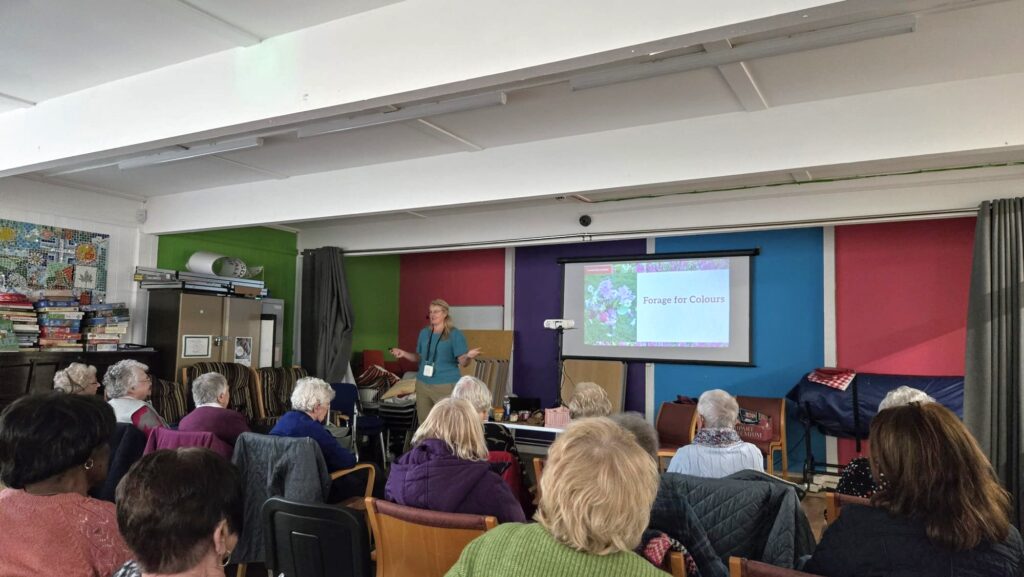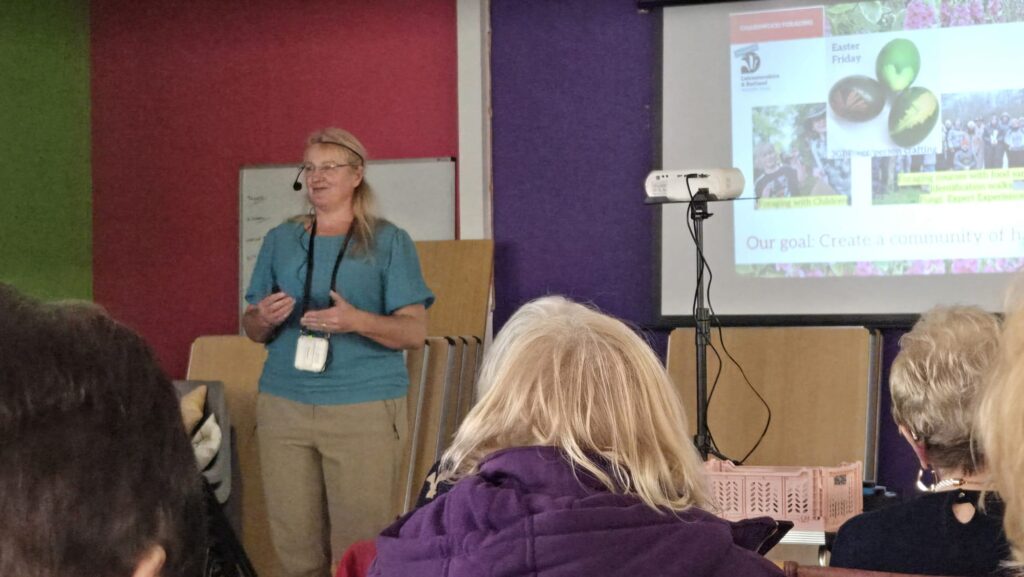
Chaddesden Park – Age UK center
24th March 2026
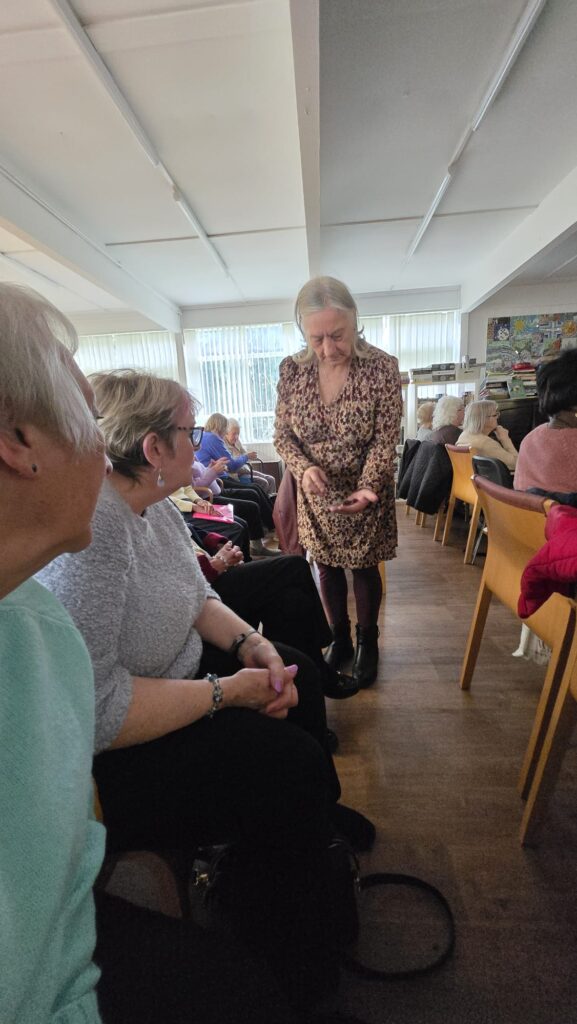
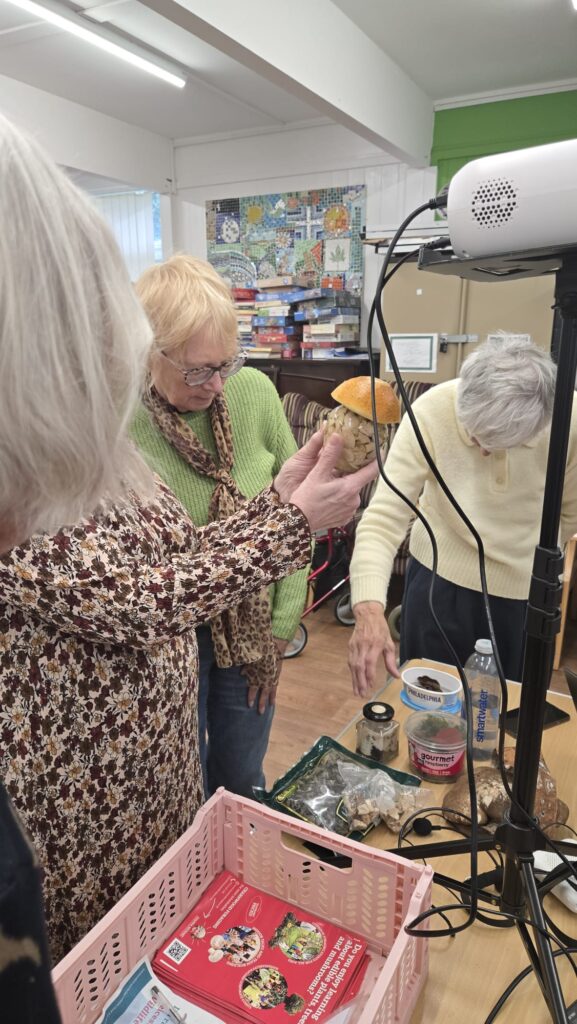
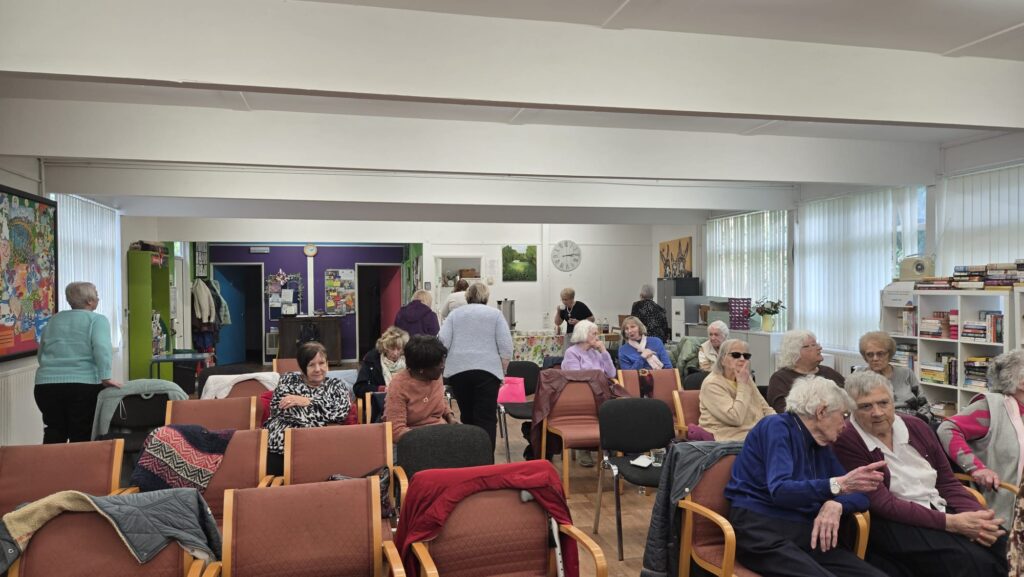
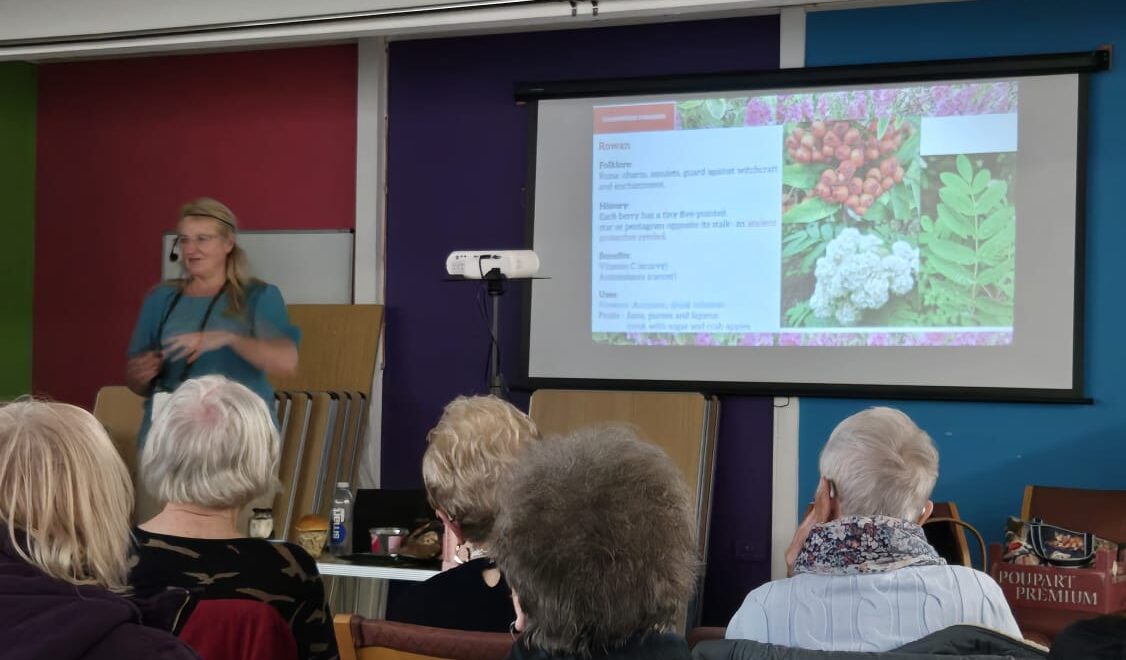
It was a pleasure to spend an afternoon with Chaddesden Ladies Club club exploring the theme of “Forage for Colours” – a journey through the natural world using colour as a way to understand edible plants, trees, and fungi, alongside their folklore, history, and traditional uses.
The talk highlighted how surprisingly narrow the modern human diet is, despite the huge diversity of edible species around us, and how reconnecting with wild food can deepen both knowledge and appreciation of nature.
Colour by Colour: What We Explored
⚫ Black – Protection, Depth & Mystery
We began with black, a colour long associated with power, elegance, and folklore.
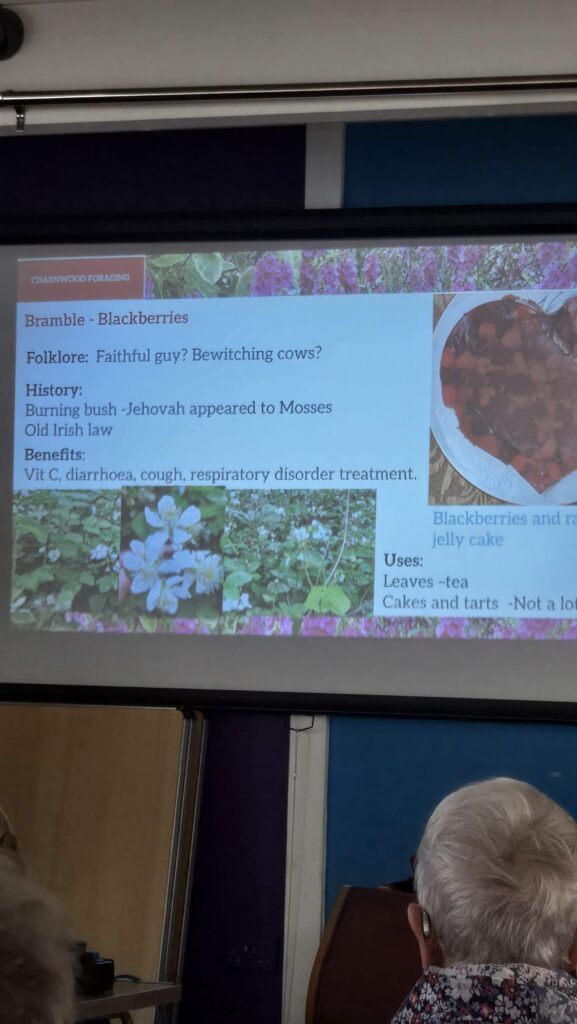
- Bramble (Blackberries) – seasonal abundance, traditional remedies, leaf teas, and their use in cakes, tarts, jams, and jellies.
- Mahonia / Oregon Grape – tart berries rich in vitamin C, edible flowers, and a discussion around berberine in the roots and bark.
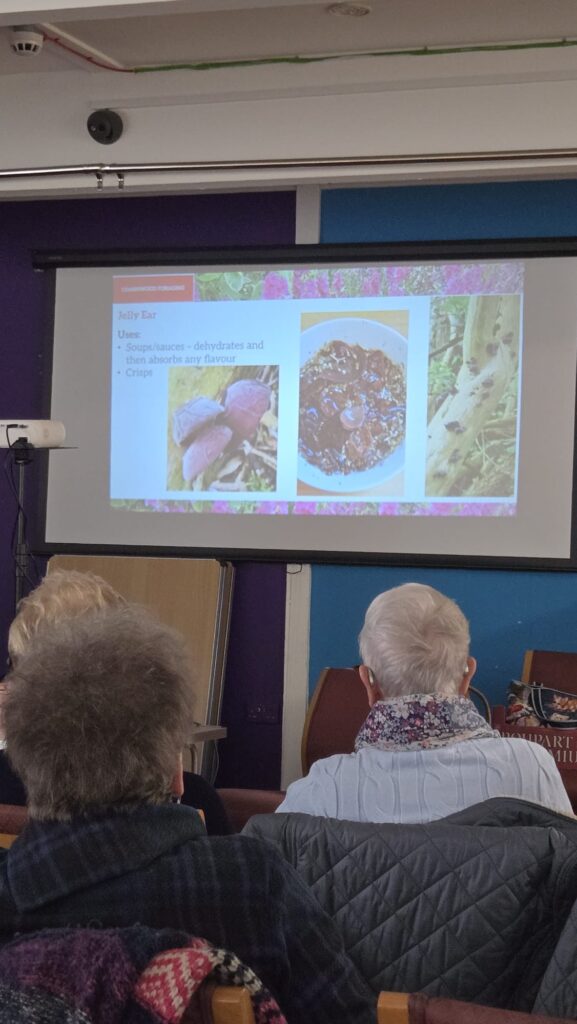
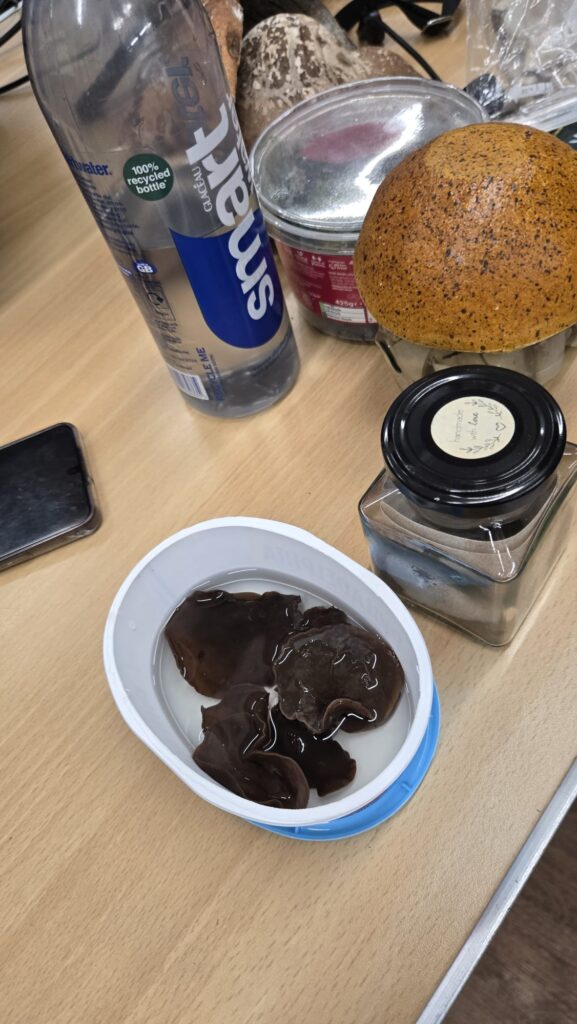
- Jelly Ear Fungus – a fascinating woodland fungus used in soups, sauces, and crisps due to its ability to absorb flavour.
⚪ White – Purity, Subtlety & Survival
White led us into discussions of identification skills and hidden detail.
- Chickweed – a humble but nutrient-rich plant used fresh, cooked, or as a soothing tea.
- Rowan – rich in folklore and symbolism, with berries that must be cooked before use and flowers suitable for infusions.
- St George’s Mushroom – a spring mushroom tied to St George’s Day, with key identification features and a strong safety focus on dangerous lookalikes.
🟢 Green – Growth, Nature & Balance
Green represented vitality and renewal.
- Common Hogweed – edible with care and correct identification, alongside a clear warning about the dangers of Giant Hogweed.
- Sycamore – traditional folklore uses, edible seeds when prepared correctly, and medicinal sap.
- Russula (Brittlegill) Family – how to recognise the group, carry out edibility tests, and identify notable species such as the Charcoal Burner.
🔴 Red – Passion, Power & Folklore
Red brought us into the world of striking fungi and hedgerow trees.
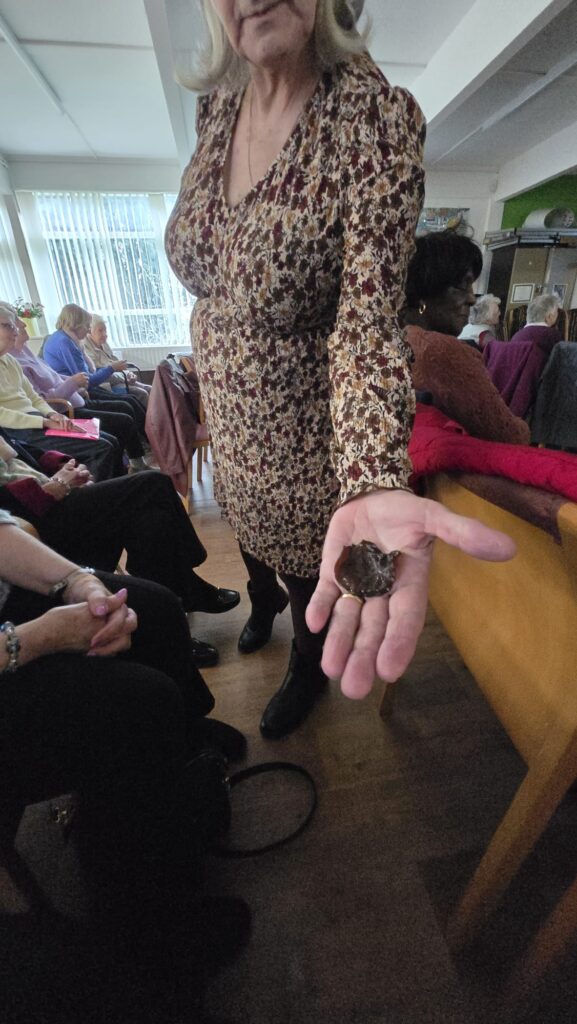
- Scarlet Elfcup – an unmistakable woodland fungus steeped in folklore, more admired than eaten.
- Poppy – seeds dded to many tasty cakes
- Hawthorn – deeply tied to May Day traditions, with edible leaves, flowers, and berries (excluding the seed).
🟡 Yellow – Happiness, Energy & Resilience
Yellow focused on some of our most familiar wild plants.
- Dandelion – roots to flowers, folklore wishes, and a long history of nutritional and medicinal use.
- Chanterelle – identification and comparison with the False Chanterelle, highlighting the importance of confident mushroom ID.
- Gorse – edible flowers with a coconut aroma, traditionally used for wine, with toxicity warnings for other parts of the plant.
🌙 Silver – Moonlight, Intuition & Healing
We ended with silver, a colour associated with calm, reflection, and traditional medicine.
- Silverweed – historic medicinal uses and edible roots (with a reminder about UK foraging laws regarding roots).
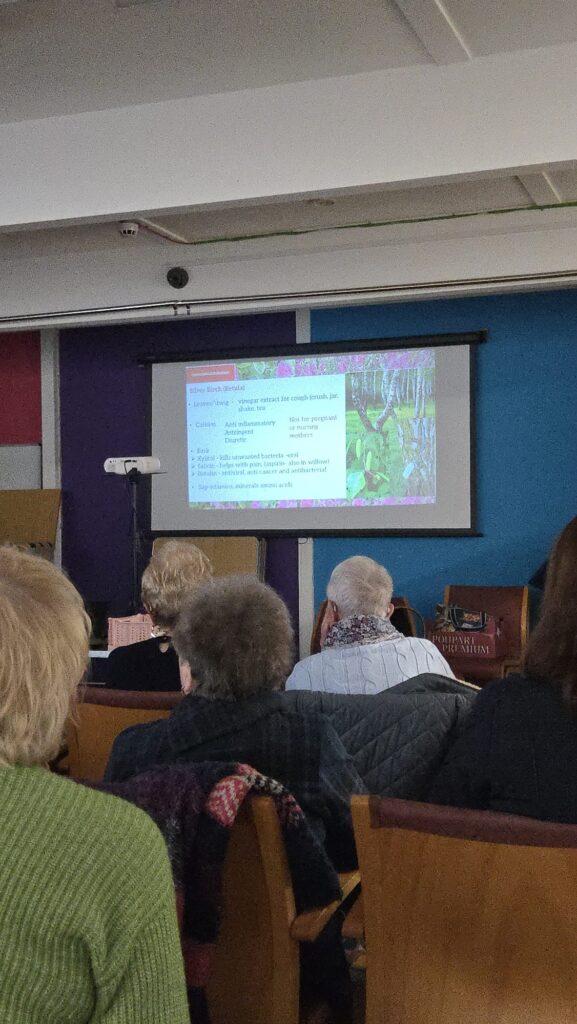
- Silver Birch – sap, leaves, bark, and catkins, covering both nutritional and medicinal properties.
- Birch Polypore – a remarkable medicinal fungus with antiviral, antibacterial, anti-inflammatory, and traditional wound-care uses.
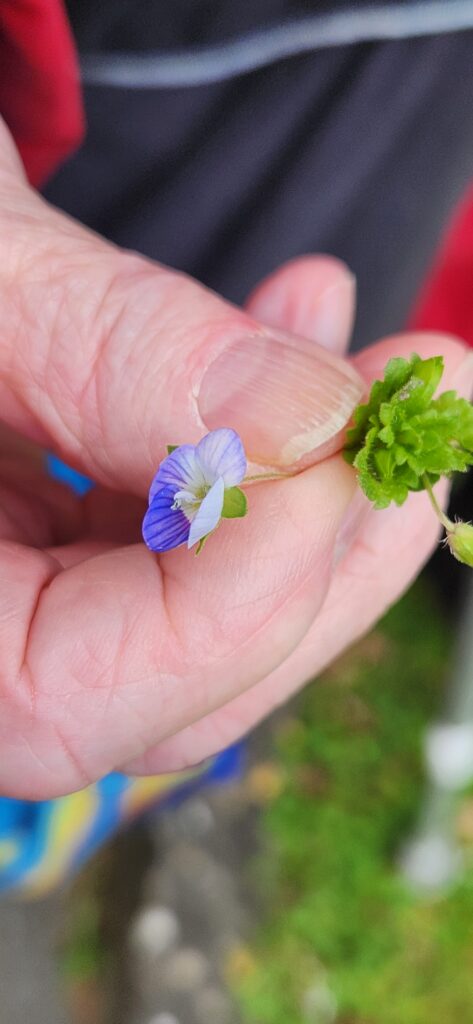
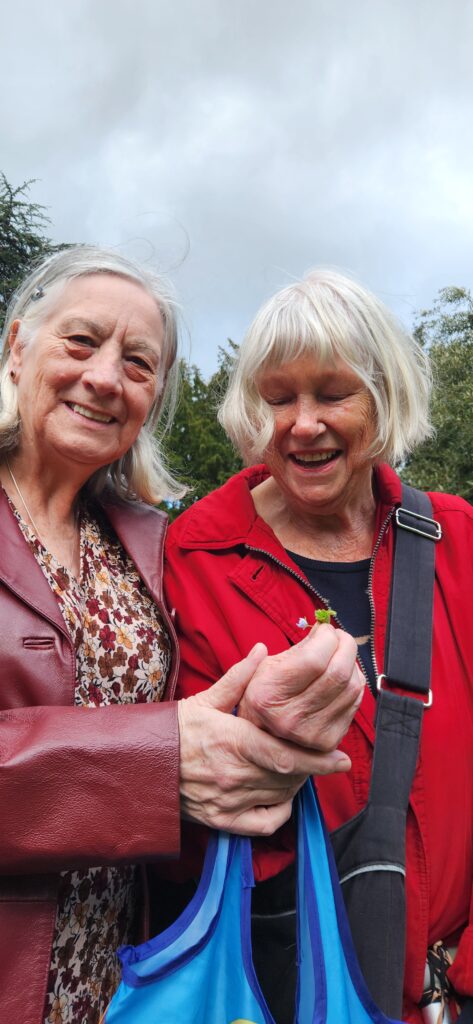
The afternoon talk culminated but a short stroll around the carpark where with few ladies we have discover over 10 edible or medicinal plants. All of them no more than 10 meters from the parking. Isn’t it just beautiful how much food and medicine is around us and all for free.
Check out our upcoming courses or browse our plant profiles for more information.