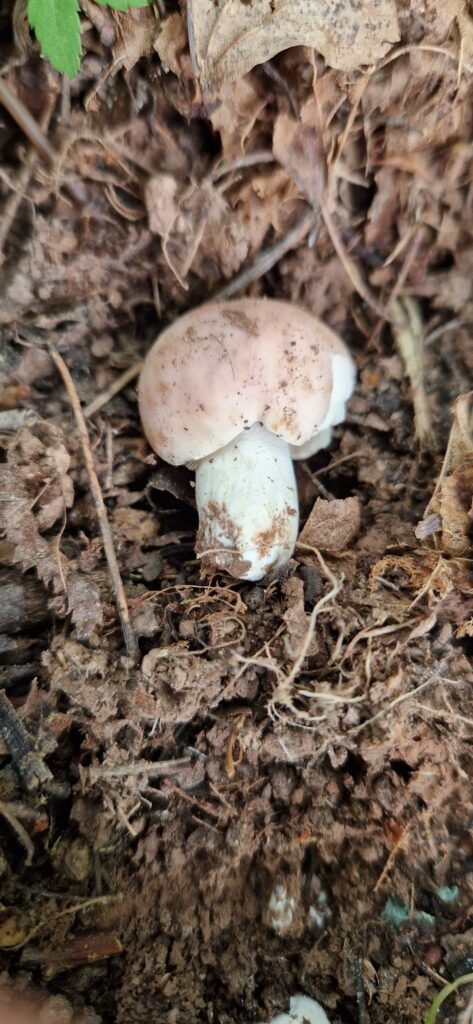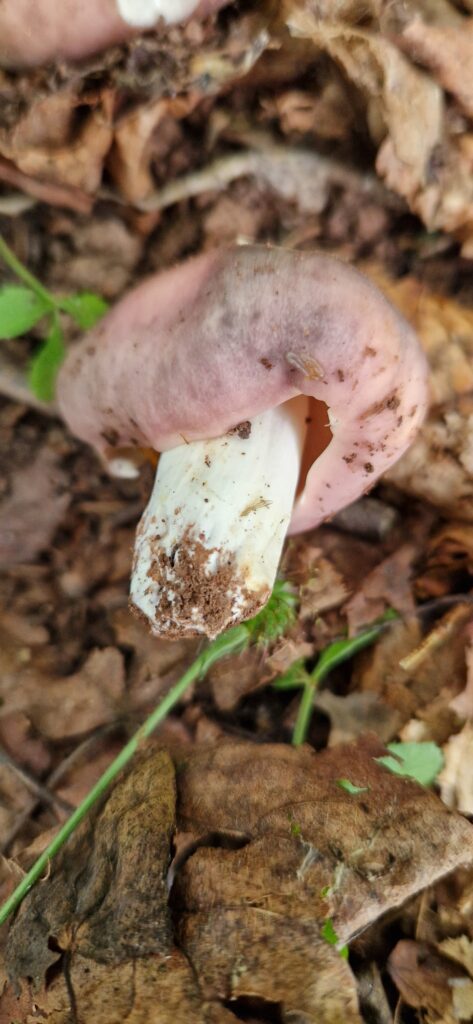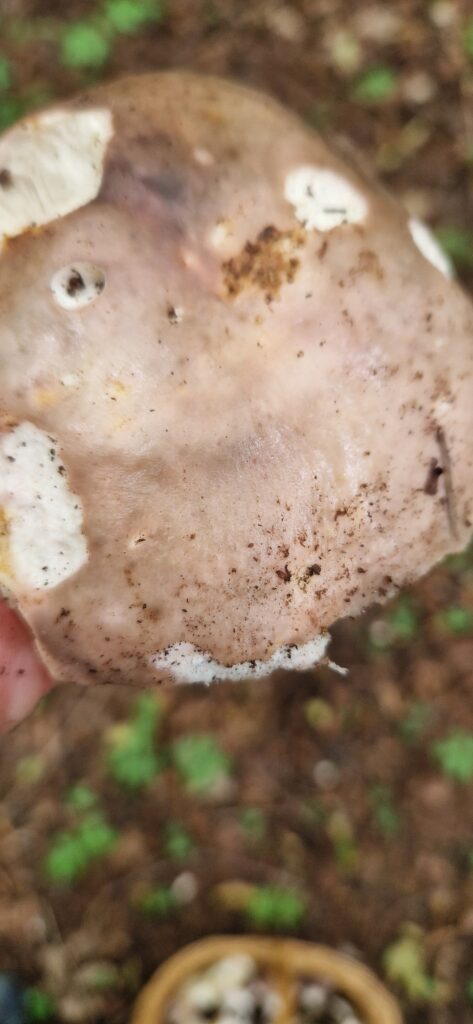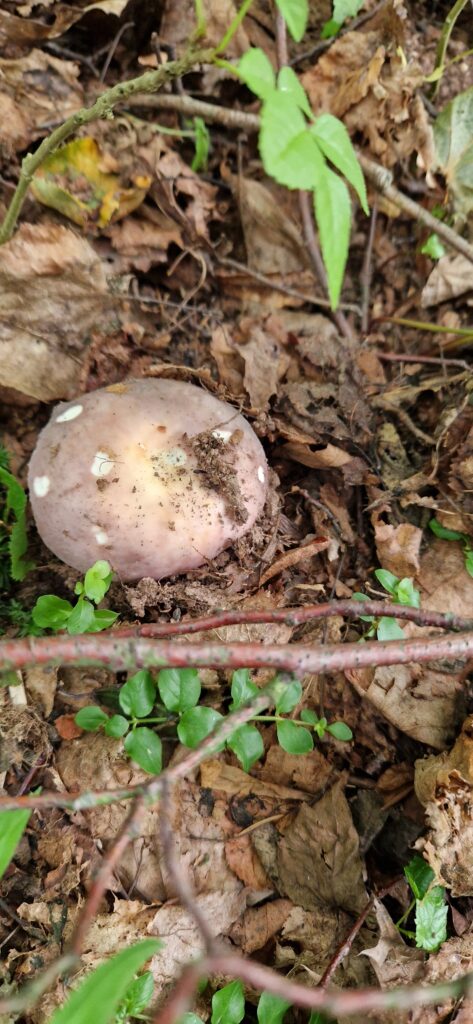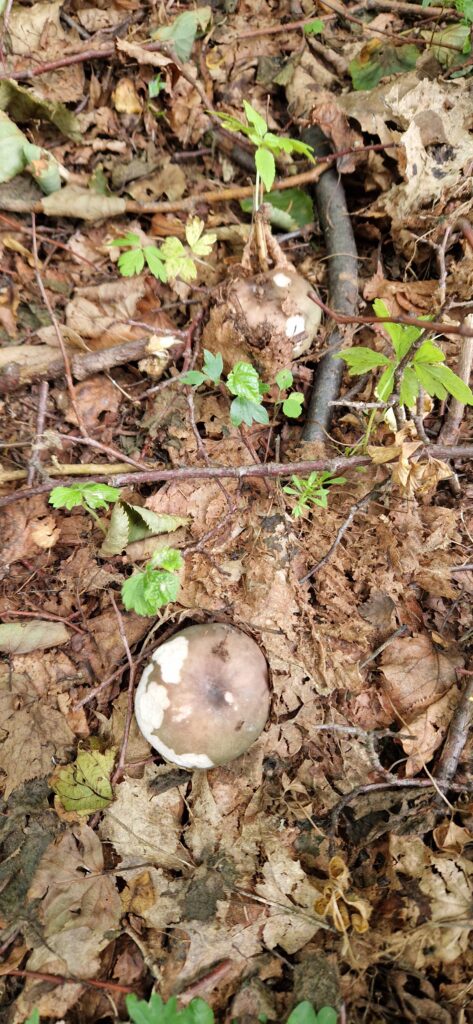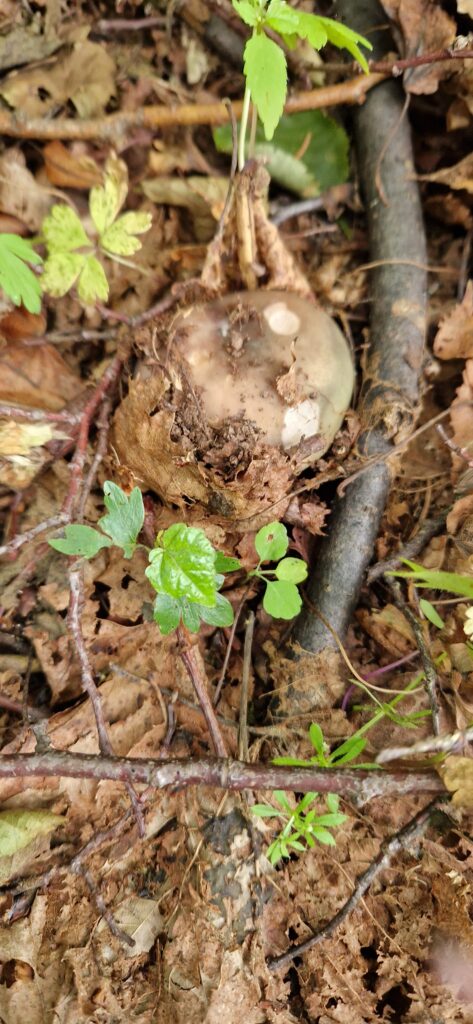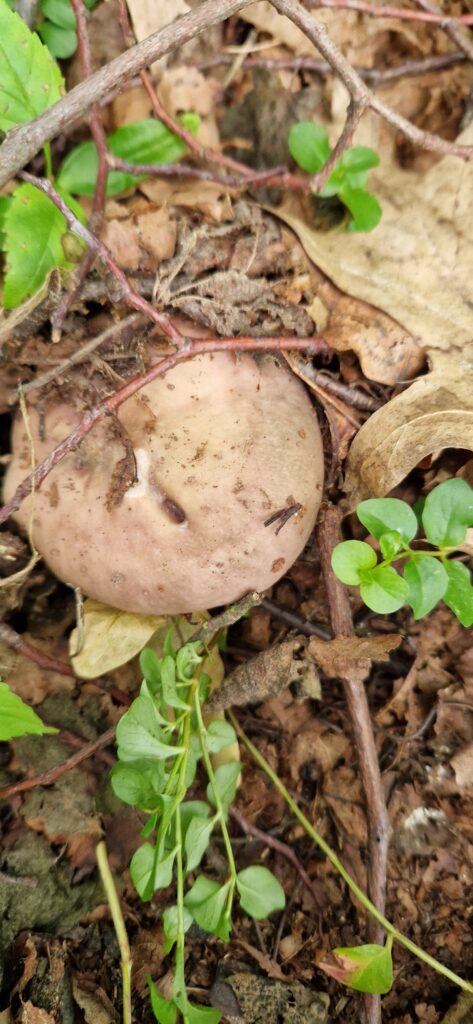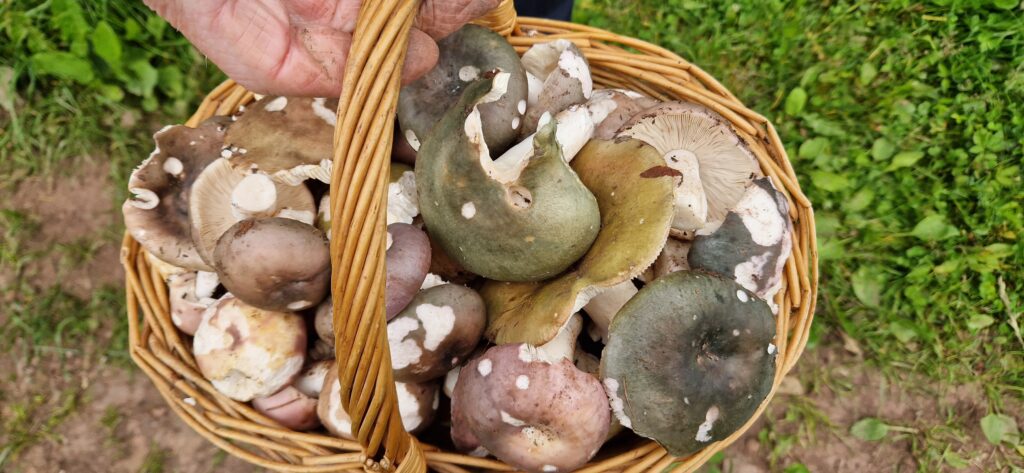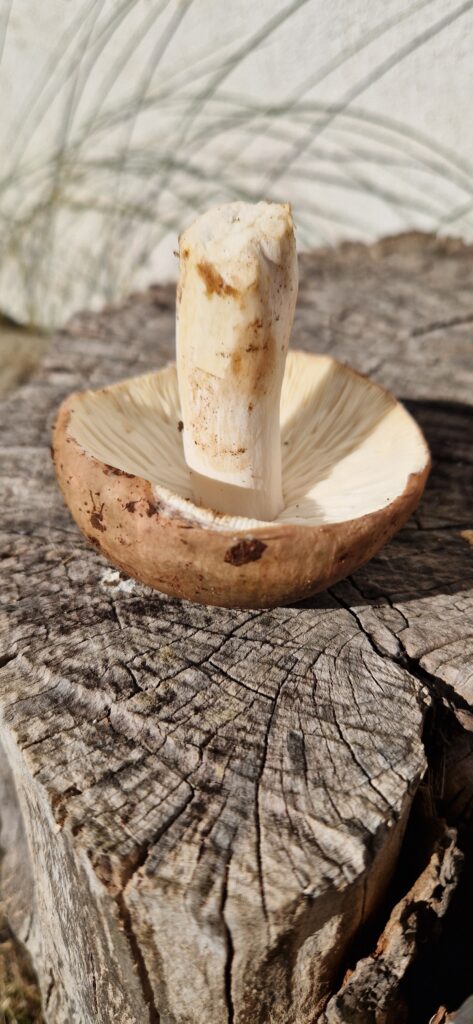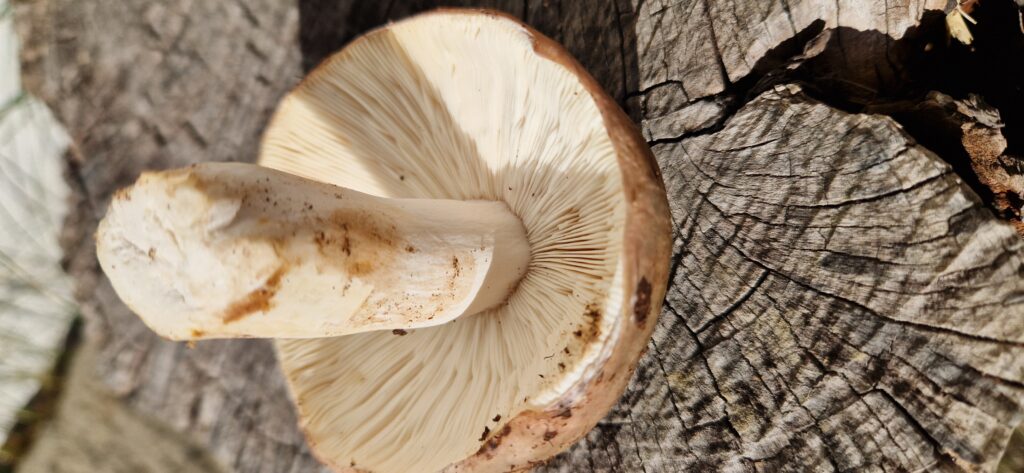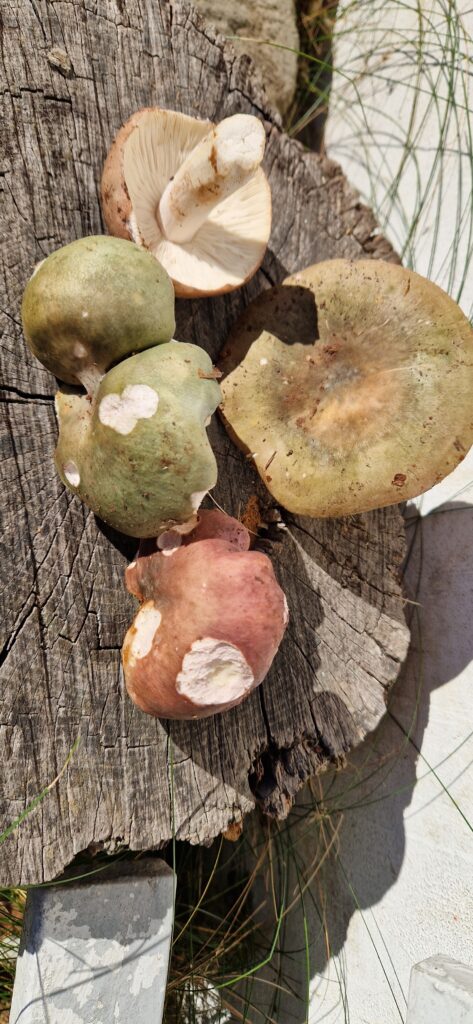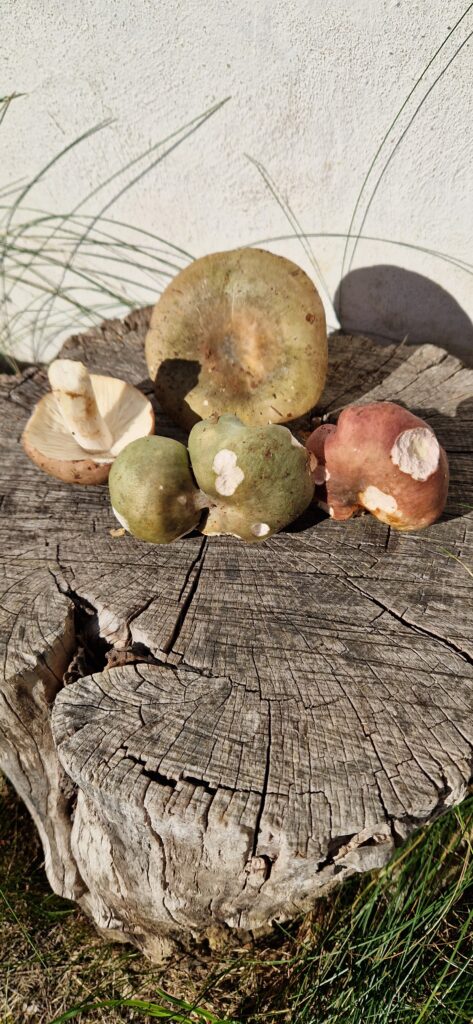
The Charcoal Burner is one of the most reliable and beginner‑friendly members of the Russula (brittlegill) family, standing out from its relatives by being both edible and unusually robust. While many Russulas are fragile and unpredictable, this species breaks the rules – making it a valuable confidence‑builder for those learning mushroom identification.
Not sure about mushroom identification? Join us for the next foraging course in Charnwood, Leicestershire, and learn how to safely identify fungi in the wild.
Habitat
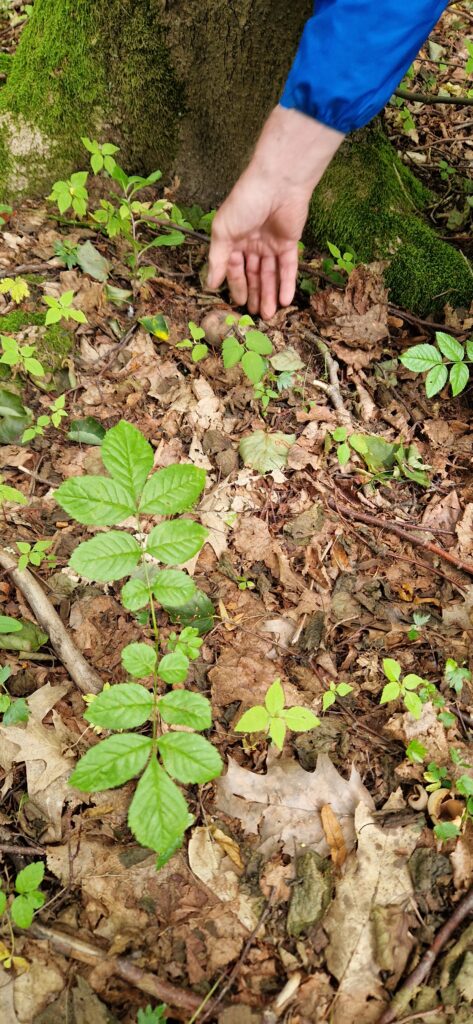
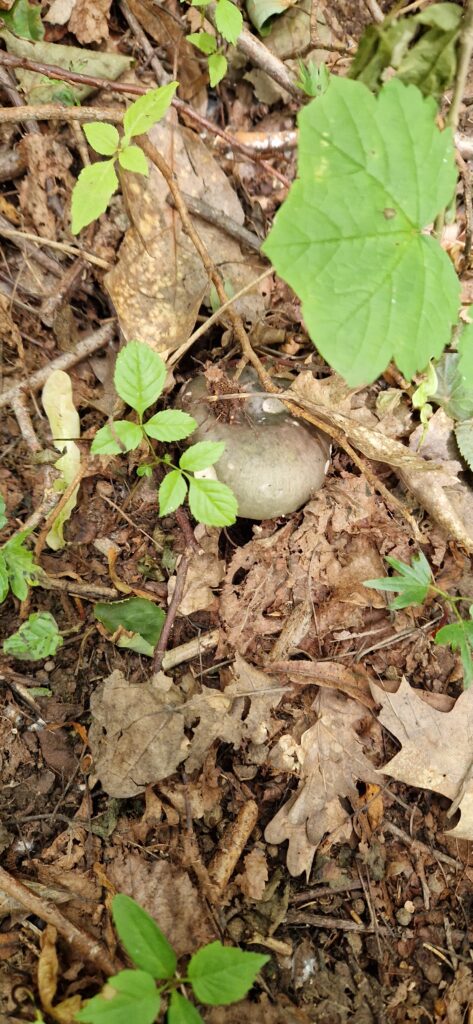
Found in deciduous and mixed woodland, the Charcoal Burner forms mycorrhizal relationships primarily with oak and beech, though it may also occur with other broad‑leaved trees. It typically grows on soil rather than wood, appearing singly or in scattered groups.
Identification Features
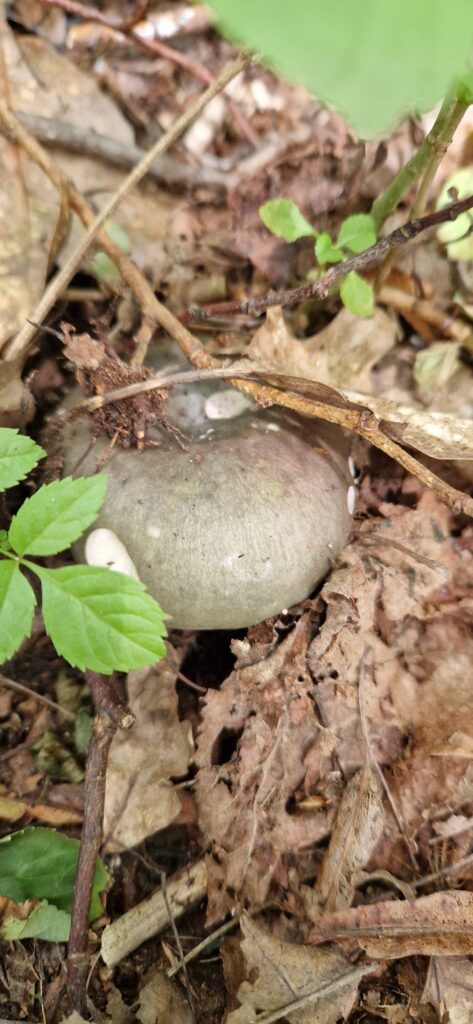
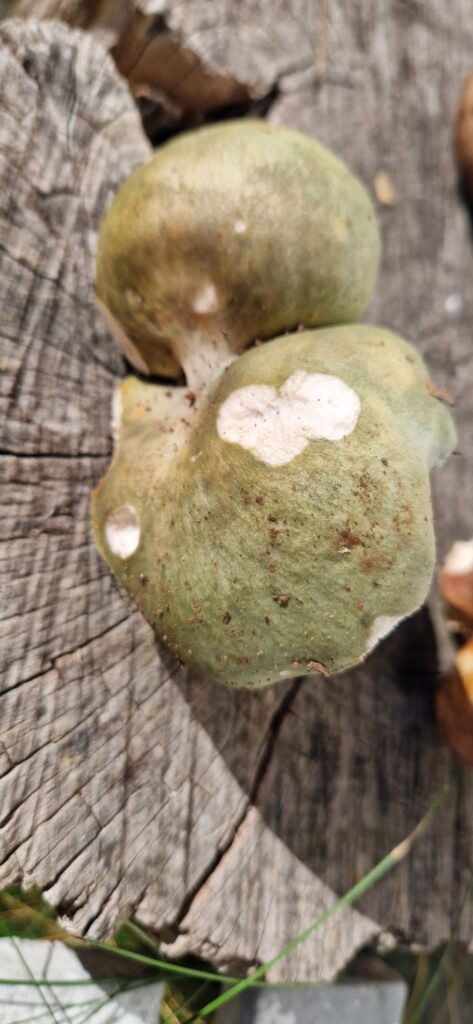
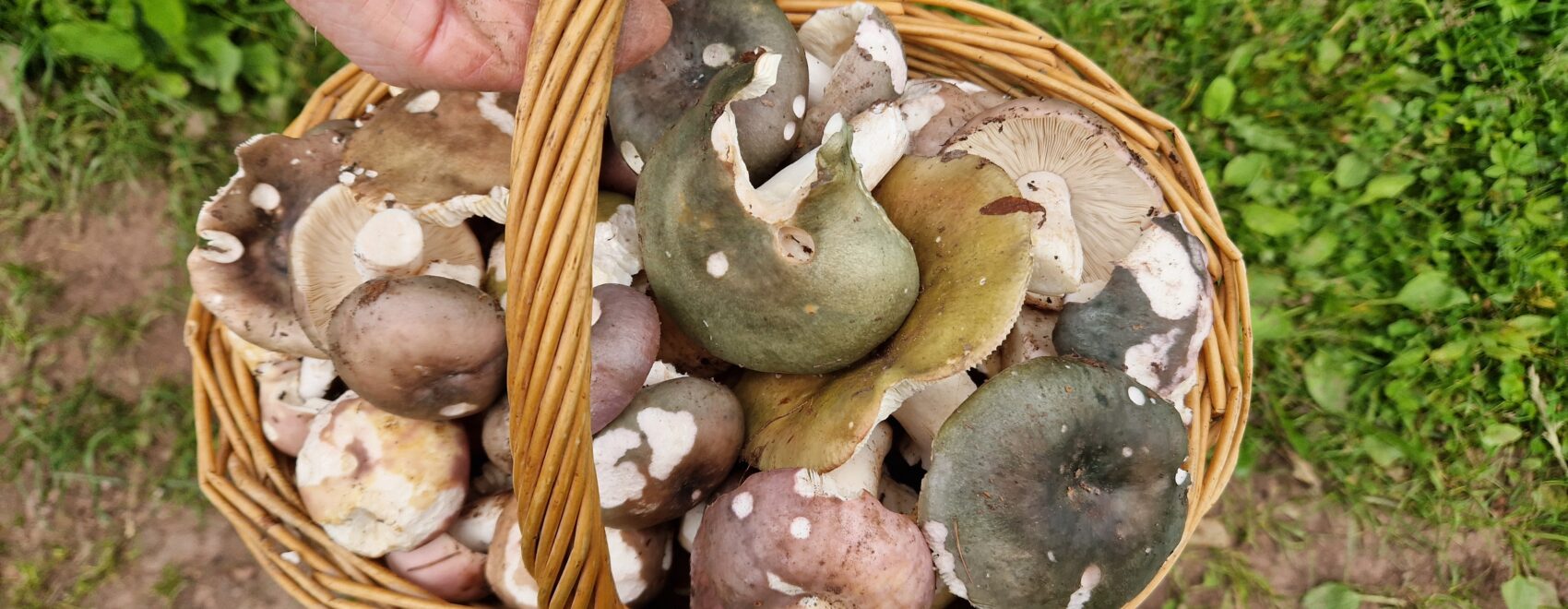
- Cap: Variable in colour – often greenish, grey‑green, purple, lilac, or a mix of tones. The surface can appear slightly cloudy or mottled, as if dusted with ash (hence the name). Cap size ranges from medium to large.
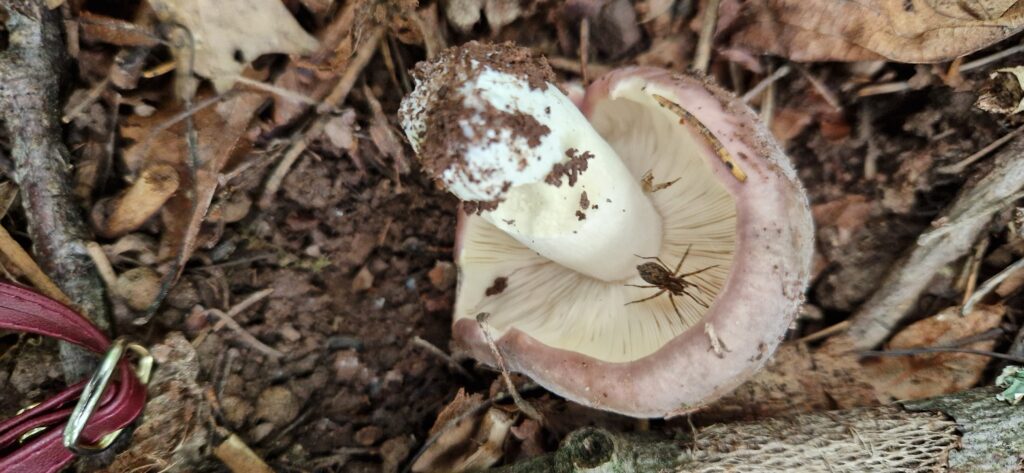
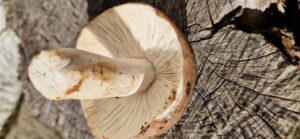
- Gills: Cream to pale buff and remarkably flexible for a Russula. When gently stroked, the gills bend rather than snap – a key identifying feature.
- Stem: White, solid, and firm, lacking a ring or volva.
- Flesh: White and comparatively tough for a brittlegill.
- Smell: Mild and pleasant, never acrid.
Lookalikes
The Charcoal Burner can resemble many other Russula species due to its variable cap colour. However, it can be separated from them by a combination of features:
- Other Russulas usually have brittle, crumbly gills that snap easily.
- Many Russulas taste hot or peppery, whereas this species does not.
Although there are no deadly poisonous Russulas in the UK, some species can cause significant gastrointestinal upset, so correct identification remains essential.
Edibility
This is considered one of the best edible Russulas in the UK.
- Mild‑flavoured and versatile
- Suitable for frying, adding to sauces, or using in mixed mushroom dishes
- Best cooked; avoid eating raw
As with all wild mushrooms, only eat when you are 100% confident of identification.
Ecology
As a mycorrhizal fungus, the Charcoal Burner plays an important role in woodland ecosystems by exchanging nutrients with its host trees, supporting soil health and forest resilience.
Season
Typically found from summer through to autumn, depending on weather conditions.
Health & Safety Note
Never rely on a single feature when identifying mushrooms. Always check habitat, gills, stem, smell, and texture together, and consult multiple reliable sources. If in doubt, leave it unpicked.
Learn More on a Foraging Course
Seeing the Charcoal Burner in person and comparing it directly with other Russulas is one of the best ways to build identification confidence. If you’d like hands‑on experience with edible fungi and their lookalikes, consider joining one of my fungi identification or foraging courses, where safety and correct identification are always the priority.
Join us for a foraging adventure in Charnwood, Leicestershire! Whether you’re a beginner or a seasoned forager, our events are a great way to learn about and identify edible fungi in their natural habitat.