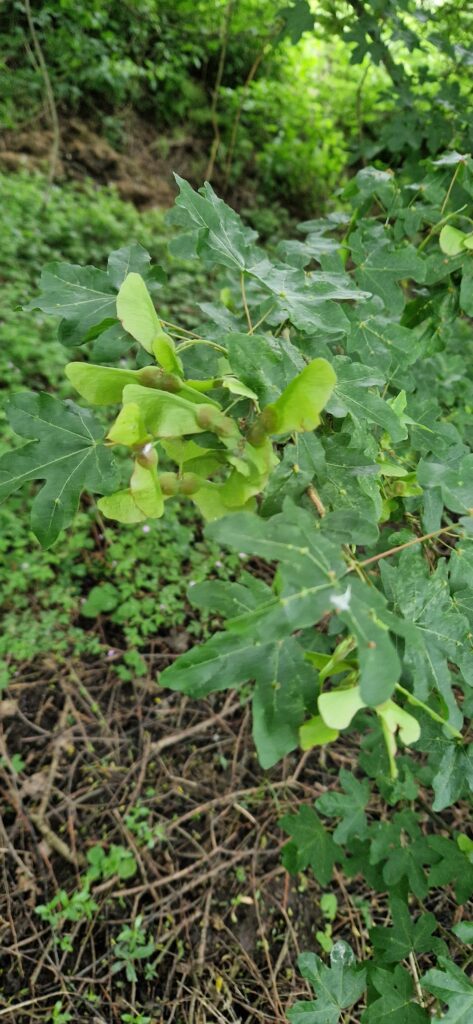
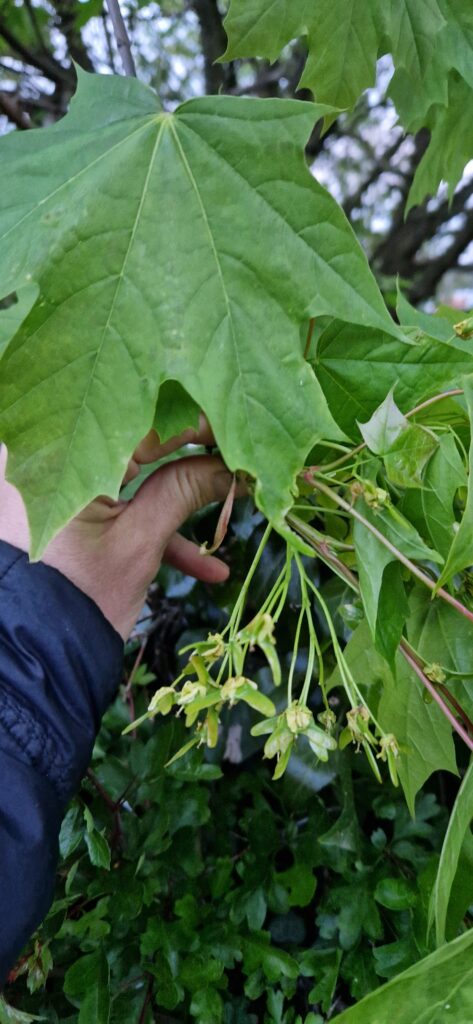
The sycamore (Acer pseudoplatanus) is a common tree found in woodlands, hedgerows, and along roadsides, known for its large, palmate leaves and distinctive winged seeds called “keys.” While sycamore trees are typically admired for their size and shade, the keys (seeds) are edible and can be used in a variety of ways. These small, winged fruits offer a unique wild food source and are enjoyed in various traditional recipes.
Overview
Latin Name: Acer pseudoplatanus
Common Names: Sycamore, Plane Tree
Natural Habitat
Sycamores are commonly found in:
- Woodlands, along roadsides, and in disturbed soils
- Hedgerows and areas with fertile, well-drained soil
- Prefers areas with full sun or partial shade and can grow in a range of soil types
Sycamore trees are widespread in temperate regions and are particularly abundant in Europe, although they are also found in North America and other parts of the world.
Identification
Leaves
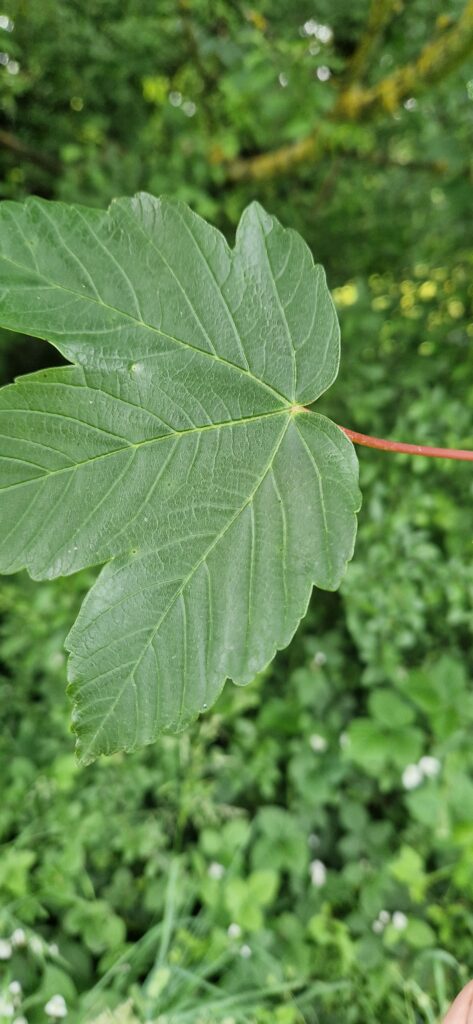
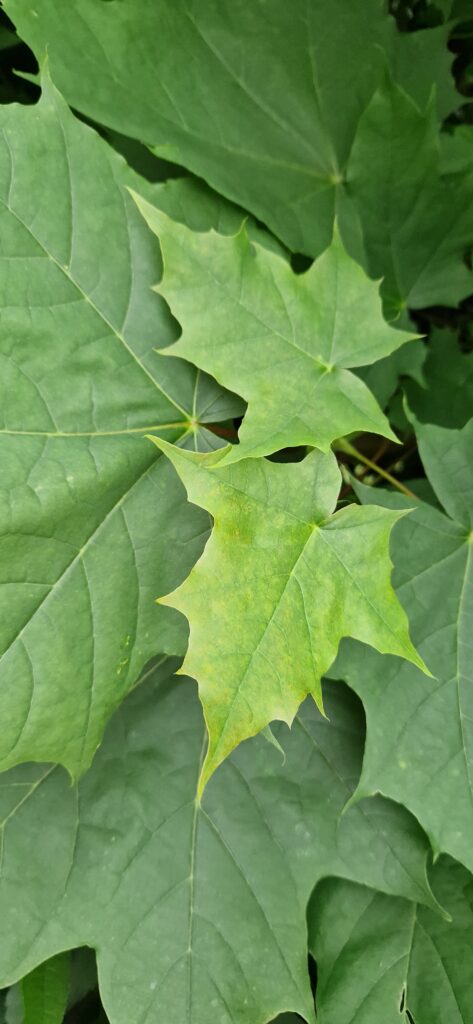
- Large, palmate leaves with five lobes, typically 15–30 cm in length.
- The leaves are bright green and have a slightly rough texture, turning yellow in autumn.
- The edges of the leaves are toothed, and they often have a somewhat coarse appearance.
Flowers
- Small, greenish-yellow flowers that appear in clusters during spring.
- The flowers are not particularly showy but contribute to the tree’s overall size and structure.
Keys (Seeds)
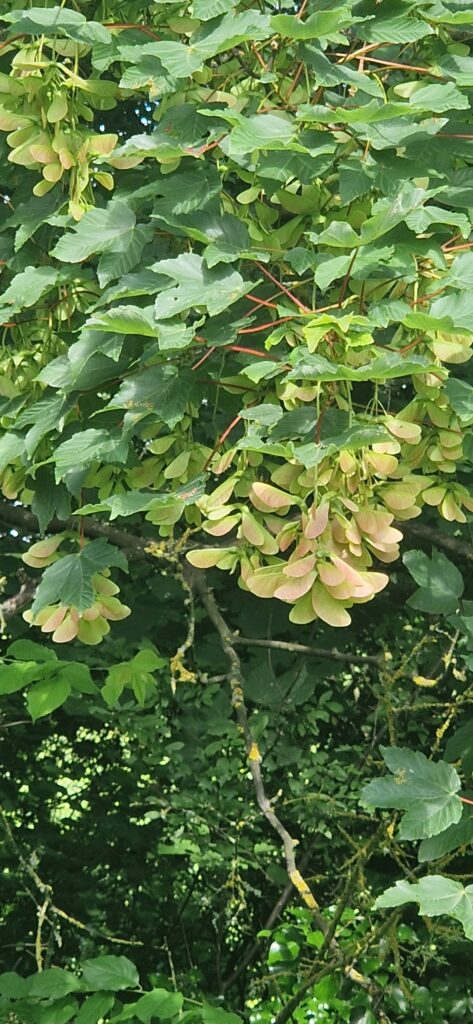
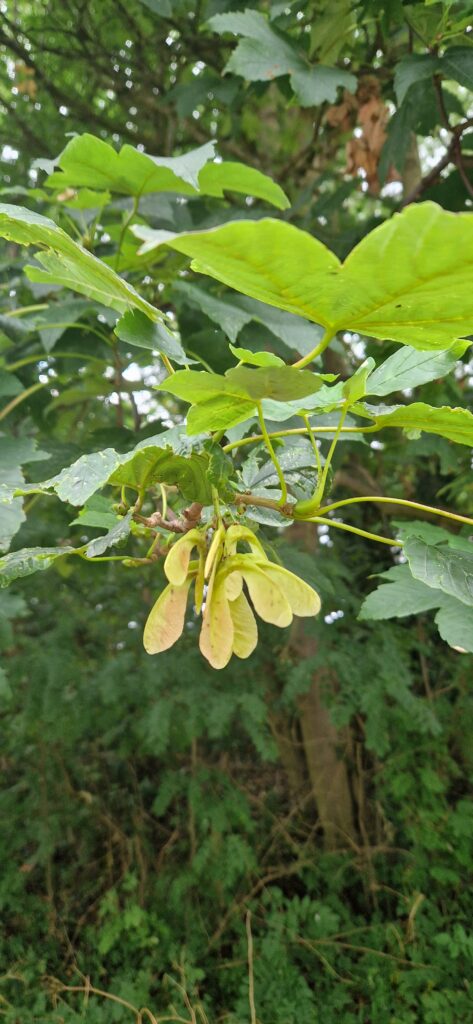
- The sycamore tree’s keys are winged, double-winged fruits that hang from the tree in clusters.
- Each key is around 2–4 cm in length and has two papery wings that allow them to be dispersed by the wind.
- These keys ripen in late summer to early autumn, turning from green to brown.
Edibility and Culinary Uses
The sycamore’s seeds, or keys, are edible when harvested at the right time. They are best consumed when still young and green, as the older seeds can be tough and fibrous. These seeds can be eaten raw or cooked, offering a subtle, nutty flavor.
Common Uses
- Raw: The seeds can be eaten raw by simply peeling away the wings and nibbling on the seeds inside.
- Roasted: Roasting the seeds enhances their flavor and texture, making them a delicious snack.
- Ground: Dried seeds can be ground into a powder and used in baking or as a flour substitute in some recipes.
- In Salads: Raw seeds can be added to salads for extra crunch and flavor.
- Tea: The young seeds can be used to make a mild tea, offering a delicate, earthy flavor.
Recipe Ideas
- Roasted Sycamore Seed Snack
- Sycamore Seed Flour Pancakes
- Fresh Sycamore Seed Salad
- Sycamore Seed Tea
Nutritional Value & Health Benefits
Nutritional Content
- Rich in carbohydrates, providing a natural energy source.
- Contains small amounts of protein and healthy fats.
- A good source of minerals like calcium and potassium.
- Contains antioxidants that help protect cells from damage.
Medicinal Benefits
- Digestive Health: Sycamore seeds are a good source of dietary fiber, promoting healthy digestion and bowel regularity.
- Energy Boost: Due to their carbohydrate content, the seeds provide a quick energy boost when needed.
- Antioxidant Properties: The antioxidants in sycamore seeds can help reduce oxidative stress and inflammation in the body.
Foraging Tips
Sycamore seeds can be foraged during late summer to early autumn, once the keys are fully ripened and brown. When foraging for sycamore keys, keep the following in mind:
- Best Harvesting Season: Late summer to early autumn, when seeds are mature but not overly tough.
- Sustainability: Harvest responsibly, leaving plenty of seeds for wildlife. Sycamore seeds are a key food source for various birds and small mammals.
- Pro Tip: To avoid confusion with other winged seeds, remember that sycamore keys are larger and have two wings per seed.
Folklore & History
The sycamore tree has long been revered for its strength and shade. In ancient cultures, the sycamore was considered a symbol of protection, and its wood was used for making furniture and tools. While the seeds were not a primary food source, they were sometimes used in times of scarcity as an emergency food. In some cultures, sycamore trees were planted near homes for their protective and medicinal properties.
Safety Precautions
- Mature Seeds: Older sycamore seeds can be tough and fibrous, so they may not be as enjoyable or digestible. Harvest when they are still young and tender.
- Allergies: As with any wild food, try a small amount first to ensure you don’t have an allergic reaction.
- Identification: Ensure that you are correctly identifying the sycamore tree and its seeds. Other trees may have similar-looking seeds, but they may not be edible.
Conclusion
Sycamore trees offer more than just shade—they provide an edible and nutritious food source in the form of their keys. With their subtle nutty flavor, these seeds can be enjoyed raw, roasted, or ground into flour. By foraging responsibly and learning how to identify the sycamore, you can make the most of this wild food resource.
Eager to learn more about wild edibles? Join our foraging courses in Charnwood, Leicestershire, and discover the many ways to enjoy wild plants.