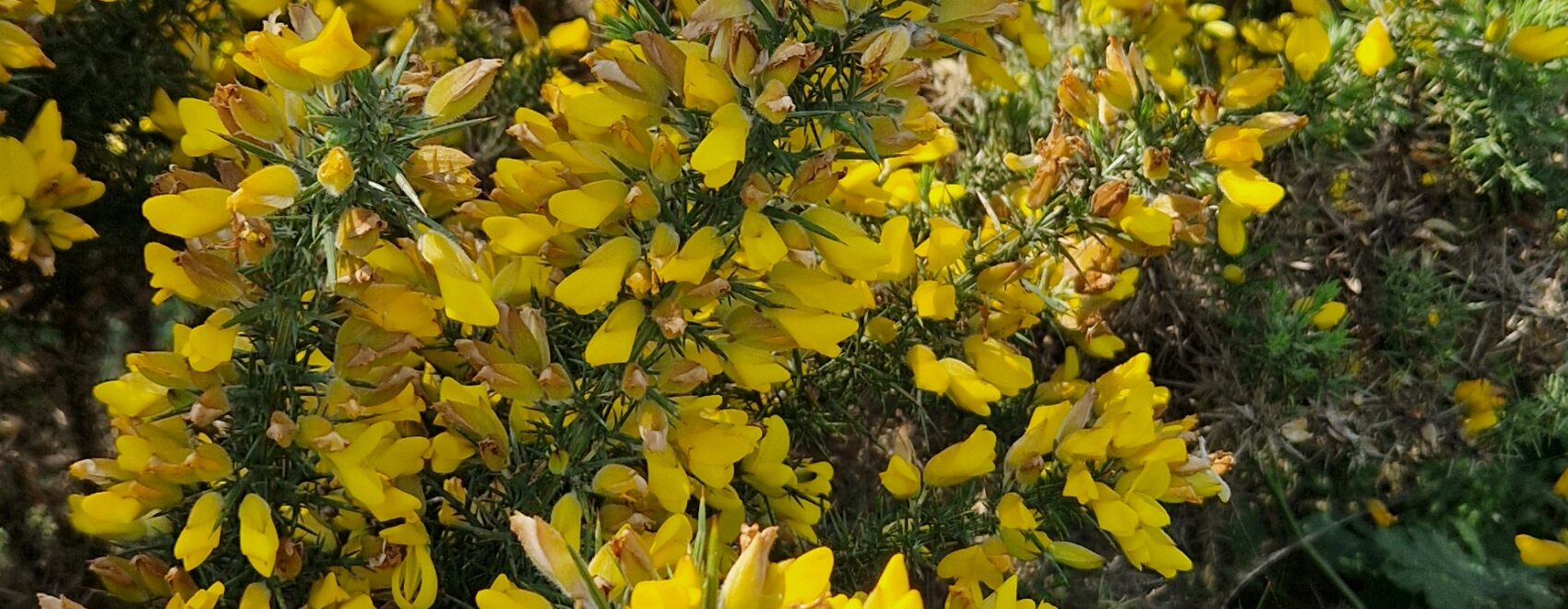

The gorse plant belongs to the Fabaceae family and its Latin name is Ulex europaeus. It’s also commonly known as furze or whin.
Urticaceae family.
Gorse bushes are commonly found in coastal areas, heathlands, and open areas with well-drained, acidic soils. They can also colonize disturbed areas such as abandoned fields, roadsides, and clearings.
Appearance
Leaf Description:
- Gorse leaves are small, scale-like, and spiky, with a dark green color.
Flower Description:
- Gorse flowers are vibrant yellow and have a distinct coconut-like fragrance. They bloom from late winter to early summer, covering the plant with a bright burst of color.
Stem Description:
- The stems of gorse are woody and often densely covered in thorns..
Fruit/Seed Description:
- Gorse produces small, dark brown pods that contain seeds. These pods are usually covered in soft spines.
Edibility
- Gorse flowers are edible and can be used in various culinary applications. However, other parts of the plant, including the seeds and foliage, are not consumed due to their bitter taste and toxicity.
Recipes
Gorse flowers can be used to infuse syrups, jams, and even alcoholic beverages like gorse flower wine. They can also be added to salads or used to flavor desserts.
Vitamins Content/Health Benefits
- Gorse flowers contain vitamin C and have been traditionally used in herbal medicine to treat various ailments such as respiratory issues and skin conditions. However, scientific evidence supporting these health benefits is limited.
Foraging season
Flowers – late winder/early summer
Folklore/Interesting Info
- In folklore, gorse has been associated with protection and good luck. It’s also said that when gorse is in bloom, kissing is in season, referring to the tradition of couples kissing under flowering gorse bushes
Health warning
- While gorse flowers are edible and can be used in culinary applications, other parts of the plant can be toxic if ingested in large quantities. Additionally, the thorns on the stems can cause injury, so caution should be exercised when handling the plant. It’s always advisable to properly identify plants and consult reliable sources before foraging or consuming them