
29th June 2025 6:30-8:30 pm
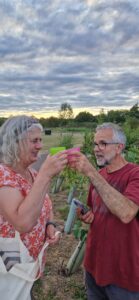
On a warm Sunday evening, softened by cloud cover that kept the heat comfortably mild, we held our summer foraging course at Nanpantan Sports Ground. The long daylight hours and lush growth made for perfect conditions to explore wild edible plants in a relaxed and educational setting.
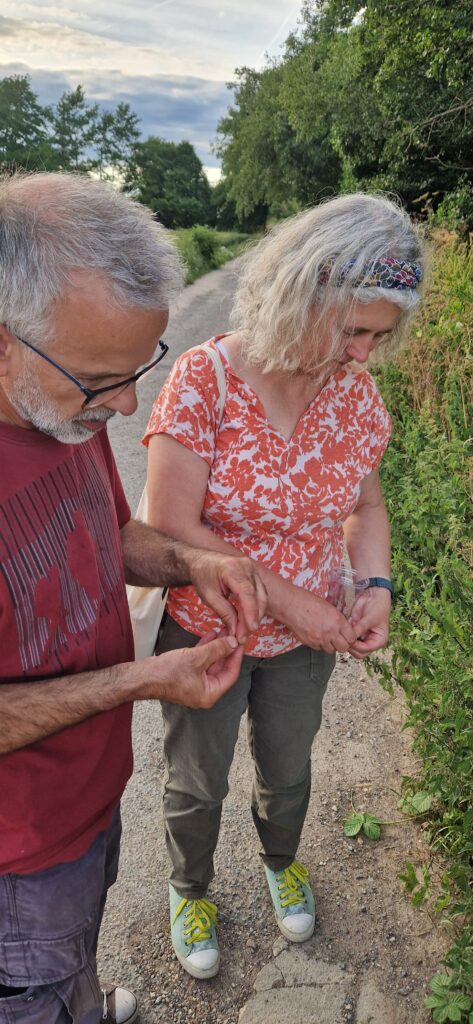
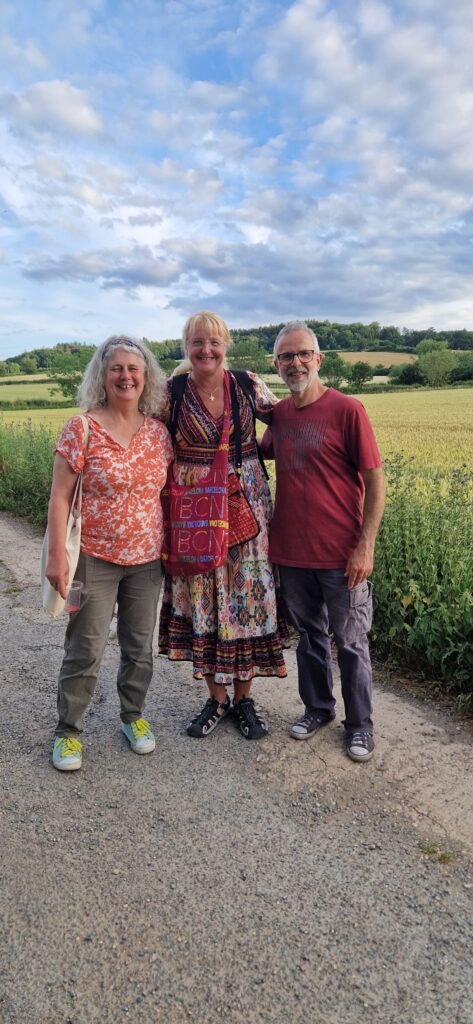
Though only two participants joined us (out of four tickets sold), the small group allowed for a more in-depth, personal learning experience.
Our Foraging Walk Highlights
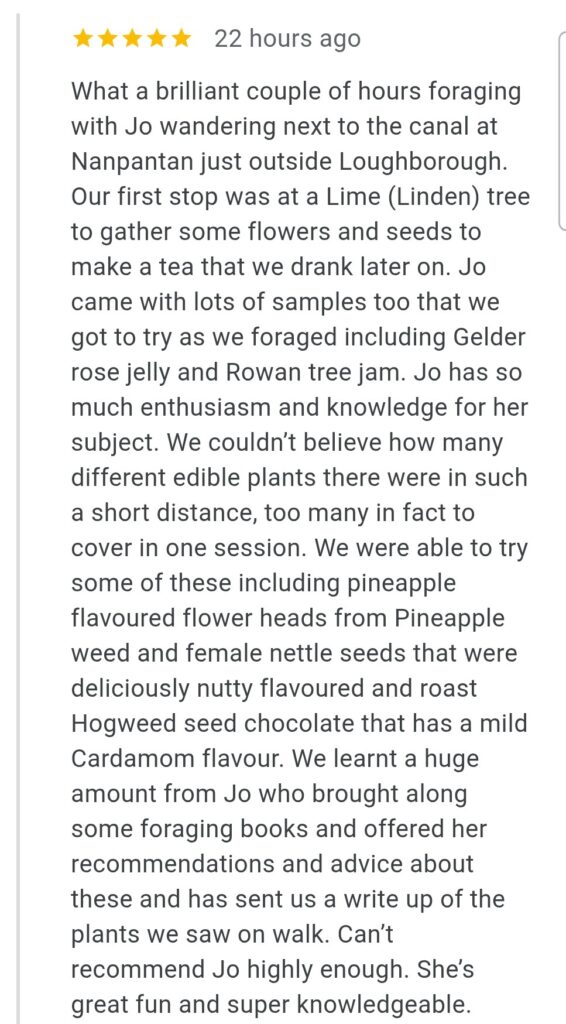
We began with a calming linden flower tea, prepared fresh from flowers gathered at the start of the walk.
Moving onto the path along the field:
- Brambles: These offer more than berries—the leaves are traditionally used to soothe respiratory issues. We sampled a delicious homemade cordial.
- Dry Meadow Foraging: This sunlit, nutrient-poor area was a true forager’s delight, with:
- Several species from the Orache family: lamb’s quarters and fig-leaved goosefoot
- Shepherd’s purse, pineapple weed, mild chamomile
- A range of thistles, and a taste of garlic mustard seeds
- Common Hogweed (Hairy Hogweed): Identified safely, and paired with our Charnwood Foraging signature chocolates made from roasted seeds—a real treat.
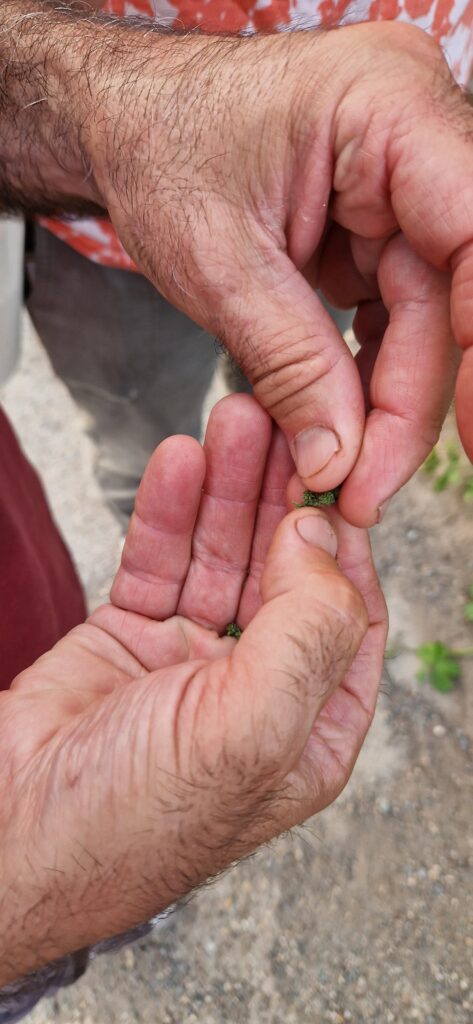
- Female Nettle Seeds: We nibbled these energizing seeds and discussed their nutritional value.
- Plantain vs. Dock Leaves: A great field comparison showing why plantain is more effective for stings and wound healing.
- Cleavers: Past their spring tonic prime, but still useful—full of seeds, which can be roasted for a wild coffee substitute.
- Common Horsetail: A plant to forage with caution; we discussed its traditional uses and potential risks.
- Rosebay Willowherb vs. Hairy Willowherb: We explored differences between these two similar plants—though props would’ve helped (note to self for next time!).
Entering the Cemetery Area
As we passed into the cemetery area and the nearby young woodland:
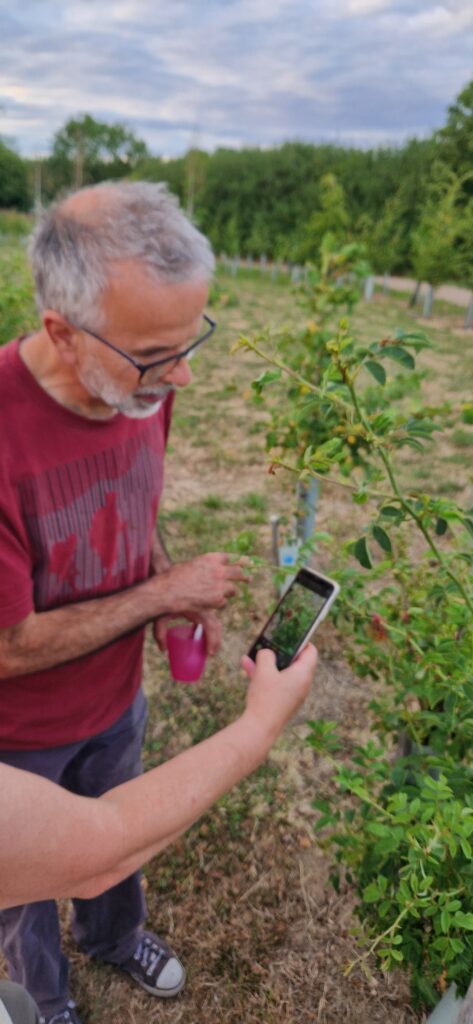
- Crab Apples & Clovers: Both traditional wild edibles. Clovers are also known historically as famine or survival food.
- Pine Trees: We discussed edible uses of pine cones and bark.
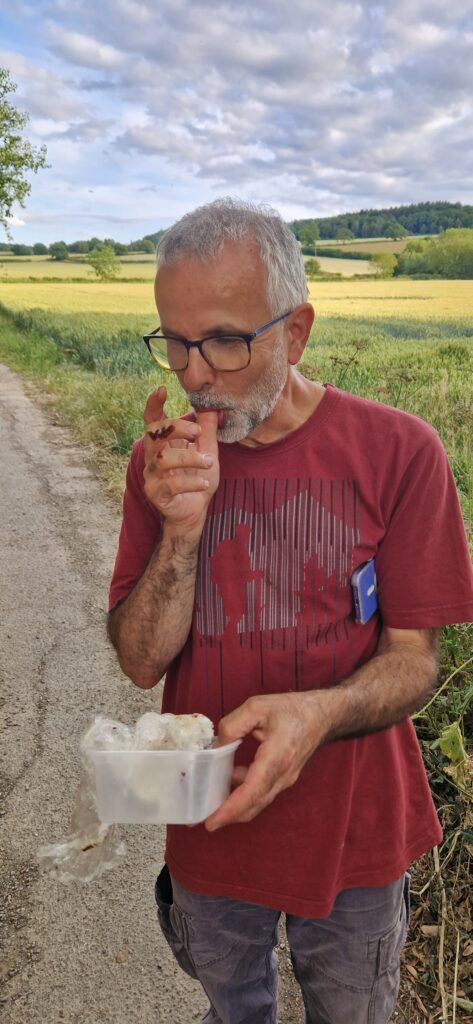
- We tasted a range of wild treats:
- Rowan syrup and jam
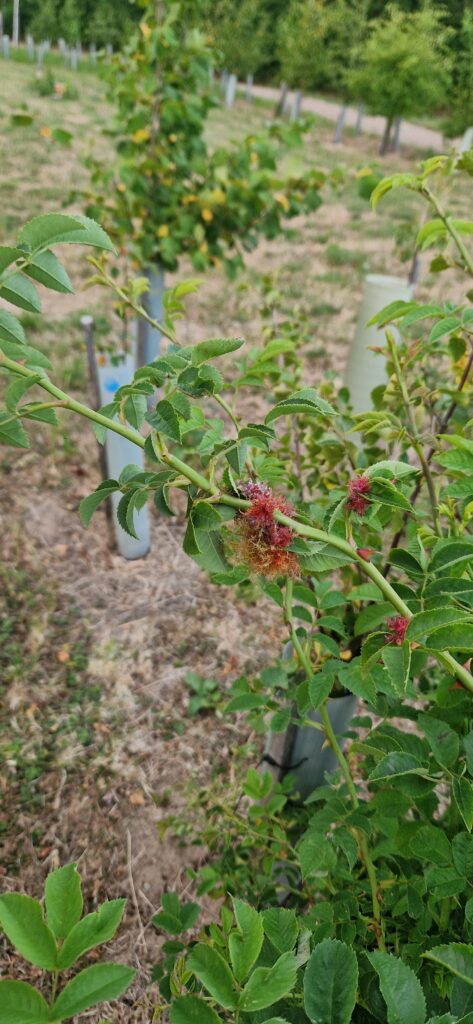
- Foul-smelling guelder rose jelly (not for the faint-hearted!)
- Silver birch sap – subtle and refreshing
- Mushrooms fast track learning:
- Chicken of the woods
- Oyster mushrooms
- Jelly ear
- Birch polypore
- Hemlock: One of the most crucial safety moments—everyone learned to recognize this highly toxic plant to avoid dangerous mistakes.
Final Stop
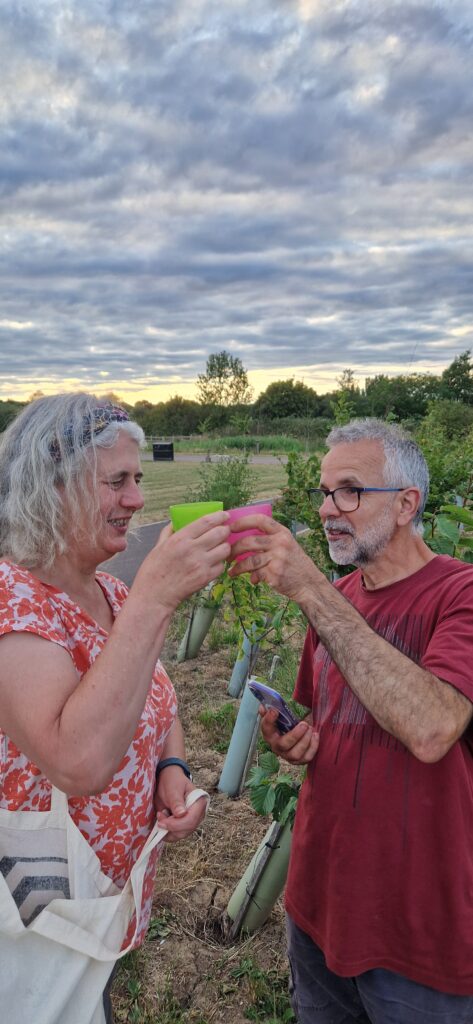
We ended the evening with a warm cup of yarrow tea, followed by our own linden flower tea, enjoyed back at the car park—bringing the course full circle.
Despite overrunning 30 min, we still could not learn about all the wonderful plants around us. Perhaps next time, we meet again…
Interested in Learning to Forage?
We no longer run dog walker–friendly public courses, but private foraging experiences are still available.
Whether you’re an individual, a family, or a small group, we offer tailored sessions to help you safely identify and use wild edible plants and mushrooms. Ideal for beginners or anyone keen to deepen their connection with nature.
👉 Get in touch to book your private foraging course or sign up for one of our public events.


- Nature Exploration
- Plant Identification
- Outdoor Learning
- Sustainable Living
- Community Bonding and team building
- Foraging near me Leicestershire
Book on our next event to have fun with us and learn a lots!
