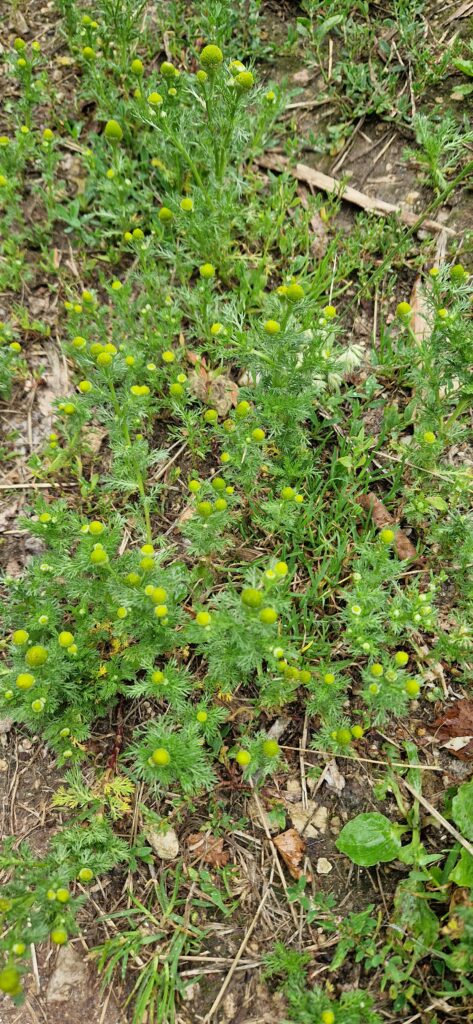
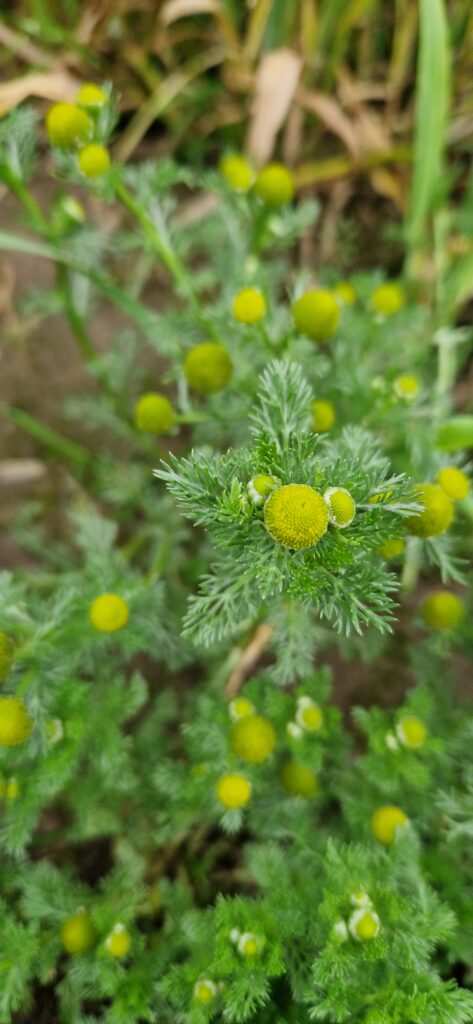
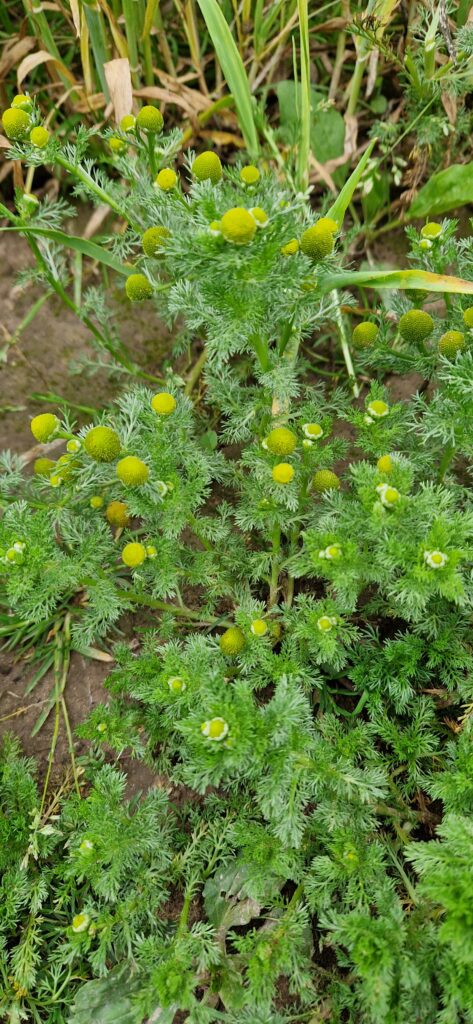
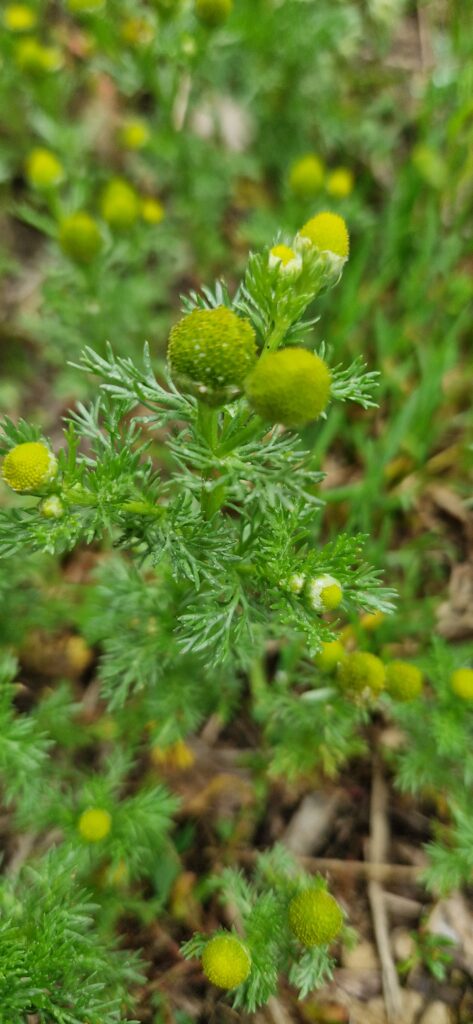
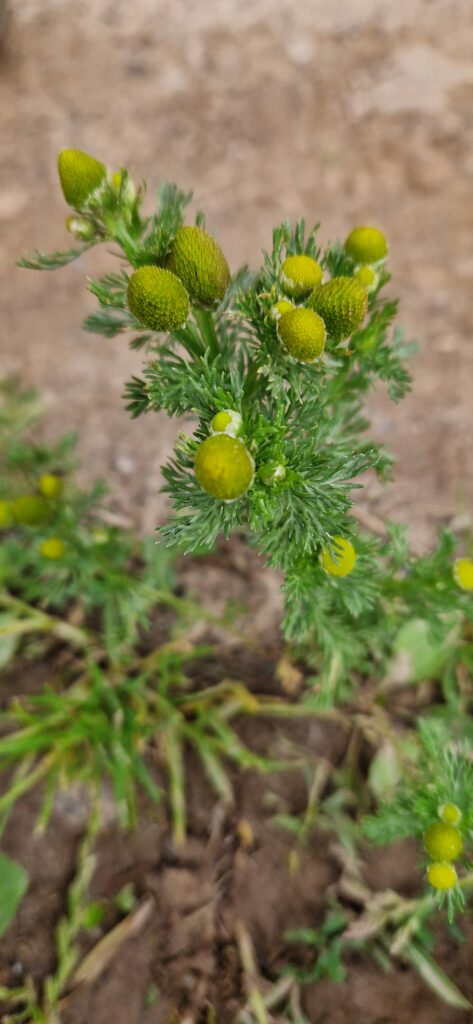
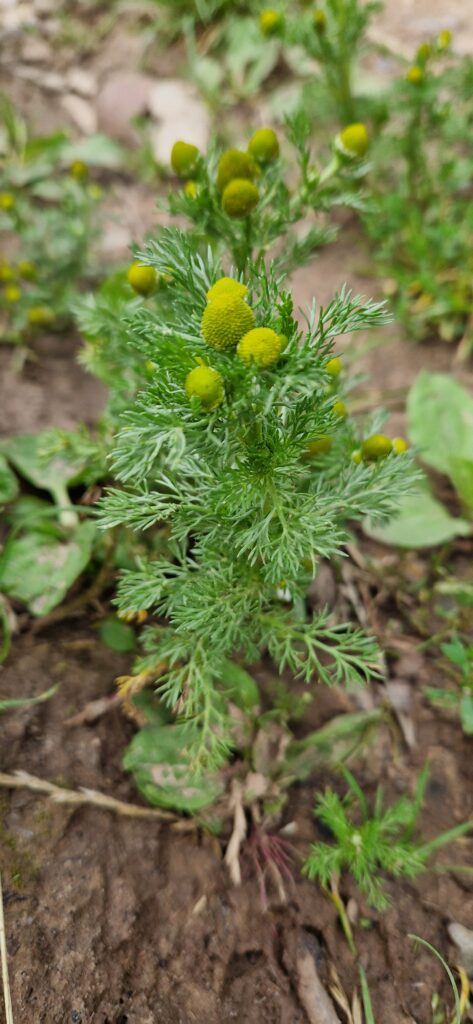
Pineapple Weed (Matricaria discoidea) is a charming and aromatic wild herb commonly found along footpaths, roadsides, and disturbed soils. Despite its unassuming appearance, this daisy-family plant offers a sweet, fruity scent reminiscent of pineapple—making it a surprising and delightful find for foragers and herbal enthusiasts alike.
Overview
Latin Name: Matricaria discoidea
Common Names: Pineapple Weed, Wild Chamomile, Disc Mayweed, Rayless Chamomile
Natural Habitat
Pineapple Weed thrives in dry, compacted, and disturbed environments such as:
- Sidewalk cracks and gravel paths
- Driveways and parking lots
- Dirt roads and field edges
- Urban lots and well-trodden trails
It’s a hardy pioneer species, often growing where little else will. It flourishes from late spring through early autumn, especially in full sun.
Identification
Leaves:
Finely divided, feathery, and fern-like, the bright green leaves are soft to the touch and often release a mild camomille scent when crushed.
Stems:
Slender, green, and branching, usually standing upright but can sprawl depending on location.
Flowers:
Distinctive yellow-green, dome-shaped flower heads without petals (hence the “rayless” name). When crushed, they emit a strong pineapple-like aroma.
Height:
Typically ranges from 5 to 30 cm tall, though it may appear shorter when growing in heavily trafficked areas.
Edibility and Medicinal Uses
Pineapple Weed is a safe and tasty wild edible that doubles as a gentle herbal remedy. Its sweet, tropical scent and flavor have made it a favorite among traditional herbalists and adventurous chefs.
Culinary Benefits
Flowers and Leaves:
The flower heads are the most flavorful part, offering a fruity taste that pairs well with sweet and savory dishes alike. Use in:
- Herbal teas and iced infusions
- Baked goods (cookies, scones, cakes)
- Jams and syrups
- Salads or fresh garnishes
Flavor Profile:
A cross between pineapple and chamomile, with subtle bitterness and floral notes.
Medicinal Benefits
Traditionally used in folk medicine, Pineapple Weed has been appreciated for its gentle soothing properties:
- Digestive aid: Helps calm upset stomachs and indigestion
- Mild sedative: Similar to chamomile, promotes relaxation and restful sleep
- Anti-inflammatory: Used topically for minor skin irritations or puffiness
Preparation and Uses
Raw:
Young flower heads can be nibbled on trail walks or added directly to salads.
Infused:
Steep dried or fresh flowers in hot water for a calming herbal tea.
Cooked:
Infuse syrups or bake into desserts for a subtle pineapple flavor.
Drying:
Collect during peak bloom and air-dry for use in winter teas or herbal blends.
Foraging Tips
Best Harvesting Season:
Late spring through summer, when flower heads are firm and aromatic.
Sustainability:
This plant grows abundantly and recovers quickly—ideal for beginner foragers. Pick responsibly and leave some to reseed.
Pro Tip:
Look for Pineapple Weed in high-traffic, sun-exposed areas. Crush a flower head between your fingers—if it smells like pineapple, you’ve found the right plant.
Folklore & History
Pineapple Weed quickly became naturalized and beloved by indigenous peoples and settlers alike. Its sweet scent and calming properties earned it a place in the herbal traditions of various cultures.
Safety Precautions
Lookalike Warning:
Generally low-risk due to its unique scent and dome-shaped flower head, but may be confused with young chamomile species or weedy composites. Always use smell as a key ID marker.
Pollution Alert:
Avoid harvesting near roadsides or chemically treated areas. Opt for clean, low-traffic locations if available.
Allergy Note:
As a relative of chamomile and ragweed, Pineapple Weed may cause allergic reactions in sensitive individuals.
Conclusion
Pineapple Weed is a delightful, easy-to-identify wild edible that offers both flavor and gentle healing properties. Whether brewed into tea, baked into cookies, or simply enjoyed fresh in the field, this sweet-scented herb is a fragrant reminder that even the most common paths can hide unexpected treasures.per knowledge and caution, this aquatic herb can be a delicious and safe addition to your wild food journey.
Want to learn more about safely identifying wild edibles?
Join our foraging courses in Charnwood, Leicestershire.