Village Hall, Old School Meadows, DE6 2FN
20th April 2026
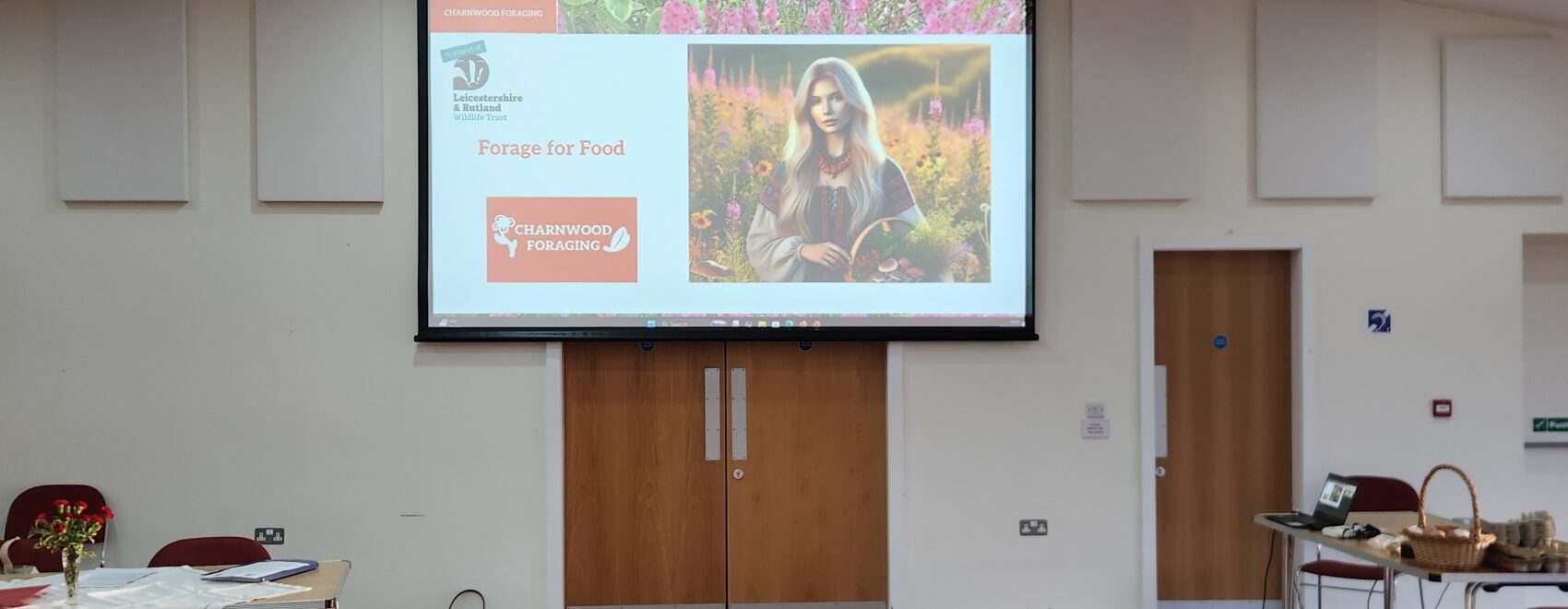
Our Forage for Food session was a celebration of nature’s edible treasures, packed with practical foraging tips, historical anecdotes, and food inspiration. Attendees explored a variety of edible wild plants, medicinal herbs, and wild mushrooms that thrive in UK woodlands, meadows, and even gardens.
We introduced colourful fungi like the meadow waxcap (Cuphophyllus pratensis), scarlet waxcap, and the unmistakable chicken of the woods (Laetiporus sulphureus) – perfect vegetarian alternatives with a meaty texture and flavour. The vibrant beefsteak fungus (Fistulina hepatica) also featured, prized for its striking appearance and unique acidic bite when eaten raw in salads.
Among the many wild plants, we discussed the health benefits and culinary uses of:
- Dandelion – from root to flower, a liver tonic and forager’s favourite.
- Dead nettle – rich in nutrients, ideal for baking and teas. e.g. dead nettle cake.
- Ground elder – an invasive plant that tastes like parsley and is excellent in savoury dishes e.g. Hashgreen
- Cleavers (Galium aparine) – a sticky plant with traditional uses for sleep, skin, and the lymphatic system
- Hostas – yes, the ornamental garden plant! Delicious when young and tender
- Fireweed (rosebay willowherb) – great for fermenting into Ivan’s chai or brewing as tea
We also showcased wild “jam” ingredients such as rosehip, medlar, and even reedmace (Typha), known as the “supermarket of the swamp,” for its many edible parts including shoots, pollen, and rhizomes.
A special highlight was a reminder on common hogweed (Heracleum sphondylium) – a truly versatile plant when cooked, producing seeds ideal for spice mixes and young shoots for frying. We also covered safety, especially in distinguishing it from the dangerous giant hogweed.
From traditional remedies to modern recipes, this event connected people with the edible plants all around them. If you’re curious to explore wild food foraging, mushroom identification, and safe cooking techniques, don’t miss our upcoming foraging courses.