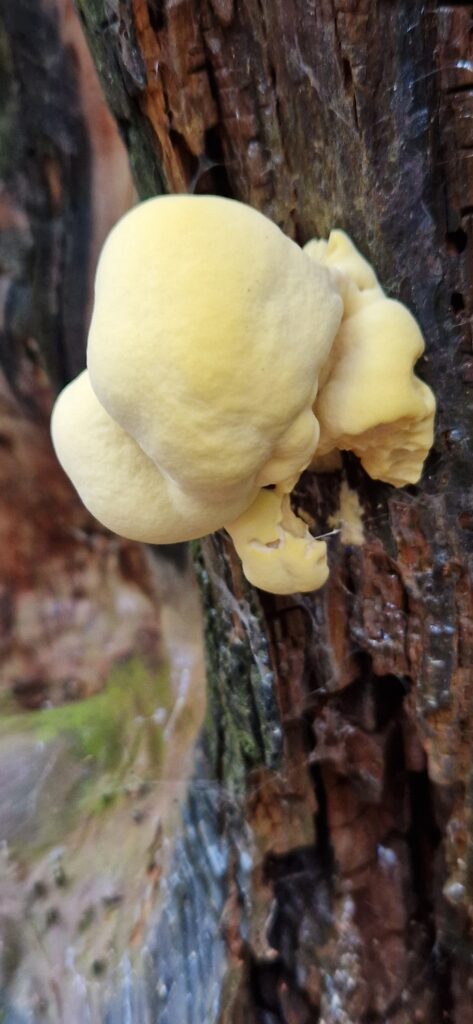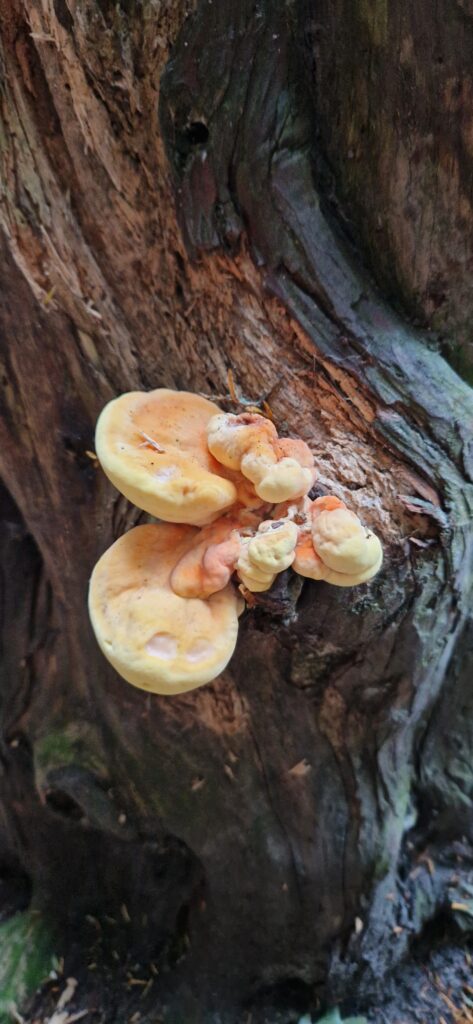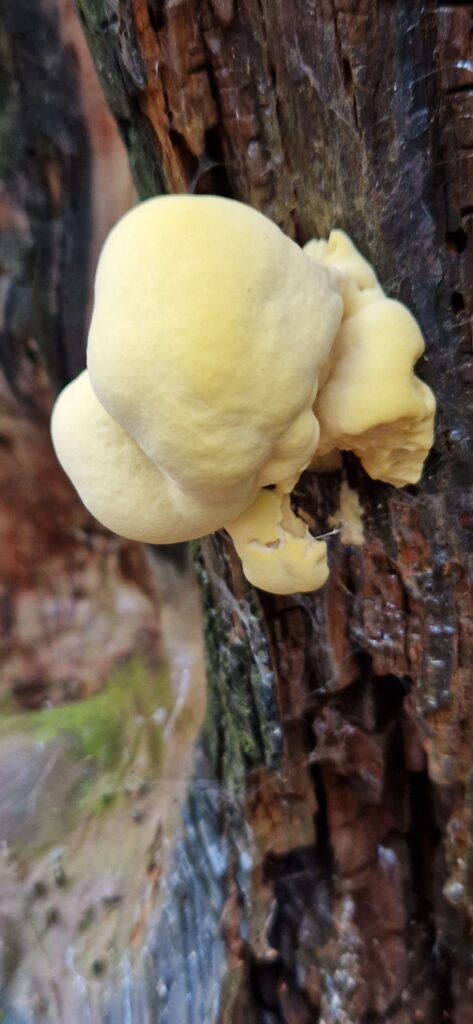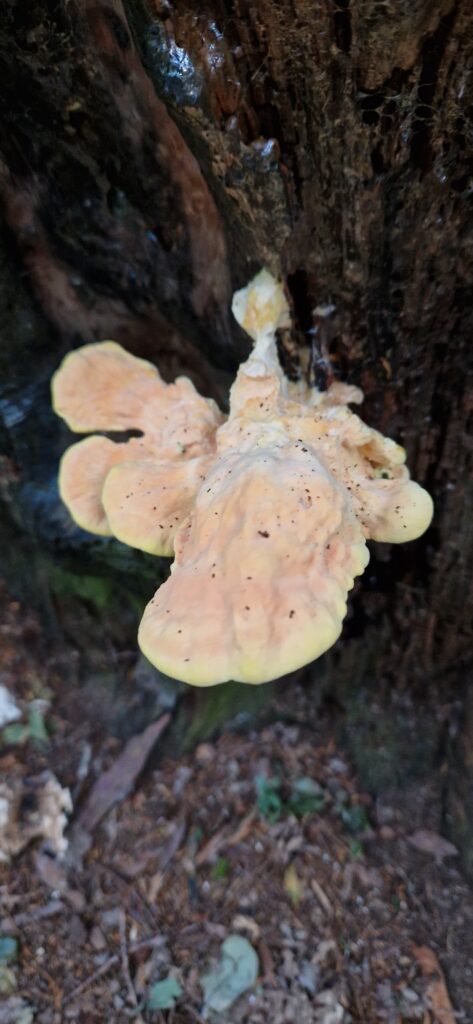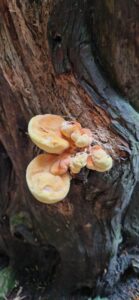
The Chicken of the Woods (Laetiporus sulphureus), also known as the “Sulphur Shelf” or “Chicken Mushroom,” is a distinctive and highly sought-after polypore fungus. Known for its bright color and chicken-like texture, this mushroom is a favorite among foragers and culinary enthusiasts alike.
Other names: “Sulphur Shelf” or “Chicken Mushroom.”
Not sure about plant identification? Join us for the next foraging event in Charnwood, Leicestershire.
Habitat
- The Chicken of the Woods grows on decaying hardwood trees, such as oak, chestnut, and cherry, though it can occasionally be found on conifers. This mushroom typically appears in large, overlapping clusters on the trunks, stumps, or branches of dead or dying trees. It is widely distributed across Europe, North America, and parts of Asia, emerging from late spring through autumn, depending on the climate.
Identification features
- Cap: The cap of the Chicken of the Woods is fan-shaped and can range from 10 to 40 centimeters across. It has a bright yellow to orange surface, which fades to white or pale yellow as the mushroom ages. The texture is smooth and velvety when young, becoming more brittle as it matures.
- Pores: The underside of the cap features small, tightly packed pores rather than gills, which are also yellow to white. Unlike many other mushrooms, the Chicken of the Woods does not bruise or stain when handled.
- Flesh: The flesh is thick, soft, and juicy when young, with a texture often compared to cooked chicken meat. As the mushroom ages, the flesh becomes tougher and less palatable.
Edibility
- The Chicken of the Woods is a highly prized edible mushroom, especially when young and tender. It has a mild, chicken-like flavor and a texture that is remarkably similar to meat, making it a popular choice for vegetarians and vegans as a meat substitute. However, it must be thoroughly cooked before consumption to avoid potential digestive discomfort. Some people may experience allergic reactions or gastrointestinal upset, so it’s advised to try a small amount first.
Recipes
Lovely firm mushroom best when young. Fry in butter and it taste better then a tender chicken.
Czech: smaženice – mushroom mix fried with onion, butter and eggs
Chicken of the wood with chicken egg
Vitamins Content/Health Benefits
The Chicken of the Woods contains several important nutrients, including protein, fiber, and a variety of vitamins, particularly B vitamins. Additionally, it provides antioxidants such as ergothioneine and selenium, which help protect cells from oxidative stress and may reduce the risk of chronic diseases, including heart disease and cancer. This mushroom also offers immune-boosting properties and supports overall health.
Foraging season
- The Chicken of the Woods is typically found from late spring through autumn, with peak seasons varying by region. Climate change has influenced its fruiting times, and in some areas, it can now be found as early as May or as late as November.
Health warning
- While the Chicken of the Woods is considered edible, caution is advised when foraging. Some individuals may be allergic or sensitive to this mushroom, especially when it’s grown on conifers or eucalyptus trees, as these can cause gastrointestinal issues. As always, accurate identification is essential, and it’s best to consult with an expert or use a reliable field guide if you’re uncertain. Thorough cooking is also recommended to ensure safety and enhance flavor.