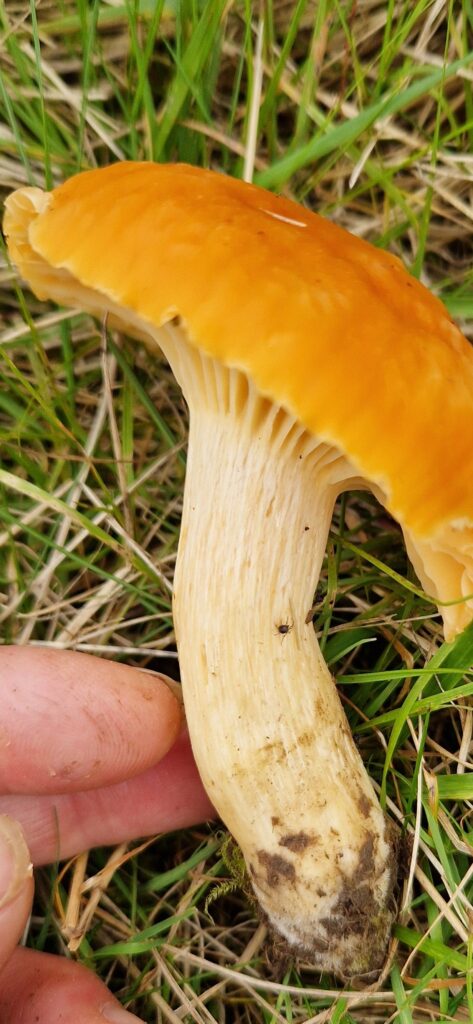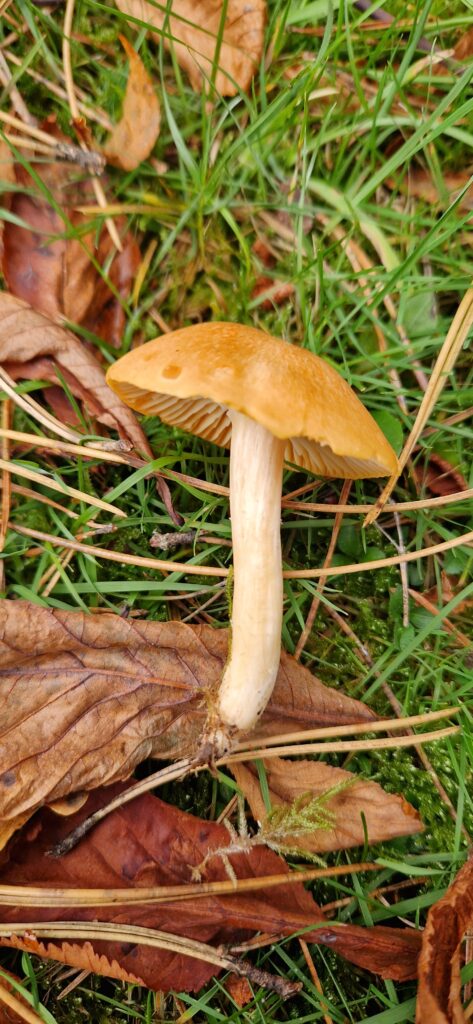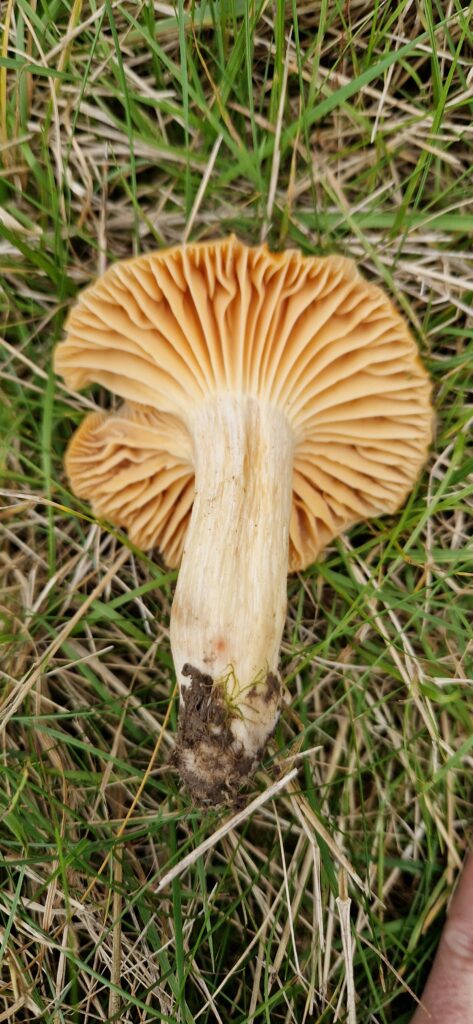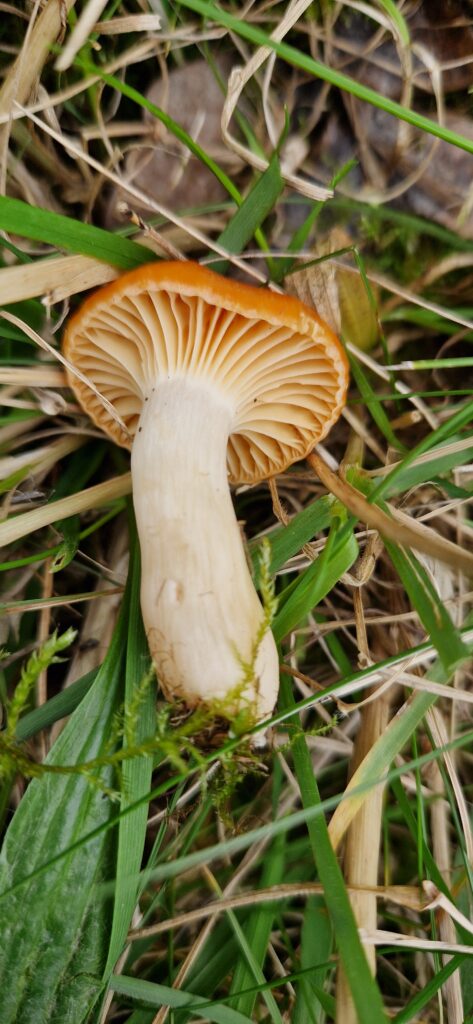
Meadow Waxcap (Cuphophyllus pratensis) is a charming and highly recognizable mushroom, prized for its waxy texture and vibrant coloration. Found in grasslands and meadows, this edible species is a favorite among foragers for its mild flavor and ecological significance.
Other names: Butter Waxcap, Hygrocybe pratensis.
Not sure about mushroom identification? Join us for the next foraging event in Charnwood, Leicestershire.
Habitat
The Meadow Waxcap thrives in nutrient-poor, well-drained grasslands, including pastures, meadows, and lawns that are often grazed or mown. It prefers unimproved grasslands free from fertilizers and pesticides. This mushroom is most commonly found across Europe and North America, appearing from late summer through autumn.
Identification features
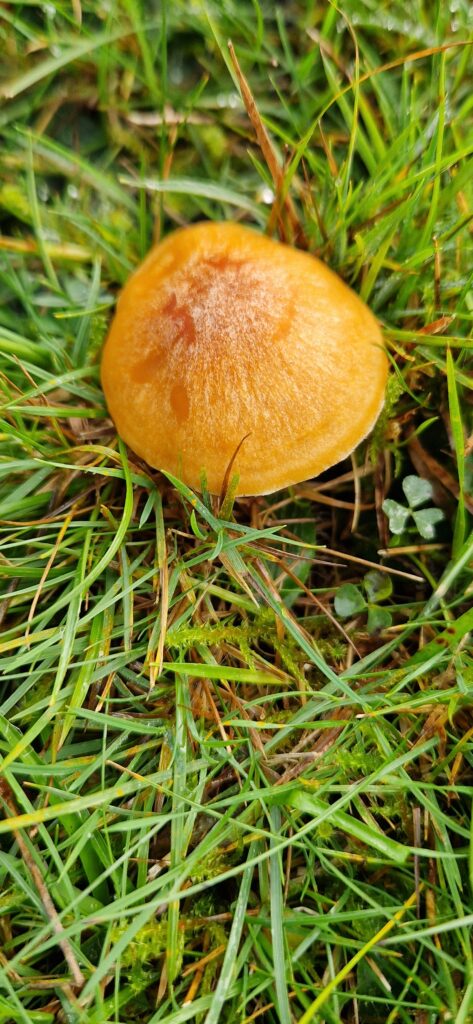
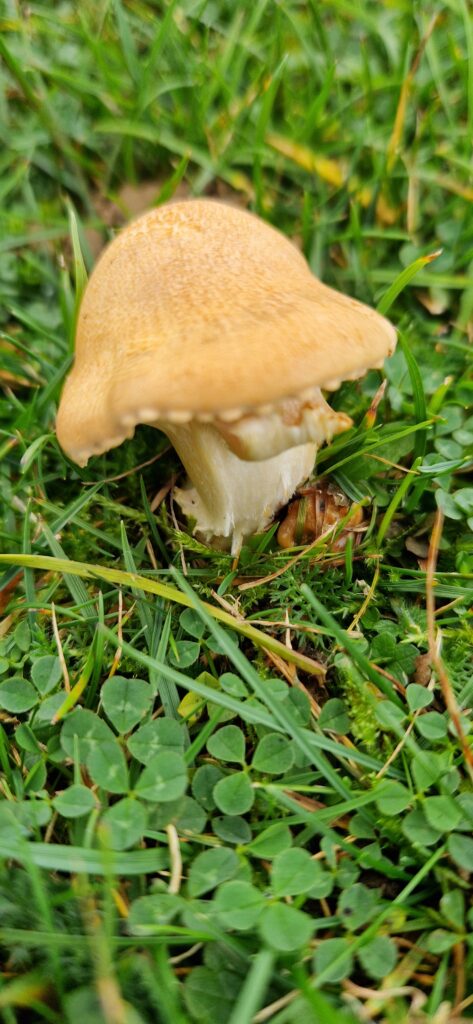
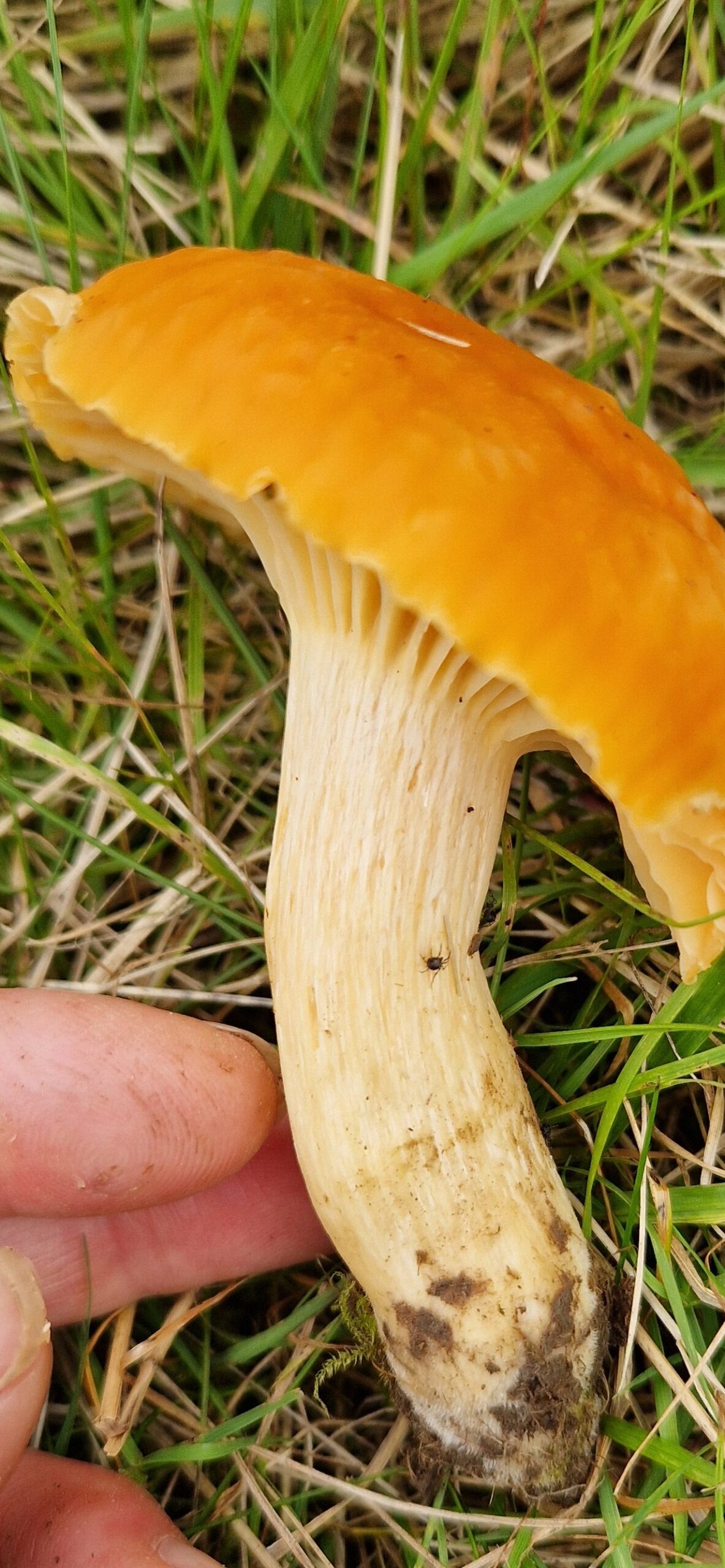
Cap: Smooth, dome-shaped when young, flattening out with age. The cap ranges from 3-8 cm in diameter and is typically a warm, orangey-buff to pale peach color. Its surface often feels waxy or greasy.
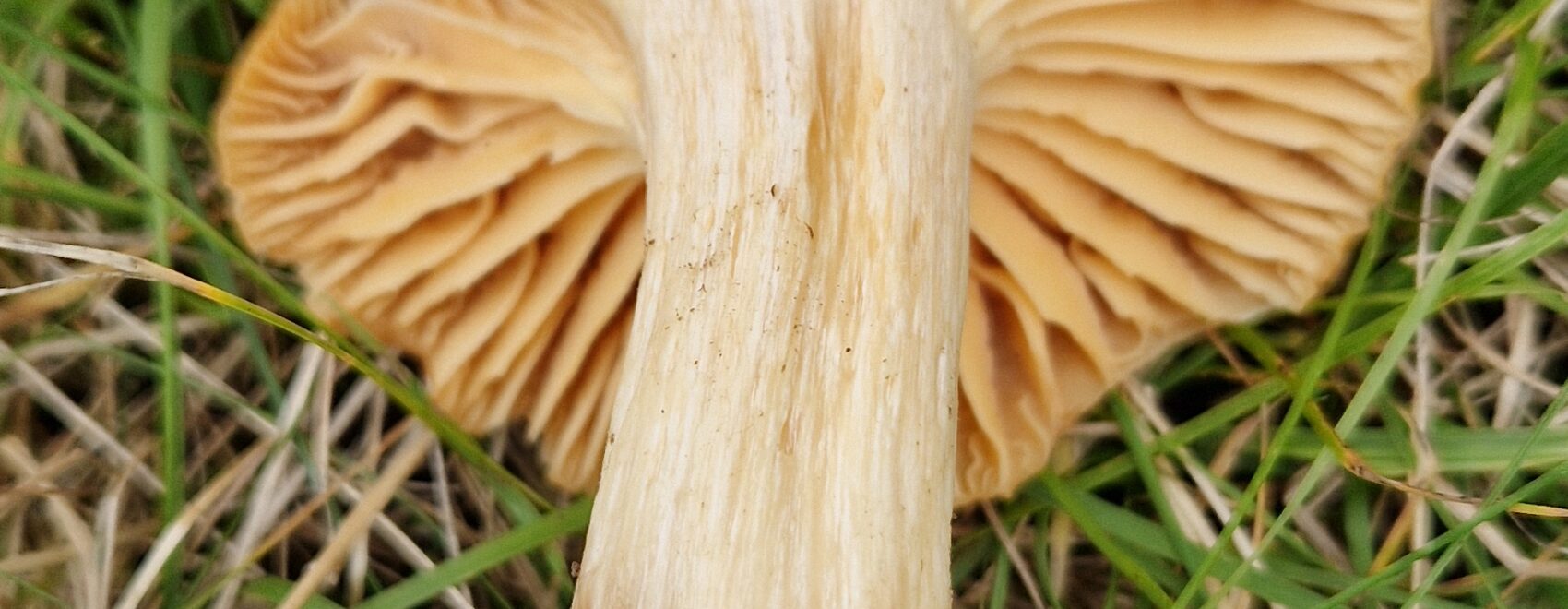
Gills: Thick, widely spaced, and waxy in texture, running slightly down the stem. The gills are pale cream to buff in color.
Stem: Stout and smooth, often the same color as the cap or slightly paler. It can grow up to 6 cm tall and 1 cm wide.
Spore Print: White.
Smell and Taste: Mild, with no distinctive aroma or strong flavor.
Lookalikes
- Parrot Waxcap (Gliophorus psittacinus): Brightly colored, often green or yellow, with a slimy texture that distinguishes it from the Meadow Waxcap.
- Snowy Waxcap (Cuphophyllus virgineus): Similar in shape but pure white in color, making it easy to distinguish from the Meadow Waxcap.
While listing these here only a very inexperience eye would consider them a look a like. Meadow waxcaps are the largest so if unsure, dont collect anything smaller than 5cm cap size.
Do not collect PINK waxcap- these are not nice to eat and while not on endangered list, they are still considered a rare find.
Edibility
The Meadow Waxcap is edible and valued for its mild, nutty flavor and firm texture. It is best cooked and works well in stir-fries, soups, or as part of a mixed wild mushroom dish. As with all wild mushrooms, ensure proper identification before consumption and avoid over-harvesting to protect its natural habitat.
Ecological role
Meadow Waxcaps are bioindicators of healthy, unimproved grasslands, as they thrive in areas with low nutrient levels and minimal human disturbance. They play a vital role in nutrient cycling and contribute to the overall biodiversity of their habitats. Their presence often signals a rich and balanced ecosystem.
Foraging season
The Meadow Waxcap appears from late summer to late autumn, with peak fruiting often occurring after wet weather. It is commonly found in clusters or scattered groups in open grasslands and meadows.
Health warning
While the Meadow Waxcap is considered safe to eat, accurate identification is essential, as some less-edible waxcaps can resemble it. Always avoid collecting mushrooms from areas that may have been treated with chemicals or fertilizers, as these can contaminate the fungi.
Discover the enchanting world of waxcaps and other wild fungi by joining our foraging events in Charnwood, Leicestershire!
Whether you’re a beginner or an experienced mycophile, our guided walks are the perfect opportunity to expand your knowledge and appreciation of fungi.