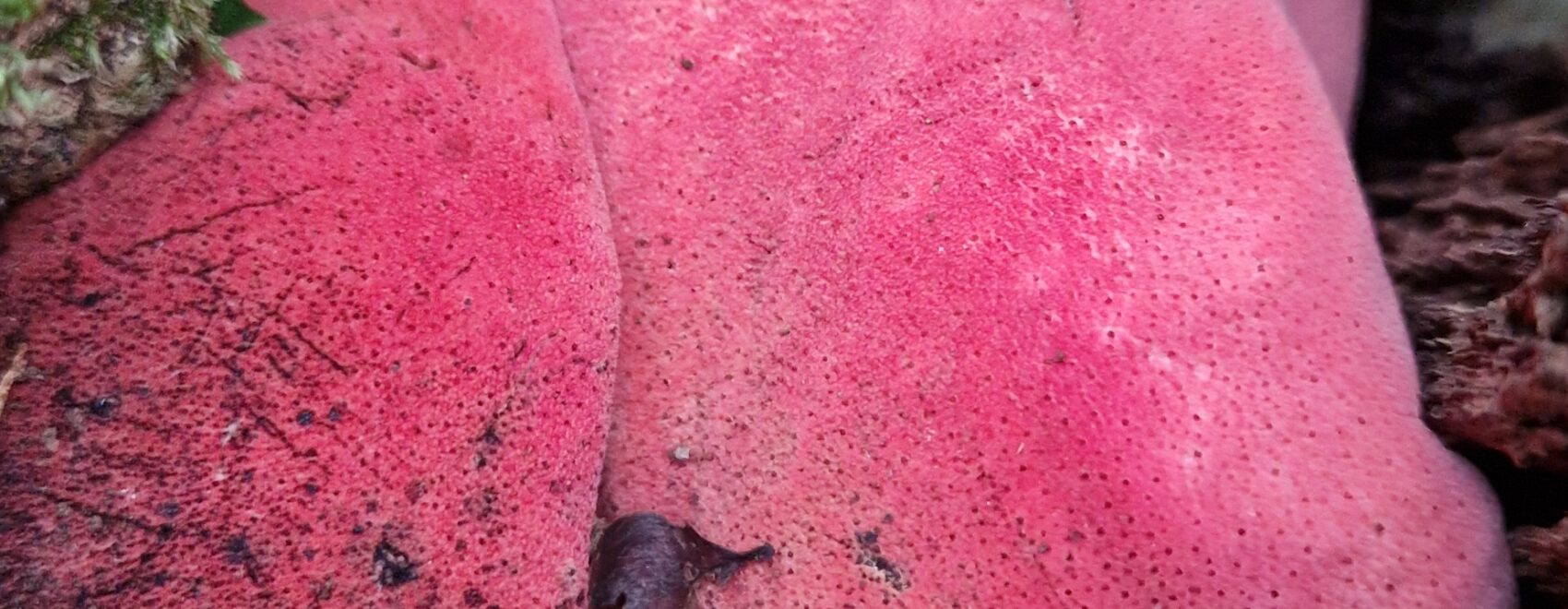

The Beefsteak Mushroom (Fistulina hepatica), also known as Ox Tongue, is a fascinating and striking fungus often found on oak trees. This mushroom is recognized not only for its vibrant, fleshy appearance but also for its distinctive texture and color, resembling a piece of raw beef or an ox tongue.
Other names: Ox Tongue, Steak Mushroom, Cows Tongue, Wood Beef.
Not sure about mushroom identification? Join us for the next foraging event in Charnwood, Leicestershire.
Habitat
The Beefsteak Mushroom is commonly found growing on the trunks of mature hardwood trees, particularly oaks. It thrives in moist, temperate climates and is typically seen in woodlands, forests, and occasionally in gardens where oak trees are present. This fungus is a saprotrophic species, meaning it feeds on decaying organic matter, especially the wood of its host tree. It is widely distributed across Europe, North America, and parts of Asia, appearing from late spring through early autumn.
Identification Features
Shape: The Beefsteak Mushroom has a large, irregular shape, with its cap resembling the appearance of raw meat. It often grows in a thick, fleshy form, and can reach sizes up to 30 cm in diameter.
Color: The cap is bright red or pinkish when young, transitioning to a deep, maroon color as it matures. Its flesh is soft and appears raw, with a texture similar to that of beefsteak.
Texture: The flesh is spongy and juicy, making it easy to tear or slice. When cut, the mushroom exudes a reddish, blood-like liquid, which adds to its meat-like appearance.
Gills/Spore Print: The underside of the cap is covered with spore-bearing pores, which appear white to pale yellow at first but turn yellow-brown as the mushroom matures. Its spore print is yellowish-brown.
Edibility
The Beefsteak Mushroom is edible and has a mild, savory flavor. It is often compared to beef or a rich, meaty texture when cooked, though its taste may vary depending on its age and the host tree from which it grows. The mushroom is best enjoyed when young, as older specimens can become tough and less palatable.
The beefsteak is also very interesting raw in salad.
Though edible, the mushroom should be consumed in moderation as some individuals may have sensitivities to it.
Ecological Role
The Beefsteak Mushroom plays an important ecological role as a decomposer. It feeds on dead or decaying wood, breaking it down and enriching the soil. This process contributes to forest health by recycling nutrients back into the ecosystem. The fungus also provides a food source for various insects and wildlife, further supporting biodiversity.
Foraging Season
The Beefsteak Mushroom typically appears from late spring to early autumn, with the best time for foraging being summer. It is most commonly found during wet periods, as moisture is necessary for the growth of this juicy fungus.
Health Warning
While edible, the Beefsteak Mushroom is not suitable for everyone, and individuals with sensitivities or allergies to fungi should avoid consuming it. Always be cautious when foraging and ensure accurate identification to avoid confusion with other potentially toxic mushrooms.
Explore the fascinating world of fungi with our foraging events! Whether you’re new to mushroom hunting or an experienced forager, join us in Leicestershire UK, for hands-on learning and discovery.


