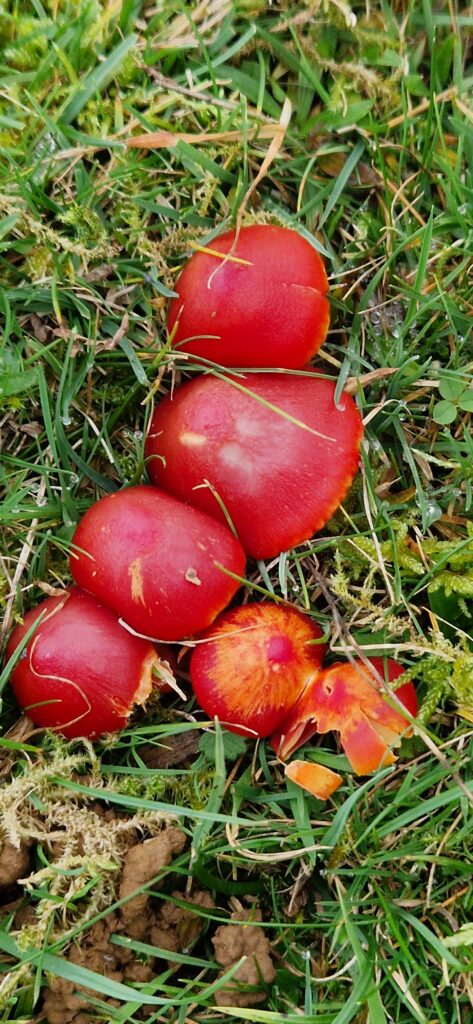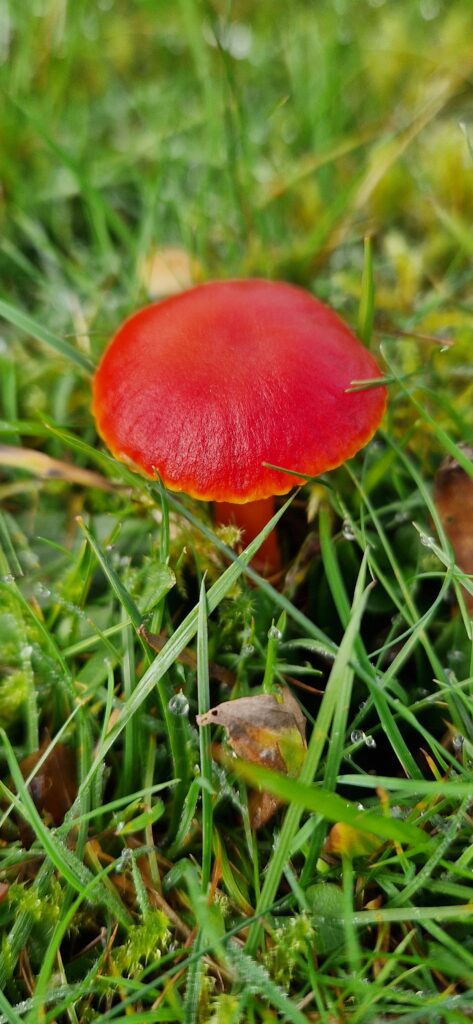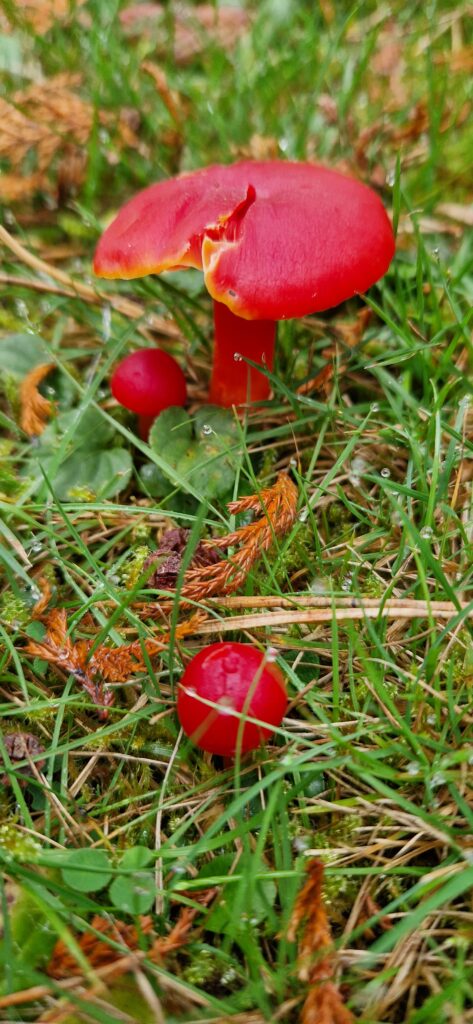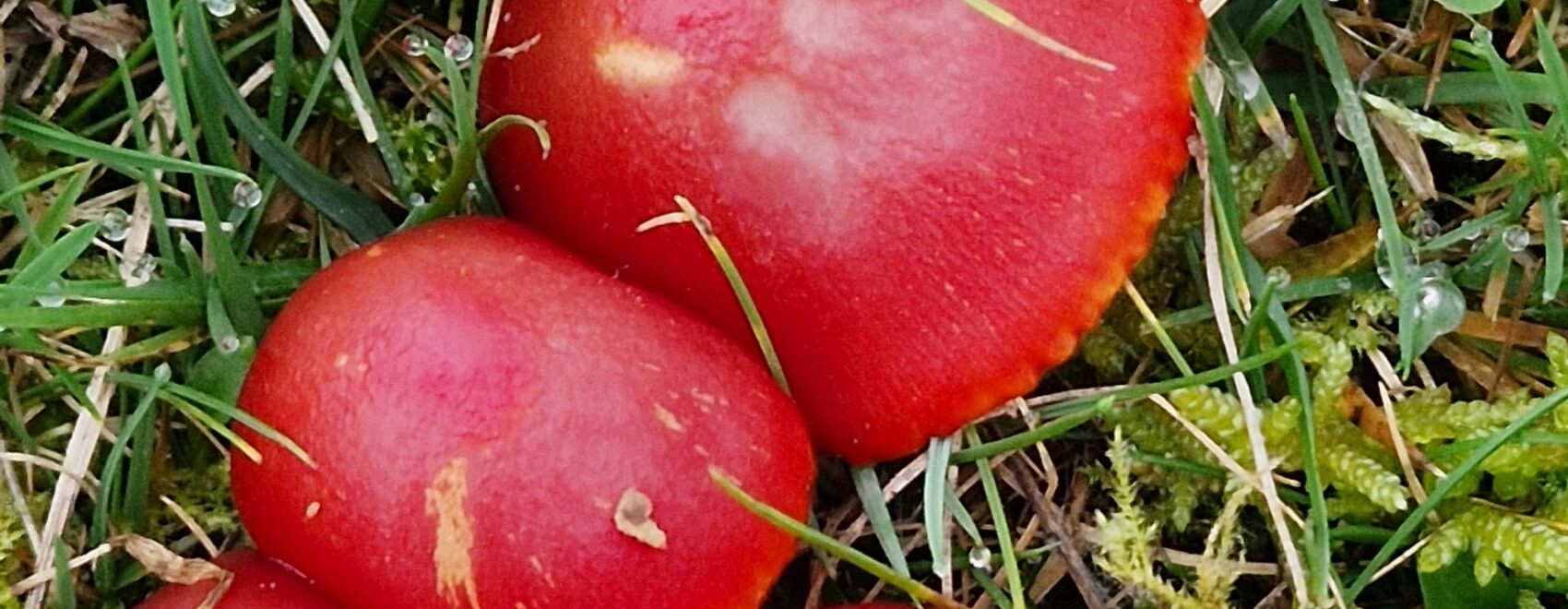

Scarlet Waxcap (Hygrocybe coccinea) is a stunningly vibrant mushroom, known for its brilliant red cap and striking appearance. A hallmark of healthy grasslands, this species is a favorite among fungi enthusiasts for its vivid coloration and ecological significance.
Other names: Scarlet Hood.
Not sure about mushroom identification? Join us for the next foraging event in Charnwood, Leicestershire.
Habitat
The Scarlet Waxcap is typically found in unimproved grasslands, including pastures, meadows, and mossy lawns that have not been treated with fertilizers or pesticides. It prefers nutrient-poor soils and thrives in areas that are grazed or mown. Widely distributed across Europe and North America, this mushroom appears from late summer through autumn.
Identification features
Cap: Bright red to orange-red, sometimes fading to yellowish at the edges with age. The cap is smooth, slightly sticky when wet, and convex when young, flattening out with maturity. Caps are usually 2–5 cm in diameter.
Gills: Adnexed to free (not attached to the stem) and moderately spaced, with a yellow to orange coloration that contrasts beautifully with the red cap.
Stem: Bright red to orange, slender, and smooth, with a slightly fibrous texture. It can grow up to 8 cm tall and 0.5–1 cm wide.
Spore Print: White.
Smell and Taste: Mild, with no distinctive aroma or strong flavor.
Lookalikes
- Crimson Waxcap (Hygrocybe punicea): Larger and more robust, with a deeper red cap and a yellowish stem base.
- Ruby Waxcap (Hygrocybe russocoriacea): Smaller and darker red, often with a greasy surface.
- There are quite a few red cap waxcaps growing in the UK – a very close examination is needed to confirm exact identification.
Edibility
The Scarlet Waxcap is considered edible, but its delicate size and the importance of its conservation make it a less common choice for foragers. If consumed, it is best used as part of a mixed mushroom dish to showcase its vibrant appearance rather than for its flavor, which is mild and unremarkable.
Ecological role
The Scarlet Waxcap is a key indicator of biodiversity in grassland ecosystems, thriving in nutrient-poor soils and undisturbed habitats. Like other waxcaps, it plays a role in nutrient cycling and supports a healthy, balanced environment. Its presence is a sign of high conservation value in grasslands.
Foraging season
The Scarlet Waxcap typically appears from late summer to late autumn, with peak fruiting occurring after periods of rain. Look for its vivid red caps glowing among mossy grasslands during these months.
Health warning
While the Scarlet Waxcap is edible, its rarity and ecological importance mean it should be foraged sparingly, if at all. Accurate identification is essential, as it shares its habitat with other waxcaps and small red mushrooms that may not be edible. Always harvest responsibly to ensure the preservation of this beautiful species.
Discover the dazzling world of waxcaps and other fungi by joining our foraging events in Charnwood, Leicestershire! Whether you’re a novice or an experienced mycophile, our guided walks offer the perfect opportunity to learn about these fascinating organisms in their natural habitat.
4ot.