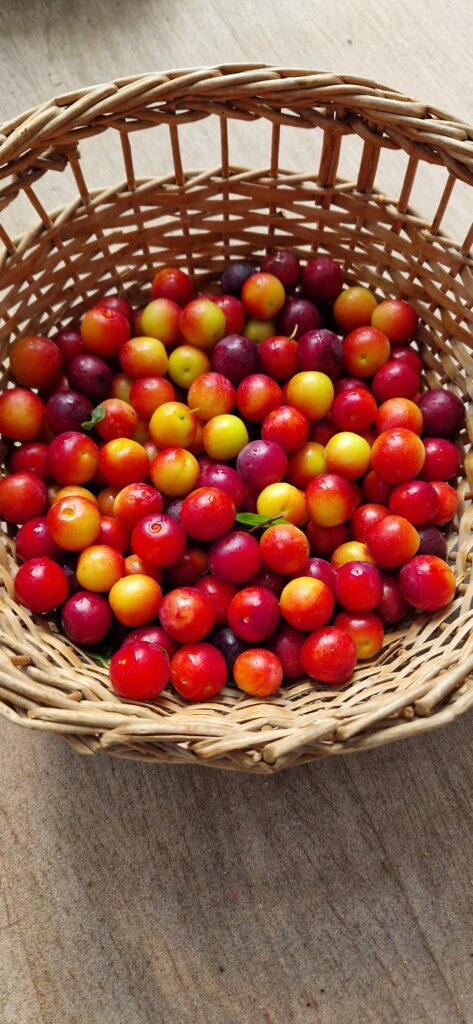
Latin name: Prunus cerasifera
Other names: Myrobalan Plum, Wild Plum
Habitat
The Cherry Plum tree (Prunus cerasifera) is native to Europe and western Asia but has been widely naturalized across the globe. It thrives in a variety of soils, preferring well-drained conditions. Commonly found along hedgerows, in woodlands, and in urban areas, it’s a versatile species valued for its ornamental beauty and fruit production.
🌳 Want to explore more? Join our next foraging event in Charnwood, Leicestershire, and enhance your tree identification skills.
Appearance
Leaves
- Oval-shaped, dark green, and smooth.
- Turn yellow in autumn, adding seasonal charm.
- Arranged alternately along the branches and measure 4–6 cm in length.
Flowers
- Early blooming, producing small, white or pale pink flowers in late winter or early spring.
- Five-petaled and fragrant, they attract bees and early pollinators.
Stem
- Smooth, dark brown bark with occasional cracks on older branches.
- Slender and flexible stems, giving the tree an elegant structure.
Fruit/Seeds
- Round fruits, typically red, yellow, or purple, depending on the variety.
- Juicy, sweet, and tart with a single large seed inside.
- Ripen from late summer to early autumn.
Edibility & Recipes
Cherry Plums are a delicious and versatile fruit:
- Raw: Enjoy fresh from the tree as a sweet-tart snack.
- Jams & Jellies: Perfect for preserving their vibrant flavor. (Cherry Plum jam)
- Cherry Plum “Povidla“
- Baking: Use in tarts, pies, or cakes for a fruity twist. (Cherry plum Muffins)
Health Benefits
Cherry Plums are packed with nutrients:
- Vitamin C: Supports immunity and skin health.
- Fiber: Promotes healthy digestion.
- Antioxidants: Help reduce inflammation and oxidative stress.
Foraging Season
The best time to forage Cherry Plums is from mid to late summer, depending on the climate and variety. Look for fruits that are fully ripe, soft, and vibrant in color.
Folklore & Interesting Facts
- Symbolism: In many cultures, Cherry Plums are associated with renewal and springtime.
- Early Blooms: As one of the first trees to flower, they signify the arrival of warmer weather.
- Wild Hybridization: Cherry Plums are known to hybridize with other Prunus species, resulting in unique fruit varieties.
Health Precautions
- Cherry Plum seeds contain trace amounts of amygdalin, which can release cyanide when ingested in large amounts. Avoid consuming the seeds.
- Ensure the fruit is fully ripe before eating to enjoy its best flavor and avoid potential digestive issues.
✨ Ready to discover more about wild fruits like Cherry Plums? Join our foraging events in Leicestershire and learn the secrets of nature’s bounty!