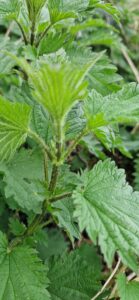
Stinging nettle’s Latin name is Urtica dioica. It belongs to the Urticaceae family.
Other names for stinging nettle include:
- Common nettle
- Nettle leaf
- Nettle weed
- Gerrais
- Wergulu (Old English)
Habitat
Deciduous and coniferous woodland, cultivated land, grassland, hedgerows, meadows, mountains, riverbanks, roadsides, wasteland.
Not sure about plant identification? Join us for the next foraging event in Charnwood, Leicestershire.
Appearance
Leaf Description:
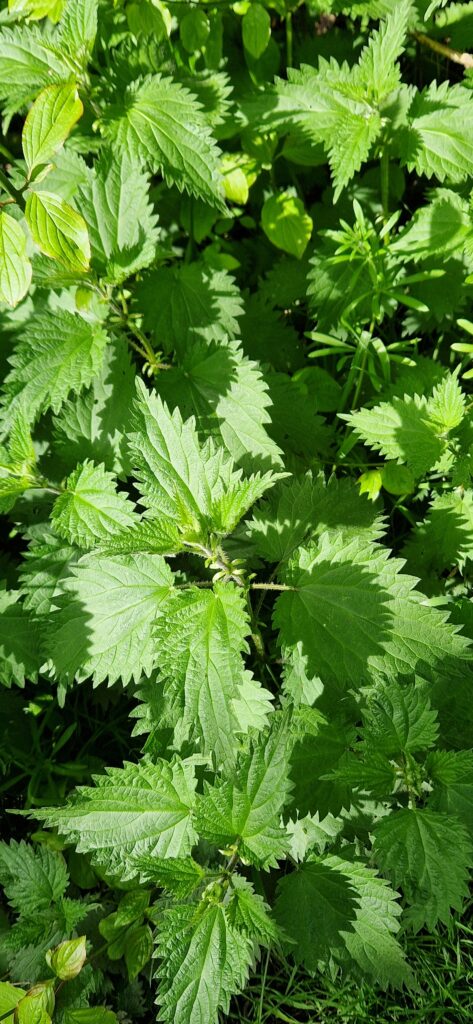
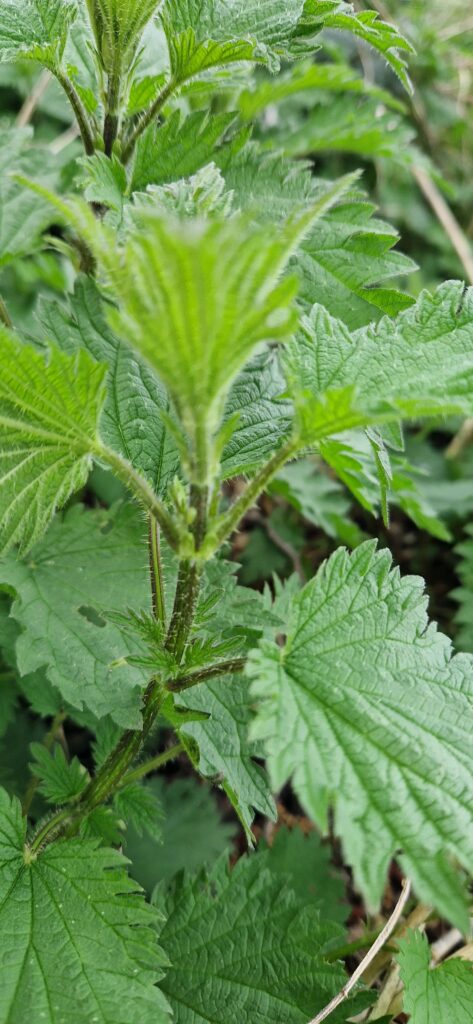
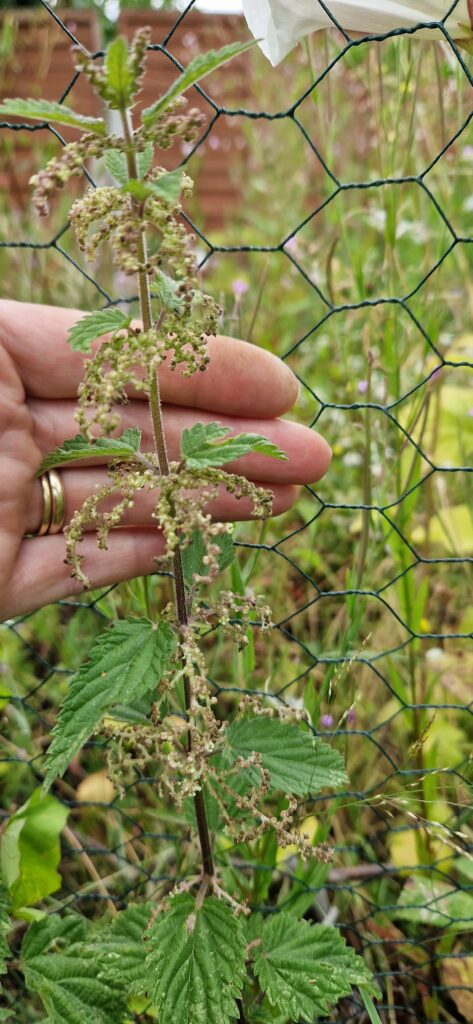
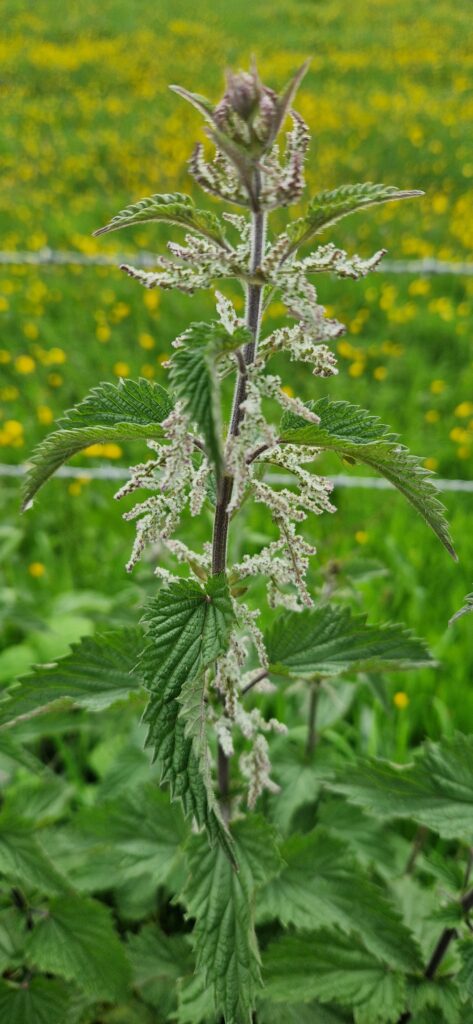
- Stinging nettle leaves are typically heart-shaped with serrated edges.
- They are covered in tiny hairs that release a stinging substance upon contact with skin, causing irritation.
Flower Description:
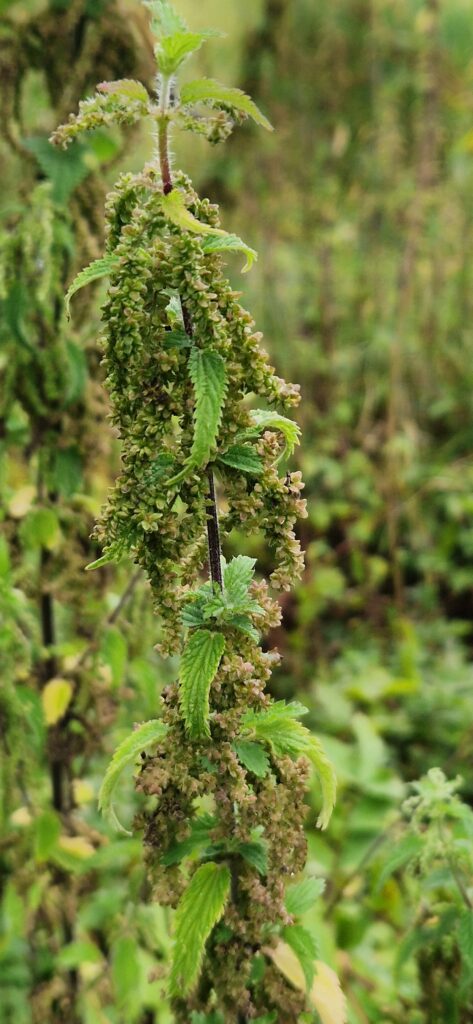
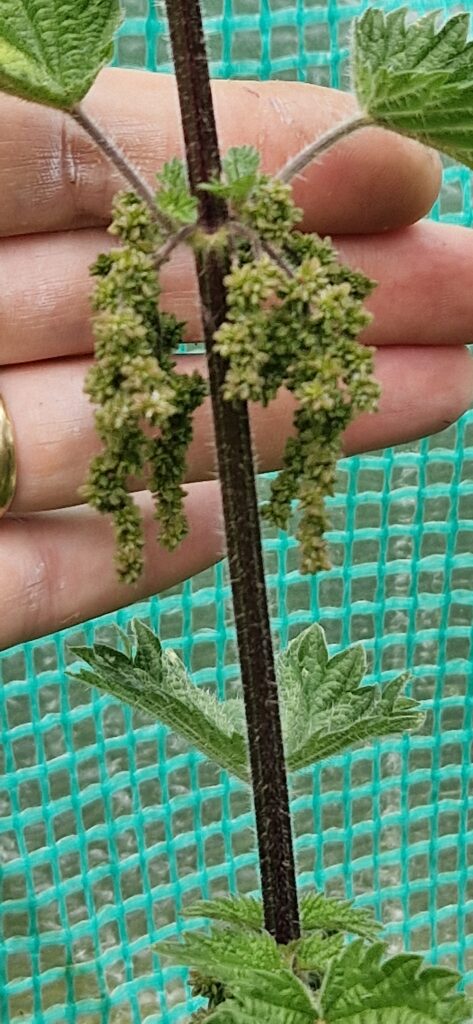
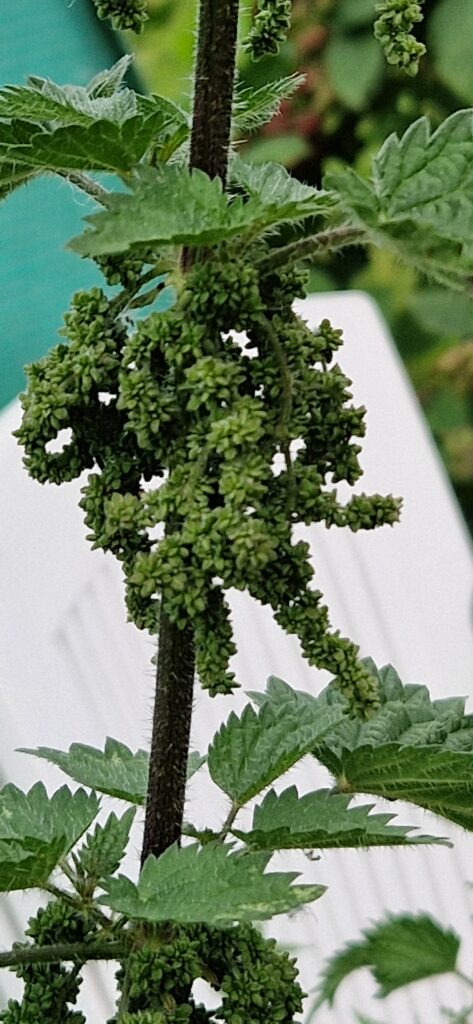
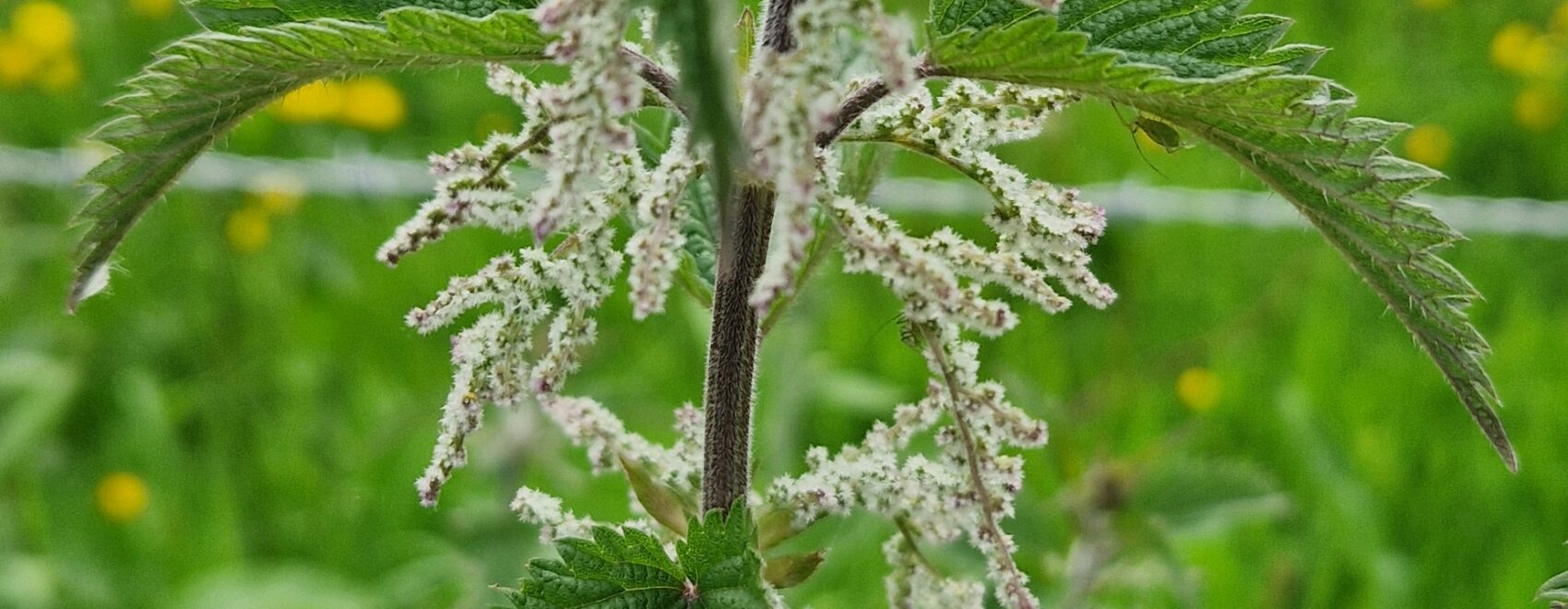
- Stinging nettle flowers are small and greenish-white.
- They grow in clusters on long, branching spikes.
Stem Description:
- Stinging nettle flowers are small and greenish-white.
- They grow in clusters on long, branching spikes.
Fruit/Seed Description:
- Stinging nettle produces small, greenish-brown seeds contained within small fruits.
Edibility
- Despite its stinging properties, stinging nettle is edible and nutritious.
- Cooking or drying the leaves removes the stinging chemicals, making them safe to eat.
- Young nettle leaves are often used in cooking and can be added to soups, stews, teas, and even made into pesto.
- Seeds can be eaten as replacement for chia in nutritious breakfast
Recipes
- Stinging nettle and sweet potatoes tartlet
- “Eye sore” or a pretty healthy snack
- Nettle seeds bread
- Cleaver and Young Nettle Smoothie
- Hash Green
- Kimchi
- Scotch eggs
Vitamins Content/Health Benefits
- Stinging nettle is rich in vitamins and minerals, including vitamins A, C, and K, as well as calcium, iron, and magnesium.
- It is believed to have various health benefits, including anti-inflammatory properties, improving urinary health, and supporting blood sugar control.
- Some studies suggest it may also help alleviate allergy symptoms and joint pain.
Foraging season
Leaves – from spring onwards- cut and grow again plant
Seed – late summer/autumn
Folklore/Interesting Info
- Stinging nettle has a long history of use in traditional medicine and folklore.
- It was believed to have protective properties and was often used in rituals to ward off evil spirits.
- In some cultures, stinging nettle was used as a remedy for arthritis, gout, and other ailments.
Health warning
- While stinging nettle is generally safe when consumed as food or tea, handling fresh leaves can cause skin irritation.
- It’s important to wear gloves and protective clothing when harvesting or handling fresh nettles to avoid stings.
- People with certain medical conditions or who are pregnant should consult with a healthcare professional before consuming stinging nettle as it may interact with medications or exacerbate certain health issues.