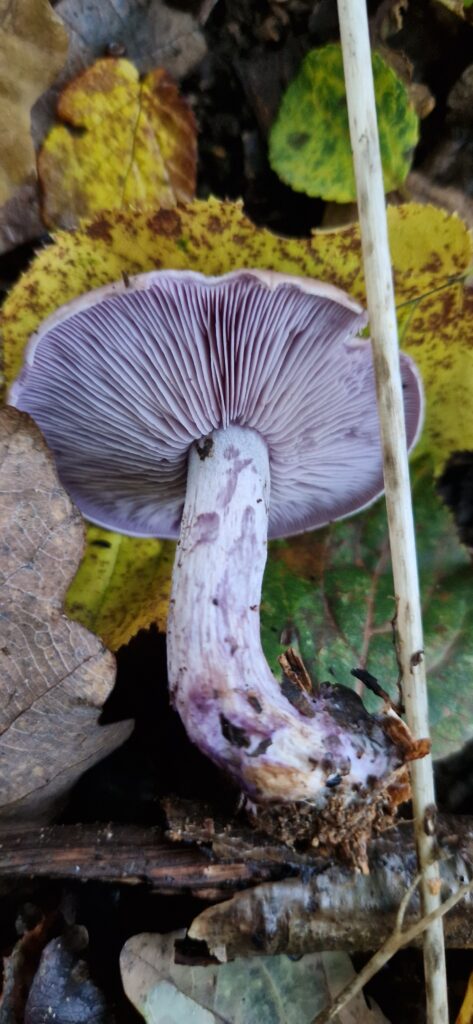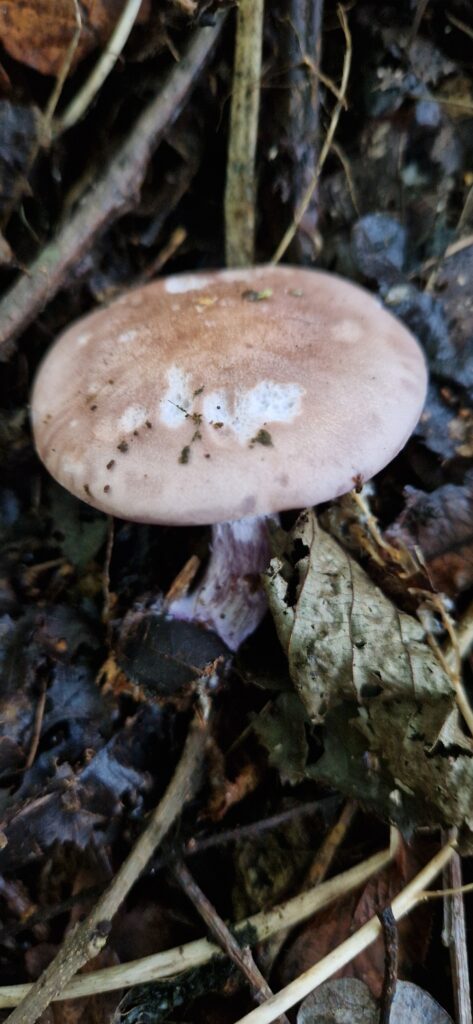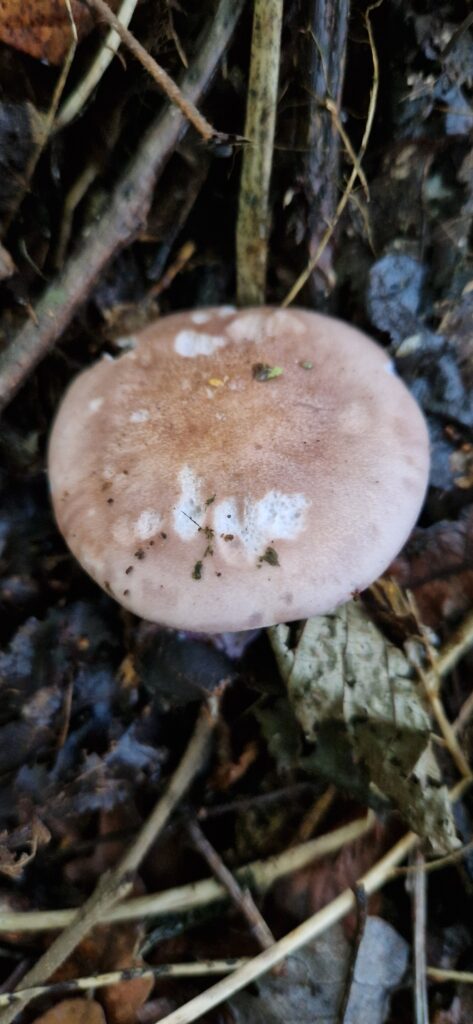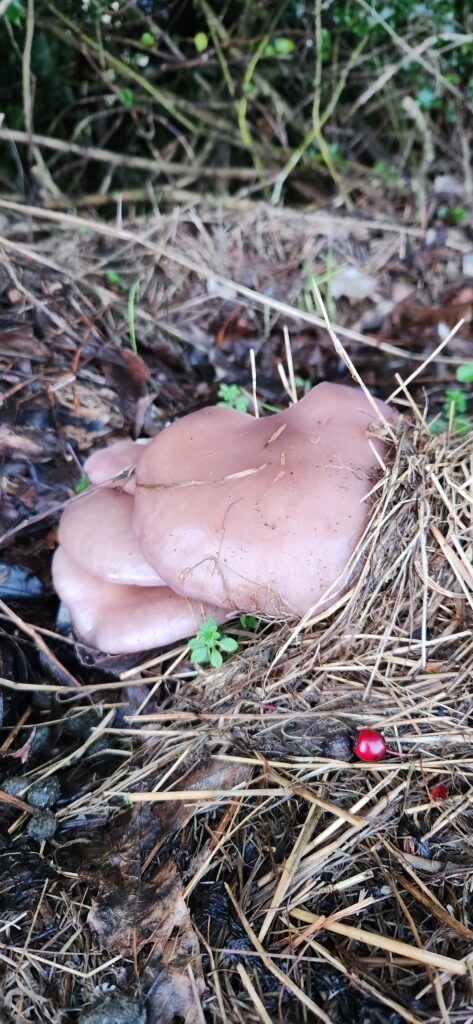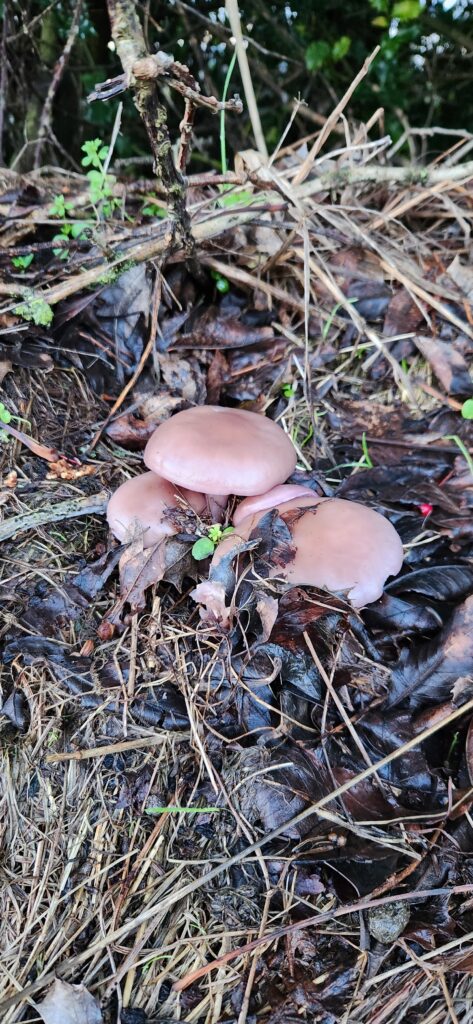
The Wood Blewit (Lepista nuda) is a popular edible mushroom known for its striking lilac-blue hues and earthy flavor. It’s a prized find for foragers but requires careful identification due to potential lookalikes and must be cooked before consumption.
Other names: Clitocybe nuda, Blue leg
Not sure about mushroom identification? Join us for the next foraging event in Charnwood, Leicestershire.
Habitat
Wood Blewits thrive in a variety of habitats, including leaf litter, grassy fields, and compost heaps. They are saprotrophic, breaking down organic material, and often appear in rings or clusters. Found widely across Europe, North America, and Asia, their fruiting season typically spans late autumn through early winter, occasionally extending into mild, wet winters.
Identification features
Cap: Convex to flat, often wavy with age, and ranges from pale lilac to buff in color. It can grow up to 15 cm in diameter, with a smooth, slightly greasy texture when damp.
Gills: Crowded, descending the stem slightly, and begin as lilac before fading to pale pink or beige as they mature.
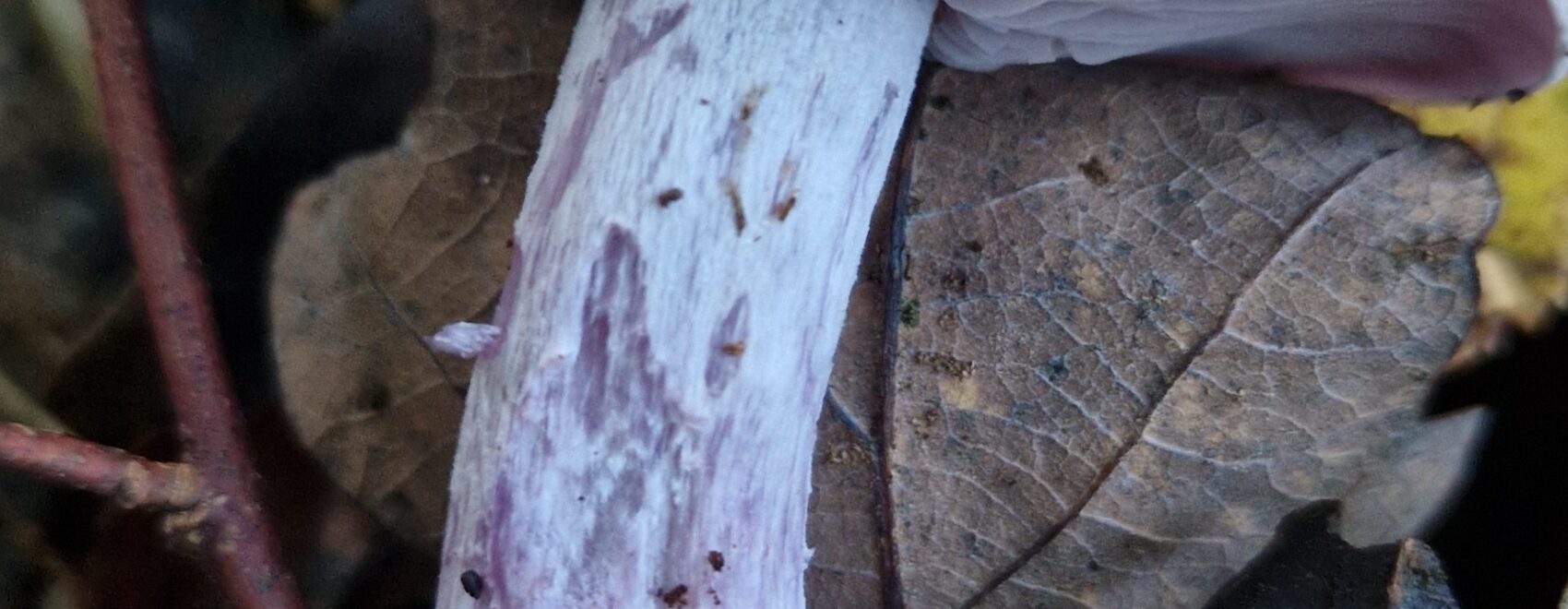
Stem: Sturdy and fibrous, often swollen at the base, with a lilac-blue hue that fades with age. It can reach up to 8-10 cm in length.
Spore Print: Pale pink.
Smell: Distinctively perfumed and earthy, often described as reminiscent of fresh laundry or aniseed.
Lookalikes
- Bruising Webcap (Thaxterogaster purpurascens): This toxic species shares a similar lilac-blue color but can be distinguished by its unpleasant smell, rusty brown spore print, and the presence of orange-brown spores on the stem. These spores stick to residue from the cortina or hang like cobwebs from the cap edge.
- Sordid Blewit (Lepista sordida): A smaller, less vibrant relative of the Wood Blewit. It is also edible and poses no significant issues for identification when size and habitat are considered.
Edibility
Wood Blewits are delicious and versatile, but they must always be cooked before consumption, as they can cause mild stomach upset if eaten raw. They pair well with garlic, butter, and cream-based dishes, making them a favorite for soups, risottos, and sauces. Ensure proper identification before eating, as confusing them with toxic species can lead to severe illness.
Recipes:
Ecological role
As saprotrophs, Wood Blewits play a vital role in nutrient recycling, breaking down leaf litter and contributing to soil health. Their presence in an ecosystem is often a sign of a thriving, biodiverse habitat.
Foraging season
Wood Blewits are typically found from late autumn to early winter, often appearing after the first frosts. They are resilient to cold weather, making them a reliable find during the colder months when other mushrooms are scarce.
Health warning
While Wood Blewits are a choice edible, accurate identification is crucial. Avoid consuming raw specimens and always ensure that your find does not resemble toxic lookalikes such as the Bruising Webcap. When in doubt, consult an expert or attend a guided foraging event.
Discover the delights of wild fungi by joining our foraging events in Charnwood, Leicestershire! Whether you’re a novice or an experienced forager, there’s always something new to learn.