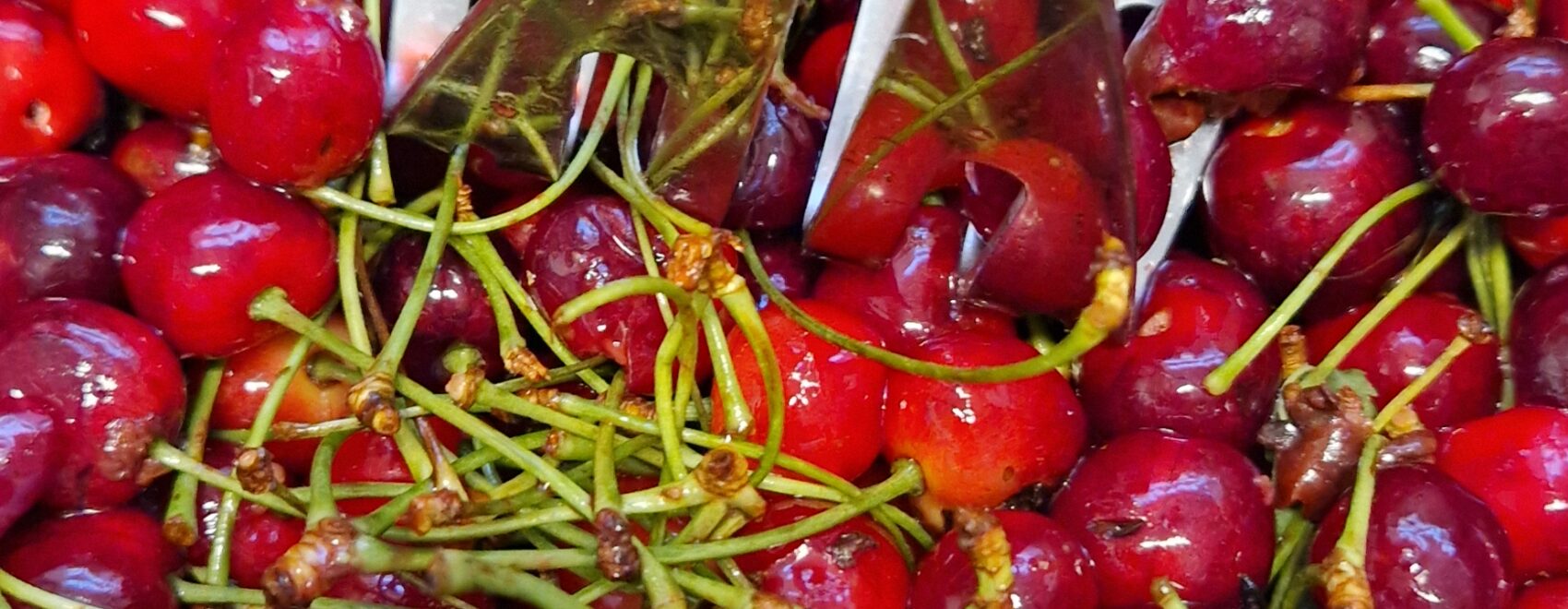

Wild Cherry Juice – A Bold and Naturally Sweet Foraged Drink
Wild cherry juice is a beautiful way to preserve the intense, tangy-sweet flavour of summer’s cherry harvest. Whether you’re collecting wild cherries from black cherry trees, bird cherry, or garden escapees, this simple method captures the essence of the fruit with no need for added sugar—just pure cherry goodness.
This recipe uses minimal ingredients, no artificial preservatives, and includes a traditional winemaking enzyme to help you get the most juice from your forage.
What Are Wild Cherries?
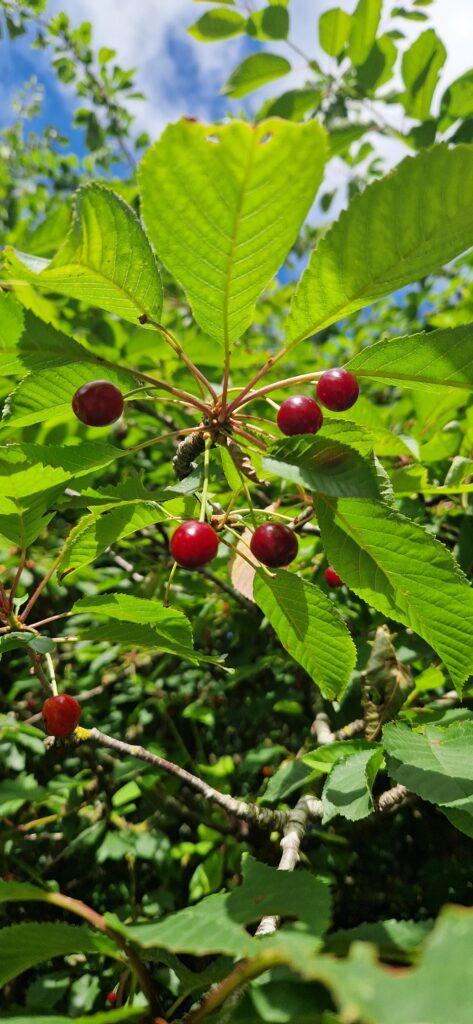
Wild cherries are smaller and more tart than cultivated varieties, but when ripe, they offer a powerful depth of flavour. Look for fully black or deep red fruits with soft flesh and a glossy sheen—these contain the most natural sweetness and juice.
Ingredients
(Makes approx. 1–1.5 litres of juice depending on cherry type)
- 2 kg wild cherries (ripe, with stalks left on)
- 150 ml water (just enough to help the mashing process)
- 1 teaspoon citric acid (or juice of 1 lemon)
- 1 teaspoon pectolase (pectic enzyme, available from homebrew shops)
- No sugar is required if your cherries are fully ripe. Add only to taste once the juice is extracted.
Instructions
Step 1: Prepare and Mash the Cherries
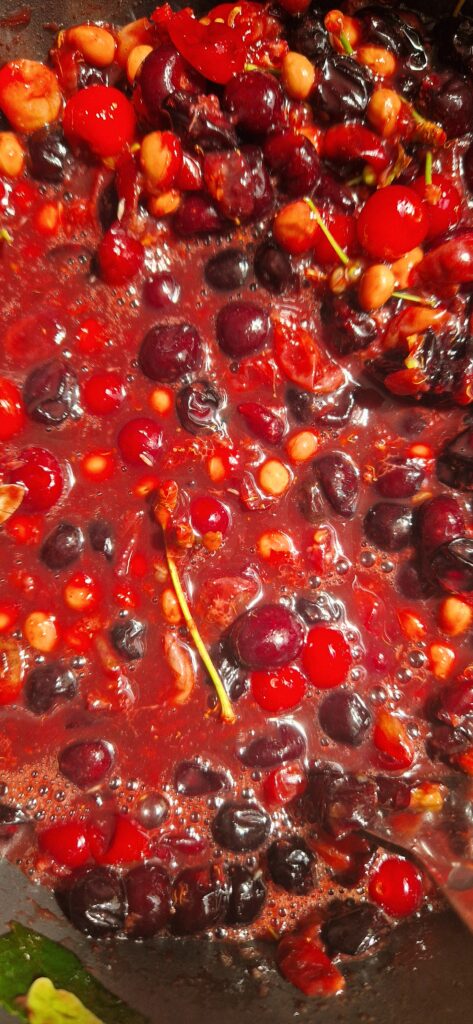
No need to de-stalk or stone the cherries—place the whole fruits, stalks and all, into a large clean bowl or fermenting bucket.
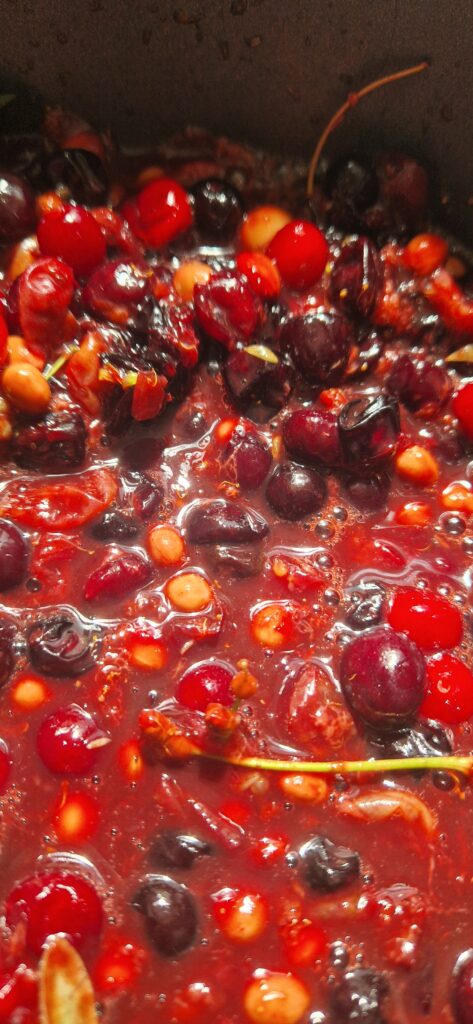
Using a potato masher (or clean hands), mash the cherries thoroughly until the texture resembles lumpy mashed potatoes. Add a small amount of water to help break up the fruit and release juices.
Step 2: Add Citric Acid and Pectolase
Sprinkle the citric acid and pectolase over the mashed fruit. Stir well to distribute.
The citric acid enhances flavour and helps preserve the juice, while the pectolase breaks down pectin, making it easier to extract clear, high-yield juice from the pulp.
Step 3: Rest Overnight
Cover the bowl with a clean cloth and leave the mixture at room temperature for 12–24 hours. During this time, the enzymes will help break down the skins and flesh, making juice extraction much easier.
Step 4: Mash Again and Strain
After resting, give the mixture another good mash to squeeze out every drop of juice. Then strain through a muslin cloth, jelly bag, or fine sieve, squeezing gently but firmly to extract as much liquid as possible.
Discard the remaining pulp and stones (or compost them).
Step 5: Pasteurise (Optional for Storage)
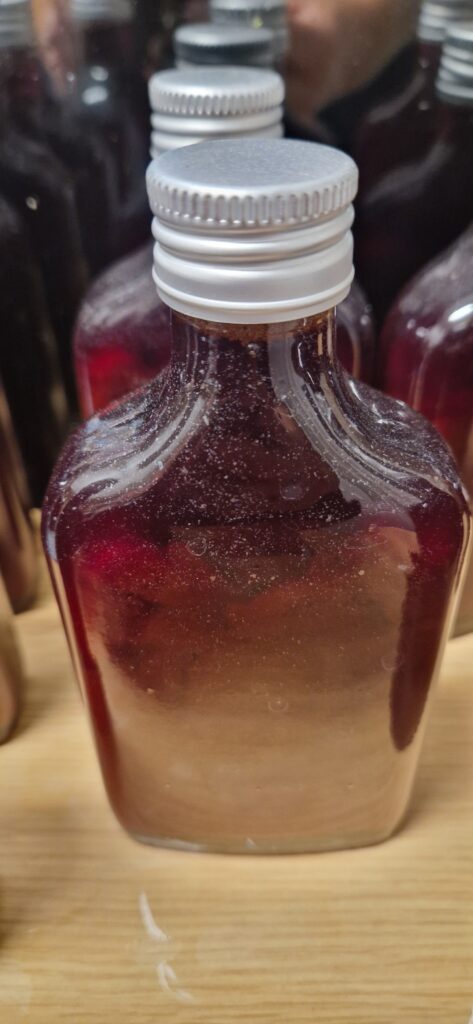
If you plan to preserve the juice, gently heat it to 70–75°C (not boiling) and hold it there for 10–15 minutes to sterilise. Pour into sterilised bottles and seal while hot.
If you plan to drink it fresh, simply chill and enjoy!
Why You’ll Love This Recipe
🍒 Naturally Sweet – Made from ripe wild cherries, no sugar required.
🧃 Versatile – Enjoy chilled, freeze into ice cubes, or use as a base for syrups and cocktails.
🌿 Forager-Friendly – A low-waste, preservative-free method rooted in traditional wildcrafting.