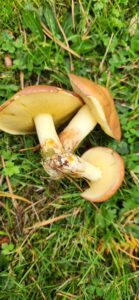
The Weeping Bolete is a charming and easily recognisable wild mushroom, known for the tiny milky droplets that “weep” from its pores when young. This characteristic, along with its smooth, ringless stem, makes it a distinctive member of the Suillus genus and a rewarding find for autumn foragers. Closely associated with pine trees, it plays an important ecological role as a mycorrhizal partner, helping to sustain healthy forest ecosystems.
Other names: “Granulated Bolete,” “Milky Bolete.”
Not sure about mushroom identification? Join us for the next foraging event in Charnwood, Leicestershire!
Habitat
The Weeping Bolete is commonly found in pine forests, especially around young Scots pine plantations and sandy or well-drained soils. It forms a mutualistic mycorrhizal relationship with pine roots, helping trees absorb nutrients while receiving sugars in return.
It often appears from late summer through autumn, particularly after rain, sometimes forming large groups. Though native to Europe, it can also be found across North America and parts of Asia wherever suitable pine hosts exist.
Identification Features
Shape:
Young mushrooms have a rounded cap that expands to become convex or nearly flat with age.
Cap:
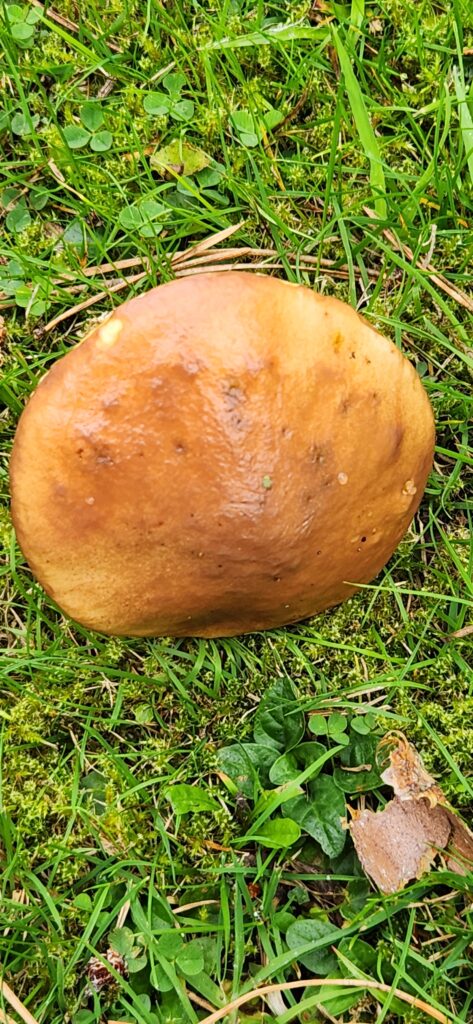
- Colour ranges from honey-yellow to ochre or tan, sometimes darker towards the centre.
- Smooth and slimy when wet, especially in damp weather.
- The skin peels away easily, a common trait in Suillus species.
- Typically 5–10 cm across.
Pores:
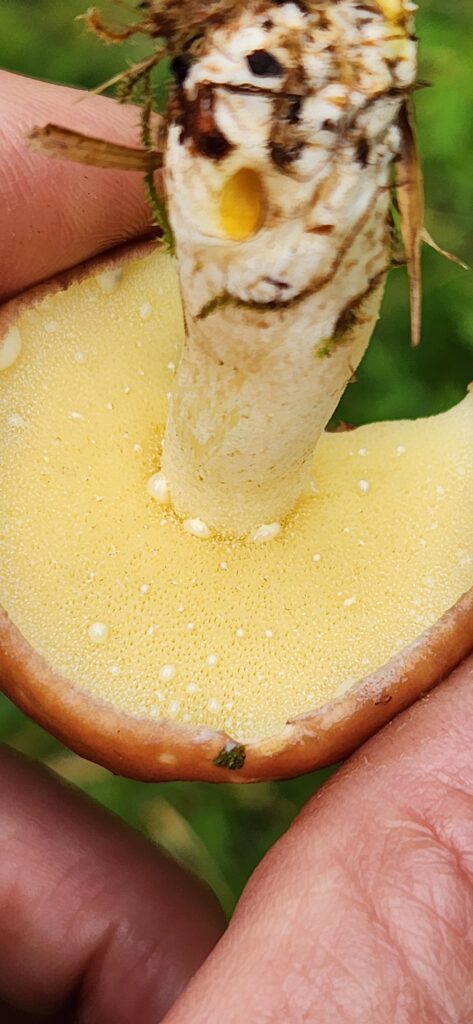
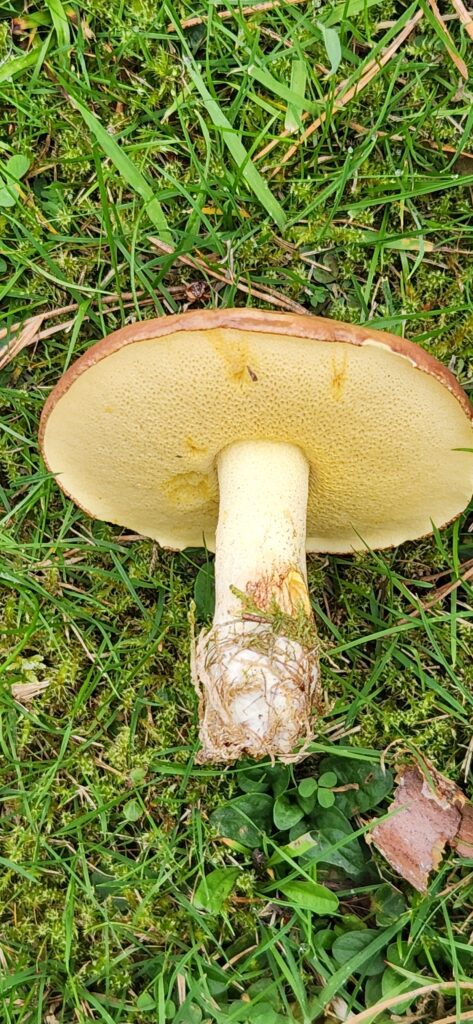
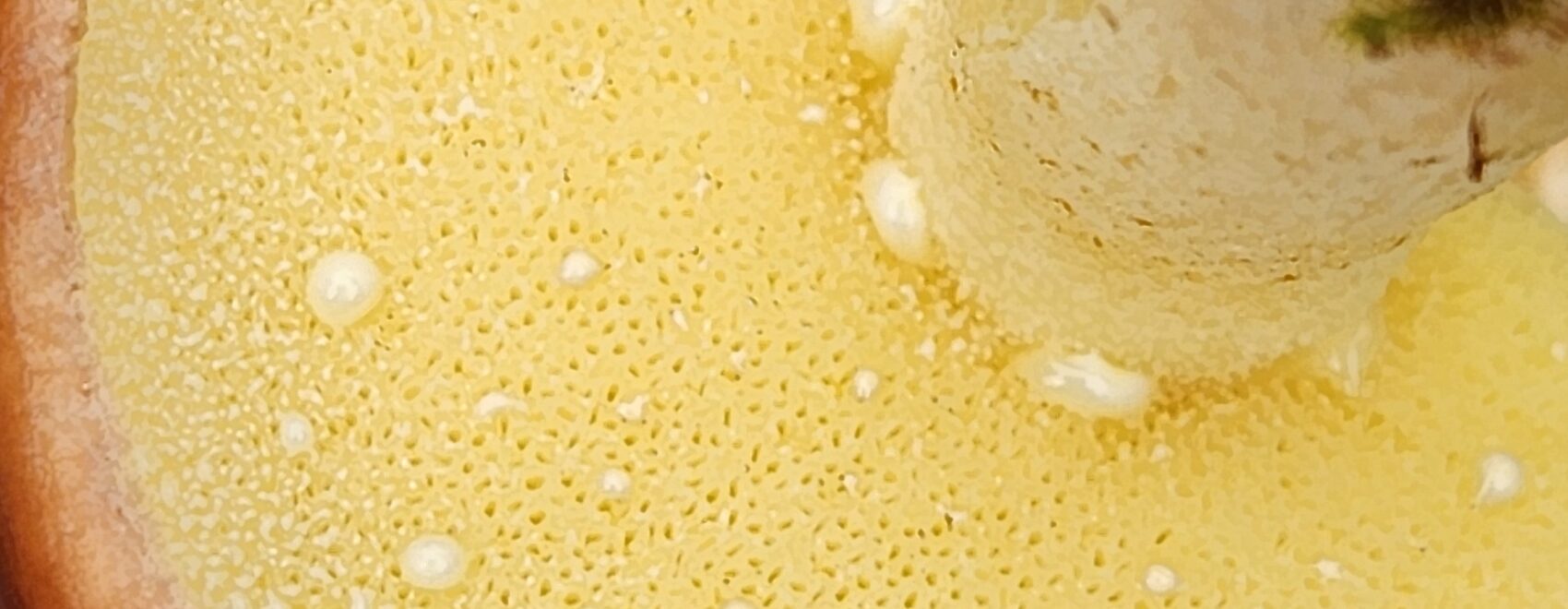
- Pale yellow, small, and exude milky droplets when young — a defining feature that gives this species its name.
- As the mushroom ages, these droplets dry to leave tiny brownish spots.
Stalk (Stipe):
- Yellowish, sometimes with fine brown granules near the top.
- No ring — this is the easiest way to tell it apart from the closely related Slippery Jack (Suillus luteus).
- Usually 4–8 cm tall.
Flesh:
- Pale yellow, soft, and does not change colour when cut.
Smell and Taste:
- Mild and pleasant, sometimes slightly fruity.
Comparison: Weeping Bolete vs. Slippery Jack
| Feature | Weeping Bolete (S. granulatus) | Slippery Jack (S. luteus) |
|---|---|---|
| Ring on Stem | ❌ None | ✅ Yes |
| Pore Surface | Weeps milky droplets | No droplets |
| Cap Colour | Honey-yellow to tan | Dark brown to chestnut |
| Cap Texture | Slimy, less glossy | Very slimy, glossy |
| Habitat | Pines, often young plantations | Pines, mature forests |
| Taste | Mild and pleasant | Mild, sometimes slightly resinous |
Edibility
The Weeping Bolete is edible and generally considered one of the better Suillus mushrooms. Its flavour is mild and nutty, particularly when sautéed in butter or added to soups and stews.
However, the slimy cap cuticle can cause mild digestive discomfort in some people, so it’s recommended to peel the skin before cooking. Like all wild mushrooms, the Weeping Bolete should be thoroughly cooked and never eaten raw.
Recommended preparation:
- Peel the cap, slice, and fry gently in butter with herbs and garlic.
- Excellent in risottos, sauces, or creamy pasta dishes.
Ecological Role
This species is a mycorrhizal fungus, forming symbiotic partnerships with pine trees. Through this relationship, the fungus provides the tree with essential minerals like phosphorus and nitrogen, while receiving sugars in exchange. This process contributes to soil health, biodiversity, and forest resilience.
Foraging Season
You can find Weeping Boletes from late summer through autumn, particularly after rainfall. Look near pine trees, especially young plantations or the edges of coniferous woods where sunlight still reaches the ground.
They often appear alongside other Suillus species, making it a great opportunity to learn the subtle differences between them.
Health and Identification Warning
While the Weeping Bolete is edible, always be cautious when foraging for wild mushrooms. Several Suillus species look similar, and incorrect identification can lead to unpleasant results.
Always ensure:
You avoid mushrooms growing near roadsides or polluted soils.n Leicestershire!
You are 100% certain of identification before eating.
You cook thoroughly and try a small amount first.