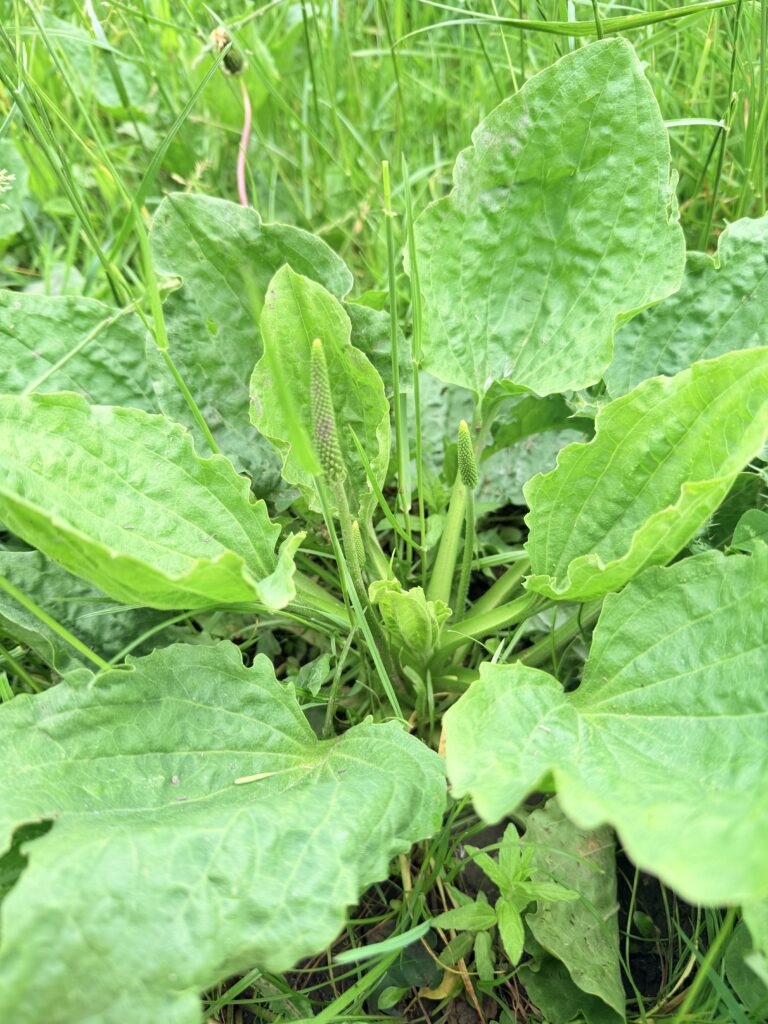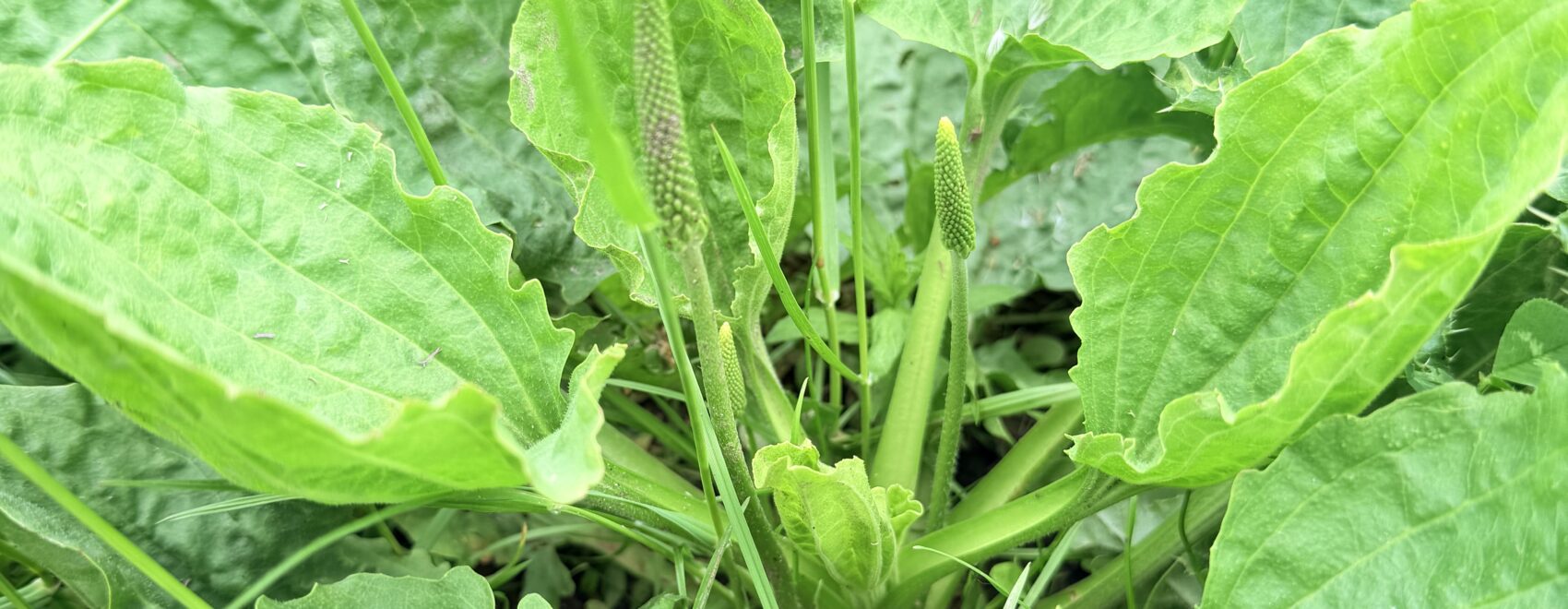
Plantain Herb (Plantago Major/Plantago Lanceolata) is a familiar wild plant with a long history of use in traditional herbal skin preparations.
Its leaves have traditionally been used in poultices, infused oils and balms for minor skin discomfort, including calming down itchy or irritated skin and insect bites.
This simple recipe explores how to make your own plantain-infused oil and traditional beeswax balm at home.
⏳ Patience Required
Medium
🧺 Traditional Ingredients
For the filling:
- Carrier Oil (Extra Virgin Olive Oil, Sunflower Oil)
- Fully Dried Plantain Leaves
- Vitamin E Oil
- Bees wax
👩🍳 Method
Make Your Own Traditional Plantain Balm
A simple introduction to creating a dried-herb infused oil and beeswax balm at home. (there are a variety of homemade recipes out there, just search)
Phase 1 — Make the Plantain Infused Oil
50g thoroughly dried plantain leaf + 500 mL EVOO, Clean & completely dry jar, ensure all herb remains submerged, label with ingredients, batch number & date. Infusion time: Approximately 4–6 weeks in a cool, dark place, checking periodically that the fully dried leaves remain submerged. Strain thoroughly and discard if there are signs of moisture, mould or spoilage.
Phase 2 — Make a Small Test Balm
Rather than immediately using 100 g of your lovely homemade infusion, I’d encourage you to experiment with perhaps 40 g infused oil + 10 g beeswax.
If you want it softer/harder, you can adjust the wax on the next batch.
Phase 3 — Melt, Pour & Label
Gently melt the beeswax into the oil using a bain-marie, remove from heat, optionally add Vitamin E, pour into a completely clean and dry container, cool and label with ingredients and date.
For educational/home use: This recipe explores a traditional preparation of plantain-infused oil and botanical balms. It isn’t intended to diagnose or treat a medical condition. Correct plant identification is essential. Use fully dried plant material, maintain good hygiene, patch-test before wider topical use, and don’t apply homemade preparations to deep, infected or serious wounds. Seek appropriate medical care for significant injuries, infection or persistent skin problems.
🌿 Topical Use Guidelines
- For external use only.
- Patch test first. Try a small amount on a limited area and discontinue if redness, itching, burning, swelling or irritation develops. Plant and cosmetic ingredients can cause irritant or allergic contact dermatitis.
- Avoid the eyes, mouth and other mucous membranes.
- Do not use on deep, heavily bleeding, infected or serious wounds. For cuts and grazes, NHS first aid is to control bleeding, rinse the wound with clean water and cover appropriately.
- Do not use herbal balms as first aid for fresh burns. NHS guidance recommends cool running water for at least 20 minutes and specifically advises against applying creams, lotions or sprays during first aid.
- Use extra caution with allergies, sensitive skin, pregnancy, breastfeeding, children, medicines or existing skin conditions. Seek appropriate professional advice where necessary.
- Stop using the balm if the skin becomes more irritated. Seek medical advice for worsening pain, spreading redness, discharge/pus, fever or other signs of infection.
Traditional Uses & Herbal Wisdom
Plantain has been valued for generations as a traditional first-aid plant.
Its leaves have historically been used for:
- Insect bites and stings: Traditional preparations for soothing minor skin discomfort.
- Dry and itchy skin: Herbal-infused oils and balms used to soften and condition the skin.
- Minor skin irritation: Traditional poultices and topical preparations.
- Cuts and grazes: Fresh leaves were historically used as poultices, although homemade preparations are not recommended for treating open wounds.
Plantain contains naturally occurring compounds, including mucilage, allantoin and iridoid glycosides, which have attracted scientific interest for their potential skin-related properties.
Traditional Herbal Preparations
Fresh Leaf Poultice: Traditionally, plantain leaves were crushed to release their juices and applied to the skin. This is part of herbal folklore and historical practice, rather than a recommendation for modern wound care.
Infused Oil: Fully dried plantain leaves are steeped in a carrier oil to create a botanical preparation.
Balms and Salves: Plantain-infused oil is combined with beeswax to create a simple balm for conditioning and caring for intact skin.
Modern safety: Avoid applying homemade herbal preparations to open wounds, infected skin or fresh burns. Always follow appropriate first-aid guidance.
⚠️ Safety / Foraging Note
Always be 100% certain of your identification before harvesting.
Only forage within your level of experience.
Photos: