
An intensely bitter, aromatic herb with silvery foliage and a long history of use in traditional herbalism and bitters
Wormwood is a distinctive perennial herb with beautiful silvery-grey foliage and a powerful aromatic smell. Its intensely bitter flavour has made it famous in traditional herbal preparations and as one of the characteristic botanicals historically used in absinthe.
Although Wormwood has an interesting history as both a medicinal herb and flavouring plant, it is not a plant for casual eating and requires particular care because of its potent compounds.
Not sure about plant identification? Join us for the next foraging course in Charnwood, Leicestershire, and learn how to safely identify wild plants.
🌳 Habitat
Commonly found in:
- Roadsides and disturbed ground
- Dry grassland
- Waste ground and rough areas
- Banks and field edges
- Coastal and well-drained habitats
- Gardens and areas where it has been cultivated or escaped
It prefers sunny, well-drained locations and can tolerate relatively poor soils.
🔍 Identification Features
- Tall, upright perennial, commonly reaching around 1 metre or more
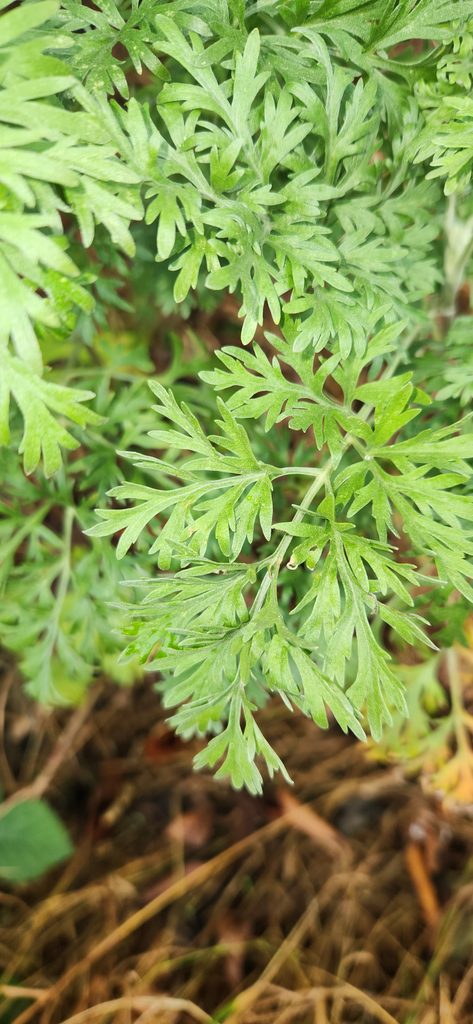
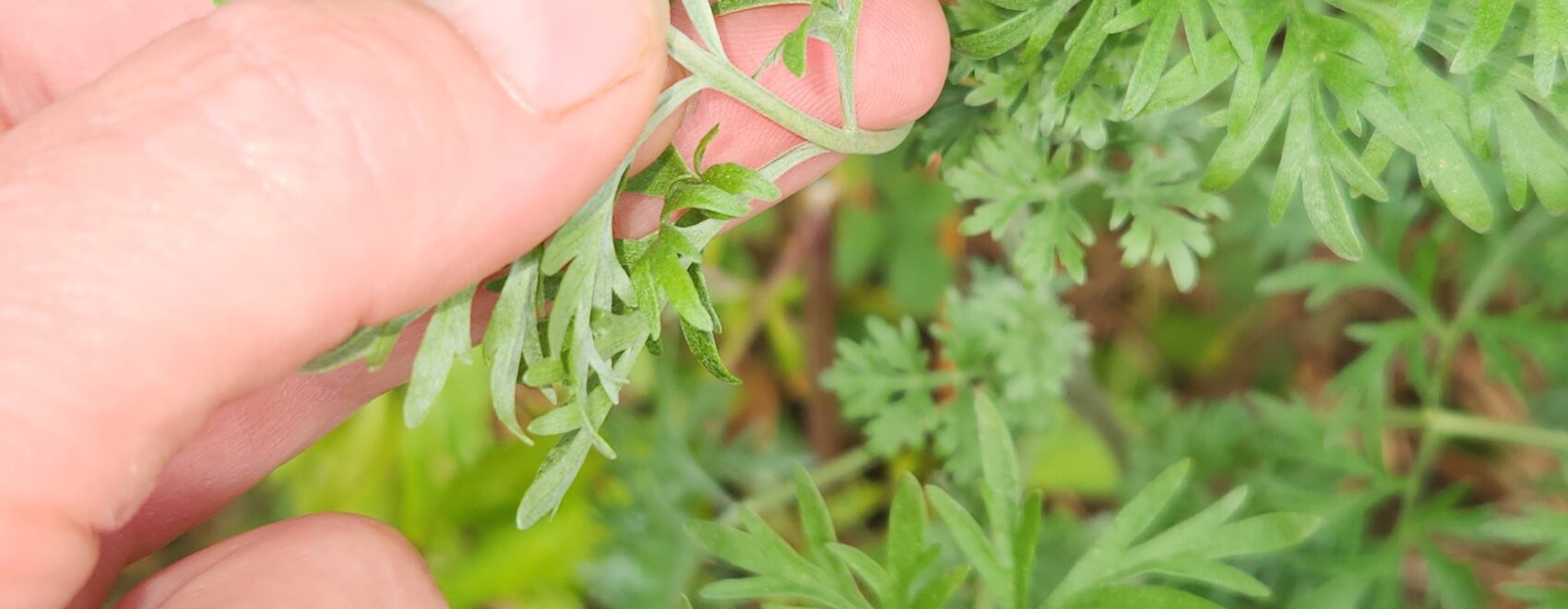
- Soft, silvery-grey to grey-green foliage
- Leaves deeply divided into rounded or blunt lobes
- Leaves covered with fine hairs, giving the plant its characteristic silvery appearance
- Strong, distinctive aromatic smell when the foliage is crushed
- Small yellowish flower heads carried in branching clusters
- Stems often become woody towards the base
The combination of silvery foliage, deeply divided leaves and extremely bitter aromatic smell makes Wormwood quite distinctive.
⚠️ Lookalikes
- Mugwort (Artemisia vulgaris)
- Other Artemisia species
- Southernwood (Artemisia abrotanum)
Mugwort is one of the more likely plants to cause confusion. Both belong to the Artemisia genus, but Wormwood is generally much more silvery and finely divided, with a particularly strong aromatic and bitter character.
As always, identification should be based on several features rather than smell alone.
🍴 Edibility
Wormwood is not recommended as a general food plant.
Its extremely bitter leaves have historically been used in very small quantities to flavour bitters and alcoholic drinks, including traditional absinthe preparations.
However, Wormwood contains compounds including thujone, and excessive consumption can be harmful.
This is a good example of a plant where traditional use does not mean that it is safe to consume freely.
🌿 Ecology & Traditional Uses
Wormwood has a fascinating history in traditional herbalism and food culture.
Its intense bitterness led to its traditional use in digestive bitters and herbal preparations, while its aromatic leaves have also been used to flavour alcoholic beverages.
It is particularly famous as one of the traditional botanicals associated with absinthe.
The plant’s strong aroma can also make it useful in traditional household practices, including as a plant believed to help deter certain insects.
Its silvery foliage and small yellow flowers also make it an attractive addition to gardens and provide habitat and resources for a range of insects.
📅 Season
- Leaves: Spring through summer
- Flowers: Summer to early autumn
- Best identification: During the growing season when the distinctive foliage is present
⚠️ Health Warning
Wormwood should not be consumed casually or in large quantities.
It contains thujone and other biologically active compounds, and excessive intake can cause serious adverse effects. Concentrated preparations and essential oil are particularly unsuitable for self-treatment.
Avoid medicinal use during pregnancy and breastfeeding, and seek professional medical advice before using Wormwood medicinally, particularly if taking medication or if you have an existing health condition.
Always ensure correct identification before consuming any wild plant, and remember that a plant having a traditional medicinal use does not automatically make it safe.onsuming any wild plant.
Not sure about plant identification? Join us for the next foraging event in Charnwood, Leicestershire.