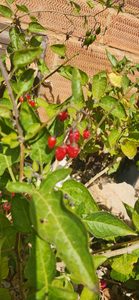
The beautiful wild climber with poisonous berries
Woody nightshade is one of those plants that can easily catch your eye while walking through hedgerows, woodland edges and scrub. Its delicate purple flowers, bright red berries and scrambling growth make it a beautiful addition to the summer and autumn landscape.
But despite its attractive appearance, woody nightshade is poisonous and should not be eaten.
Also known as bittersweet, bitter nightshade and climbing nightshade, woody nightshade belongs to the Solanaceae – the nightshade family – which also includes familiar food plants such as tomatoes, potatoes and chillies. Its poisonous nature is a useful reminder that being able to recognise a plant does not necessarily mean that it is safe to forage for food.
How to identify woody nightshade
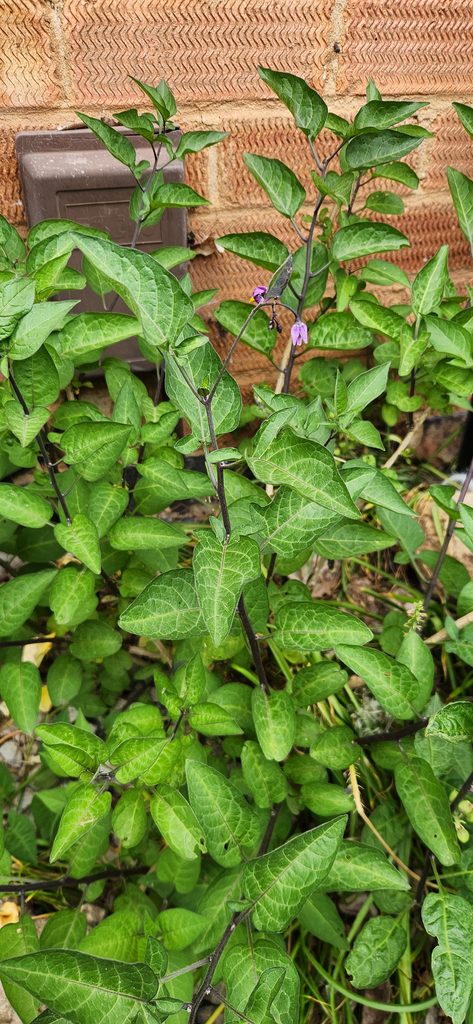
Woody nightshade is a perennial climbing plant which can scramble through hedges and other vegetation, reaching around 1.5–2.5 metres.
🌿 Leaves
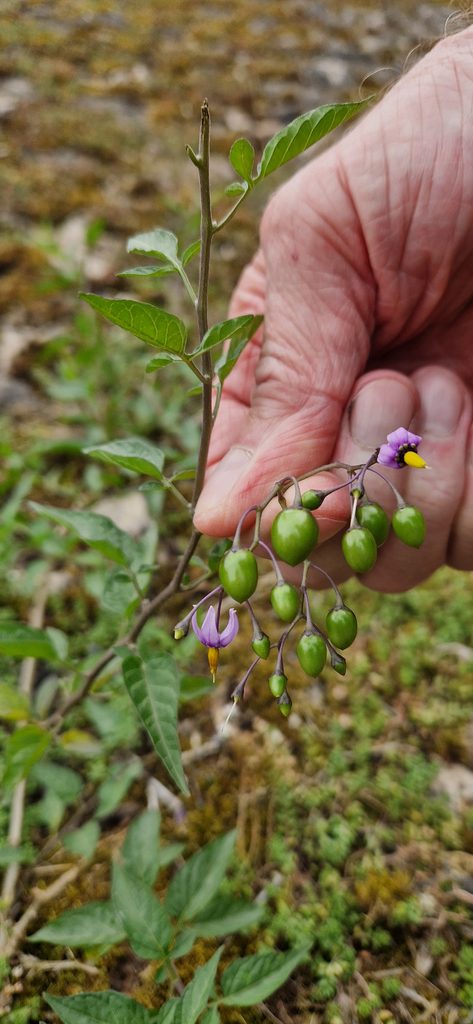
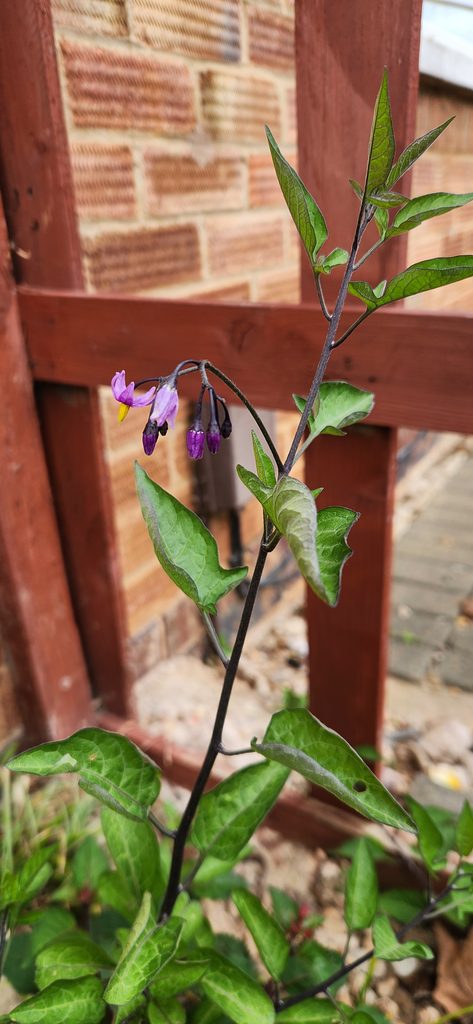
The leaves are quite distinctive. They are generally oval to heart-shaped, but often have one larger central lobe accompanied by two smaller lobes or leaflets towards the base.
The stems can become somewhat woody, particularly towards the base of older plants, which helps explain the common name woody nightshade.
💜 Flowers
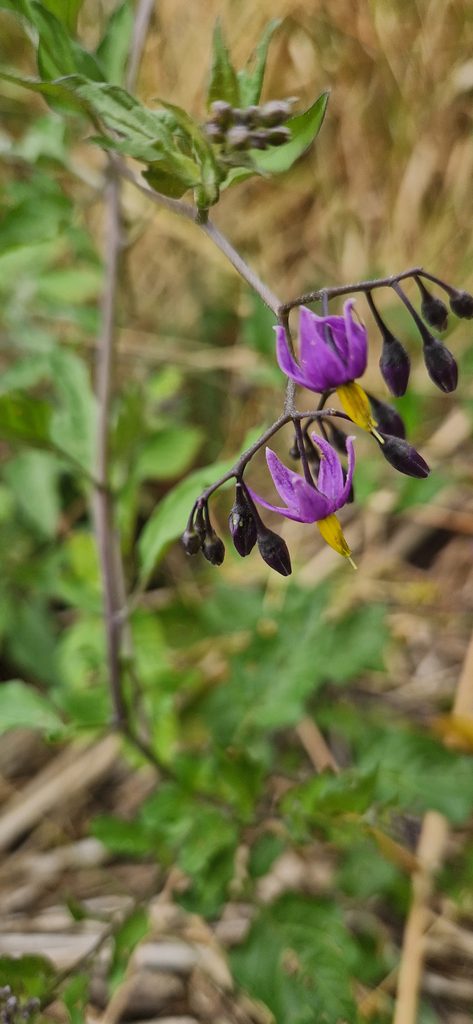
The flowers appear from summer onwards and are one of the best ways to recognise the plant.
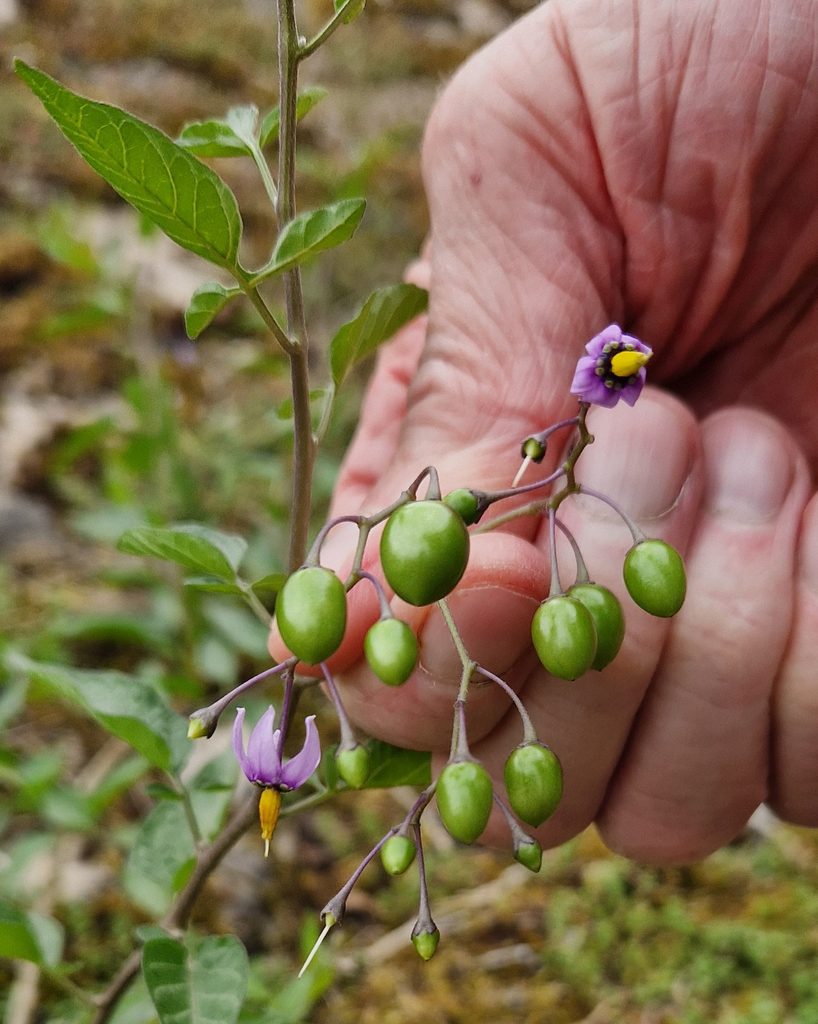
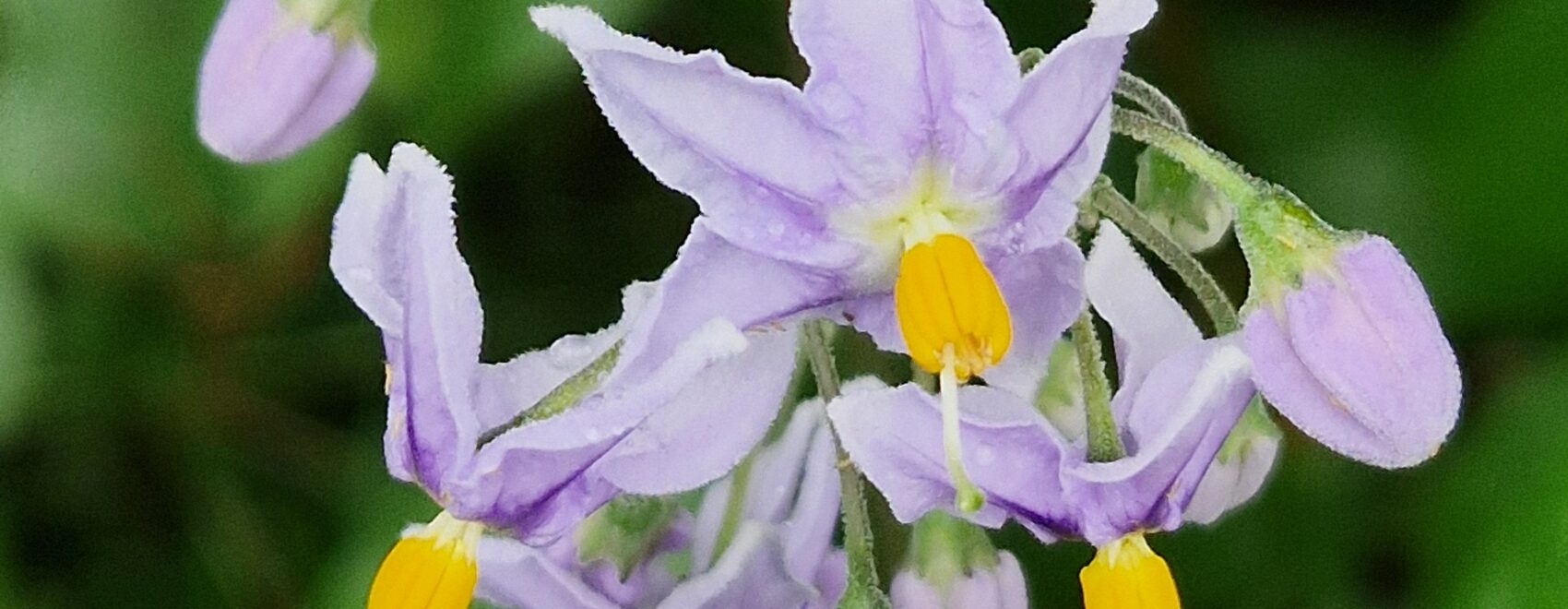
They are usually purple with a prominent yellow centre, with five petals that curve backwards. The flowers hang from the plant rather than standing upright.
Look closely and the bright yellow anthers in the centre are particularly noticeable.
🔴 Berries
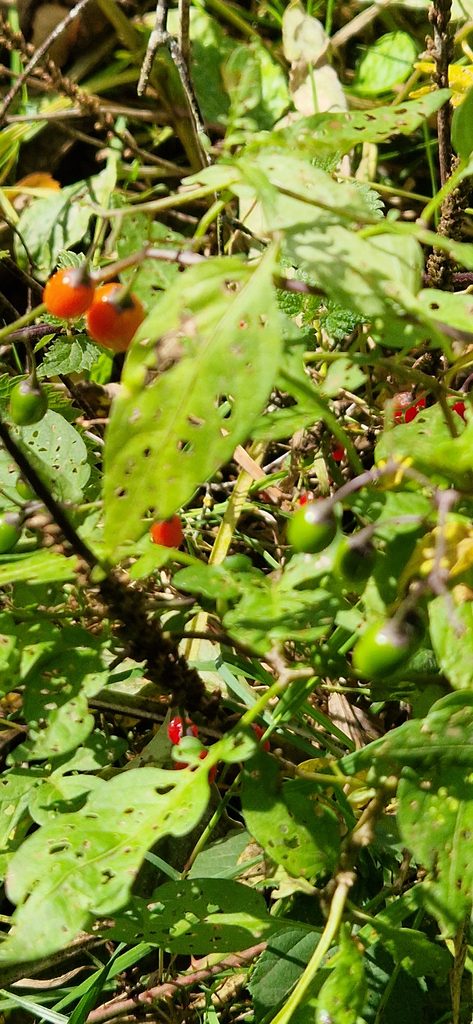
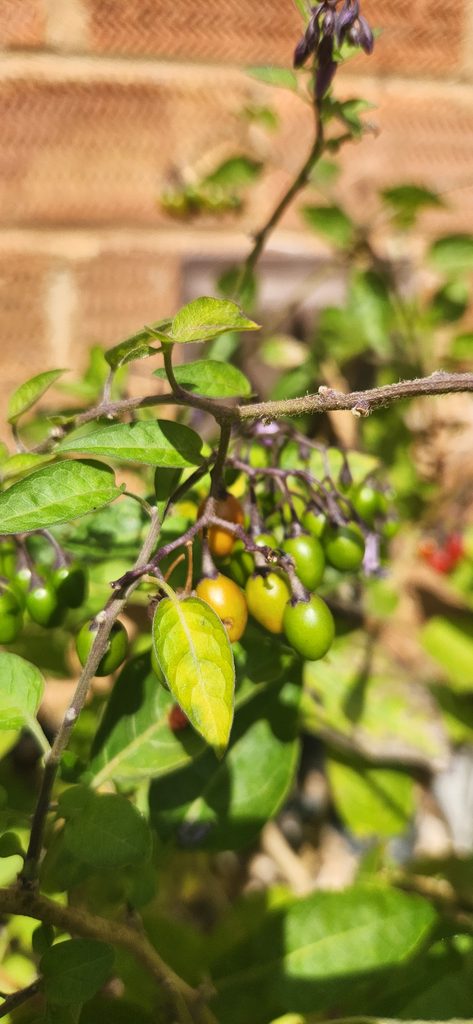
After flowering, woody nightshade produces clusters of green berries which gradually ripen to a striking bright red.
These glossy berries can remain on the plant into autumn and make woody nightshade especially easy to spot.
Do not eat the berries. They are poisonous.
The red berries are also an important identification feature when distinguishing woody nightshade from deadly nightshade (Atropa belladonna), which produces black berries. Both plants are poisonous.
Where can you find woody nightshade?
Woody nightshade is found in a wide range of habitats, including:
- hedgerows
- woodland edges
- scrub
- banks and rough grassland
- areas where it can scramble through other vegetation
It can grow in both full sun and partial shade and is widespread enough to be encountered during walks and foraging expeditions across Britain.
Look out for it particularly in summer when the purple flowers appear, and again in late summer and autumn when the bright red berries make the plant much easier to recognise.
Is woody nightshade edible?
❌ No – do not eat it.
Although the name “bittersweet” can sound rather appealing, woody nightshade is not a wild food.
The RHS classifies Solanum dulcamara as harmful if eaten, and the plant contains naturally occurring toxic compounds. The berries are particularly tempting because of their bright colour, making correct identification important when children are exploring outdoors.
This is one of the plants we like to include when teaching safe foraging and plant identification: learning what not to eat is just as important as learning what is edible.
Woody nightshade and the nightshade family
Woody nightshade belongs to the Solanaceae family, commonly known as the nightshade family.
This is a fascinating family because it contains plants with very different properties. Alongside poisonous species such as deadly nightshade and woody nightshade, the family also includes some of our most familiar cultivated foods, including:
- tomatoes
- potatoes
- aubergines
- peppers and chillies
So the presence of a plant in the nightshade family does not automatically mean it is poisonous – each species needs to be identified and understood individually.
Woody nightshade vs deadly nightshade
These two plants are sometimes confused because they share the name “nightshade” and have purple flowers.
There are some useful differences:
Woody nightshade – Solanum dulcamara
- Climbing/scrambling growth
- Purple flowers with obvious yellow anthers
- Red berries
- Leaves often with distinctive lobes
Deadly nightshade – Atropa belladonna
- More upright, bushy growth
- Purple-green bell-shaped flowers
- Shiny black berries
- Generally found in woodland, scrub and disturbed ground
Both are poisonous, so neither belongs in the foraging basket.
A plant worth knowing – even if you never eat it
Foraging isn’t simply about finding something edible.
A good forager learns to recognise edible plants, poisonous plants, lookalikes and plants that are simply best left alone.
Woody nightshade is a perfect example. Its purple flowers and brilliant red berries make it a memorable plant to learn, and once you know its distinctive combination of climbing habit, purple-and-yellow flowers and red berries, it becomes much easier to recognise on a walk.
So next time you spot those little purple flowers scrambling through a hedgerow, take a closer look – just leave the berries where they are!
⚠️ Foraging safety
Never eat a wild plant unless you are 100% certain of its identification and that the particular part of the plant is safe to eat.
Woody nightshade (Solanum dulcamara) is harmful if eaten. Do not use the berries, leaves or other parts of the plant as food. Take particular care around children and pets, who may be attracted by the colourful berries.
Learn first, harvest second.
At Charnwood Foraging, we believe that responsible foraging starts with developing a good relationship with the plants around us – including learning which ones we should admire rather than eat.
Not sure about plant identification? Join us for the next foraging event in Charnwood, Leicestershire.