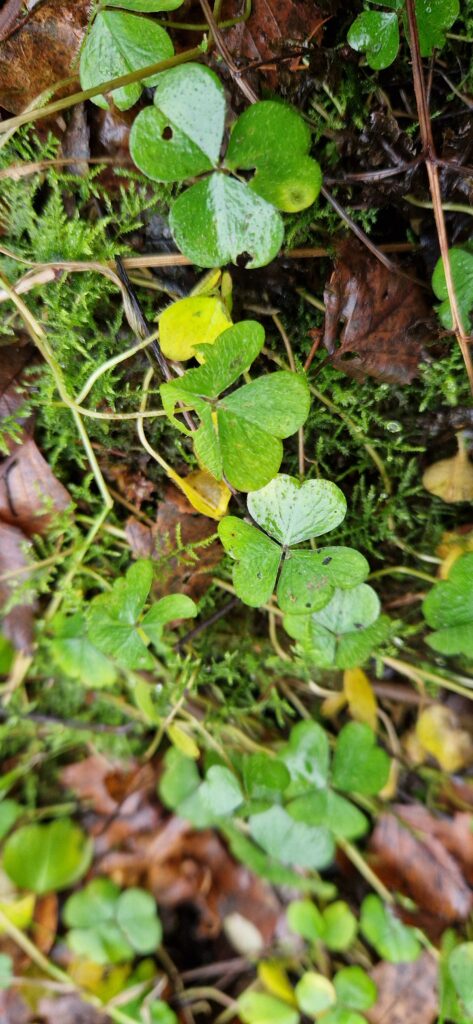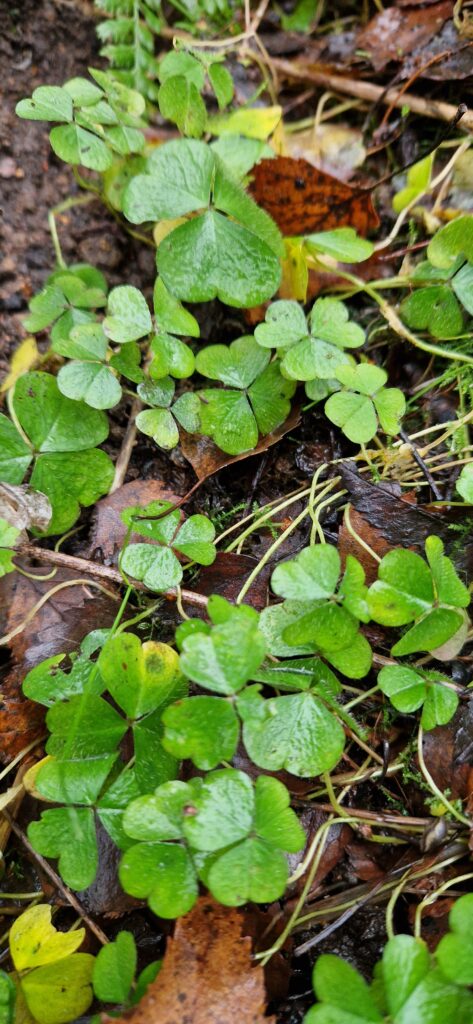
Wood sorrel, with its delicate, clover-like leaves and tangy, lemony flavor, is a charming wild plant often found carpeting woodlands and shady areas. Treasured for its unique taste and traditional medicinal uses, it is a favorite among foragers for both culinary and cultural significance.
Overview
Latin Name: Oxalis acetosella
Common Names: Wood Sorrel, Common Wood Sorrel, Fairy Bells, Cuckoo’s Bread
Family: Oxalidaceae (Wood Sorrel family)
Natural Habitat
Wood sorrel is native to Europe, Asia, and North America. It thrives in:
- Deciduous and coniferous woodlands
- Damp, shaded areas
- Hedgerows and grassy verges
It prefers moist, acidic soils and often forms lush carpets in undisturbed forest floors.
Identification
Leaves
- Shape: Heart-shaped leaflets, three per stem, resembling clover.
- Color: Light to mid-green, sometimes with purple markings on the underside.
- Movement: Folds downward at night or in bright sunlight.
Flowers
- Appearance: Small, delicate white flowers with purple or pink veining.
- Bloom Time: Late spring to early summer.
Height
- Low-growing, typically 5–10 cm tall.
Taste & Smell
- Tangy, lemony flavor due to its oxalic acid content.
Edibility and Culinary Uses
Wood sorrel is highly versatile and prized for its sharp, citrusy flavor.
Leaves:
- Use raw in salads, sandwiches, or as a garnish.
- Add to soups and sauces for a zesty twist.
- Blend into wild herb pestos or green smoothies.
Flowers:
- Use as an edible decoration for desserts and drinks.
Recipe Ideas:
- Wild Herb Salad with Wood Sorrel
- Lemon Sorrel Sauce for Fish or Poultry
- Refreshing Wood Sorrel Iced Tea
Nutritional Value & Health Benefits
Nutritional Content
- High in vitamin C.
- Contains small amounts of vitamin A and calcium.
Medicinal Benefits
- Traditionally used for:
- Digestive Health: Easing nausea and indigestion.
- Cooling Agent: Reducing fever and soothing inflammation.
- Detoxification: Supporting liver and kidney function.
Foraging Tips
Best Harvesting Season:
- Early spring through late summer.
Sustainability:
- Harvest sparingly to allow plants to thrive.
Note:
- Foraging for roots is only allowed on private property with the owner’s permission. However, the roots of wood sorrel are rarely used.
Folklore & History
Wood sorrel has long been associated with folklore and herbal traditions. In Celtic mythology, it symbolized purity and renewal. The plant was used historically to quench thirst on long journeys and as a remedy for scurvy due to its high vitamin C content. Its delicate beauty and sharp flavor have made it a symbol of simplicity and charm in many cultures.
Safety Precautions
- Oxalic Acid Content: Wood sorrel contains oxalic acid, which gives it its tangy taste but can interfere with calcium absorption in large quantities. Consume in moderation, especially if you have kidney issues or a history of gout.
- Ensure proper identification, as it can be mistaken for other plants, though it is generally safe and non-toxic.
Conclusion
Wood sorrel (Oxalis acetosella) is a delightful wild plant that combines culinary versatility with cultural and medicinal significance. Its sharp, refreshing flavor and delicate beauty make it a standout addition to any forager’s basket. Whether enhancing a salad or steeping it into a refreshing tea, wood sorrel is a treasure worth exploring.
Not sure about plant identification? Join us for the next foraging course in Charnwood, Leicestershire, and learn to identify and use wild plants responsibly and sustainably!