A cheerful yellow-flowered mustard with edible leaves, seeds and a long history as both food and crop
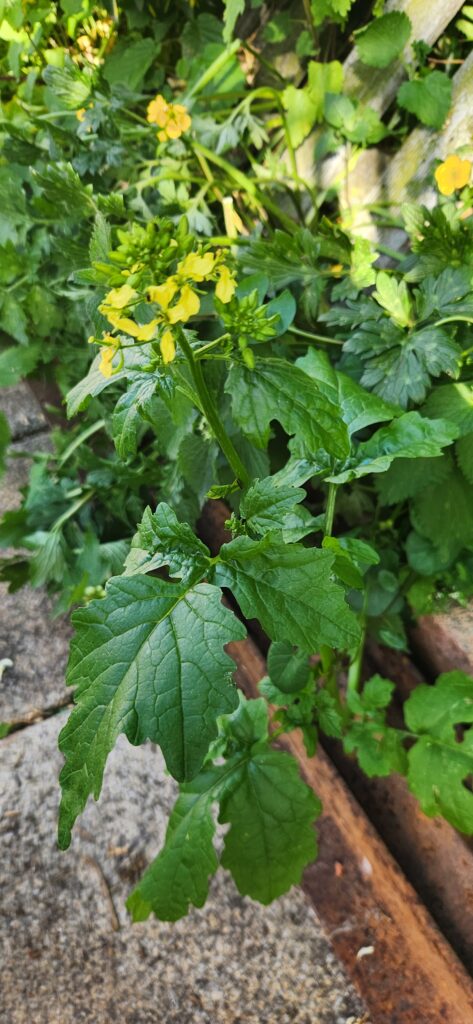
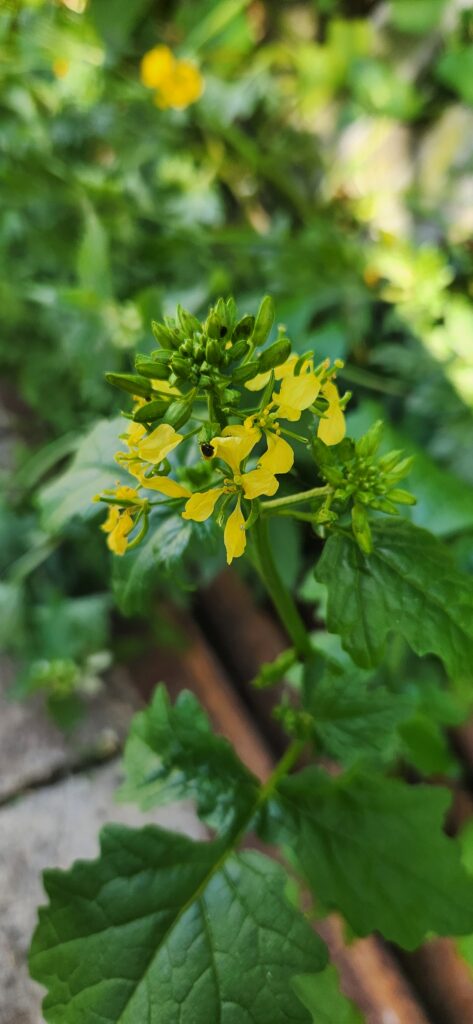
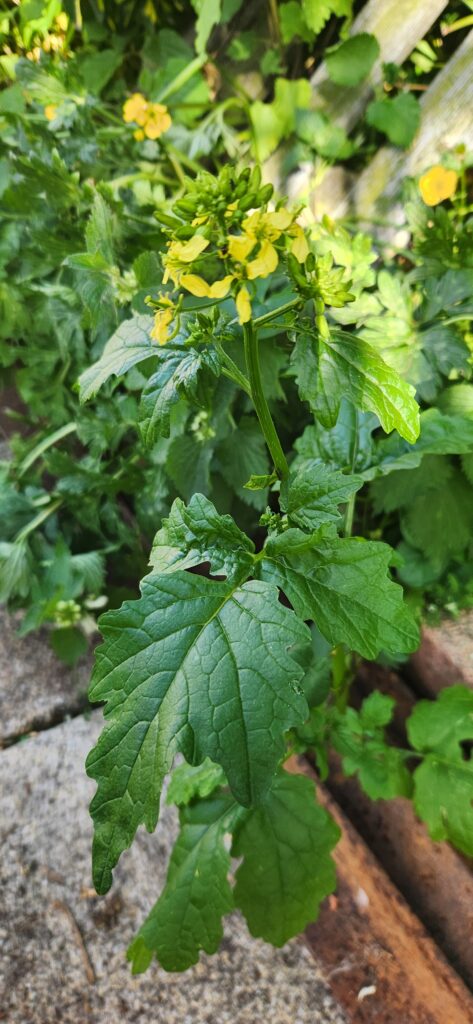
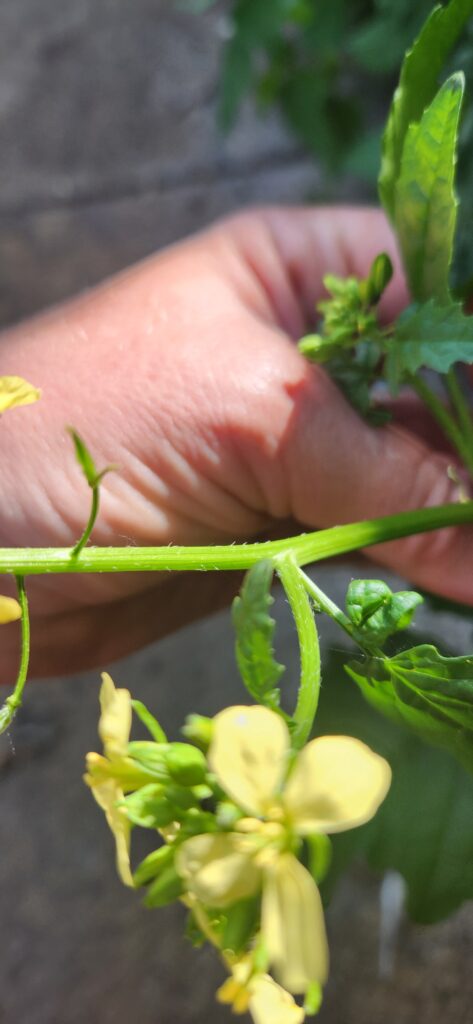
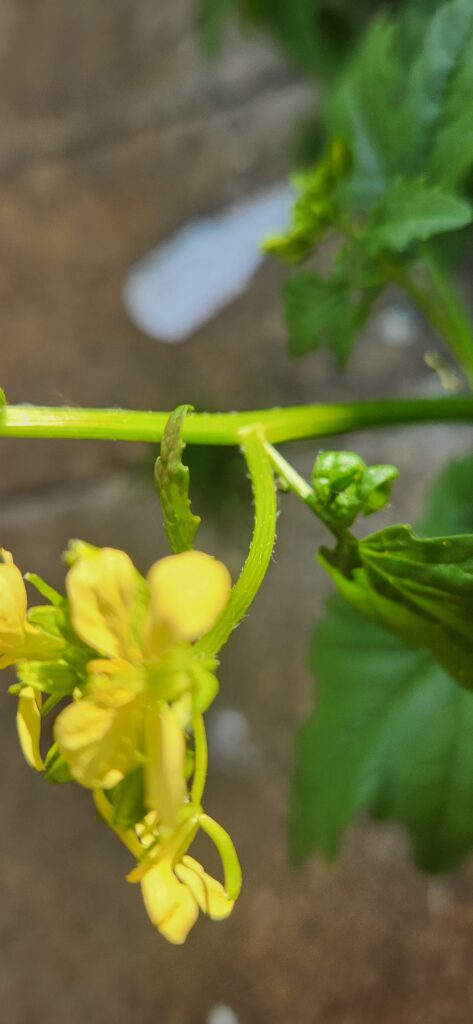
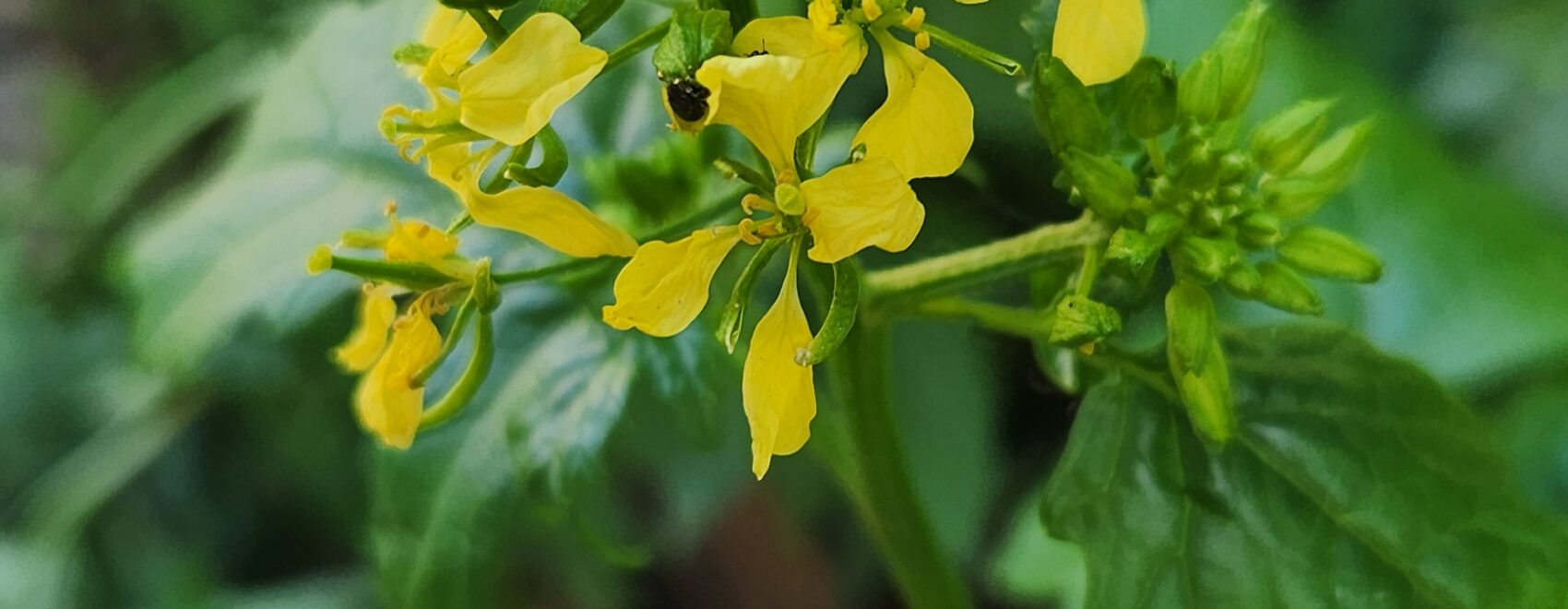
Despite its name, White Mustard does not have white flowers. Its flowers are bright yellow, while the name refers to its pale yellow or cream-coloured seeds.
A member of the cabbage family, White Mustard has been cultivated for centuries for its seeds, which are used to make mild mustard. It can also occur on disturbed ground, field margins and waste places, sometimes as an escape from cultivation or where it has been grown as a cover crop or green manure.
For foragers, the young leaves, flowers and immature seed pods can all be of interest, while the mature seeds are the plant’s best-known culinary use.
🌳 Habitat
Commonly found in:
- Arable field margins
- Disturbed ground
- Waste ground
- Roadsides and verges
- Gardens and allotments
- Areas where seed mixtures have been sown
- Land used for green manure or cover crops
White Mustard prefers open, sunny places and disturbed soils.
🔍 Identification Features
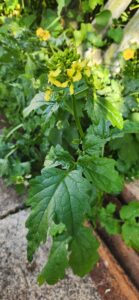
- Upright annual plant, often around 30–80 cm tall
- Bright yellow flowers with four petals, typical of the cabbage family
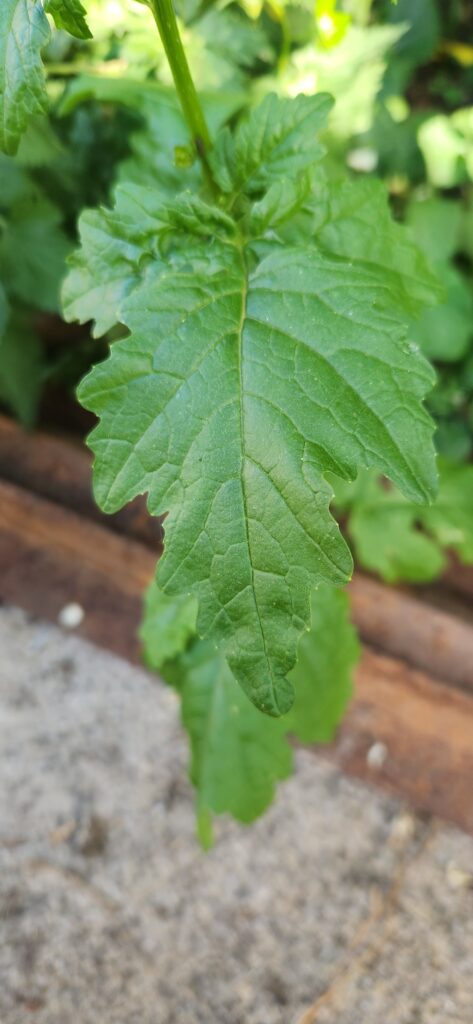
- Lower leaves are deeply lobed, rough and often somewhat hairy
- Upper leaves become smaller and less divided
- Stems may be coarse and hairy
- Seed pods are relatively broad and often noticeably hairy
- Pods develop a distinctive flattened, sword-like or beak-like tip
- Mature seeds are pale yellow to cream-coloured
One of the most useful identification features is the combination of bright yellow flowers and bristly seed pods with a prominent flattened beak.
⚠️ Lookalikes
- Charlock (Sinapis arvensis) – very similar and closely related; careful examination of the seed pods is particularly useful
- Hedge Mustard (Sisymbrium officinale) – smaller, paler flowers and slender pods held close against the stem
- Oilseed Rape (Brassica napus) – usually more robust with smoother, often bluish-green leaves
- Wild Radish (Raphanus raphanistrum) – flowers often show distinct darker veins and mature pods become strongly segmented
- Other members of the cabbage family
White Mustard and Charlock can be particularly confusing, so mature seed pod structure can be extremely helpful for confident identification.
🍴 Edibility
Several parts of the plant are edible:
- Young leaves – peppery and mustard-like; eaten raw or cooked
- Young flowering tops – can be lightly steamed or added to savoury dishes
- Flowers – attractive edible garnish with a mild mustard flavour
- Young seed pods – edible while still tender
- Mature seeds – used to make mustard and spice blends
The pale seeds generally produce a milder mustard than darker brown or black mustard seeds.
Young leaves are usually at their best before the plant becomes older, tougher and more bitter.
🌿 Ecology & Traditional Uses
White Mustard has a long history as a cultivated food plant and is particularly valued for its seeds.
The seeds are used in:
- Prepared mustard
- Pickling
- Spice mixtures
- Sauces and dressings
- Preserving recipes
The plant is also grown as a green manure or cover crop, helping to cover bare soil and add organic material when incorporated back into the ground.
Its flowers are visited by bees and other pollinating insects.
Historically, mustard preparations were also used externally in warming poultices and traditional remedies, although such uses can irritate or burn the skin and should not be attempted casually.
📅 Season
- Young leaves: Spring to early summer
- Flowers: Late spring through summer
- Young seed pods: Summer
- Mature seeds: Late summer into autumn
Timing can vary considerably where plants have been deliberately sown.
⚠️ Health Warning
Always ensure correct identification before consuming any wild plant.
White Mustard contains mustard compounds that give the plant its characteristic heat and flavour. These can be irritating in large quantities, particularly to the digestive system.
People with known mustard allergy should avoid it. Mustard is one of the 14 allergens that must be declared under UK food-information rules, so this is especially important if serving homemade samples to course participants.
Take particular care when harvesting from agricultural field margins, as plants may have been exposed to herbicides, pesticides or other treatments.
Avoid collecting from polluted roadsides or contaminated ground.
🌿 Join a Foraging Course
White Mustard is a fascinating plant for learning about the cabbage family — and a brilliant comparison species alongside Charlock and Hedge Mustard.
Not sure about plant identification? Join us for the next foraging event in Charnwood, Leicestershire.